Posts Tagged → driving
Careless speeding & Poor traffic controls take another friend
We lost a most wonderful friend yesterday afternoon. One of the nicest people you could ever meet in your life, needlessly lost her life, while trying to cross North Front Street in Harrisburg.
Three factors caused Dr. Holly Engelman (55 YO) to be struck and immediately killed by a car: Careless driving, at speed far above what is posted (40 MPH transitioning to 35 MPH), in a marked crosswalk that lacks sufficient traffic controls to make drivers slow down and give the occasional pedestrian the right of way.
The driver whose car collided with Holly as she crossed within the crosswalk was young, driving way too damned fast, like almost everyone drives these days. And instead of seeing the adjoining lane blocked by a car waiting for Holly to make her way across Front Street, and taking note of it, her killer simply sped around it.
As Holly stepped past the stopped car, she was hit by the other car. While she was in the marked crosswalk.
Yes, this crosswalk at Vaughn and Front Street is marked on the pavement, and yes, it has signs on both sides, and yes, it has a flashing light and signs hanging over the crosswalk. But what it does not have is a couple rumble strips on both sides. Rumble strips, or speed bumps, can force drivers to slow down, by dint of the discomfort they cause when driven over at high speed. If designed to really slow a car down, they will immediately remove the tailpipe when hit at high speed.
Otherwise, these crosswalks are dangerous enticements, death traps that promise safety, but deliver death and injury.
I always drive the speed limit on Front Street. It is a residential street and also a low speed artery into and out of Harrisburg City. And yet, no matter where I enter Front Street, with however much lead time between me and approaching traffic, my doors are always blown off by passing vehicles that are going between fifty and sixty MPH. Some faster than this. Never fails, everyone is in a huge hurry to get into Harrisburg or out of it.
Plenty of tailgating, plenty of aggressive zooming up behind a vehicle that is already going the posted speed limit. As if Front Street is a race track, the Autobahn, a highway. But it is none of those things. Front Street runs along the scenic Susquehanna River, and right along the walking/ biking path above the river bank. Very little margin for error in this corridor, really no room for high speeds.
And yet, drivers speed there, and crash there, all the time.
There is no police presence on Front Street. Zero speed enforcement. None, ever. Not even at this one crosswalk.
Holly was a gentle, kind, beautiful person, with an uninhibited, attention-grabbing Woody Woodpecker laugh that made everyone around her laugh with her. Big time community volunteer, while also holding down a regular science job. She had a PhD in some polysyllabic hard science field that involved test tubes, lab rats, genes, big buildings, whatever, the whole gemish. Brilliant person, always positive to be around. Her two sons are good kids, smart in their own rights, and also hard working. Ditto her husband Andrew.
There is no replacing a Holly when something like this avoidable killing “accident” takes place. Holly was one of a kind, a super person of tiny stature who gave much more back to the community and society around her than her tiny size would indicate. She was one of the Princess of Patience’s best friends here in Harrisburg, and our home has been in mourning all day.
Folks, slow down in your vehicles. I do not understand why the hell so many people routinely drive like a bat out of hell in parking lots, or on residential streets, where people are around and where the margins for error are tiny. Nothing “pressing” in your life or mine is worth taking someone else’s life over. Driving fast in these enclosed spaces isn’t getting you anywhere any faster, but your risk factors are going through the roof.
And for those who will debate me on this, consider the young lady driver who killed our friend Holly. She likely faces the serious charge of manslaughter, in addition to reckless driving, etc etc. Her young life will never be the same, and will probably be much worse for a long period of time, simply because she was in too much of a hurry to slow down for Holly walking in the crosswalk.
In 2019, a young guy crashed into my truck’s rear, at pretty high speed, as I was stopped at a red light in Lewisburg. For about forty miles on our drive up Route 15, I had watched him staring at the dumb phone in his lap. He kept on slowing down as he became more absorbed in what he later told me was “the stupidest stuff.” And he would then suddenly speed up when he realized that other vehicles were passing him. He yo-yo’d like this for forty miles, and never once saw me waving to him, looking at him, trying to get his attention. He totaled his brand new Mustang, and hurt me.
Nothing on your social media feed is worth killing a Holly over, and if something on your phone really is so important, then pull off the road and give it your full attention. You, me, Holly, and the other person on your other end will all benefit.
Goodbye, dear Holly, sweet Holly, smart and humble and gentle Holly, mom Holly, doctor Holly, wife Holly, good friend Holly. We miss you very much.
UPDATE: Local news is covering this well. Here is a good example, and the reader comments are illuminating.
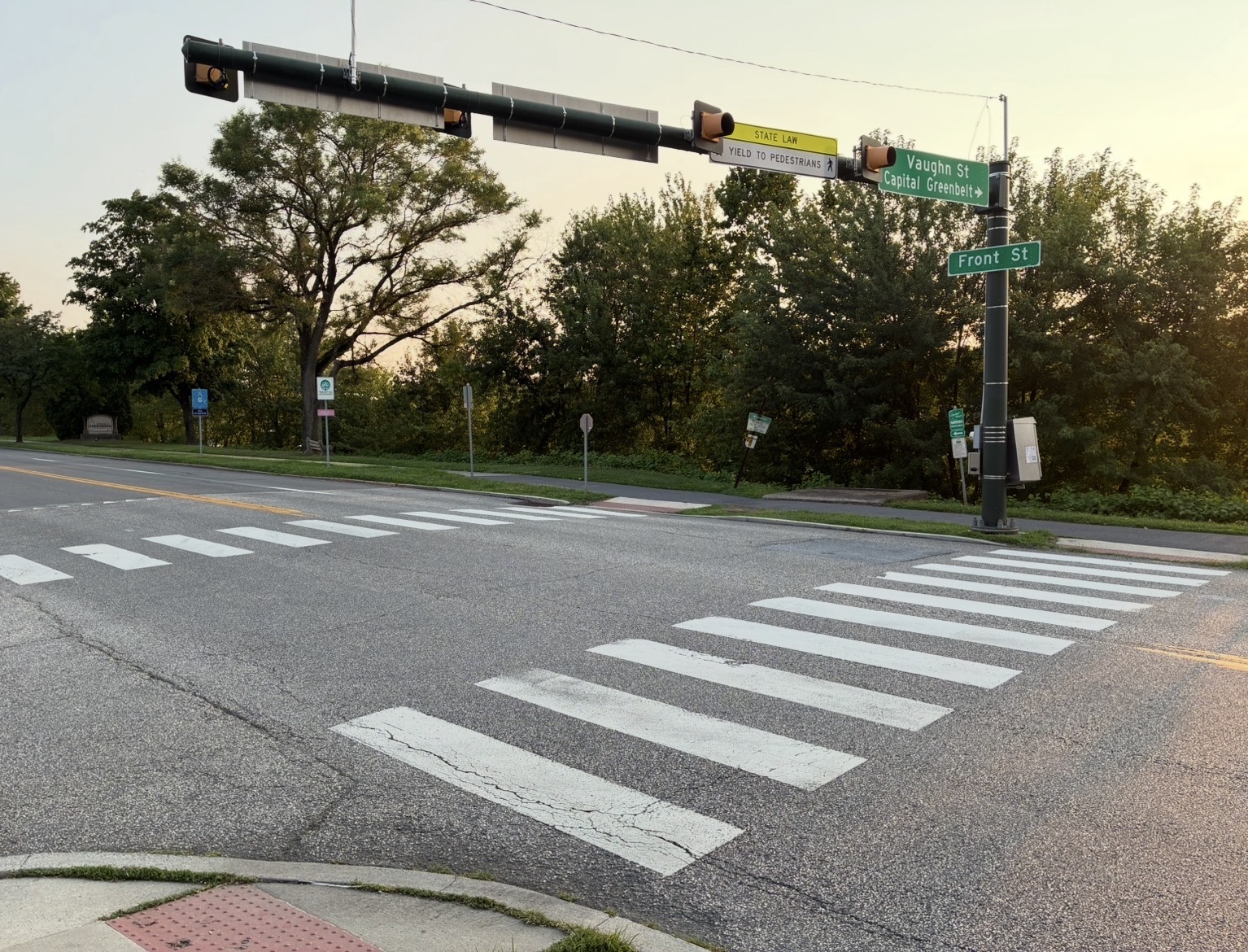
The scene of the crime. Killing a pedestrian here is no “accident.” It is negligent homicide, manslaughter.
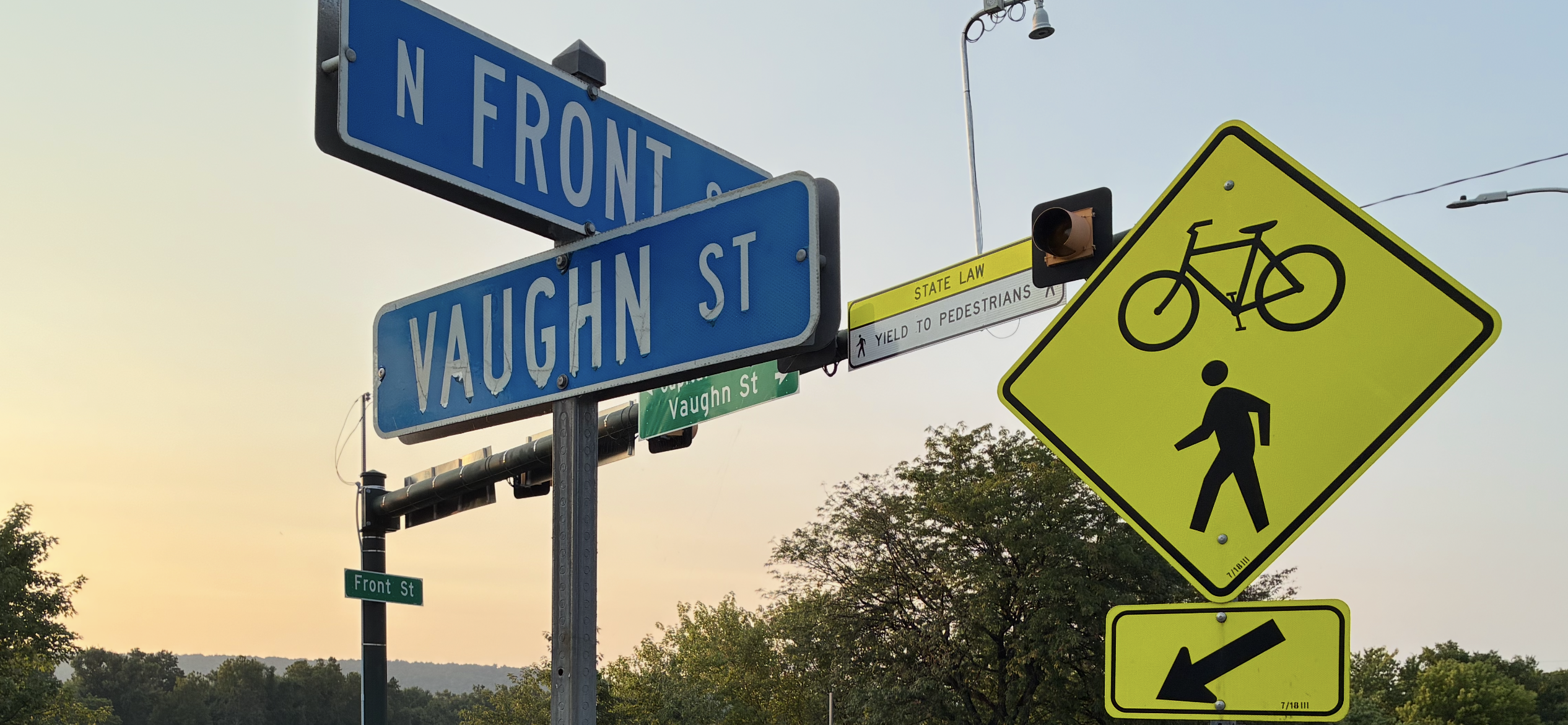
How many signs and lights do drivers need? Apparently a lot
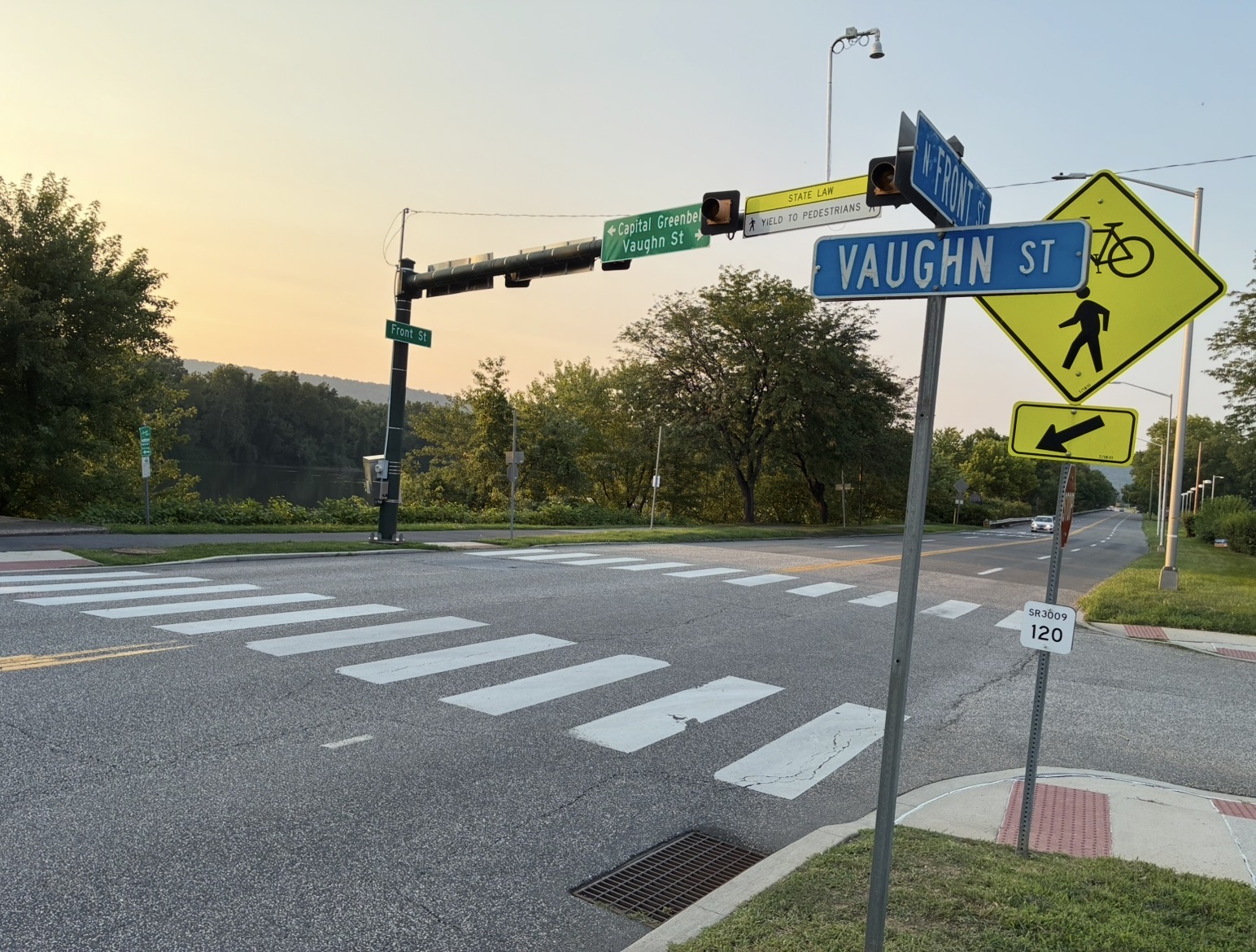
Another view. Northbound. People blasted through here while I tried to cross. Supposed to yield, a couple vehicles stopped, but most paid no mind
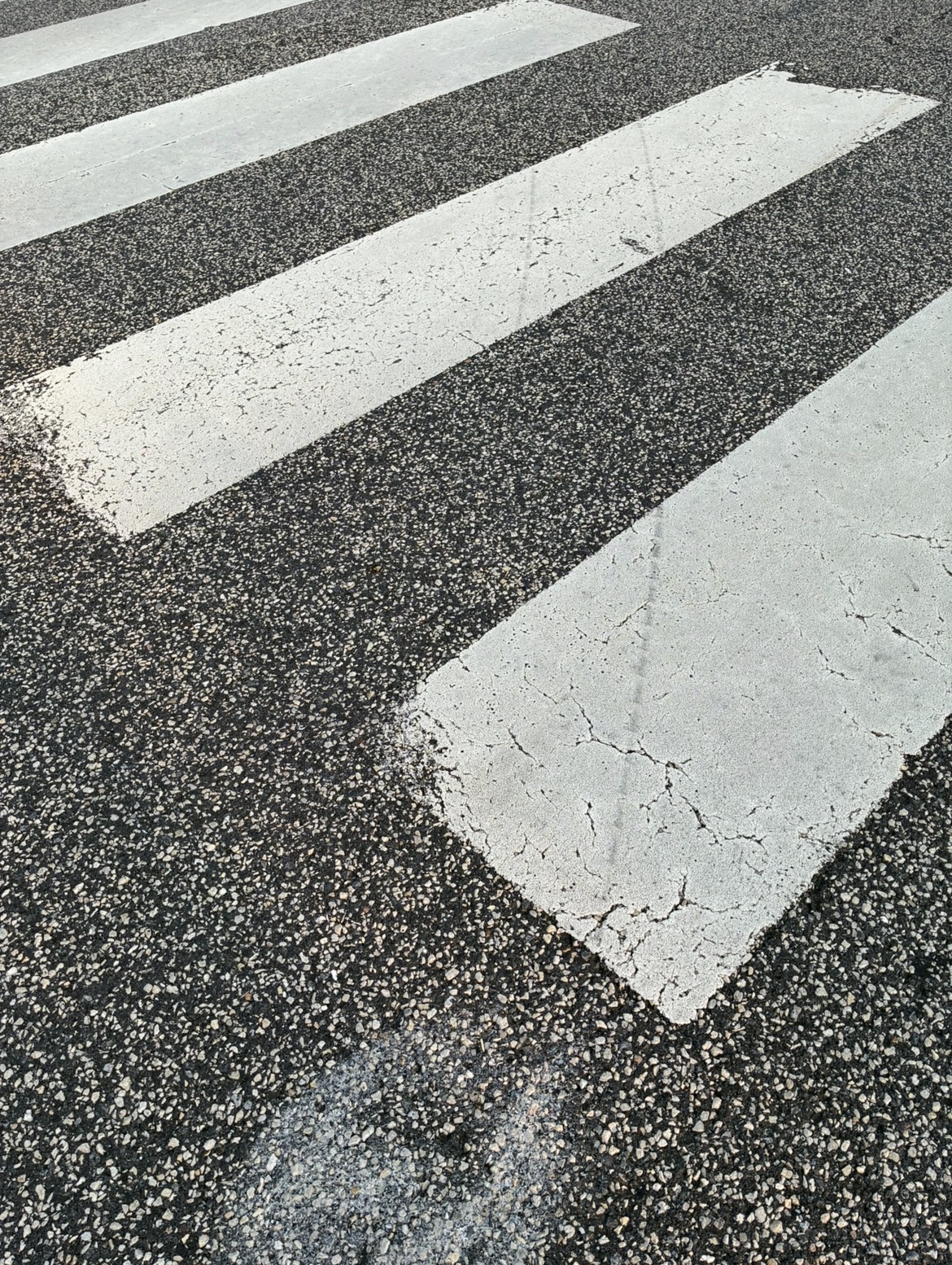
Is this the skid mark at the strike location?
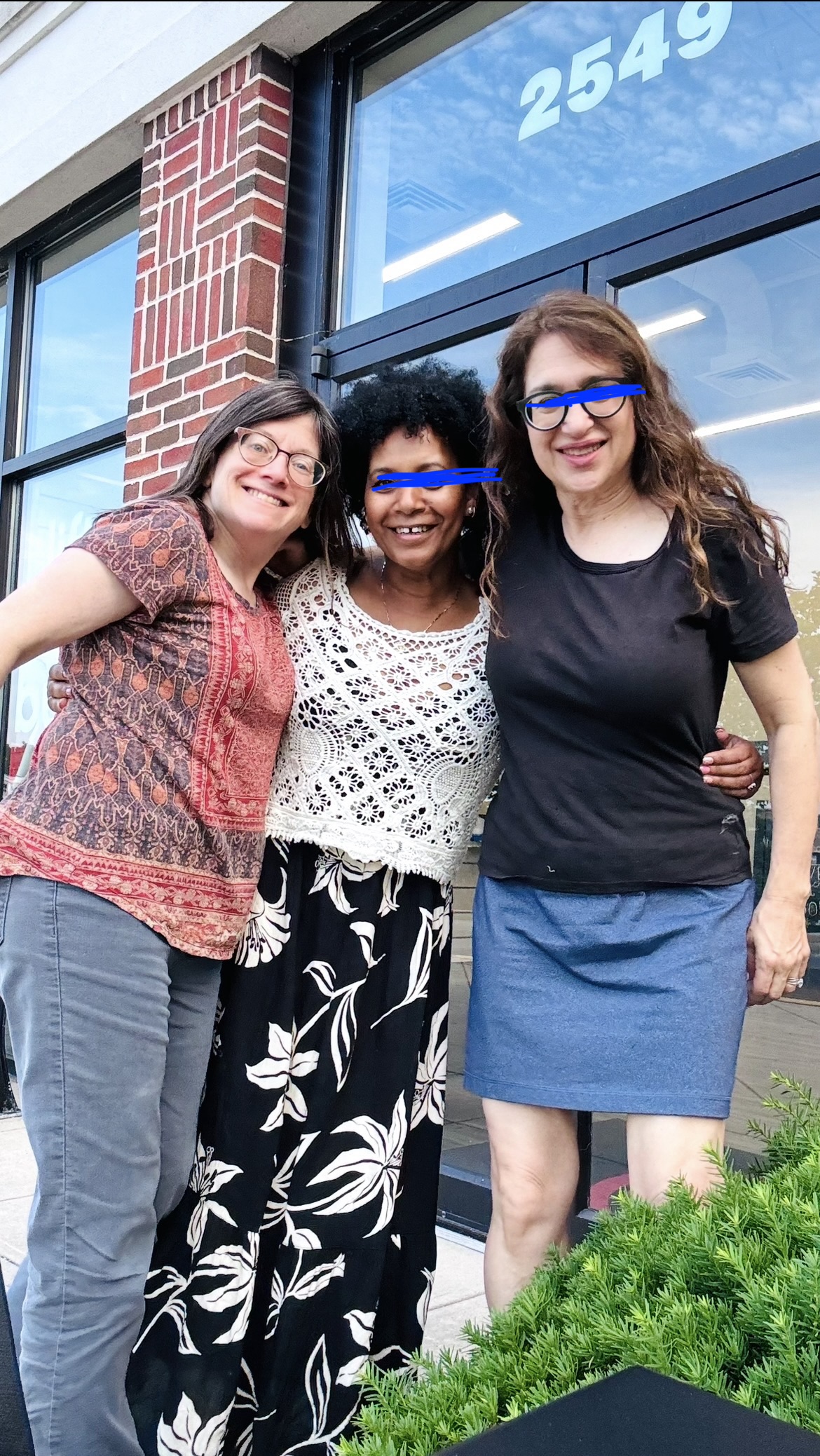
Dr. Holly Engelman, on the left, as always
I-81, the 1950s relic
While making an epic deep-South deep-dive last week, I had the interesting experience of driving on a great long stretch of the I-81 interstate. Holy Moses. I have returned alive and in one piece to report back on this journey-by-traffic, and to ask a basic government policy question.
Originally started in 1957 to connect northeastern Pennsylvania to Upstate New York and southern Canada, for moose hunters, one presumes, today I-81 connects Upstate New York/ Canada with Tennessee, and in doing so it transverses New York, Pennsylvania, West Virginia, Maryland, Virginia, and penetrates deeply into Tennessee, where I-81 ends and I-40 then seamlessly takes up the west-ward flow of vehicles and young men.
In its day, it seems that much of our 1950s built infrastructure was considered grand, even sometimes grandiose. Sure, back then, the idea of paving hundreds and hundreds of miles of highway with bazillions of tons of mined quarry aggregate and petroleum tar probably seemed an achievement just short of landing on the moon. And indeed, building modern highways is still a real achievement of science and technology, as well as physical manpower.
After all, a road is nothing more than liquid rock, which was mined, picked, blasted, bulldozed, lifted, trucked, crushed, and re-constituted in heated form with tar that, when it all settles and dries, provides a comfortable high speed driving surface. It is nothing less than a miracle to remove millions of tons of rock from the ground, process it, then put it back on top of the ground so that humans can easily and smoothly travel.
Today, Americans take good roads, smooth roads, for granted. Probably like everything else in our lives, to be honest. But the harsh truth is that our road system is aging, and I-81 is a good example of both the old combination of muscle, modern science, and good government, in short a real miracle, meeting up with the harsh reality of fulfilling our dreams by failing to maintain the big investments of yesteryear.
What did not follow in I-81’s wake, in either functional or miraculous form, was the simple funding necessary to operate and maintain this and all of the other incredible roads that make up our interstate system.
The I-81 experience today of driving at modern posted speeds of 60-70 miles per hour, on a crumbling two-lane roadway, that is chock full of bumper-to-bumper traffic, sucks mightily. Such a wild experience begs the question: Why the hell is 2026-level traffic expected to safely transit from Canada to Tennessee on a crowded two-track?
Why the hell is I-81 almost entirely two lanes in each direction, for hundreds and hundreds of miles, with only a few three-lane passing zones on steep hills thrown in helter skelter? It is a study in modern combat driving. It is a study in strange political choices, funding priorities.
The same can be said for the two-lane I-78, which brings New Yorkers and New Jerseyites westward into Pennsylvania, where, after fleeing their fouled nests back east, they settle here and begin voting for the same damned failed policies and ideologies that fouled their nests and drove them out in the first place.
Come to think of it, keep I-78 at two lanes.
And now come to think of it, while remembering a couple of the conversations I had with locals in the middle of rural southern Tennessee farmland on the Mississippi border, maybe this is the reason why I-81 remains a two-track the entire damned way: Keeping the damned Yankees out!
And with that in mind, now I understand: The narrow road and the local Southern attitude are both relics of the 1950s. Yep, now it all makes sense.
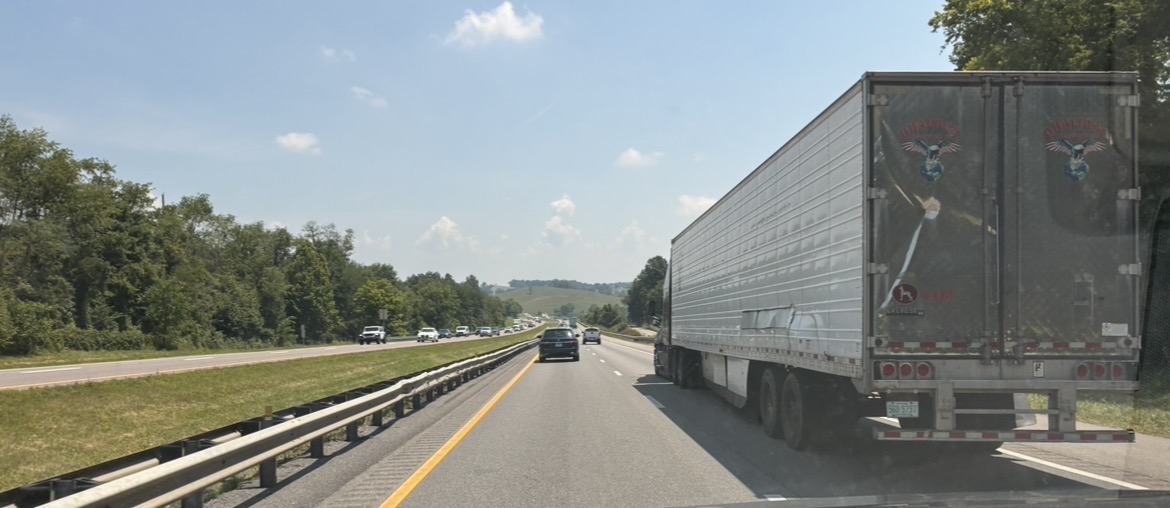
I-81 in both directions is packed with high speed traffic
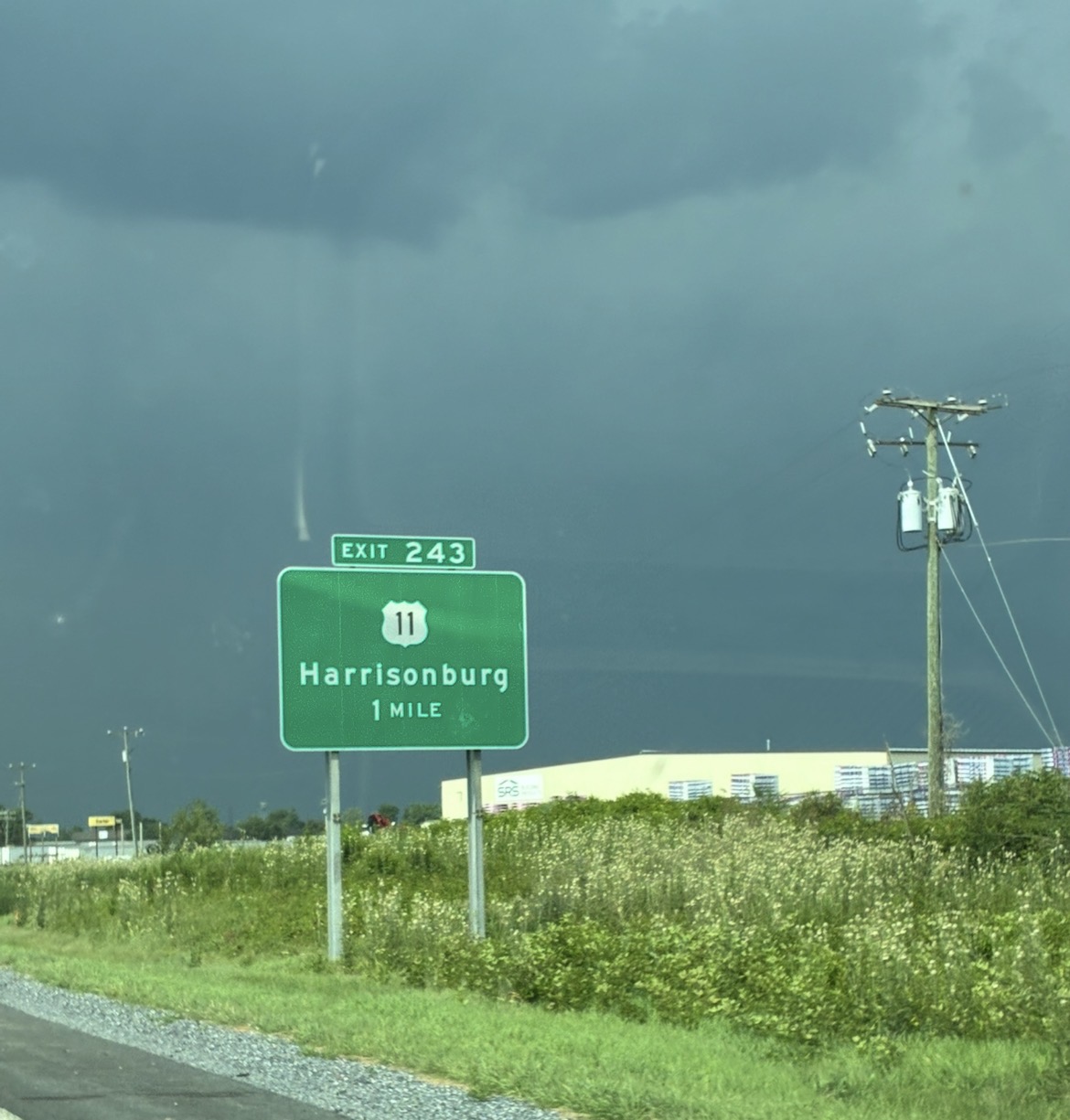
Not to be confused with Harrisburg, PA, but it happens anyhow
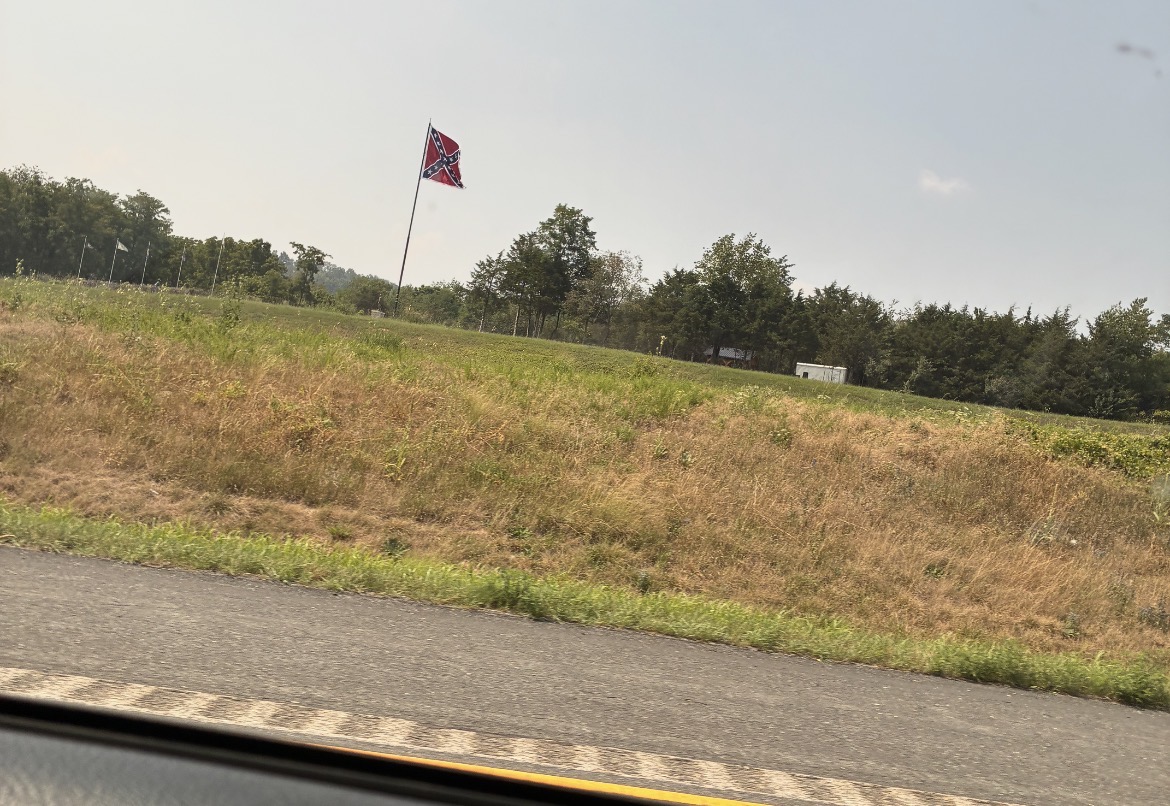
First and only Stars-and-Bars I saw the whole trip, and this in central VA. None in rural TN, where I saw they dominated the American flag forty years ago.
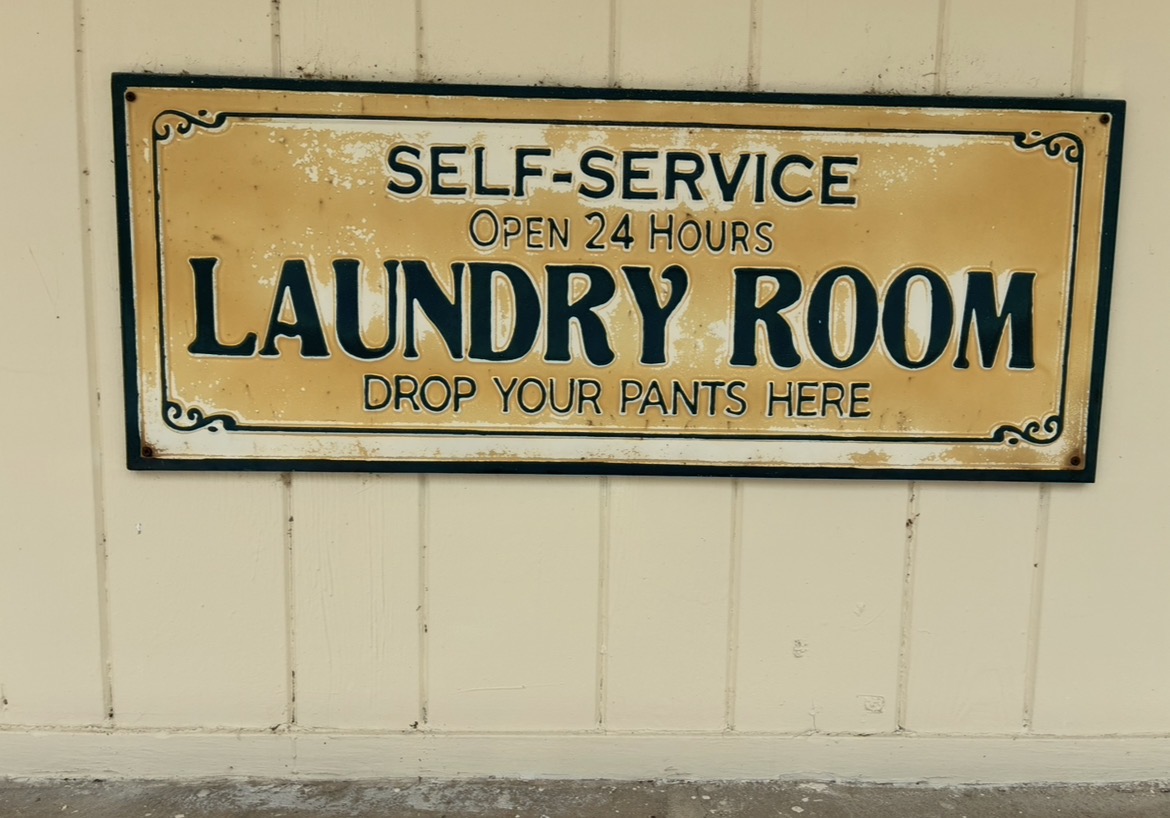
Southern humor. Works for me
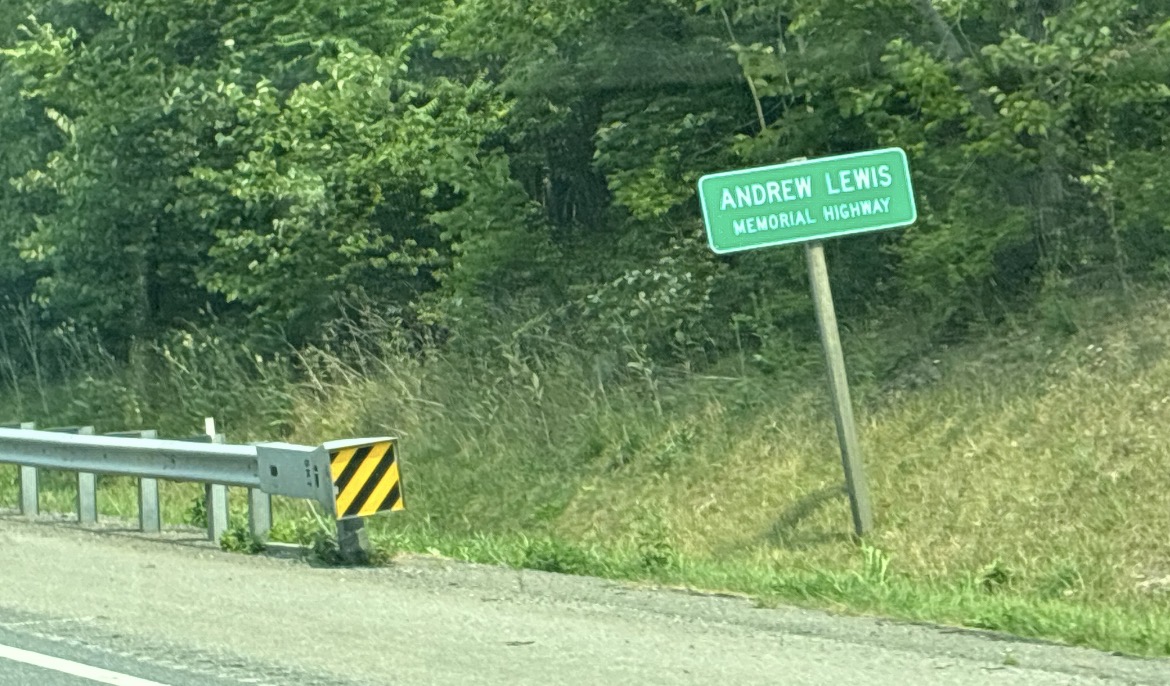
Said living former PA politician texted back “Reports of my death are greatly exaggerated.” Different guy, same name.
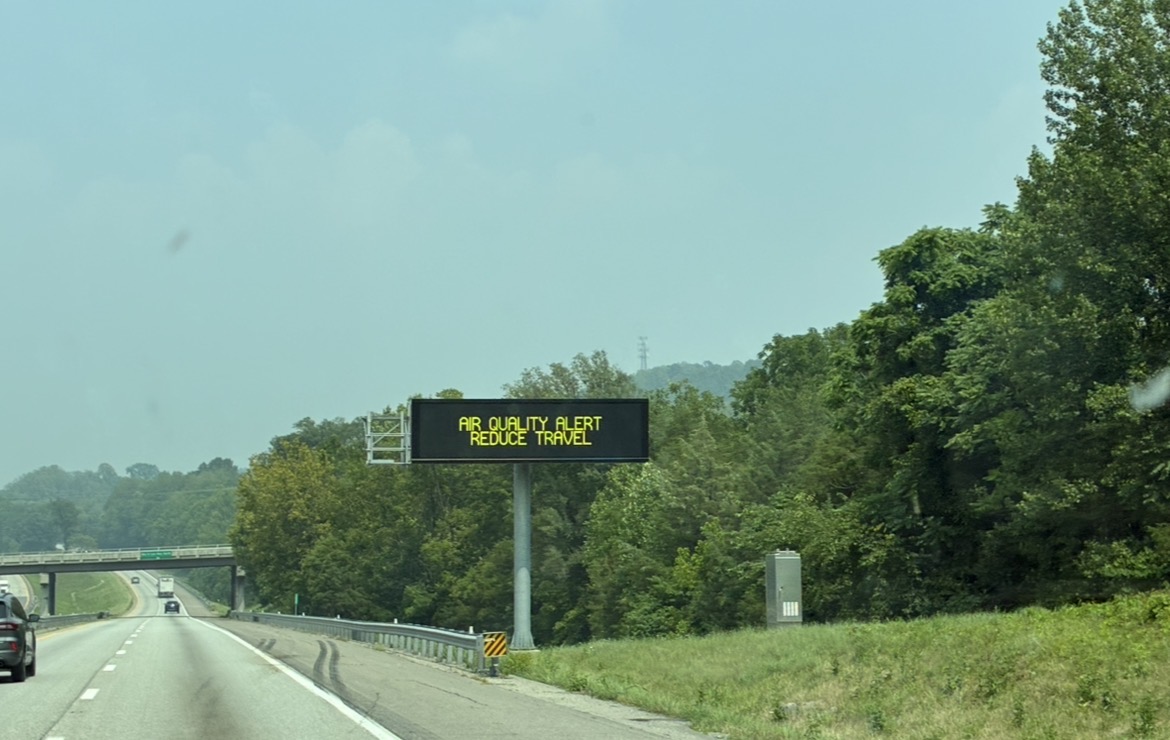
Canada’s forest fires influenced life on Southern American roads
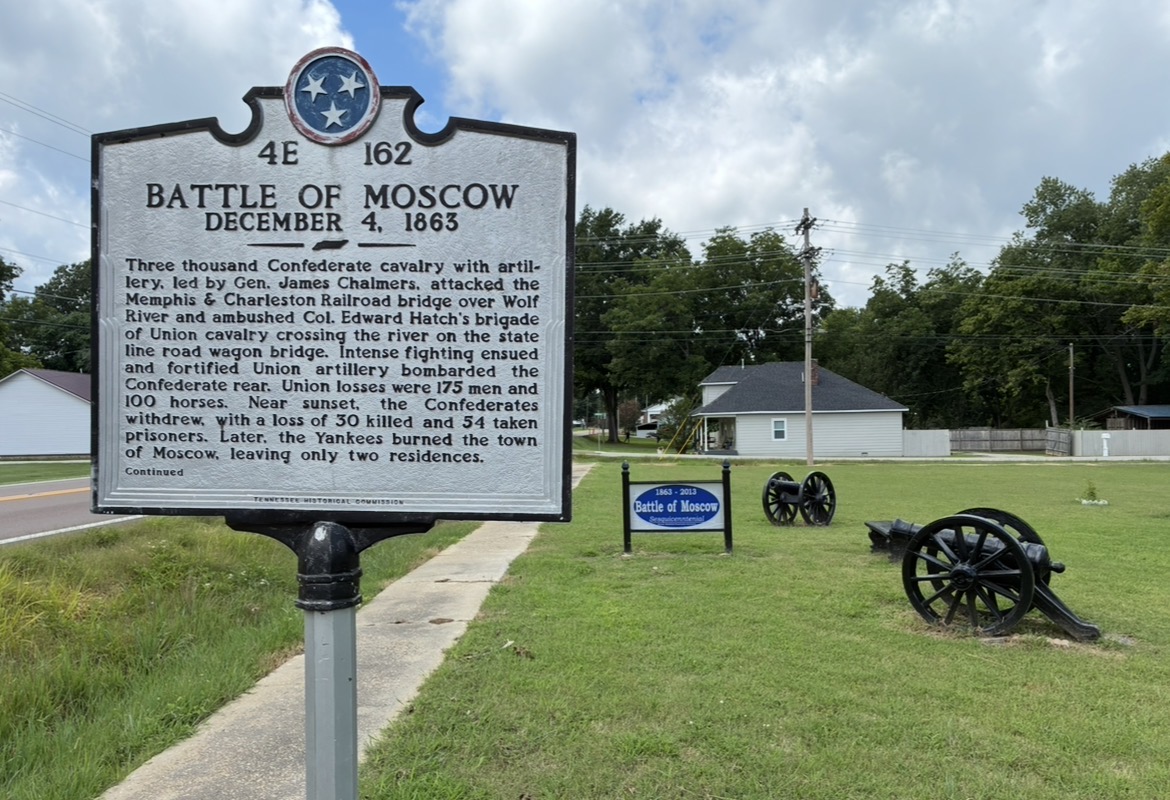
“Yankees”… talk about a 1950s Southern attitude…
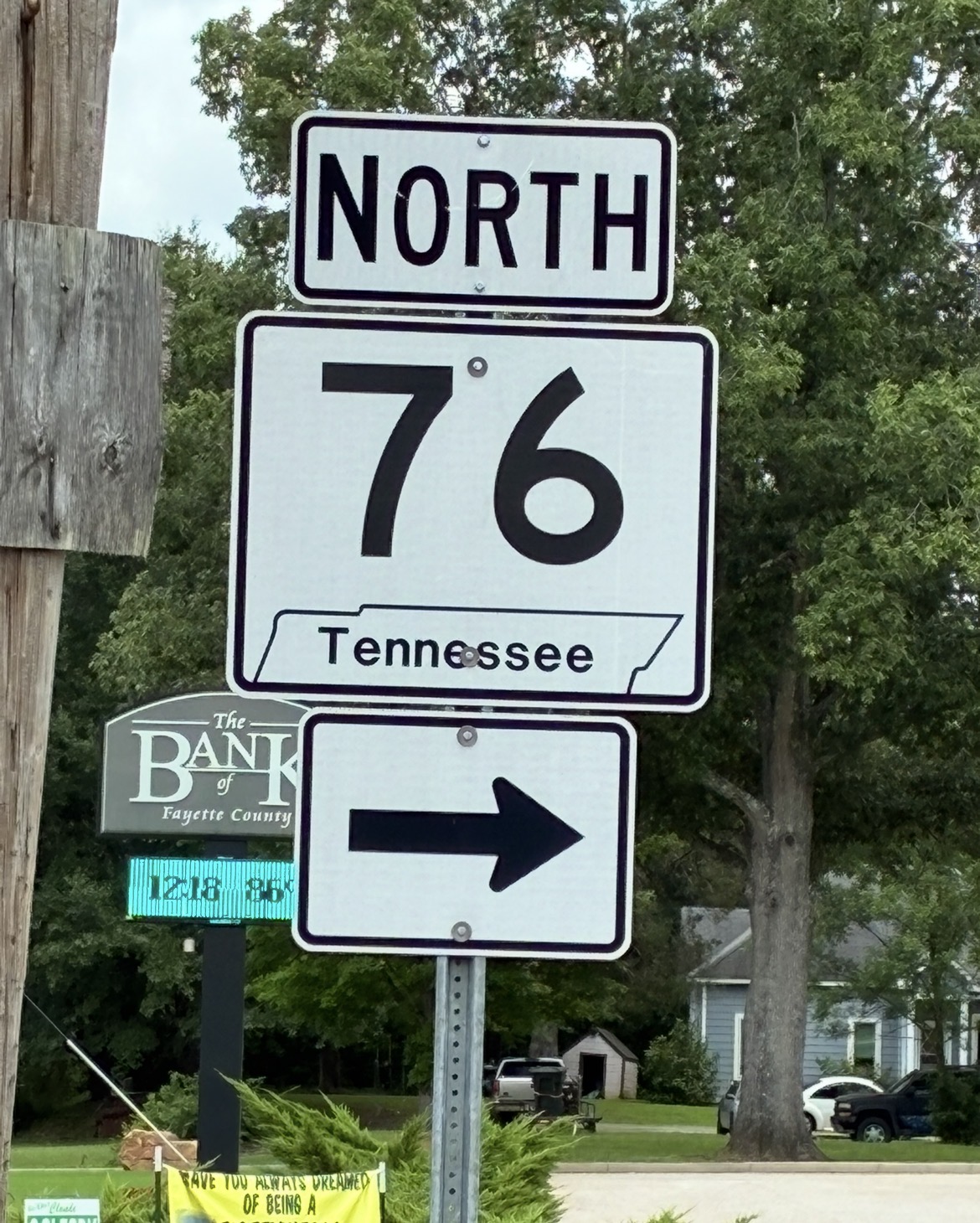
On the 250th anniversary of America, this sign held special meaning to me
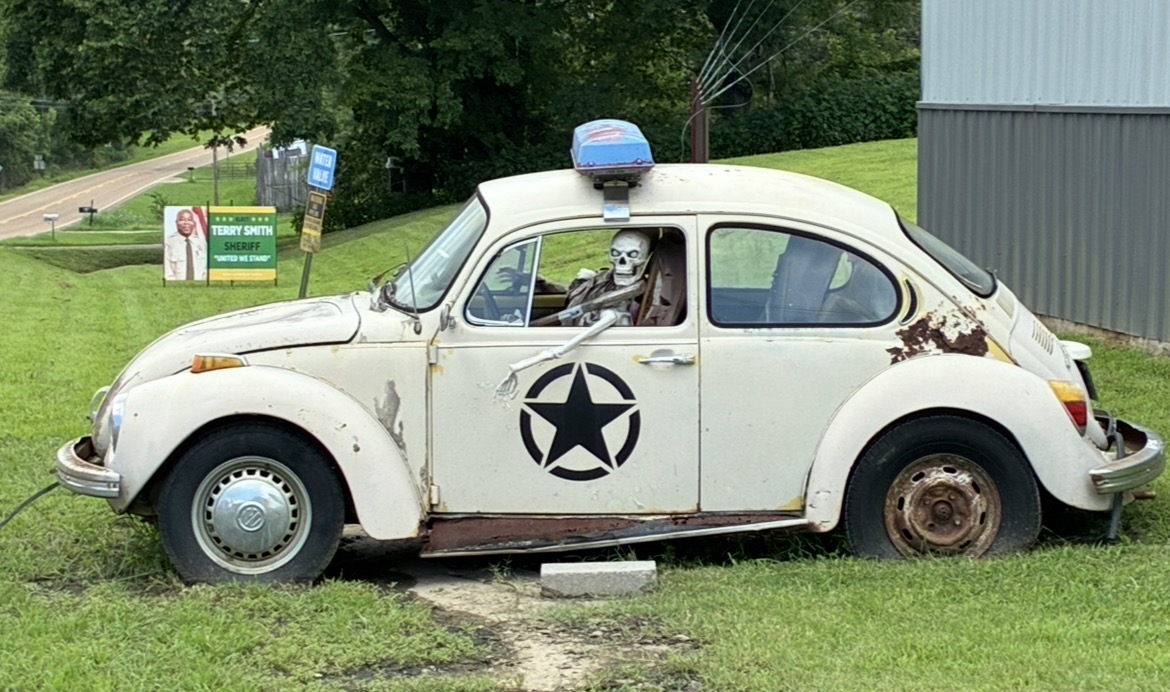
Southern humor. Note the “Dukes” sign
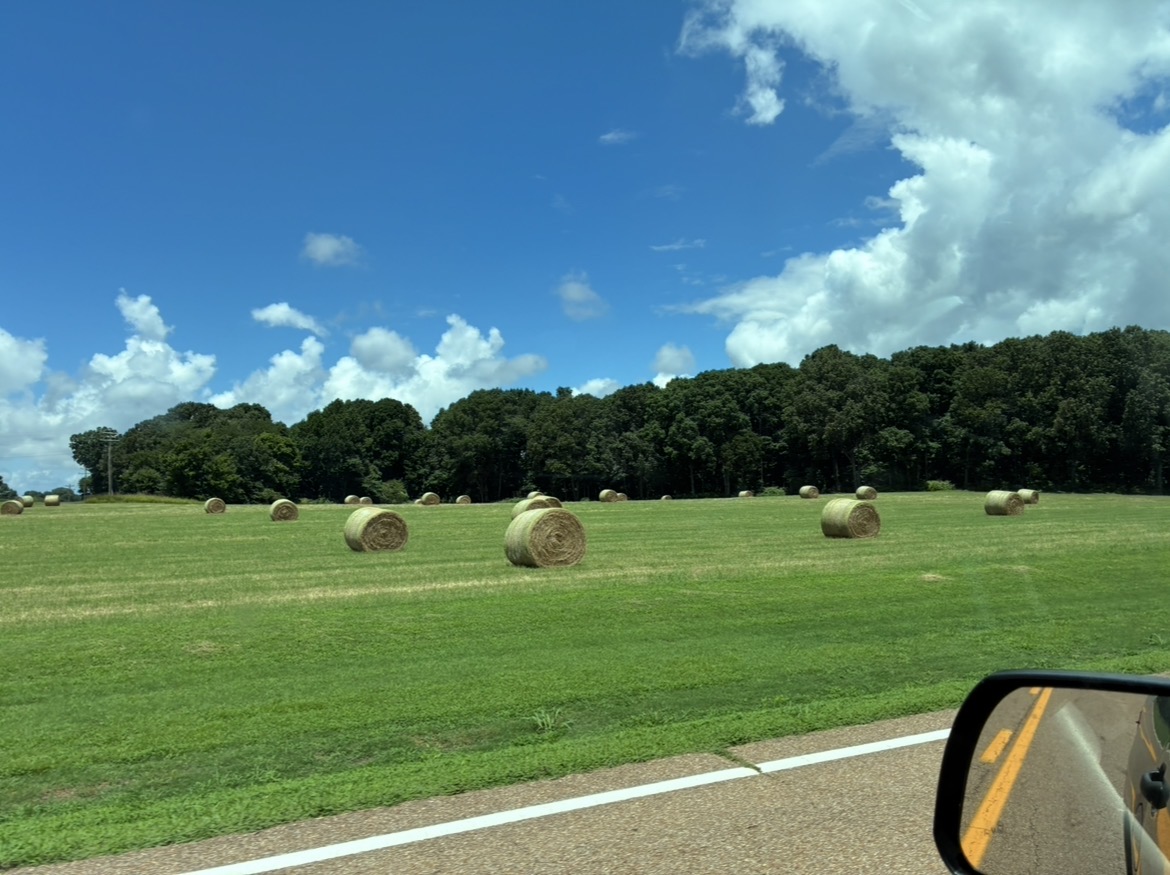
Southern rural TN is spectacularly beautiful
Are Turtles Crossing the Road Really a Threat?
Why drivers seem to target slow-moving, non-threatening little turtles is beyond understanding.
Don’t we all have a soft spot in our hearts for innocent, vulnerable, gentle creatures that do us no harm?
The same goes for snakes, which eat the rodent mice, rats, and chipmunks that do so much damage to our homes, crops, gardens, and vehicles.
Every spring and summer, turtles cross roads as they leave water bodies like rivers, ponds, lakes, and marshes, and seek out soft soil where they can lay their eggs, so that the next generation of their kind can continue their unimposing life cycle. Yet every year, roadways are littered with dead and wounded turtles, many dying slowly in the baking hot sun.
Their crime is nothing more than appearing in front of humans behind the wheel of a machine. Are so many of us really so homicidal or sadistic that we go out of our way to hurt, injure, and kill a little helpless animal?
The unfortunate, sad answer is Yes, a lot of drivers go out of their way to hit turtles with their cars. You can simply look at where the turtles lie, crushed or wounded on the side of the road, where the car driver had to actually veer off the roadway to hit the helpless little thing. What is really sad is that turtles take at least ten years to breed, so killing one or two (or stealing one or two) in a given area can doom or kill off the entire population there.
If you have compassion for turtles, you can watch these instructive videos below, where curious turtle-liking guys put a rubber turtle alongside some roads near their homes and generated some unhappy results, and where drivers get out to try and help injured turtles.
Bottom line is Yep, drivers went out of their way to run over the little rubber turtle.
When Texting While Driving Becomes Manslaughter

Allison was a young, smart, beautiful, productive American