Posts Tagged → tomatoes
Alas, the last of the garden’s tomatoes
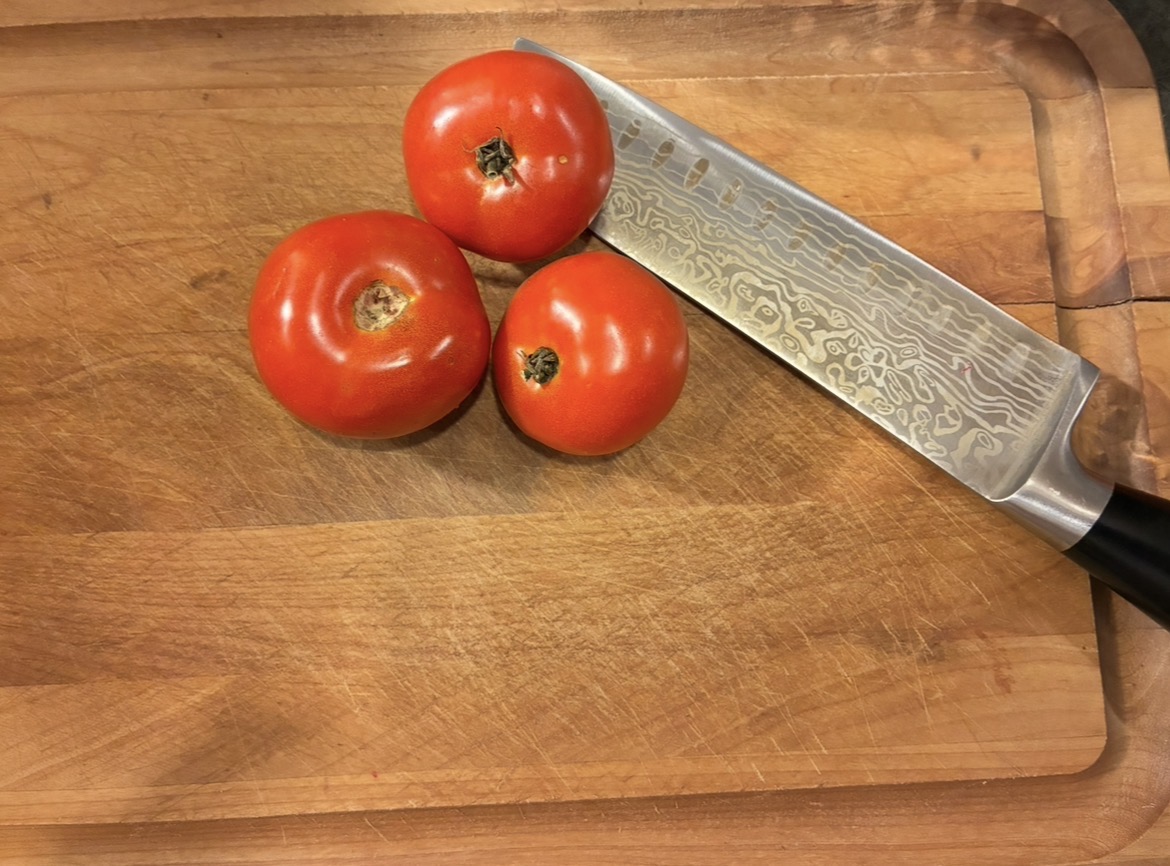
The last of my garden’s tomatoes
Tomatoes are the number one home garden crop in America. Even if you do not particularly like or enjoy tomatoes alone, they are easy to grow and easy to process into a variety of foods, condiments, sauces, etc.
Like the Bubba character said in “Forrest Gump”: There is tomato bisque, tomato barbecue, fried tomato, baked tomato, grilled tomato, hot tomato soup, cold tomato soup, diced tomatoes, stewed tomatoes, whole tomatoes, cooked tomatoes, raw tomatoes, sun-dried tomatoes, tomatoes on the vine and tomatoes on the window sill. The list goes on, and the uses for tomatoes seem boundless. So, people grow ’em and find ways to use ’em.
Plus, tomatoes are red, which is a universally appreciated color for edible foods. They are alive.
Well, summer ended months ago, but I just ate the last three tomatoes from my garden. It is a sad moment, because so long as these had sat around on the widow sill and then in a colander on the table, I had a palpable connection to the summer and to my garden, which brings me real pleasure. Now that these last three were diced up and eaten in a fresh mixed salad for lunch, the house feels empty. Summer and its last remnants are truly gone, until next year.
Oh, there are still plenty of un-eaten garden tomatoes frozen in the freezers. As tomatoes are harvested over their growing season, there are always many more that become ripe than can be eaten, and so those get put right into the freezer. Whole and as-is. Then they are pulled out and used as-needed for sauces, or mixed and sauteed with zucchini and onion as ratatouille, which goes great with everything fish, poultry, meat, or a few fried eggs for breakfast. But they are not fresh.
You know, a garden is symbolic. There is the Garden of Eden in the Bible, a symbol for Western Civilization and adjacent human populations for thousands of years. The idea that a garden can be idyllic, a place of deep contemplation or even of spiritual pursuit, is also common among both the Anglo Saxon English and the Japanese Shinto Buddhists. Gardens are a universal thing, practical and philosophical.
In the 1940s and 1950s, back yard American gardens (“Victory Gardens”) became big symbols of American self-reliance, as rationing for World War II put a strain on food supplies. These Victory Gardens were immensely successful in every measure, including healthy food produced, money saved, communities and families brought together, work ethics taught, chores completed, and young people’s allowances earned. An entire post-war culture was developed around these Victory Gardens.
Well, America is a garden, too. Like a garden, it depends on inputs in order to produce outputs. Gardens do not run on good intentions or virtue signals or promises, they need piles of horse crap, lime, and compost (all of which I put into my garden every year). And if you neglect to feed your garden these nutrients, it will be unable to feed you tomatoes in return.
And so we are a few days away from an important election, where it seems one entire political party is devoted to the idea that the American garden does not need to be fed nutrients, and yet they can just continue to take and take and take from it. That is, “free” Medicare, and “free” housing and “free” this and free that. Of course nothing is free, because somewhere someone has to pay for it.
If the American garden ceases to be productive, then this political party will raid the individual back yard gardens of American citizen taxpayers who have labored hard to make their gardens successful. And after having their backyard gardens raided by the government and by scavenging people, the hard working gardeners will cease growing gardens. What is the point?
This approach to government is guaranteed failure with gardens, and is not a sustainable way to approach or run government, either. No government can succeed by taking and and taking and taking, and giving to people who do not put nutrients back into the American garden. Eventually you run out of other people’s money (Margaret Thatcher). And when you run out of other people’s money, then the entire system collapses.
I hope our dear readers vote for a sustainable approach to running America as a garden, and not for the forced re-distribution approach to mismanaging a garden. Because if the takers and the scavengers win next week’s election, there will be no tomatoes anywhere. The tomatoes you grow in your garden will be claimed by someone who never worked to grow them. And you will have no tomatoes. And you will have a crappy summer, too.