Posts Tagged → steel
I saw China dumping today
Today, I saw tangible evidence of China just outright dumping its products at give-away prices, way below manufacturing cost. It was such a dramatic sight that it made me wonder why they are doing this. Come along with me on this trip, and see what conclusions you come to yourself about what we see together.
This morning I arrived at the Pine Run Auction in Linden, PA, good and early. Got my bidder card, #6, and walked around, looking at the items coming up for auction starting at 9:00am. Nearly everyone in attendence looked the same, dressed the same, was the same age. It was humorous, because when I threw on clothes this morning, I thought surely I would be overly rustic. Nope. We all looked the same, all the old rural northcentral Pennsylvania guys. Well, “old” is a relative thing; I was one of the younger men there. And the truly young were in their forties…..
Among the rusty old American farm machinery, tri-axles, crates of machinery attachments, tools, the almost-retired CAT excavators and the chipping and peeling John Deere bulldozers, lay piles, literally piles, heaps, of shrink-wrapped brand-new Chinese made machines. I mean piles. Brand new.
Being sold by the bushel.
Mini excavators and their extra attachments, mini skid steers, machines designed for the enterprising individual American man, sold for a few hundred dollars each. Barely their value as scrap steel. Photos below, if you doubt me.
Begging the question: What is China doing? Why are they taking these huge losses? Is China being beaten down by American tariffs, as our president said they would? Is China’s economy in free-fall? Is China in big economic trouble?
Or is China so wealthy and successful that they can afford to literally just give away their most expensive consumer products, at this huge loss? Imagine all of the myriad other little auction houses like Pine Run, all across America, all auctioning off these same machines, attachments, for pennies. This is a huge amount of steel, rubber, hydraulic fittings, and petroleum stuff being just wholesale dumped across America, by our biggest frenemy.
My impression is that this is the behavior of a drowning person.
Pine Run Auction of Linden, Pennsylvania, might be just one molecular data point in a galactic constellation of economic activity data points generated by one and a half billion human beings (America plus China). But there are calculus equations for calculating the slope (the direction) of a single data point, and while I can barely do one plus one type calculus, my gut instinct about today’s Pine Run Auction is that the Chinese economic slope is heading in a severe angle straight toward the planet’s surface in a huge flaming fireball.
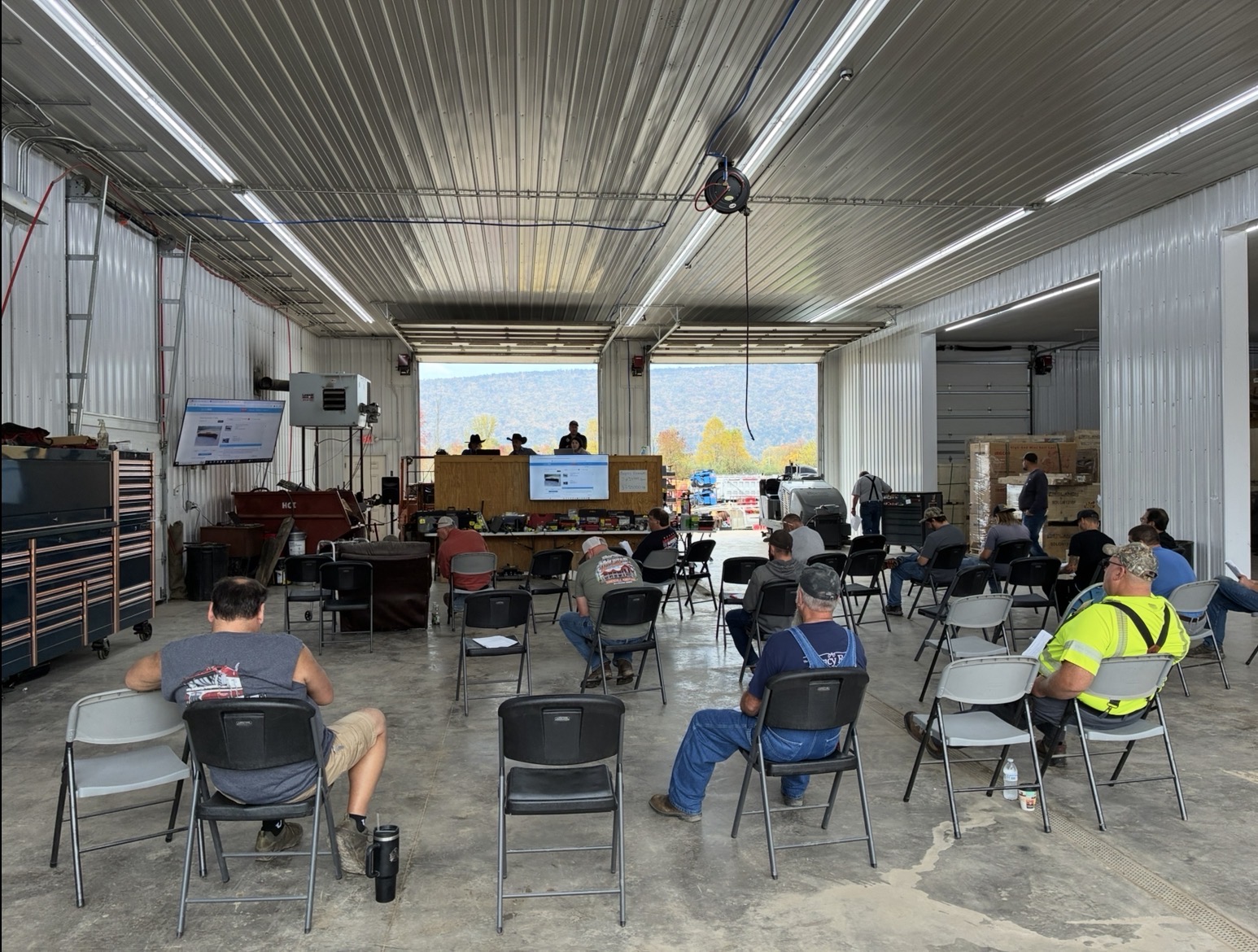
Part of the bidding gang. A lot of bidders participated by Proxibid
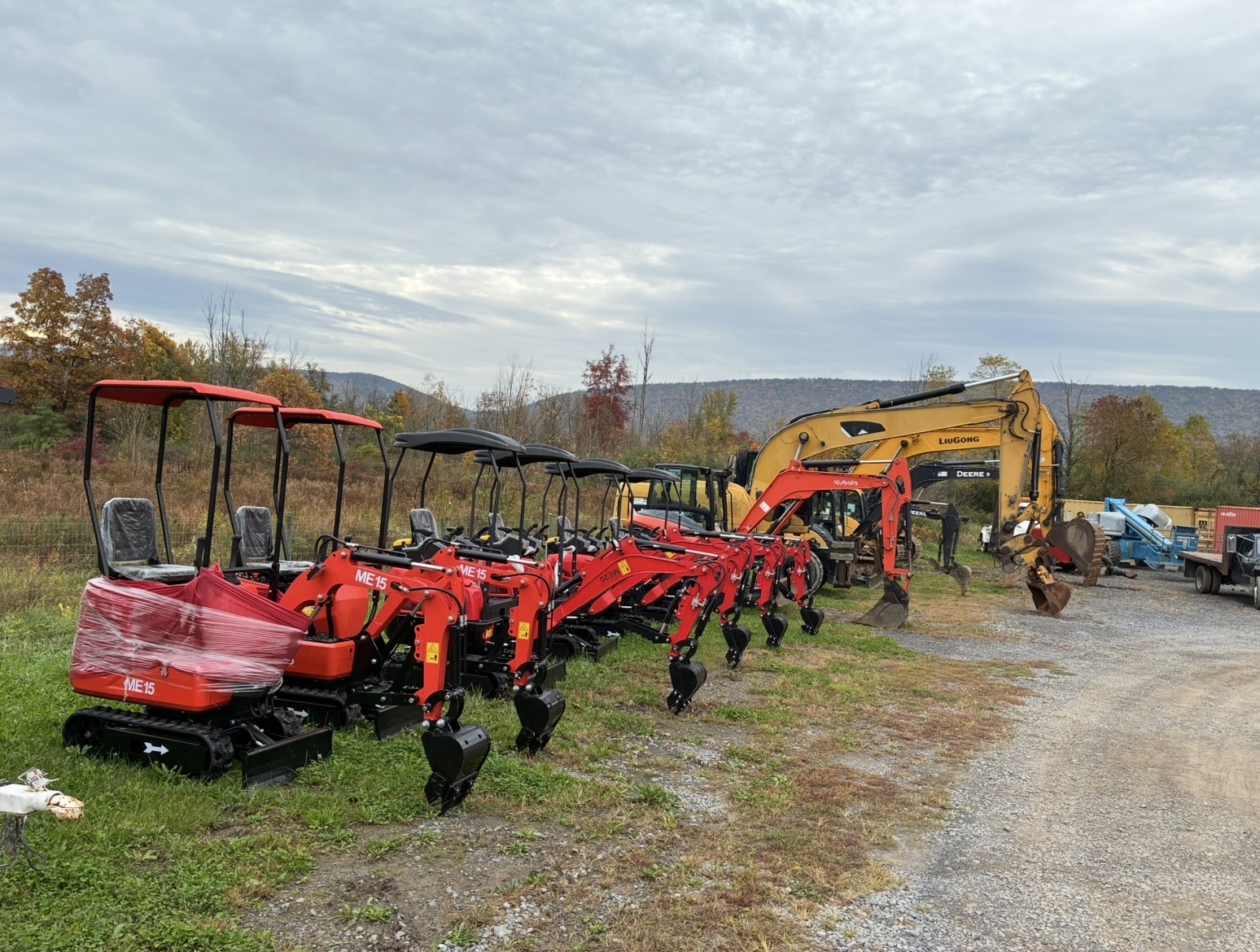
Chinese mini excavators that should have cost thousands of dollars, sold for huundreds each.
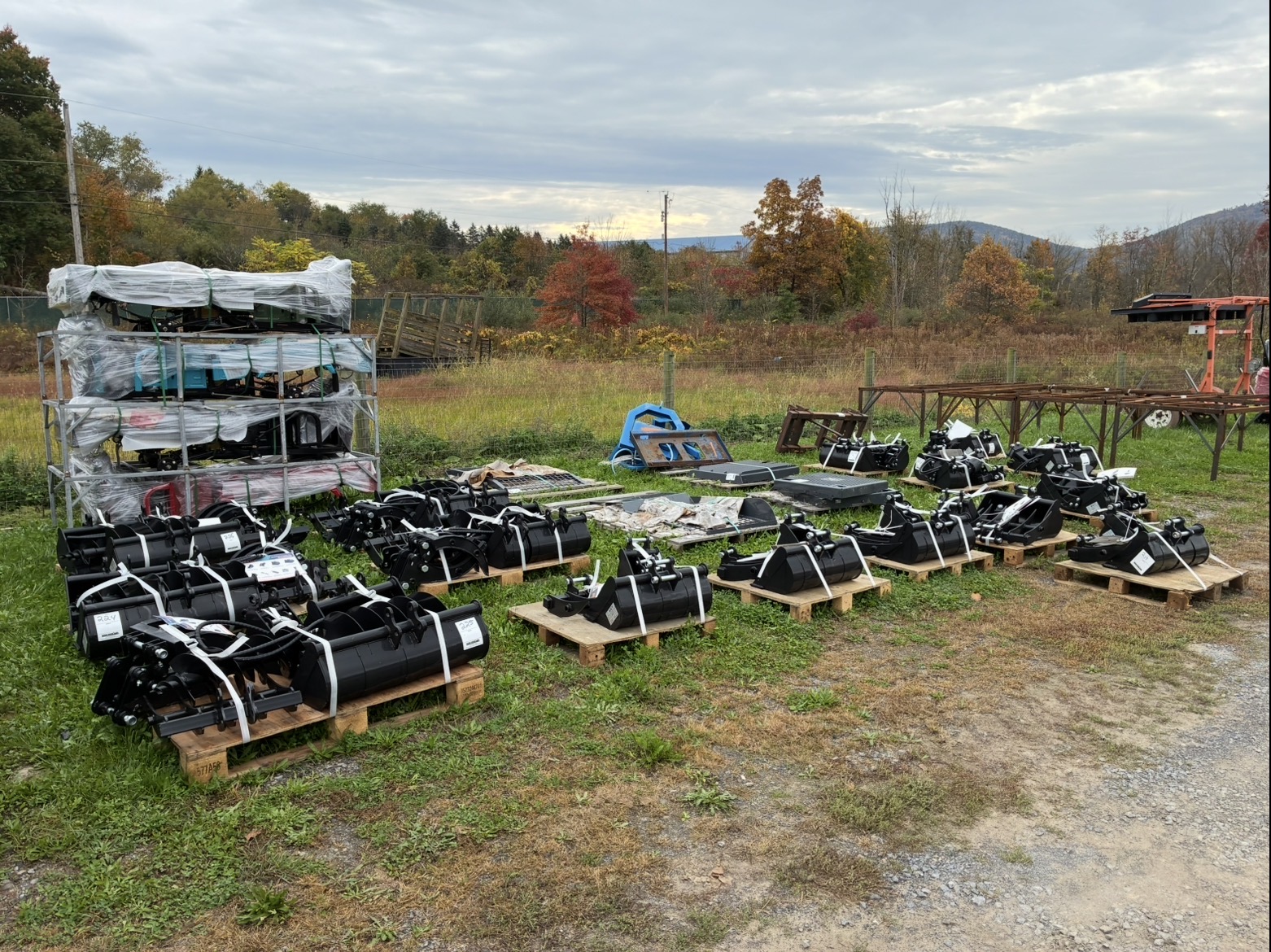
Steel attachments for the Chinese-made excavators, many of which sold for more than the matching machine, because they will be re-fabricated and adapted for other American machines
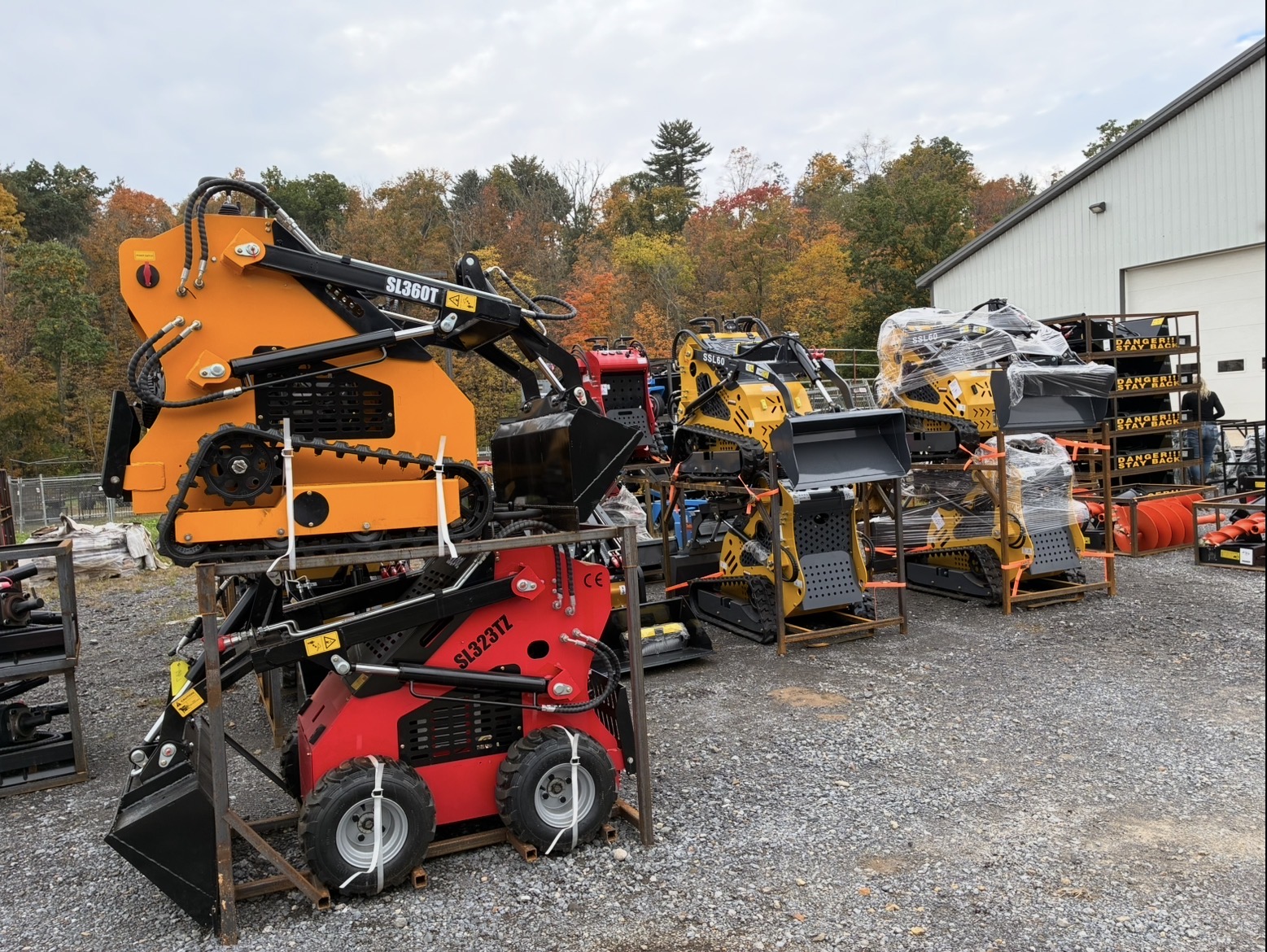
Interesting concept, a mini-skid steer. Stacks of them. Selling for hundreds of dollars. How much did China pay to make these, versus how many pennies did they get back?
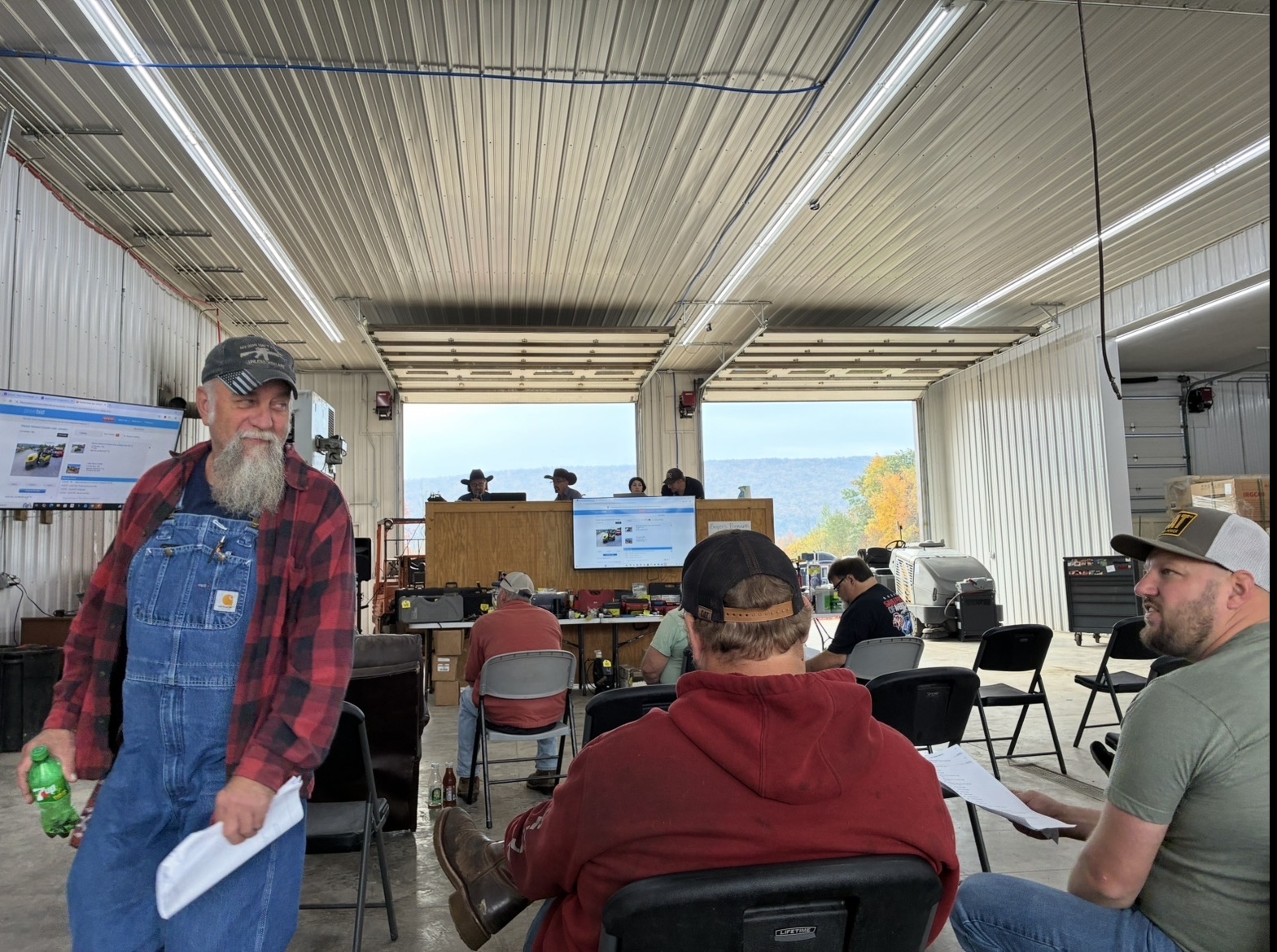
Cowboy hats and bib overalls, rural America, baby. Way off in the distance Bald Eagle Mountain is visible through the open bay doors
Why isn’t PA in the National Fair in DC?
Came as news to me that there even was a national state fair. Being held on the National Mall, in Washington, DC. Cotton candy, rides, Ferris Wheels, fried foods guaranteed to jump start your heart and then clog it, stuffed teddy bear prizes for your sweetheart, strong man competitions, rope-pulling contests, the usual fun stuff seen at most county and state fairs around America for the past 100 years or more.
Either I do not spend much time online, or the marketers for this big event were not aggressive about it. I just knew nothing about it, read nothing about it, heard nothing about it, had seen nothing about it until a week ago, when it was a couple days away from opening.
Turns out that this “National State Fair” is really big time. Almost a World’s Fair in some ways, with new technology and products being debuted. Pretty darned cool. It runs for a month, and covers America’s 250th birthday celebration on July 4th Independence Day. We are told the fireworks “will be like nothing you have ever seen, that Washington has ever seen.”
Yeah, OK, but is there a place and a role for one of my black powder cannons? Those things really go BOOM.
And so it came as a shock to see recent follow-up articles about how my home state of Pennsylvania is not (or was not) participating in this National State Fair on the National Mall in DC. Pennsylvania, the Keystone State, not participating in America’s 250th birthday celebration in Washington? Really?
Pennsylvania is called the Keystone State for some good reasons, some historic reasons. We were the keystone colony and then state that held together the northeastern and southern colonies and then states. Home of the Declaration of Independence. Pennsylvania’s natural resources literally built the America you experience today. Our own coal fueled the mills in Steelton and Pittsburgh that smelted our own iron ore into steel, that in turn became the railroad tracks laid on Pennsylvania oak railroad ties (of which I have sawed up many on my own sawmill).
The state of Wyoming is not some western name. It is an eastern name, from the Delaware Indian word for “great grassy plains.” The state of Wyoming is named after the Wyoming Valley in northeastern Pennsylvania, because it was the eastern railroads built entirely of Pennsylvania materials that deposited European settlers out on the Wyoming plains (after the Indians had been forced onto reservations). I do not know what the various Indian tribes called what is today Wyoming. But I do know that Pennsylvania had a big hand in making it so.
Pennsylvania coal, iron, and old growth hardwood timber drove the Industrial Revolution in America. Forty minutes due east of Harrisburg is the village of Cornwall, in Lebanon County. An enormous pit there is now filled with water, but it used to be filled with men mining heavy iron ore from the ground. In 1776, those pits were opened to produce the iron to make the cannons that Revolutionary War general George Washington needed to face off against the most hardcore British military, with much of the subsequent cannon blasting and men bleeding happening on Pennsylvania soil (and again at Gettysburg in the Civil War…hmmmmm… this Keystone State thing just keeps raising its head).
I could go on and on about Pennsylvania history in the founding and development of America, but you should get the point here. Pennsylvania got the nickname “Keystone State” for a lot of good reasons, worthy reasons, hard-won reasons.
So, Pennsylvania, having played such a huge role in the founding and early development of America, should naturally be well represented in America’s 250th birthday celebration in Washington, DC, right? Right? RIGHT?
Ummmm, nope. PA governor Josh Shapiro very recently stated to the press that his administration was unable to locate any PA businesses who wanted to participate in the National State Fair, or who could afford to participate in it.
Apparently, I was not alone in learning this new information, as both of our US senators, John Fetterman and Dave McCormick, have in the past 72 hours leapt to action, together, to find both interested businesses and the private funding to get them situated at the National State Fair.
Their bi-partisan action to save the day for Pennsylvania on the national stage is news in and of itself, because just finding a Democrat who wants to be caught dead anywhere near a Republican, much less work with one towards some common shared goal, like, say, a National State Fair in Washington, DC, is harder than raising Lazarus from the grave.
So bravo! to senators McCormick and Fetterman, who say that they have received an outpouring of interest from all of the associated and related and even distantly related associations, groups, and individuals and businesses. PA -based manufacturers and inventors are especially keen to showcase their wares at the event, and have now publicly said so.
Which brings me back to the lurking elephant in the room (it is more of a big donkey than an elephant): Why is Governor Shapiro not out in front of this, leading the charge down to the National Mall? Why did he just kind of low-T diss this event and downplay it, as if it is no big deal for PA to be AWOL on something so important as the national celebration of America’s 250th birthday?
Does Governor Shapiro really, truly, sadly suffer from an affliction of TDS so terribly fatal that he became grossly partisan and petty about something so important?
What a big missed opportunity this is for a man who has represented himself as a political centrist, a uniter and not a divider. Governor Shapiro has aspirations of being re-elected this Fall, and of possibly running for President of America in 2028. As a former Democrat myself, I find myself shaking meself’s old head, once again, at the sad turn the Democrat Party has not just taken once or twice, but which now continues to take even farther off and over a steep cliff.
That someone of Governor Shapiro’s caliber is sulking and boycotting America’s national 250th birthday celebration is a baaaaaad sign. Bad for our body politic and bad for Governor Shapiro’s larger political aspirations.
Past PA governor Ed Rendell was as partisan a politician as you could find anywhere. Rendell was a huge and tireless champion for the Democrat Party. And yet, Rendell also took every opportunity to work cooperatively with his political opponents when those opportunities were given. Rendell understood that it is better to bask in the spotlight of national appreciation with political opponents, than it is to sulk alone in some partisan silo, holding one’s ball close to the body and vowing to never play with those kids ever again. That behavior is bad for everyone.
Pennsylvania’s Governor Shapiro likely has better things to do than read this blog, but if he does, I would (and do) ask that he hightail it down to the National Mall, and share the spotlight with the two US senators from Pennsylvania, McCormick (R) and Fetterman (D).
Promoting Pennsylvania is Job #1 for elected officials from Pennsylvania, and doing that with a smile on one’s face makes everyone involved look like emotionally healthy adults. And it makes all Americans feel like there are still some sane, normal people involved in retail politics. People we can look to for leadership. People who care about all of America, and not just about their own little slice of the electorate, off in some corner, away from everyone else American.
Now, please excuse me while I go hang my Happy 250th America flag on my front porch.
Rusty ducks and ammo
My friend called me and asked if I wanted to hunt ducks on the Eastern Shore of Maryland. Same general location that my son killed his first deer; a vicinity I have fished for many years. Several other guys would be along, all but one I already knew and liked. Sounded like a fine plan, and I signed up to share a hotel room with my friend and his son.
As the days went by my pile of preparatory hunting gear got bigger. Neoprene waders and boots, check. Huge and super warm waterfowling jacket with super old school camo pattern I bought at LL Bean decades ago, check. Shotgun in waterproof case, check. Wool long johns, wool shirts, scarves, bison wool hat, gloves and glove liners, warm boots, check check check.
Ammo. Right…hmmm…shotgun shells for the shotgun. What about the steel shot we have had to use since the 1990s ban on lead shot for waterfowling? Although I knew I had some already, I needed to get a good supply of that shot in twelve gauge, because ducks in general and sea ducks in particular are fast as hell and easy to miss. For every duck a hunter brings to hand, he might fire four or five shells. She might fire three or two, by the way.
So on an unrelated trip to that area several weeks ago, I checked Cabela’s in Hamburg, PA. I found a guy on his knees studying eight boxes of shotshells, and describing his find to someone on the other end of his cell phone. And I mean eight boxes total out of what had been a shelving system five feet high and forty feet long once filled with thousands of shotshells, and now containing a grand total of eight boxes of 25 shells each. And four were in 20 gauge, useless to sea duck hunters, who need the maximum power and shot load of a 12-gauge magnum.
So that left four boxes of 12-gauge #3 steel shot, which is OK for regular fresh water ducks but of limited use on sea ducks, which are bigger and tougher. And the guy kneeling down studying them was running his hand over the boxes, and describing them to some unseen prospective buyer chum.
“Tell your friend on the phone that if you don’t buy that 12-gauge right now, I am buying it,” said I to the guy studying the ammo.
“Buy it! Buy it!” came the cry on the other side of the cell phone.
And so I departed Cabela’s with only a flashlight and no steel shot. What the hell people are doing hoarding steel shot is beyond my ability to guess or even imagine. No civil wars will be won with steel shot. No home invaders repelled with steel shot. I don’t believe there are so many waterfowlers that every daggone shell produced is being used as we sit and read this.
And so it went at the other outdoor stores I visited, including mass retailer Bass Pro, where ammunition is usually sold by the truck load. Nothing, nicht, zero. Which then drove me past the retail approach and back into my ancient stashes of hunting ammunition. And indeed, I discovered a wide assortment of waterfowling ammunition accidentally stored in all kinds of odd and dubious places, like wader pockets, inside boots, PFDs, and in crumbling boxes moldering away in musty corners. But at the end of my search, I discovered in total about two boxes worth of steel shot, ranging from 2-3/4″ to 3-inch magnums to half a box of 3.5″ super magnums. Some of the shells needed help, though, before they could be fired in a gun.
And so a Dremel with heavy grit sandpaper was employed to remove heavy rust, and then a small wire brush at high RPMs to give a decent polish. Yeah, I was that desperate, but the work paid off. I was happy to have what I had.
I am pleased to report that the rusty old ammo garnered a healthy haul of ducks, which could be dubbed the rusty ducks.
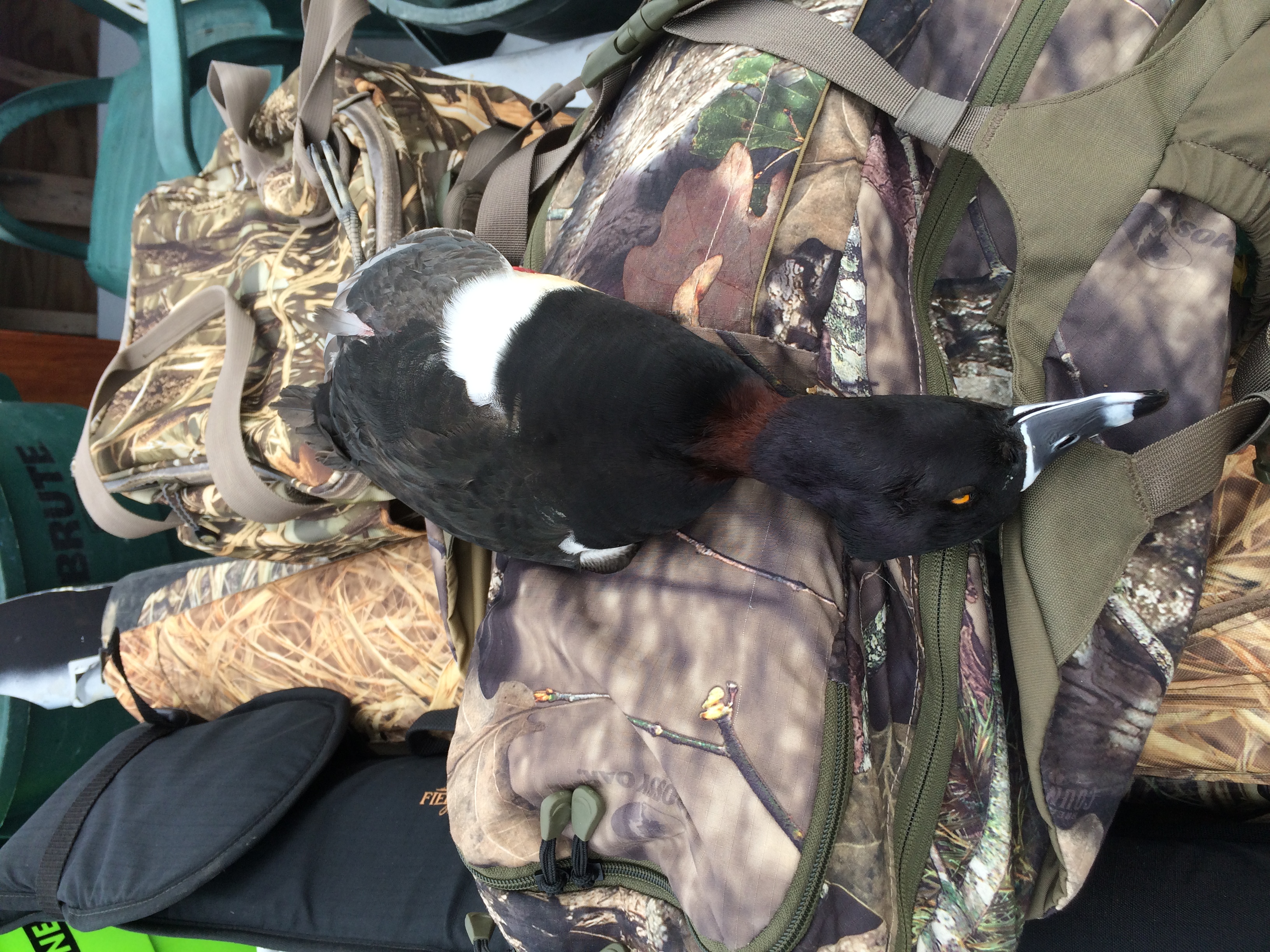
A ring necked duck, an uncommon visitor to the Chesapeake Bay’s southern waters
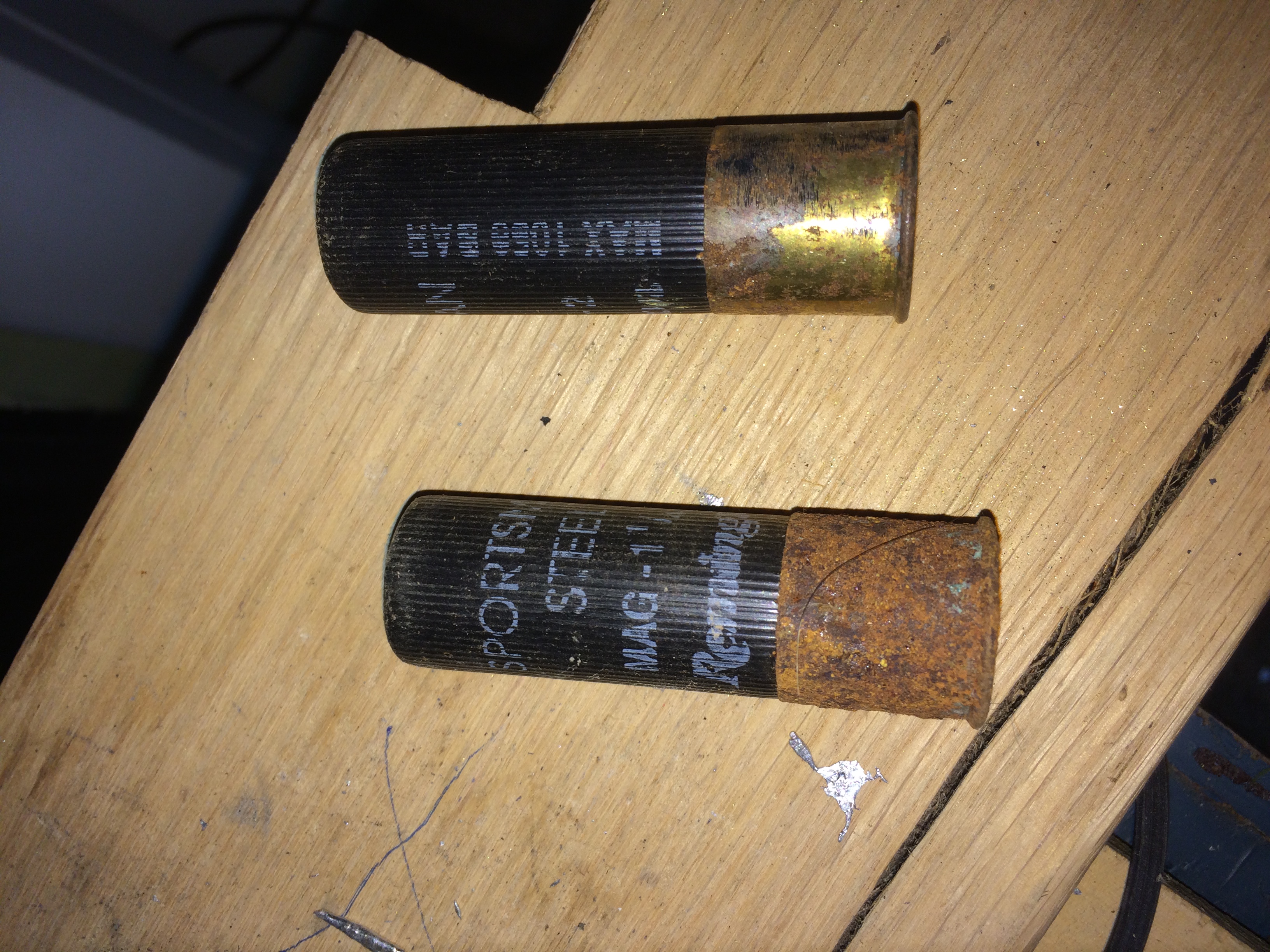
Rusty old ammo, and happy to have it

Turning rusty old ammo into dubious but functional ammo that worked and got ducks

Sunrise off of Tilghman Island. What life is all about
Some observations on knives sold at the Great American Outdoor Show
Knife production is reaching an apex, it appears. Never before in one place have I seen so many higher quality production knives as I have seen at the Great American Outdoor Show. Many booths selling hundreds and hundreds of better quality folding knives, with some custom and semi-custom knife sellers sprinkled around.
Oddly, you can’t find a sharpening stone in the entire Farm Show complex to save your blade’s life. No one is selling sharpening stones. Blades out the wazoo, yes. Ways to keep them functioning, no. Whether it is a sign of the throw-away society meeting Pleistocene Man, or too much optimism about modern steels’ edge retention capability, it is an odd sign indeed.
Once the purview of expensive custom knives, Damascus blades are now ubiquitous, although most are probably made in Pakistan and India, so their quality cannot be real high, and you’ve got no idea of their cadmium, arsenic, or lead content, either, although I am willing to bet these blades are positively toxic to human health. They do look nice, though.
[Damascus steel is a mix of different types of metals that when folded over and over and then hammered out reveal an appealing variety of patterns. Because metal types used in Damascus steel vary widely, quality varies widely. I use only Alabama Damascus in my knives]
Clearly, there is a bleeding over from the custom knife market into the high production market, where quality used to suffer badly. Knife buying Americans evidently have improved tastes and higher expectations for their over-the-counter knives. That’s a good thing. But do they have to be made in those rainbow colors? They hurt my eyes. Camo handles are humorous – drop your knife, never find your knife, lose your knife. Maybe those rainbow colored handles work, after all.
One other observation is the high number of bug-out bags being made. Man, Americans seem ready for the apocalypse. After seeing so many of these grab-and-run packs, I now realize that I need one, too. No, my oh-so-1970s Kelty backpacks do not seem up to snuff, even though they have served me well on rugged wilderness trips for many years. Nope, camo is de rigeur here, too.
Come on by the PA Federation of Sportsmen’s Clubs booth and buy a raffle ticket for our Bushmaster AR-15 M4. Just ten bucks gets you a lot closer to having your bug-out bag fully equipped with a state-of-the-art rifle.