Posts Tagged → rural
I saw China dumping today
Today, I saw tangible evidence of China just outright dumping its products at give-away prices, way below manufacturing cost. It was such a dramatic sight that it made me wonder why they are doing this. Come along with me on this trip, and see what conclusions you come to yourself about what we see together.
This morning I arrived at the Pine Run Auction in Linden, PA, good and early. Got my bidder card, #6, and walked around, looking at the items coming up for auction starting at 9:00am. Nearly everyone in attendence looked the same, dressed the same, was the same age. It was humorous, because when I threw on clothes this morning, I thought surely I would be overly rustic. Nope. We all looked the same, all the old rural northcentral Pennsylvania guys. Well, “old” is a relative thing; I was one of the younger men there. And the truly young were in their forties…..
Among the rusty old American farm machinery, tri-axles, crates of machinery attachments, tools, the almost-retired CAT excavators and the chipping and peeling John Deere bulldozers, lay piles, literally piles, heaps, of shrink-wrapped brand-new Chinese made machines. I mean piles. Brand new.
Being sold by the bushel.
Mini excavators and their extra attachments, mini skid steers, machines designed for the enterprising individual American man, sold for a few hundred dollars each. Barely their value as scrap steel. Photos below, if you doubt me.
Begging the question: What is China doing? Why are they taking these huge losses? Is China being beaten down by American tariffs, as our president said they would? Is China’s economy in free-fall? Is China in big economic trouble?
Or is China so wealthy and successful that they can afford to literally just give away their most expensive consumer products, at this huge loss? Imagine all of the myriad other little auction houses like Pine Run, all across America, all auctioning off these same machines, attachments, for pennies. This is a huge amount of steel, rubber, hydraulic fittings, and petroleum stuff being just wholesale dumped across America, by our biggest frenemy.
My impression is that this is the behavior of a drowning person.
Pine Run Auction of Linden, Pennsylvania, might be just one molecular data point in a galactic constellation of economic activity data points generated by one and a half billion human beings (America plus China). But there are calculus equations for calculating the slope (the direction) of a single data point, and while I can barely do one plus one type calculus, my gut instinct about today’s Pine Run Auction is that the Chinese economic slope is heading in a severe angle straight toward the planet’s surface in a huge flaming fireball.
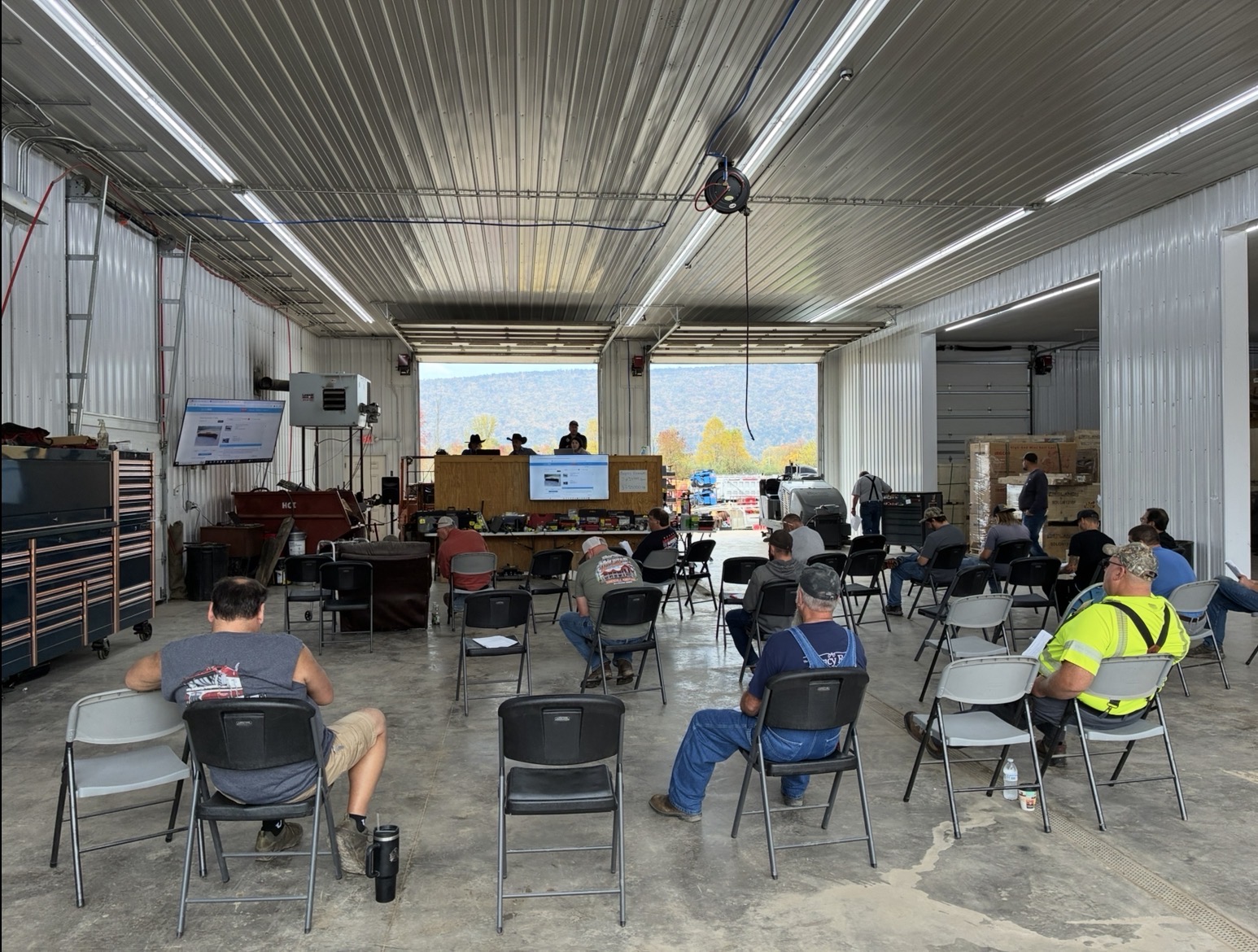
Part of the bidding gang. A lot of bidders participated by Proxibid
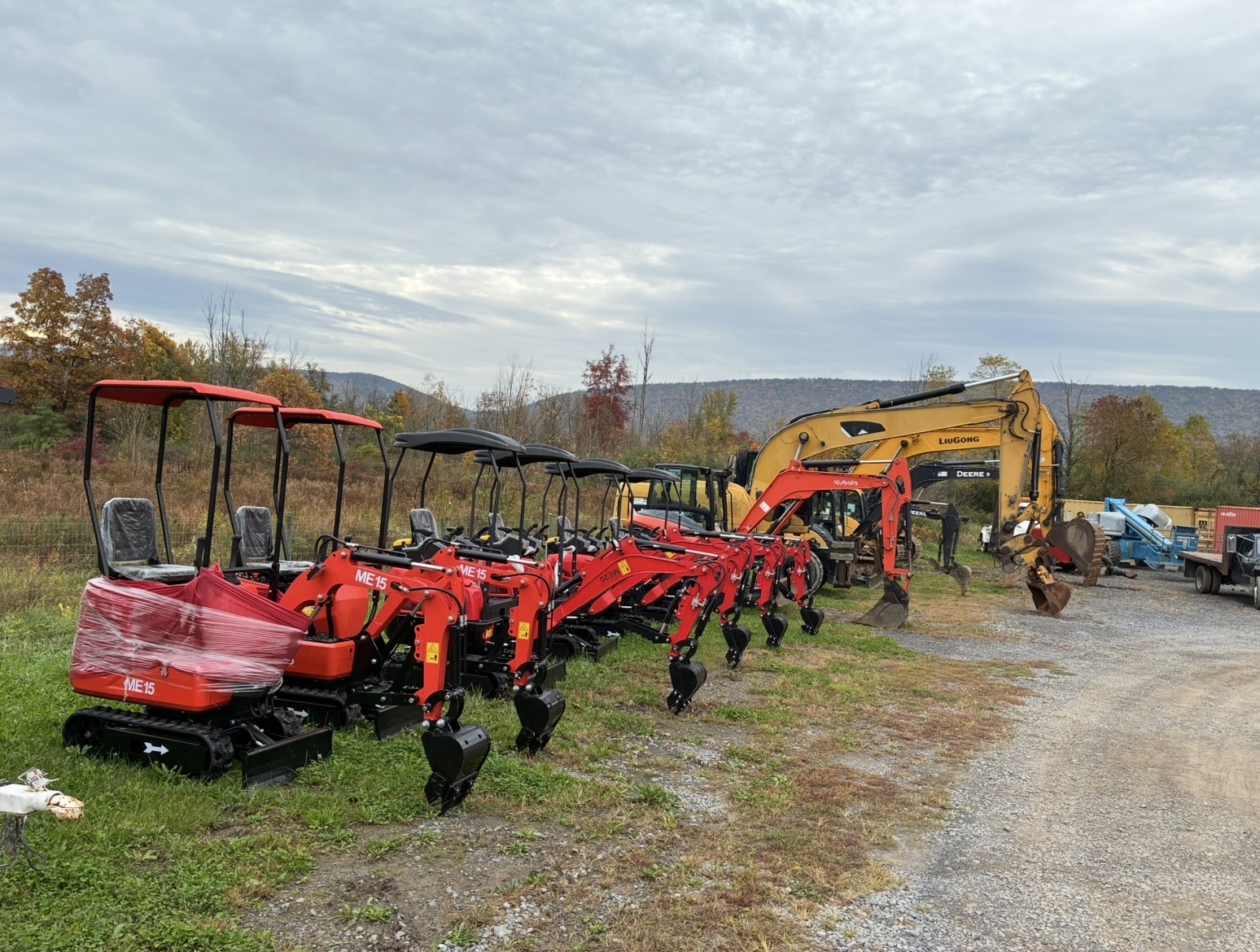
Chinese mini excavators that should have cost thousands of dollars, sold for huundreds each.
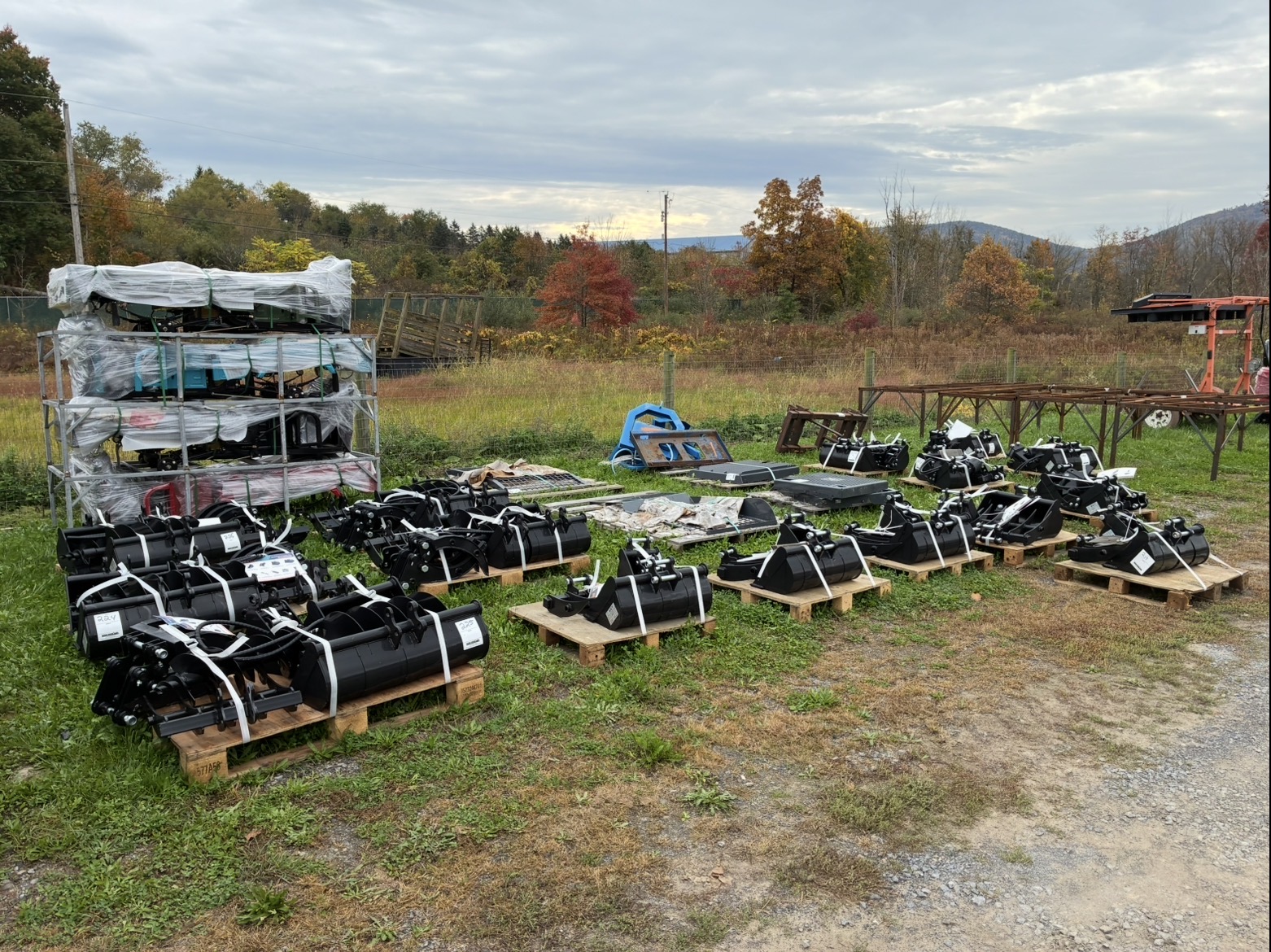
Steel attachments for the Chinese-made excavators, many of which sold for more than the matching machine, because they will be re-fabricated and adapted for other American machines
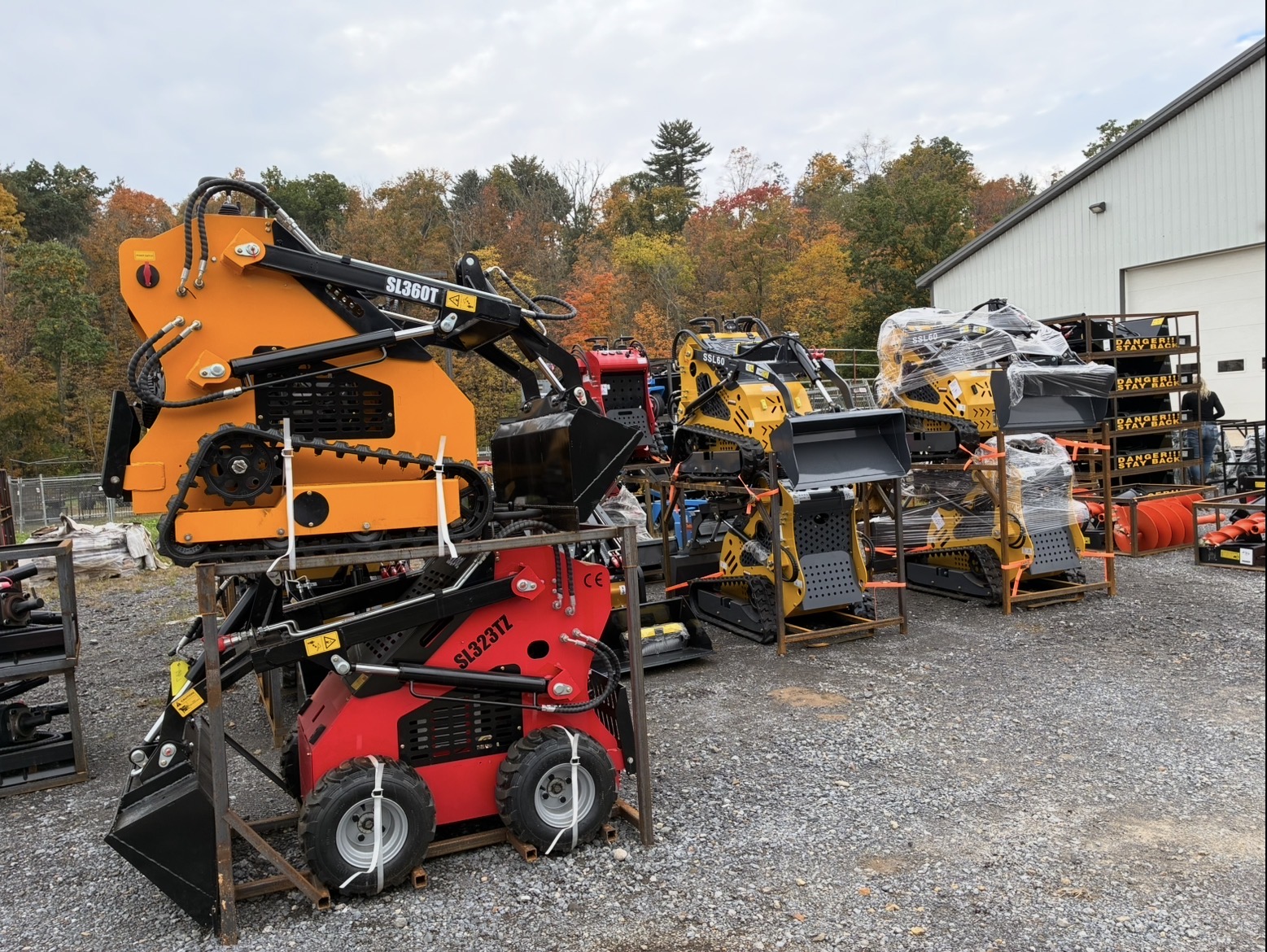
Interesting concept, a mini-skid steer. Stacks of them. Selling for hundreds of dollars. How much did China pay to make these, versus how many pennies did they get back?
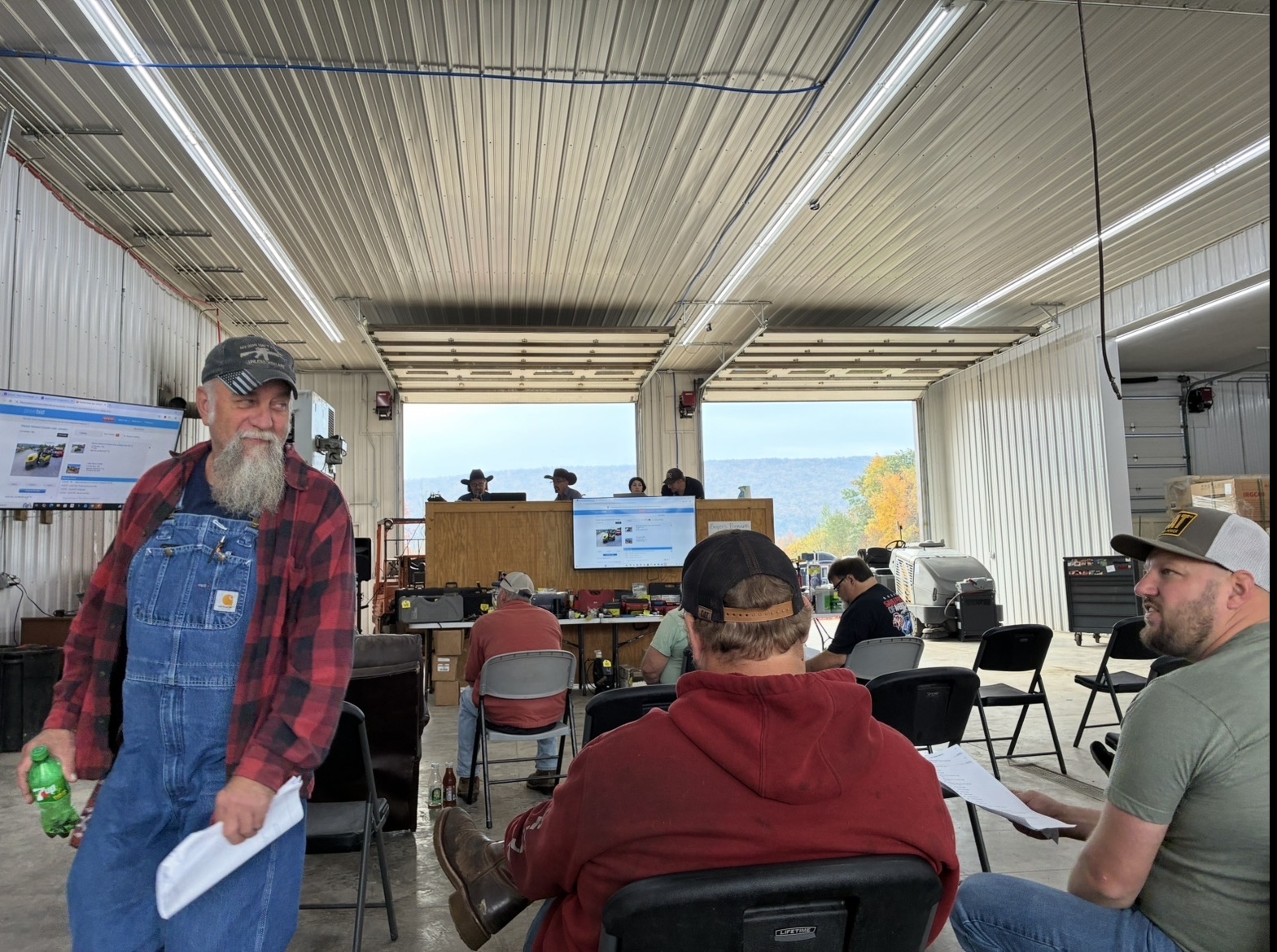
Cowboy hats and bib overalls, rural America, baby. Way off in the distance Bald Eagle Mountain is visible through the open bay doors
Young Washington movie is 9/10
Last night I was encouraged to go see a movie, which happens quite infrequently lo, these many past years. Because, for many years now, Hollywood has dropped the ball, and has produced only dreck. Like most Americans, I do not pay to see dreck. Hollywood box office bomb after bomb after bomb keeps driving home the point that Americans do not want dreck and will not pay for it. Rather, most Americans see movies to be entertained, informed, inspired. Not to be preached at, especially about counter-culture values emanating from failed frootloop academics living in worlds of stupid theory and perpetual Marxist revolution.
I fall into the camp of Americans that will go see a movie if it informs, inspires, and entertains me. So, last night I went to see Young Washington, a movie about America’s greatest Founding Father, George Washington. This movie informed me, inspired me, and entertained me, and I can therefore recommend it to you, too.
But don’t just take my word for it, Men’s Journal confirmed that this movie inspires its audience because it is factual, and the facts surrounding George Washington are inspiring.
Mind you, Men’s Journal is just one of many formerly useful and interesting institutions/ magazines/ information outlets subsequently captured by the far Left and re-purposed to spew anti-America agitation propaganda, far-Left counter-culture propaganda, etc etc. So the fact that this leftwing outlet asked the question if the Young Washington movie is accurate, is not surprising; Men’s Journal will always seek to criticize any popular movie or book that is patriotic or espousing traditional American values. What is surprising is that the magazine published an article confirming that the movie’s main claims are accurate.
Mind you, Men’s Journal did not list the things that are good or inspiring or entertaining about Young Washington, it just confirmed that it is accurate, and left it at that. They did not encourage you to go and see it. They just did a fact check. As if Men’s Journal does this routinely on any other movies.
What is good and inspiring about Young Washington is that it tells us how young George Washington worked hard, took risks, made sacrifices, and heart-felt earnestly prayed to God a lot. What is inspiring about that is that all of this hard work, risk taking, sacrificing, and prayer paid off. It created a man whom his arch enemy, King George III of England, called “The greatest man in world history.”
The movie perfectly and incredibly accurately depicts the American Indians, caught between French and British forces from north and south, and also being pushed ever westward by impoverished European colonists and their feudal aristocratic overlords. The movie also accurately represents the inevitable tension resulting from the American frontier’s merit-based opportunity system clashing with European feudal entitlement, which ultimately gave way to 1775’s violent rupture between serfs-no-longer American colonists and their overbearing, self-entitled, yet unimpressive European overlords.
“We hold these truths to be self-evident…” is the logical outcome of the American frontier, on which young George Washington was raised, and tested, then confronting and contesting a feudal Europe. And the free and prosperous America we now live in is the logical outcome of the merit-based frontier having prevailed in that contest.
Seeing a movie capture all of this “first principles” stuff is eminently entertaining, and your money is well spent, because face it, this happens only once every five or twn years these days.
I give Young Washington a 9 out of 10, and not a 10/10, for a couple reasons. First, some of the scenes are kind of hackneyed rote stuff that has been used too many times in most of the Mel Gibson movies (e.g. The Patriot) and similar genre movies. Long, artificially drawn out overly dramatic moments that do not cause tears to fall, but rather tears at the belief and tolerance system. No one takes this long to die in real life. No one acts like this in real life. Ever. Second, I spotted at least two and possibly many more percussion rifles in use by British and Colonial militia troops, as well as by American frontiersmen. Big time no-no for a film based in 1755, when flintlocks alone reigned on the battlefields of Europe and America. Percussion systems first emerged around 1810, and did not become military issue until the 1840s. Lastly, about half of the scenes are filmed in places and on landscapes that just do not physically exist anywhere in Pennsylvania, especially in Western Pennsylvania. That strains credulity, even if I logically accept the plain fact that finding any undistrubed landscapes anywhere to film on is getting difficult.
Many many years ago, as a paid non-profit land conservation professional, I helped the National Park Service conserve the Fort Necessity Battlefield and also Braddock’s Trace, out in Western Pennsylvania. These important places are depicted in the movie. That same NPS park manager and I then went on to work together on conserving the Flight 93 crash site and its surrounding landscape, after 9-11. So, I have some personal knowledge and appreciation for the rugged Western PA topography, and for the specific place where young George Washington put himself to the test, and succeeded.
It was the rugged and demanding wild landscape that created the original Israelites, who gave us The Law, and then it was the rugged, demanding, and wild landscape here in North America that gave the world America, a nation based on The Law and a light unto the nations, really the only light unto the nations on this entire planet. Thanks to George Washington. And this is why conserving rural landscapes is still so important: They are our unique American culture of freedom.
This movie meant a lot to me, more than I would have expected. Maybe you will have the same positive reaction. A lot of us Americans have an awful lot of unrequited expectations built up over the past ten or fifteen years of crappy Hollywood movie output. A lot of un-met need. And this movie, Young Washington, meets those needs.
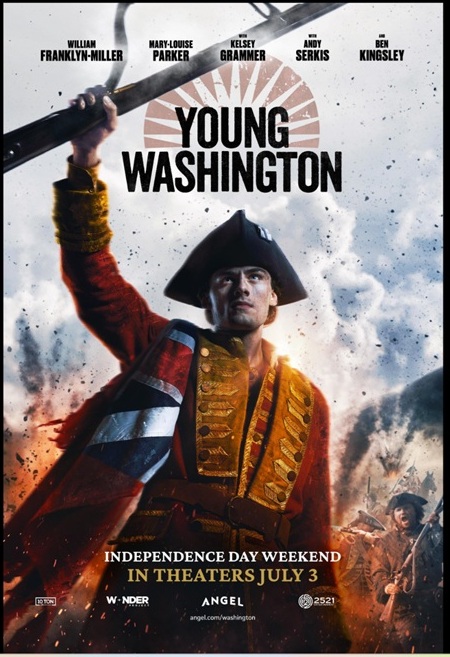
Poster for Young Washington movie
Does your happiness determine your politics?
Having grown up with leftists, and been surrounded by leftists, and worked primarily if not almost exclusively with leftists for the first 2/3 of my career, I have developed a loose theory of political orientation: Our happiness determines our politics.
Americans holding leftist political views tend to be less happy, dis-satisfied, or just generally unhappy.
“If you are not angry, you are not paying attention” went one popular leftist bumper sticker in the 1990s. Anger seems to be a self-recognized trait among leftists, a bond uniting them.
Given that what seems like 98% of political violence or culturally-based violence in America is committed by Democrats or leftists, it would follow that anger and unhappiness are driving traits in the left. Anger and hate are precursors to violence.
Karl Marx, the 1850s father of Marxism/ socialism/communism and the ends-justify-the-means political tyranny, was a notoriously dis-satisfied guy. One famous letter from his father to him excoriates Marx for never being happy and always looking to blame others for his own failures. To think that Karl Marx’s political descendants would fall far from his ideological tree is really stretching the truth of natural human character.
I could go on and on and really develop this theory, like Ten Commandments level envy is the core of evil “equity”/ thieving redistributive politics, but if you doubt this, look around yourself. Look at the people around you, and ask yourself, Who is angry, and who is optimistic and positive?
And then figure out the politics of the angry, dis-satisfied people and the politics of the happy, optimistic people. In my experience, with a few exceptions, the unhappy people are almost always on the political left. And the optimistic people are almost always on the political center-right. The few exceptions to this rule have all been rural Democrats from around Central PA. Maxine, Robb, a few others I know from rural backgrounds, all seem to be happy people and also liberal-left.
And of course we all know some gruff, jaded, grumpy old conservative curmudgeons…
So it just made me wonder if our life experience, family background and upbringing, etc determine our happiness, and then our politics naturally follow that. It seems to be the case, much more often then not the case.
My two cents.
Your experience may differ, but I doubt it will by much.
Carpe diem, carpe lifeum, carpe friendum
Carpe diem – Latin for seize the day – was popularized in America by now deceased actor Robin Williams in a wonderful (if moronically anti gun) movie called The Dead Poets Society.
In his characteristic full-throttle mode, hard to tell if he was acting or just being him-so-interesting-self, Robin Williams playing the school teacher, beautifully exhorted his high school students to carpe diem, seize the day, to gather ye rose buds which ye may, to live life fully moment by moment and day by day, to miss nothing, let no opportunity slip by, to live and be their best.
This is an ages-old challenge for all of us, especially Americans, whose lives today are filled with so much clutter and nonsense, especially online (except for this blog, of course), so much material chasing, and ego driving, and so little opportunity for reflective contemplation.
Well have I been reminded of carpe diem in just the past couple days. Another friend gone, before their time, before the years said they should be gone and leave us. A wonderful and interesting person, full of life and cantankerous fist-waving at President Trump and Republicans, who was a pretty conservative rural white Southerner, nonetheless, whose personal views on borders and illegal immigration and public welfare for new immigrants fell deeply into Republican policy territory. Whether this contrary policy place was cognitive dissonance or confusion or misplaced brand loyalty to a political party that had long ago left this person behind, I do not know, nor do I care.
I never cared. It just made them an interesting person, whose chemistry somehow strangely matched with my own.
This old friend was important to me, as are so many old friends from, let’s say, the past fifty years of my ever-shortening life. And yet, not important enough to see in person for many years, despite mutual declarations of intentions and desires to do so. So much to catch up on, the kids, the grandkids, career, friends, family.
Now, this person like a puff of smoke in a gentle breeze – poof – is gone from my life, and from the life of their own children and family, who loved them very much.
As I age, I am seeing more and more friends literally drop dead or get sick and die. People I care about very much, and maybe to whom I have not expressed my appreciation in a long time. Or my apologies for stupid behavior in our youth. Or to share some knee-slapping hilarity over ridiculous and probably dangerous adventures we did together, long ago, when rural American youth did such things with impunity, and without fear of being branded a terrorist.
Yes, I have regrets, now that my friend is dead, before I had a chance to sit down with them one more time. And in this moment of regret, or recurring moments as I move through my day from one errand and activity to another, I am reminded to carpe diem.
And… Carpe Lifeum, Carpe Friendum.
To miss no opportunity to breathe in the richest of life that I can muster, at every moment. Enjoy my friends, my life. Before I, too, suddenly and unexpectedly breathe my last breath on this earth.
Not to sound morbid, but my friend did just unexpectedly die, literally dropped dead, and so let us both turn this sad black rose into a red rose bud that we gather together, and treasure together, while we yet may.
Goodbye, old friend, and Hello, living friends. We need to have a coffee or a beer together, don’t we…
Best tattoo, ever
I am not a tattoo person. No one in my family had or has tattoos, including me, same for my wife. The rural people I grew up with occasionally had tattoos, all associated with their military service. When this current tattoo craze took off, what, fifteen years ago, I admit to being surprised. Some of the choices I have seen are… curious. When I ask the wearer why this particular tattoo, I usually get back an indifferent shrug and something like “I was feeling especially whimsical that moment.”
My various sports coaches all taught me one important lesson: Your body is your temple, and you must respect it. I am not judging anyone, but please think a little harder or look at some pictures of pretty flowers, before deciding to forever alter the body God gave you at birth with some of these tattoos. Yes, the Maori warriors have some gorgeous tattoos representative of their culture as head hunters and cannibals. But your culture is mid-America white girl and white boy, not savage warrior, nor tough about anything, really.
Because I work with a lot of rural loggers and machine operators, who are the epitome of tough as hell and who in my book earn the right to even culturally appropriative self expression, I do get a pretty dandy gander at tats running from hand to neck, and, I am told, in other more “remote” body locations. I admire the ones that had a lot of thought, deep symbolic meaning, planning, and careful execution put into them.
Starting decades ago in the military services, which until Marxist in Chief Obama and China’s Man in DC Joe Biden was largely populated by rural Americans, tattoos are no longer just a military or rural fad, as the entire country became enamored of the self expression and inevitable interesting interpretations of sagging aged flesh sure to come with time. Even demure, serious soccer moms have Playboy Bunny on their ankles. I have even seen effete feminine urbanite Marxist hipsters with their own tattoos (I wish I was rich enough to be a socialist like them), as well as the myriad blue and pink haired far left, Antifa, even conservative patriot bikers, too.
Well, today I got to see the best tattoo ever, in the history of tattoos. It wins all the awards for creativity, simplicity, symbolism, etc. The owner is covered feet to neck in tats, and when I asked her if she had any regretted old boyfriend names lurking anywhere among the visual mayhem, she said “just the initials of my ex husband, now artfully incorporated into and erased by a tattoo of the toxic waste symbol”. She then showed me. It is small, easily lost among the rest of the colorful inks, and not particularly artistic or flowing or eye catching, but I swear, it is the best tattoo ever.

Anatomy of a primary election
On May 20th, Pennsylvania held its primary election. Mostly local seats and judgeships were on the ballot, which are definitely important, but the real prizes were the PA Commonwealth Court and the PA Superior Court. As has come to be usual here and in many other states, the conservative/ independent-minded grass roots fielded their candidates and the state Republican Party fielded its candidates.
And as usual, the PA Republican Party was directly involved in the selection of the primary election candidates, their endorsements, their negative attacks, funding, etc. When a political party gets in between The People and their choice of candidate, the party always loses in the long run. When The People believe the party does not share their views or values, and is only pursuing the selection of certain candidates who will be malleable and loyal to the party, then The People lose faith in the party.
Here in PA there is real animosity between grass roots conservatives and the PA GOP establishment.
This election we had grass roots candidate Maria Battista vs. PAGOP candidate political establishment-endorsed Ann Marie Wheatcraft for Superior Court judge. Battista had run before as the GOP endorsed candidate, and had lost to the grass roots candidate. This time around, for whatever reason, she was on the outs with the PAGOP and on the in with the grass roots groups, like Lycoming Patriots. Wheatcraft had the PAGOP endorsement and money.
For the Commonwealth Court we had well known Second Amendment attorney Josh Prince vs. unknown state bureaucrat attorney Matt Wolford. Bureaucrat Wolford was mysteriously endorsed by the PAGOP, even though he has worked most of his career at the PA Dept. of Environmental Protection, an agency that no matter which incarnation it embodies, and regardless of which political party is running it, nonetheless is associated with heavy-handed regulations and lawless bureaucrats who routinely beat up on private landowners and businesses. Not exactly a likely place to give birth to a solid Republican candidate for any office, much less a judgeship.
The long and short of these two races is that Battista the outsider defeated Wheatcraft the moneyed insider, and Wolford the party endorsed yet unknown bureaucrat and mystery “Republican” defeated grass roots favorite Prince. Moreover, Prince was endorsed by numerous organizations, like Gun Owners of America, Firearms Owners Against Crime, etc.
These are strange results.
Normally voters align with outsiders or insiders, but not with one candidate here and not that one over there. And yet that is what happened in this election. Normally, big endorsements gain big traction for candidates, but we saw no evidence of that in the Prince vs Wolford race. Despite his many big endorsements, Prince was utterly crushed even in very conservative rural counties, like Lycoming and Elk, where he was known, liked, and should have won handily. And yet, in these same counties, Battista blew off Wheatcraft’s doors.
Aside from a crooked vote tallying scheme, I have no explanation for this odd outcome that defies all odds and conventional thinking. Except for one possible variable that tends to get overlooked these days, and that is ballot position. That is, where does the candidate’s name fall on the ballot – top, middle, or last.
Studies have shown that ballot position does matter, or it can matter, but much less so when voters feel compelled to look up candidates on the internet. With its easy information access, the internet has been the great leveler of campaigns everywhere. Big campaign money cannot always defend a candidate’s bad record, which will be all over the internet, visible to the voters who but follow a few clicks on a search engine.
Battista had top and Prince had bottom on their respective ballots. Meaning that the 3/4-4/4 super voters who make up the primary election electorate, were unsure of who to vote for and simply and superficially chose the first name they saw for each position. That could explain the opposite results we got for both candidates, Battista and Prince.
As we see here, the voters have to want to know something about the people they are voting for in order to defeat the ballot position factor, as well as overcome often superficial campaign advertising. And so we learned a hard lesson here: The vaunted and lauded super voters did not necessarily do super research into the candidates. They apparently did not bother to look up the candidates before walking into the voting booth. They simply saw a name at the top and made their choice.
And that is the gory anatomy of Pennsylvania’s 2025 primary election, God help us all.

Does ballot position really determine who a lot of primary election super voters choose? From this election, it would seem so.

Elk County is a very conservative rural place where DEP bureaucrats are hated like poison ivy. The 2025 results there make no sense, unless ballot position is the primary factor.

Doesn’t it seem mean spirited to not even mention candidate Josh Prince? Doesn’t it further alienate his supporters? What is that all about?

I have never seen election results like this. If conservative rural Lycoming County super voters feel so strongly about conservative candidate Battista, they for sure would have felt just as strongly about conservative candidate Prince. And yet…the results seem to prove that ballot position is the most important determinant

Dauphin County

Dauphin County
racist white liberals railroad Black candidate
Lieutenant Governor Mark Robinson is running for governor of North Carolina. That this high-energy, articulate, charismatic, passionate Black candidate scares the hell out of racist white liberal Democrats is evident. Mark Robinson is being Roy Moore’d.
Remember Judge Roy Moore? He was a judge in Alabama who ran for the US Senate a few years ago, and whose popularity attracted ridiculous lies from the Democrat Party mainstream media and its proxies. Ridiculous though the lies were, the good hearted and honest Republican and conservative Christian voters of Alabama gave just enough credence to them to undercut some of Judge Roy Moore’s support. Voters giving credence to ridiculous lies just barely cost him the election and saddled Alabama with a communist Democrat Party senator for several years.
Enough Republican and conservative Christian voters bought into the crazy lies about Judge Roy Moore that they had misgivings and did not vote for him. Thus did the leftist Democrat candidate, Doug Jones, barely eke out a win. In red blooded Alabama of all places.
It was shameful all the way around, because the crazy lies about Judge Roy Moore were so obviously crazy lies that anyone with half a brain should have said “Ah yes, the mainstream media, which is an arm of the Democrat Party, is attacking a Republican again” and then voted accordingly for Judge Roy Moore.
But conservatives are sometimes too open minded, too willing to be played by leftwing fake news, because they want to do what is right.
Doug Jones lasted just whatever was left of the uncompleted term he filled, like a year or two, and then Coach Tommy Tuberville whooped his anti-America butt and took that US Senate seat and gave it back to Americans. Alabamans had had enough Democrat Party communism in that short amount of time and sent Doug Jones packing. Although Judge Roy Moore went on to win his defamation lawsuit for the crazy lies he suffered, he was significantly damaged, and he unfortunately stepped out of politics.
So here North Carolina voters are now faced with an incompetent and arrogant governor, Roy Cooper, and Roy Cooper’s would-be replacement, Josh Stein, on the one hand, whose hands-off handling of the Hurricane Helene destruction has been an epic and highly documented failure, and on the other hand Lt. Gov Mark Robinson, whose energetic presence in American politics is a breath of fresh air and thus also a real threat to the Democrat Party stranglehold on American Blacks.
The Democrat Party and its propaganda ministry aka the Establishment Media like CNN, NPR, PBS, CBS, NBC, MSNBC, ABC et al, have thus gone after Lt Mark Robinson with the only criticism they can throw at him: Crazy lies.
Lying is the only way the Democrat Party can win in the North Carolina governor election, and of course the proven liars at CNN / CNNLOL are enabling the lying. And even if this fake “scandal” (a few non-PC posts on a website from 14 years ago) stupid attack on Lt. Gov Mark Robinson were true, it would be so stupid, so ridiculous, so meaningless that no one with half a brain should spend any time thinking about it.
Dear North Carolina voters, please do not fall for the crazy lies against Lt. Mark Robinson.
Do not allow the bad guys to pull a Judge Roy Moore against Lt Mark Robinson.
Do not allow the highly damaging Democrat Party to undeservedly hold onto power in North Carolina. As you can see with your own eyes, Governor Roy Cooper and NC AG Josh Stein have failed the victims of Hurricane Helene because they don’t give a damn about you in your hour of greatest need (in one video above you can listen to Roy Cooper lie while flanked by huge liar and failure DHS secretary Alejandro Mayorkas on the left and huge failure crooked Joe “Bribem” Biden on the right).
Josh Stein is absolutely nowhere to be seen.
You North Carolinians can only do better than Roy Cooper and his cookie cutter substitute Josh Stein, you cannot possibly do worse than them. Roy Cooper and Josh Stein are such a disaster, such a failure, that people are asking if it is done on purpose because most of the victims are rural people who would not vote for leftist Josh Stein under any conditions, anyhow.
Stand up for truth, stand up against crazy lies, stand up for yourselves, vote for truth, vote for Lt. Mark Robinson to be North Carolina’s next governor.

Lt. Gov Mark Robinson, another victim of attempted White Liberal Democrat lynching
Hurricane Helene says No Such Thing as White Privilege
“White privilege” may be the most racist thing you will hear anyone say or allege in your lifetime, probably from the most racist people on Planet Earth, white liberal Democrats, but that has not stopped this fake social construction from being pronounced and bandied about like it is actually real.
Well, Mother Nature herself has recently descended from the heavens above to demonstrate that in reality and in the natural world too, there is no such thing as “White privilege.”
In the form of Hurricane Helene last week, Mother Nature inflicted huge devastation and destruction upon eastern Tennessee and northern North Carolina and the regional demographic there. It is a group of people I have had a lot of life experience with and who I maintain intense admiration for, white rural working people.
That there are a lot of white liberal Democrats in Asheville folded into the mix of Hurricane Helene victims does not mitigate or reduce my sympathy or hope for everyone’s full recovery there. Everyone is equal before the law, everyone is created in the image of God, and we are all Americans who should be caring for one another, regardless of our political opinions or religious views.
So Hurricane Helene destroyed billions of dollars in built infrastructure, including homes, towns, villages, farms, rural roads and interstates and bridges and schools and hospitals, stranding hundreds of thousands of largely white rural American citizens without power, water, or food.
And so just to demonstrate that white people can be victims and actually have no racial privilege whatsoever, the federal government response to Hurricane Helene has been… almost silent. Like cavalier and ignoring the huge mess of human misery. Like on purpose.
Recall that to our elites, Appalachian whites are the deplorable, disposable, ignored, maligned, forgotten Americans who nonetheless mine the coal that gives us most of our electricity, serve as the roughnecks on oil and gas drilling platforms that run our vehicles, fill up the special forces and combat infantry positions in our most highly motivated and patriotic high-risk fighting forces, who log the forests that provide us with high grade lumber for our fancy kitchens and furniture, who work for the railroads, and who drive trucks across the interstates that bring Amazon Prime to your home super pronto.
In every one of these professions, these (white, rural) people are taking big risks that almost always exceed their expected financial return. Why? Because they are proud to work hard, and they love America more than they love themselves. And they are devoted to America because there is no other nation anywhere that will give them the same freedom and opportunity.
White rural working people are the people who disproportionately make America work and run and give you, dear reader, the comfortable lifestyle to which you have become all too accustomed. And now that these people need a lot of help to get through this natural catastrophe, it sure appears that they are being abandoned by the same federal government that is simultaneously giving away unlimited taxpayer dollars right and left to border-jumping illegal migrants and to the porous demi-government in Ukraine.
I am hearing mostly consistent reports of aid efforts from acquaintences, friends, and family in Asheville and eastern Tennessee (some of their own photos are below; one of my family members from there is now in a hotel in South Carolina). Last week a friend of mine from Harrisburg loaded up his work van with bottled water and food and drove seven hours to the literal end of the paved road in eastern Tennessee, where he followed signs to a Baptist church. There in the church parking lot he was met with tears of fear and appreciation, and many needy hands as entire families sought shelter there with their sole remaining belongings: Their clothing on their bodies. (Some of his own photos of this are below).
Radio personality Glenn Beck reported his unbelievably negative experience with a sole FEMA crew instructive example of No White Privilege To Be Found Here.
Plenty of political fallout has resulted from apparent Biden-Harris government failure, or even willful blocking of aid efforts. While checking his email at a FEMA post, a partisan leftist Democrat in my family there said this is all politically generated misinformation, but I don’t know if I can accept that. The damning reports and real-time online videos are overwhelming and seem irrefutable, while politically partisan mainstream media outlets appear locked into a defend-Kamala Harris-at-all-costs posture, instead of having their crews on the ground recording what the citizens journalists are capturing.
Tons of on-the-ground reports are pouring out of the region, showing a complete lack of federal interest in helping, and a complicated mix of local territorialism, miscommunication, petty power flexing, and even theft of supplies. And even when the Biden-Harris Administration does speak publicly, they are actually saying sorry, we have no money for your disaster relief.
Because Joe Biden and Kamala Harris ALREADY GAVE AWAY all the unsustainable taxpayer money to illegals and the endless war in Ukraine.
Folks, not only was there never any such thing as White privilege, but when there was an opportunity to demonstrate that American Whites get treated at least equally with everyone else, both American citizen of color and illegal border jumper alike, the point is made by our current federal government that American White people come last, if they get any help at all.


