Posts Tagged → garden
Garden post script
Every summer my garden grows butternut squash. It is a hardy squash, and a hearty meal. Eaten sweet or savory, hot or cold, baked, fried, boiled, simmered, or mashed, butternut squash is a versatile food that is easy to grow in the home garden. Pesticide free.
Or so I thought it was easy to grow, until this Monday, when I went out to harvest the two or three dozen butternut squash that had grown nicely and were supposed to be waiting to be harvested. As always, every Fall.
Turns out, the much hated local rodent population developed a taste for my butternut squashes, and ate all but two and a half of the several dozen that had been sweetly, placidly dreaming in the fall sunlight the past month. The tree rats AKA “squirrels” which had descended into my personal space en masse for the massive pin oak acorn crop had then unexpectedly turned their attention to the garden.
My garden.
The garden in which I had toiled mightily all spring and summer, and from which I had briefly turned my attention after 90% of its produce had been gathered, had become the hang-out for the socialist rodents in the neighborhood. The freeloaders, the thieves, the gluttons. They ate my butternut squashes.
Pennsylvania is fortunate to have a strong pro-gardening law, which allows gardeners to assertively defend their hard-won crops from marauding pests and vermin, like tree rat squirrels, using all means necessary. In the past, from the time when I was a kid patrolling our family’s large rural garden with a .22 single shot to just a couple years ago, I have always been a “by all means necessary” defender of the garden.
People who think that tree rats are “cute,” or entertaining, are strange. Nothing about destructive gnawing or crop thieving or ruinous scavengers is “cute.” There is no defending this destructive pestilence.
This summer, as in 2025’s growing season, I had tried Repels-All spray, which does work well for a time. You have to stay on top of it, keep it active, because if there is a rain, and it washes away, the tree rats AKA squirrels will find the opening and run amok in your crops. And Repels-All is expensive. And it cannot go on your crops, but just the tree trunks, the fencing, the perimeter. Other means of vermin control are a lot meaner and a lot more effective.
I think it is time to bring a new sheriff into town in 2027…..
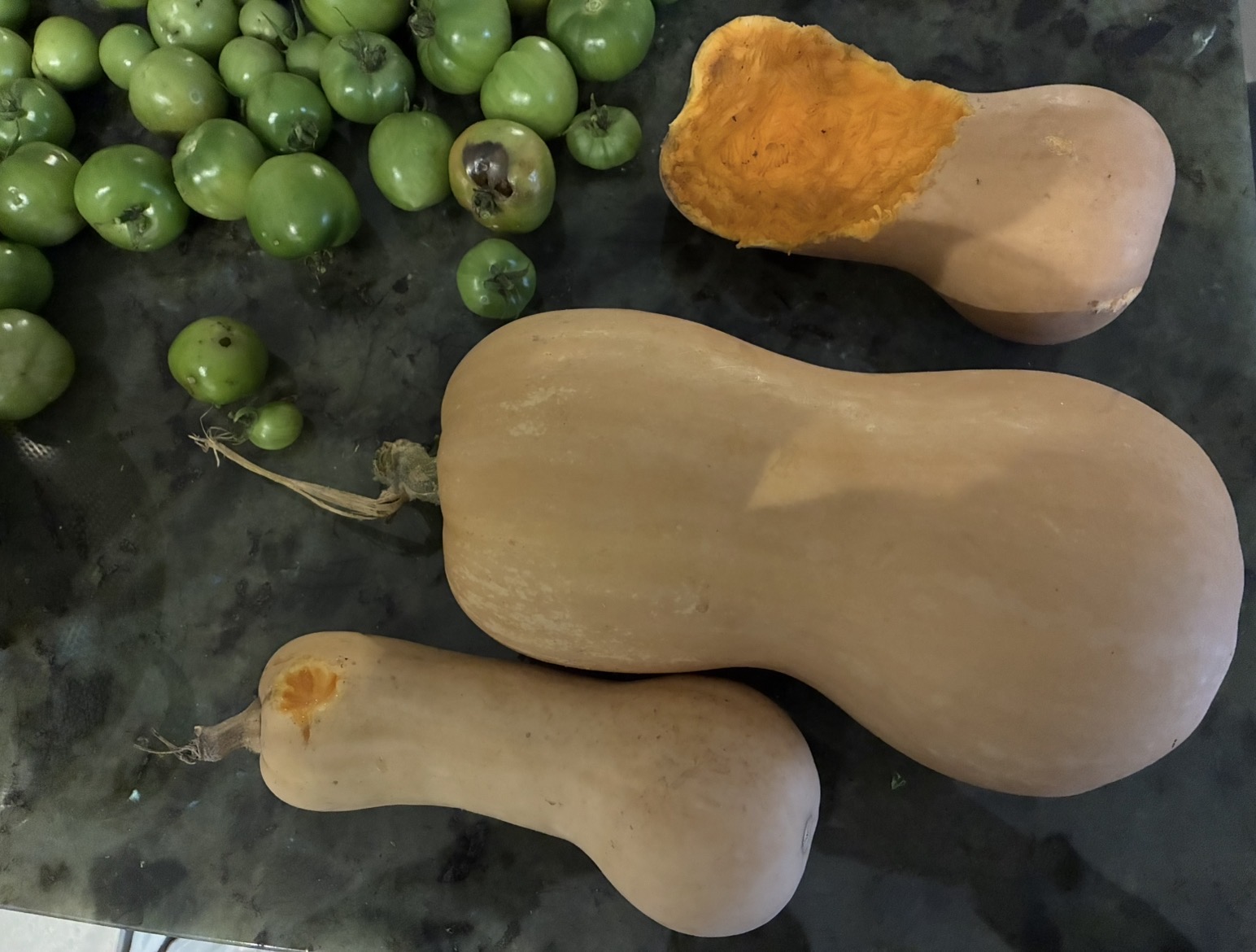
The sole survivors of the garden’s once-large butternut squash crop. Notice the squirrel tooth marks
Alas, the last of the garden’s tomatoes
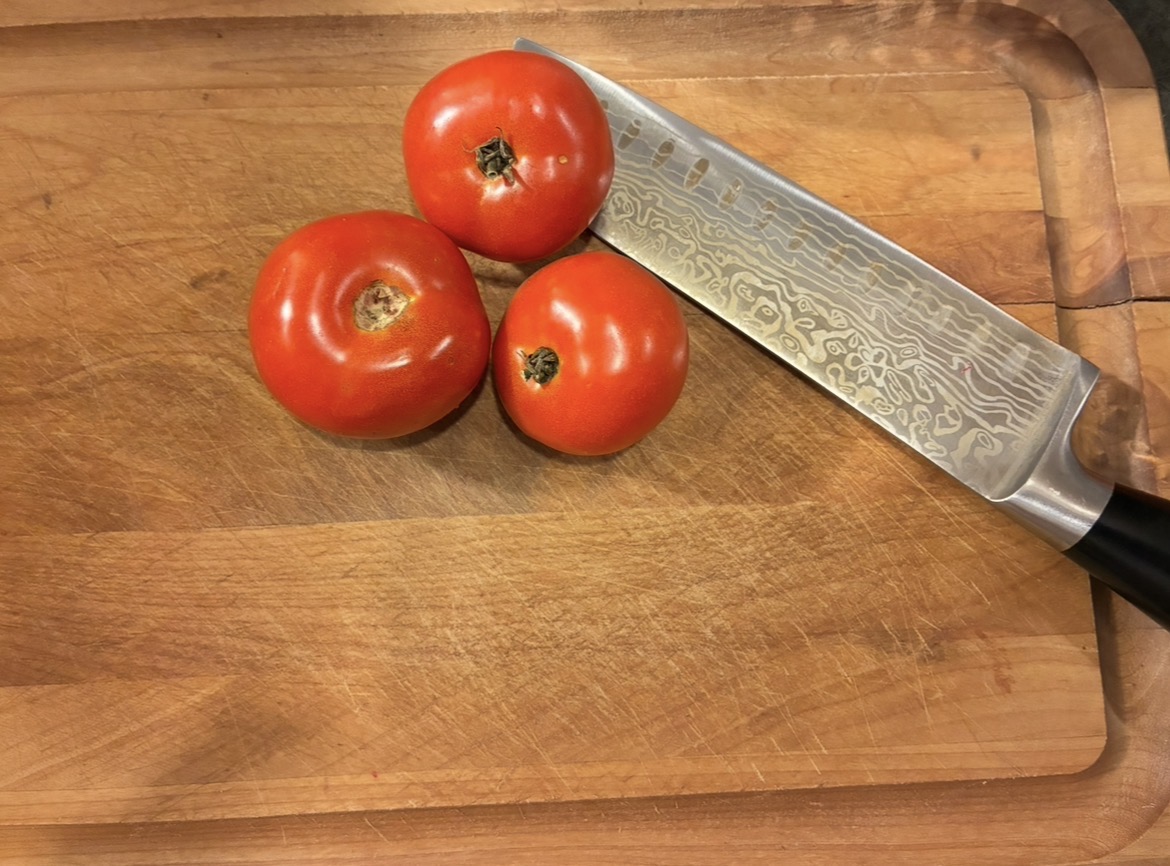
The last of my garden’s tomatoes
Tomatoes are the number one home garden crop in America. Even if you do not particularly like or enjoy tomatoes alone, they are easy to grow and easy to process into a variety of foods, condiments, sauces, etc.
Like the Bubba character said in “Forrest Gump”: There is tomato bisque, tomato barbecue, fried tomato, baked tomato, grilled tomato, hot tomato soup, cold tomato soup, diced tomatoes, stewed tomatoes, whole tomatoes, cooked tomatoes, raw tomatoes, sun-dried tomatoes, tomatoes on the vine and tomatoes on the window sill. The list goes on, and the uses for tomatoes seem boundless. So, people grow ’em and find ways to use ’em.
Plus, tomatoes are red, which is a universally appreciated color for edible foods. They are alive.
Well, summer ended months ago, but I just ate the last three tomatoes from my garden. It is a sad moment, because so long as these had sat around on the widow sill and then in a colander on the table, I had a palpable connection to the summer and to my garden, which brings me real pleasure. Now that these last three were diced up and eaten in a fresh mixed salad for lunch, the house feels empty. Summer and its last remnants are truly gone, until next year.
Oh, there are still plenty of un-eaten garden tomatoes frozen in the freezers. As tomatoes are harvested over their growing season, there are always many more that become ripe than can be eaten, and so those get put right into the freezer. Whole and as-is. Then they are pulled out and used as-needed for sauces, or mixed and sauteed with zucchini and onion as ratatouille, which goes great with everything fish, poultry, meat, or a few fried eggs for breakfast. But they are not fresh.
You know, a garden is symbolic. There is the Garden of Eden in the Bible, a symbol for Western Civilization and adjacent human populations for thousands of years. The idea that a garden can be idyllic, a place of deep contemplation or even of spiritual pursuit, is also common among both the Anglo Saxon English and the Japanese Shinto Buddhists. Gardens are a universal thing, practical and philosophical.
In the 1940s and 1950s, back yard American gardens (“Victory Gardens”) became big symbols of American self-reliance, as rationing for World War II put a strain on food supplies. These Victory Gardens were immensely successful in every measure, including healthy food produced, money saved, communities and families brought together, work ethics taught, chores completed, and young people’s allowances earned. An entire post-war culture was developed around these Victory Gardens.
Well, America is a garden, too. Like a garden, it depends on inputs in order to produce outputs. Gardens do not run on good intentions or virtue signals or promises, they need piles of horse crap, lime, and compost (all of which I put into my garden every year). And if you neglect to feed your garden these nutrients, it will be unable to feed you tomatoes in return.
And so we are a few days away from an important election, where it seems one entire political party is devoted to the idea that the American garden does not need to be fed nutrients, and yet they can just continue to take and take and take from it. That is, “free” Medicare, and “free” housing and “free” this and free that. Of course nothing is free, because somewhere someone has to pay for it.
If the American garden ceases to be productive, then this political party will raid the individual back yard gardens of American citizen taxpayers who have labored hard to make their gardens successful. And after having their backyard gardens raided by the government and by scavenging people, the hard working gardeners will cease growing gardens. What is the point?
This approach to government is guaranteed failure with gardens, and is not a sustainable way to approach or run government, either. No government can succeed by taking and and taking and taking, and giving to people who do not put nutrients back into the American garden. Eventually you run out of other people’s money (Margaret Thatcher). And when you run out of other people’s money, then the entire system collapses.
I hope our dear readers vote for a sustainable approach to running America as a garden, and not for the forced re-distribution approach to mismanaging a garden. Because if the takers and the scavengers win next week’s election, there will be no tomatoes anywhere. The tomatoes you grow in your garden will be claimed by someone who never worked to grow them. And you will have no tomatoes. And you will have a crappy summer, too.
The ultimate climate change symbol
Humans everywhere on our planet are bothered badly by hypocrisy and bee-ess (this means bullsh*t for those in Rio Linda), especially in high trust societies, like America.
Sophisticated, highly evolved, well balanced societies, like the America I grew up in, are built on informal but iron-clad mutually interlocking commitments between the society members.
If everyone agrees that stop signs and traffic lights mean what they say, then the society moves and functions like a well oiled Swiss watch (Switzerland being known as the ultimate in high trust societies). Few people to absolutely no one cuts in line or runs the stop sign, and, therefore, for example, when it is your turn to drive your car past the stop sign or traffic light, you have a very low expectation of being T-boned by another driver who simply ignored the opposing traffic signal because he simply didn’t care about it.
Same rule goes for waiting your turn in line at the gas station, at the grocery store, at a restaurant, etc. A high trust society requires a large amount of giving in to others, making room for their reasonable needs, instead of always trying to claw in everything you can get your hands on for yourself. Which is why poor and dysfunctional venues, like Gaza, Haiti, London, Detroit, and Chicago, are defined by their chaos: Anarchy rules, quality of life plummets, and, well, climate change.
These days, few subjects, no, let us be exact, no subject, involves more hypocrisy, more bee-ess, than so-called climate change.
Few subjects corrode societal trust more effectively than climate change. Climate change is the destroyer of high-trust society, simply because its loudest proponents blatantly do exactly the opposite of what they tell all of us to do. You cannot avoid the hellacious beating they give you about climate change while they are simultaneously gobbling up all of the climate they can stuff into their pants pockets. You are meant to notice this, because you are meant to accept and acknowledge that these people are our masters, our betters, our superiors.
Greta Thunberg, John Kerry, Al Gore, Leonardo DiCaprio, these are the red light runners, the single-seat jet-setters, the limousine liberals sipping champagne inside a gas guzzling armored car, the hypocrites who deliberately rub their double-speak in our faces, to show us they are in charge. They get to wildly carbonize the climate, while you and I are the carbon they want to eliminate.
Remember when Barack Hussein Obama bought a twenty million dollar beach front mansion on Martha’s Vineyard, having just spent eight years haranguing Americans about supposedly rising oceans from climate change? He must not have had much confidence in his own climate hoax. But he said it all anyways, and tried to guilt or frighten us into complying with his commands. But he did not have to follow the climate rules, did he…
By the way, Obama’s Martha’s Vineyard home is stocked with TWO one thousand-gallon propane tanks. Which are – you know this already – filled up with natural gas. Which was another climate change thing Obama was working against before he simultaneously needed half the world’s supply in his own back yard, so that his home would function just as he likes.
I know a guy who spent most of his career as a lawyer representing the coal industry. Nothing wrong with that, and they paid him very well. He lives in a beautiful house with an immaculate back yard, filled with manicured flower beds. After he retired, he re-invented himself as a climate change activist and environmental book author. No, he did not give back or donate to charity his decades of payment by the coal industry. Of course he didn’t, because that would un-do all the hypocrisy he is rubbing in our faces. The virtue signal about climate change is the key achievement, not the actual doing anything substantive about it.
Many years ago, the Princess of Patience and I stayed at a delightful rental home in Shrewton, England, while we enjoyed nearby Stonehenge and its magnificent surrounding landscape. In the rental home’s back yard was a small market garden, and also the biggest anti-climate change contraption I have ever seen: A tall, folding clothes hanger, made of aluminum and strung with plastic coated cables. A collapsible drying rack, standing all alone where the sunshine will hit it.
While sharing a bottle of Fireball at sundown with our hosts in said back yard, I inquired about the simple outdoor aluminum clothes rack dryer thingy.
“Why, everyone in England has one,” said they.
And in fact, we began to notice that, yes, these things are everywhere. And when we returned home to America, we bought one and installed it in our back yard.
Fast forward yourself to last summer, and a very sweet, jappy, exceedingly liberal and climatey-changey kind of friend of the Princess asked, while plucking juicy organic tomatoes from our garden, what the collapsible aluminum clothes rack dryer thingy in the back yard was all about.
Like, why would you hang your personal clothes out in public to dry?
Said the Princess in response: “Josh tries to conserve electricity. Hanging out our clothing in the sunshine means not burning up electricity unnecessarily in the electric clothes dryer inside.”
To which the jappy friend said “Oh, I would never do that.”
Which is the most hypocritical thing ever uttered on Planet Earth, except for the garden-less neighbor who once came over while I was tending my summertime garden and said (and no, I am not lying nor embellishing here), “You Republicans are causing climate change.”
Nope, he doesn’t have a garden, or a collapsible aluminum clothes rack dryer in his back yard, either, and he also just doesn’t give a damn. To him, invoking climate change as an accusation is the ultimate symbol of moral superiority.
To me, the ultimate symbol of being against climate change is the collapsible aluminum clothes rack dryer thingy in my back yard. If you don’t have one, I don’t trust ya and I ain’t buyin’ what yer sellin’.

My personal anti-climate change weapon. No, not my organic garden, the folding aluminum clothes dryer rack that magically dries clean clothes in the sun’s rays
Make the most of your summer!
Summer is really in full swing now. Outside temperatures are warm to hot, plenty of sunshine, school is out, beaches and picnics and state parks beckon. Fresh air, some vitamin D sunshine on the skin. Summer really is our best time to relax with family and friends, take a breather from non-stop work, take family vacations, go play with our kids or grandkids. Work never ends, and there are few opportunities to stop working and just focus on family, except for the summer.
Man, I love summer time.
I myself enjoy summer gardening. We grow the basics: Various tomatoes, zucchini, cucumbers for canned pickles, butternut squash, and a bunch of herbs and spices like basil, sage, rosemary, and dill. We also grow peaches and apples; our cherries were marauded to death by the grackles and squirrels this year. All of our home grown food is pesticide free, chemical free, which normally costs more when you buy it.
I get a big enjoyment from growing our own food, and whatever is extra, is frozen in ziploc bags. Zucchini is cut up and frozen, tomatoes are washed off and frozen whole. We eat a lot of ratatouille in the summer, because zucchini and tomatoes are so abundant. Throw in a few eggs, and you have shakshuka. Very nutritious, healthy, low fat food.
Whatever it is that you enjoy doing in the summer, make sure you do it to the max. Miss no opportunities, because these long hours and sunny days will not be coming back. Take them not for granted! Your kids will remember every moment at the beach with you, fishing with you, picnicking with you, for the rest of their lives. These are special and meaningful days.
I hope you have a great summer. Make every minute of it count.
It’s summer, have fun

Good antidote to miserable politics, your garden. On the left are cut up peaches from one of our trees, destined for the chest freezer. On the right are a potful of ripe tomatoes and basil, plucked from the garden this evening and destined to become a delicious red sauce.

Cucumbers and tomatoes and a pile of peaches came in from the back yard tonight.
I agree with you, politics is sucking all the air and happiness out of people. Whether you live in Ireland, where the government is clearly working overtime against the vast majority of the citizens who live and come from the Emerald Isle, or you live in America, where the government is clearly working overtime against the interests of all of the people who grew up here or who immigrated here legally, it is evident that democratic processes in every single democratic nation were used to achieve undemocratic outcomes that favor big money interests.
If you like your democracy, and you want to keep your democracy, it is now clear that you will not be allowed to have democracy unless you become just as ruthless as the evil people who are ripping you off.
Wasn’t the whole purpose of representative government to avoid physical violence for political control, and use voting as a substitute? For the better of us all? I guess that attempted murder of President Trump opened a lot of eyes… looks like some bad people are desperate to keep him from getting into office like The People want.
Well, it’s summertime and despite the scary efforts to erase democracy worldwide, we can and should still have fun. Summer county fairs are a wonderful place to spend a hot afternoon and cool evening, with live music and naughty food. I am looking forward to the Eastern Traditional Archery Rendezvous, which starts this Thursday in Oregon Hill, at the ski place thing. Traditional Archery people come from all around the world to just fling arrows at targets (my favorite is the 3-D Bigfoot at 85 yards), buy new or replacement kit, get a new bow for a special upcoming hunt, or to listen to the archery greats explain their techniques. There’s also trick shooting demonstrations, which really will take your breath away. Serious talent.
And running simultaneously, unfortunately, is the “new” Kempton Gunmakers Fair, in Kempton, PA. This is the replacement for the very long running Dixon’s black powder Rendezvous in the same area. I intend to take some blacksmithing classes on making traditional knives there, as well as check up on how the 62-caliber flintlock British Sporting Rifle is coming along. It’s been in the works for 18 months, so it must be really taking shape. The man making it is a very well known black powder gunmaker. For those who don’t know, these are the kind of guns that require the old fashioned gun powder to be poured down the barrel, and which often have flintlocks with a real piece of flint that makes a spark that lights gunpowder in a pan (“he’s just a flash in the pan” comes from a flash that failed to ignite the main charge of powder you had just poured down the barrel). These are not real dangerous guns. The last time one killed somebody was in 1812 or thereabouts. Although Mark Twain did have a humorous warning about “safe” old guns hung above the fireplace accidentally bagging grandma in her rocking chair. They are not toys, but they are not weapons of modern war, either.
Anyhow, go on an git, git on out to the local county fair, or to some summertime evening live music. Maybe there’s a park waiting for you and someone you care about to go have a picnic. Summer’s just about 2/3 over, and you better git while the gittin’s good.
I have been enjoying working in my garden and fruit trees, when I don’t have to share them with swarms of vermin. Today I watched birds eat four beautiful peaches, despite my attempts to drive them away. The squirrels are on temporary hiatus, probably scheming to come grab everything tomorrow morning before I wake up.
America as a garden or a bank account
With “Gardening Month” June behind us, our backyard gardens are starting to go into overdrive, and really produce the produce. The most popular garden items are zucchini and tomatoes, followed by cucumbers, green beans, other species of squash, lettuce, and herbs. Our own garden is well watered and well fertilized. Last year we put in over 800 pounds of horse manure and 160 pounds of lime, as well as a lot of home-made compost. This spring we put in about 100 pounds of our own back yard compost and another 160 pounds of lime, well-tilled deeply into the loam.
Every year we rotate the locations where the garden plants are placed. Repeated planting in the same spot results in both insect pests and fungi becoming settled there, and a constant problem. Well do I remember visiting Kokomo, Indiana, in the mid 1990s. I was there as a representative of the US EPA. We held a public hearing on the use of an anti-anthracnose/fungicide that posed some health risks, but also was saving the butts of the local and regional farmers. Kokomo County is where a huge portion of America’s summertime cantaloupes had been grown for a very long time, and the diseases attacking cantaloupes had become hard-baked into the soil.
I learned then and there not to keep planting the same plants in the same exact locations every growing season. Rather, rotate them around to different parts of the garden every season.
With daily watering, routine plant maintenance (e.g. zucchini plants should have the old bottom leaves removed every couple days, and checked daily for vine borer eggs) like lightly spraying soapy water onto garden plants and weeds around the garden edge, and regular harvesting, like a lot of other American back yard gardens, ours should be able to produce a lot of organic food for our family to eat all year long.
There is also a refreshing symmetry to the garden of having put in a lot of work on it, and then reaping a lot of benefits from it. Someone should write a book about gardening, traditional human values, and personal development. One thing I do see is a garden as a symbol of America, or as a bank account.
As currently run by corrupt career politicians in both political parties, America is not being well tended or maintained as a garden must be kept.
Said another way, if America is a bank account, it has not had any deposits made into it for a long time, and it is way over-drawn.
And no, I am not (yet) advocating for the garden to be watered by the blood of tyrants and patriots alike. But a garden must be watered, and its weeds must be pulled, if its plants are to grow and bear fruit. A bank account must have deposits if it is to have anything to withdraw from it when one requires money to buy food or clothing. There are a thousand individual public policy corolaries to the nation-as-garden theme.
Why is it that America is not being cared for and dutifully tended as a garden, or even as a basic child’s bank account, by the people who run it? Why is America being treated as a place where people, any people, can just take take take and keep on taking, as if there is no end to the garden produce or the money?
Yes, I think one political party is more at fault for this failure, but there is no ignoring that most of the Republicans have committed almost all of the same failures as their opponents, only just less so, because the Republicans are not as competent at purposeful mismanagement. Believe me, if they could do what the Democrats do, the Republicans surely would.
So why are American voters not demanding that their elected representatives follow really basic values and practices for maintaining America? Why is legislation that guarantees that only American citizens can vote being torpedoed? Why would elected representatives or American citizens want voter fraud? Voter fraud means that the garden will die! There will be no democracy or freedom to enjoy! There will be no money in the bank when we need it most!

Squash vine borer eggs on a zucchini leaf. Just tear or snip off the part of the leaf these are on. Check for them daily. These could be called illegal border jumping aliens, unjustifiably siphoning off our hard work.
Harvest time is natural, healthy

Shirey’s blueberry patch in Linden, PA. You-pick for about two to three weeks every summer. Strawberries are across Rt 15
Until a hundred years ago, just about everyone in western civilization had some sort of garden and fruit trees. Growing your own food is as old as human agriculture, roughly ten thousand years. Maybe more. Point being, being self reliant and engaged with Nature in natural cycles is a healthy and natural thing for us to do today.
Our fruit trees have been ravaged by hordes of unnaturally over abundant squirrels this year. So far they have eaten all our cherries, all of our MacIntosh and Winesap apples, and two thirds of our peaches. None of the fruits were close to ripe, but to a verminous feral rodent, they are edible. It’s quite frustrating.
The garden is putting out regular vegetables now. Zucchini, cucumbers, tomatoes, herbs, butternut squash. A few groundhogs have tried to muscle in, and have found themselves in a very new and distant home.
The “Zen” and personal health of gardening is a well discussed subject, and all I can add is that I too find gardening greatly rewarding. Our produce is organic, natural, and the fruit of our own labors. We water daily and constantly fuss with the plants. We eat or can what we harvest. Very natural, and rewarding.
Last week I visited someone else’s garden, Shirey’s blueberry field in Linden, PA. In 45 minutes my bucket had 6.5 pounds of freshly ripe blueberries I myself had picked in the blazing sun. It was 99 degrees in the sun, and I had no more energy to stand in it picking fruit. On a cooler day I have picked roughly twelve pounds of berries, most of which go into blueberry jam I make. Some are eaten fresh, and some are frozen for eating with pancakes.
Being outside is healthy and necessary for all humans. Some sunshine is necessary for creating Vitamin D, critical to the function of our brain and body. Vitamin D is actually a hormone, and a deficiency is a big risk to your health. So being outside gardening, picking fruits and vegetables, cultivating and husbanding your own food, is essential to having a clear mind and a healthy body.
Sweet corn is coming soon.
Wildlife biologist Aldo Leopold said that he knew civilization had ended when people no longer had to split their own firewood to stay warm in the winter, and had only to rely on a tiny switch on the wall to achieve exactly the temperature they wanted. Hard work, self reliance, producing things of use and value, all add meaning to our lives. Growing and picking food is a small but important statement about not being historic roadkill.


Why we share wild food with each other
People around the planet enjoy sharing wild food with one another, and we always have since God above evolved our species, however it is He evolved it. It is an innately human trait to both enjoy giving and receiving wild food.
Wild food is a broad category, but it excludes anything we buy, especially in a big store. Foods from stores are almost always, or are always, plants and animals raised in intensive industrial environments, replete with chemicals everywhere and in everything. Wild food usually includes fruits, herbs, and vegetables grown in our own gardens; fruits we have picked in the wild, like berries and apples; and any wild game meat or fish we have harvested. Chemicals are either non-existent or are naturally occurring in minute amounts from the native soil.
All around the planet people put a high premium on wild harvested meat. In Africa and Australia, “bush meat” is highly valued as fresh, nutritious, free of human-injected chemicals and hormones. Everywhere bush meat is eaten, it is traded in lieu of money. And when a European bites down on a size 8 piece of shot in her forkful of grouse recently from the Scottish Highlands, where it was shot on a drive, hung for three days in a cooler, and then shipped off to Spain, Germany, England, or France, she knows she is eating something special, and it tastes even better. The same is said for the meat of hunted red deer, and occasionally wild boar, both of which are highly prized foods served in restaurants and home kitchens across Europe.
Wild food is better for us, we all know that, both in terms of what is in it and also what is not in it, because (except for poached bush meat from at-risk wild animal populations in Africa) it is environmentally sustainable. It also tastes better, because it has grown up under natural circumstances. Giving and receiving it as a gift is a symbol of real friendship and caring. Wild food is something most Americans can participate in, especially as growers and givers, and so I hope that someone reading this is inspired to take a corner of their luxury status symbol yard and turn it into an unruly food garden. The pleasure of sharing the harvest with friends and neighbors is quite enjoyable.
Humans began as hunters and gatherers and we remain such, even with our thin veneer of civilization inartfully separating us from the wild world around us. Much of our innate gender differences are centered on what hunting and gathering was done by our ancestors over the past few hundred thousand years. Gathering food by hand is a natural and innately human thing to do, and most people find gardening calming and enjoyable. I guess being a real human and not a false, contrived human can be pleasurable.
Last month I picked over six pounds of blueberries and another five pounds of blackberries and red and black raspberries, about a hundred pounds of peaches, and about fifty pounds of apples. I won’t share these hard-won prizes with you by the fistful, because then the berries would all disappear within a few minutes. Rather, I will share them by mixing them into muffins, pancakes, cobblers, pies, and preserves spread onto toast, ice cream, and cakes. This way these gems last all year long, and everyone gets to share in them.
Aside from being cleaner and tastier than industrial foodstuffs wrapped in plastic and styrofoam, wild food has the benefits of bringing us closer to nature, closer to reality, closer to self-reliance and self-sustainability, and closer to people we might not normally encounter. Nature can be the sharp berry bushes we must reach through to pluck our juicy berries, and it can also be the mother bear and her cubs waiting for you and me to clear out of the scratchy berry patch so they, too, can feed on Nature’s bounty.
Nature here can also include a variety of destructive garden pests like squirrels, rabbits, groundhogs, and chipmunks, and learning to cope honestly with these artificially overabundant animals teaches us important lessons about reality versus luxurious and silly childish feelings and notions of animal welfare that are terribly destructive.
For example, artificially high populations of pest species, like squirrels and ground hogs, spread high amounts of disease and physical destruction. And when vegans strut and brag about their reliance on industrial monocultures like soy beans, they ignore the tremendous environmental and habitat destruction wrought in their vegan names. There are significant environmental costs to veganism and vegetarianism that could be offset if those adherents participated in wild food, like growing their own and trading/ bartering for what they cannot grow themselves. Few things are more annoying than listening to someone from a wealthy lifestyle bragging up their veganism/ vegetarianism while simultaneously tearing open plastic wraps and environmentally damaging containers containing industrial foods. Food isn’t just about what you put in your mouth, it is very much about where it comes from, where it was grown and where it lived before your credit card brought it home.
Hunting in America and Canada produces millions of pounds of fresh, clean, natural, wholesome wild meat for more than just the people who pull the trigger. Hunters Sharing the Harvest is a well known program that enjoys widespread support from both givers and receivers. Schools, neighborhood soup kitchens and homeless shelters, and just simple low-income people, all benefit from receiving this wild meat. And farmers and forest owners benefit from having artificially overabundant deer and hog populations thinned out so their crops can grow in peace.
For those silly people who oppose hunting, jiminy crickets, people, wake the heck up. You are not living in a fairy tale book, and you are having your own huge impacts on the planet around you. An animal’s life is not just measured by how it died, but also how it lived. Almost all industrial meat comes from factory farms, enough said. However, wild meat comes from animals living their lives to their fullest before quickly falling over dead from a bullet or an arrow. Any modern educated human who believes that wild animals die naturally under antiseptic and peaceful conditions is a fool, enough said. Recreational and population management hunting (not poaching or market hunting) is a perfect way to provide environmental protection to wildlife habitat, conserve vulnerable wildlife populations, and harvest natural, sustainable wild food.
By mid-December of this year, I will have probably shared over a hundred pounds of wild meat, mostly venison, occasionally waterfowl, turkey, and small game. The people who receive my gifts of deer meat (that I have shot) are always grateful, and they often report back to me on what they made with the gift, who they shared it with, and how delicious it tasted. This exchange is true friendship, and in a politically fractured world, we all can use a little more friendliness, a few more friends. Wild food is my way of contributing.
In an hour I am dropping off a bag of peaches from my own trees, and picking up a bag of pears from my friend Ryan’s trees.
What wild food are you going to grow or harvest, eat, and share? If you have a big lawn, put away that lawn mower and start growing your own food. You will like it, I promise.
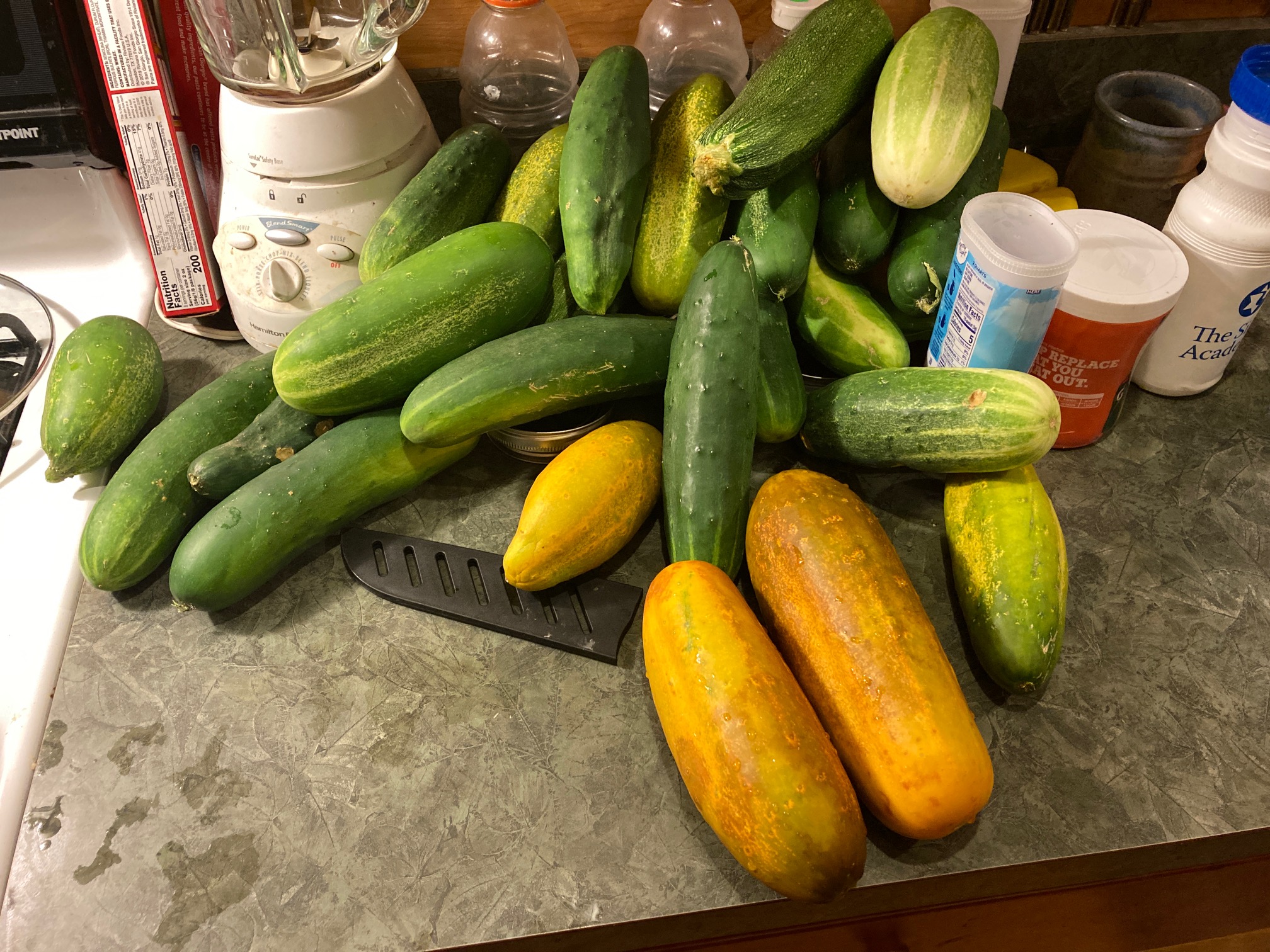
cucumbers from our garden don’t cost a dollar apiece like in the stores, and they are fresher and have no chemicals. Our home made pickles are far tastier than store bought, and have no chemicals. We use the overripe ones to make bread and butter pickles.
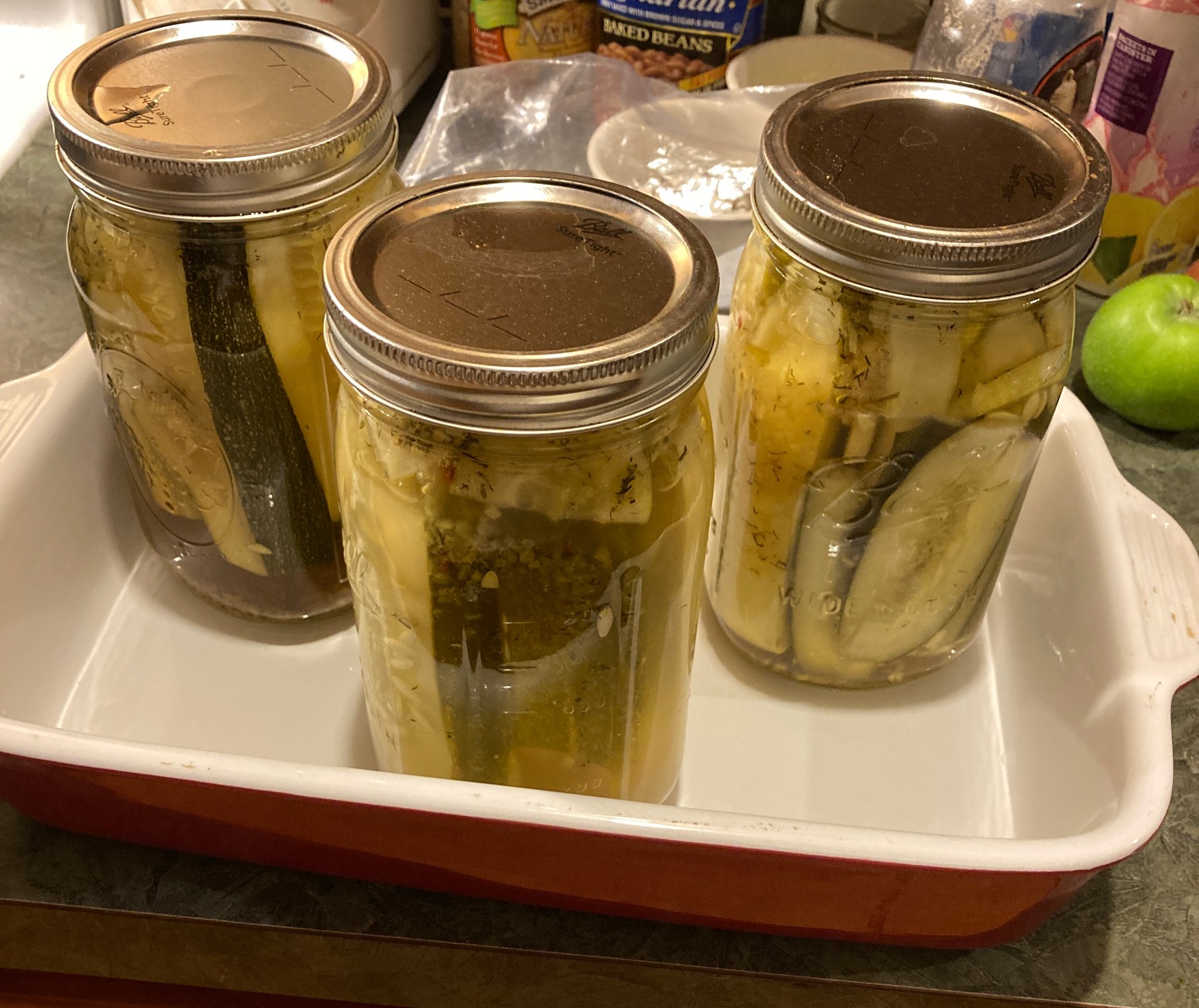
Every summer we make home made pickles. Different flavors. Yum
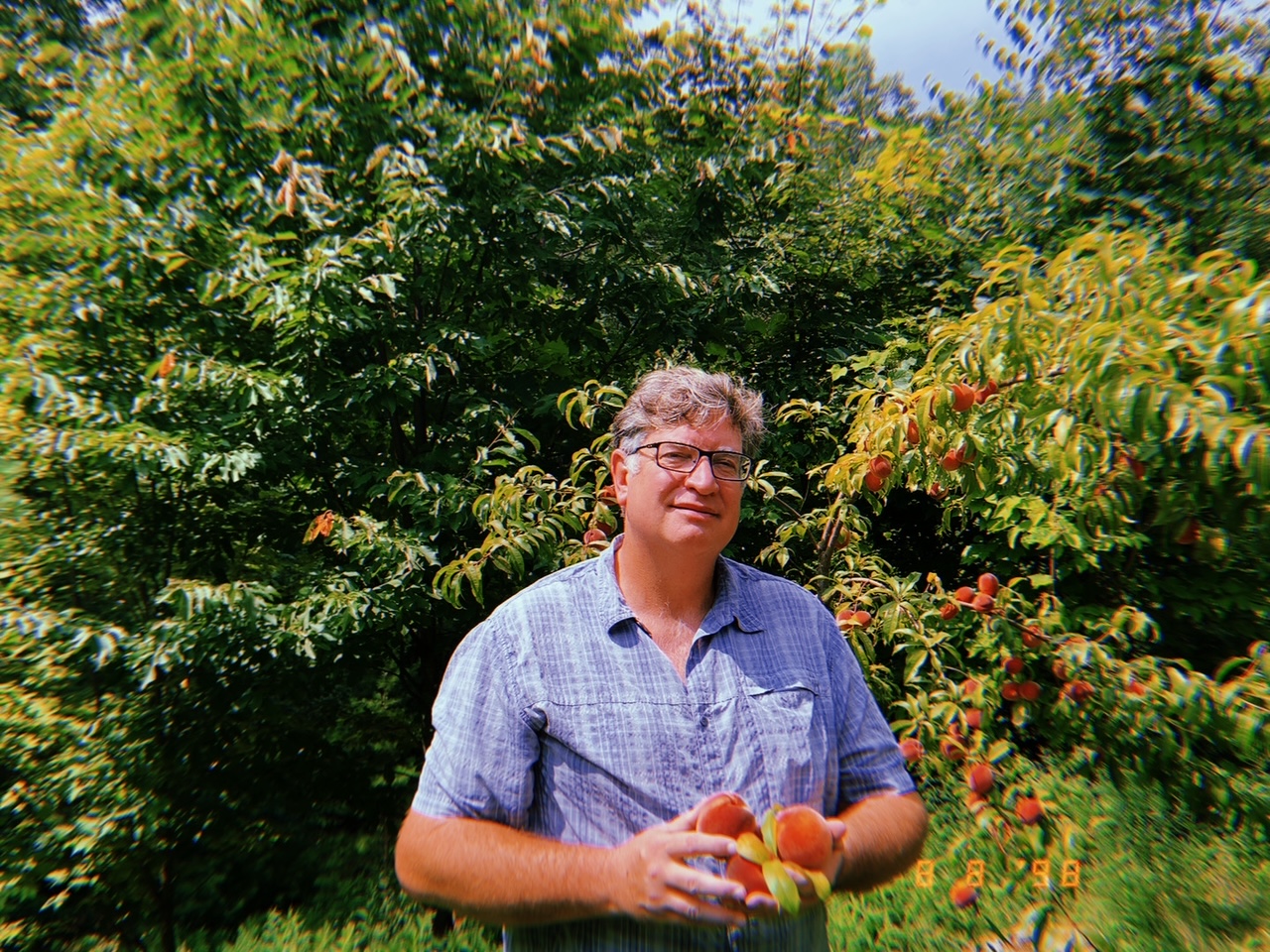
We have a bunch of peach trees. If the bears and the squirrels don’t raid them, we get to enjoy them, and cook with them, all year long
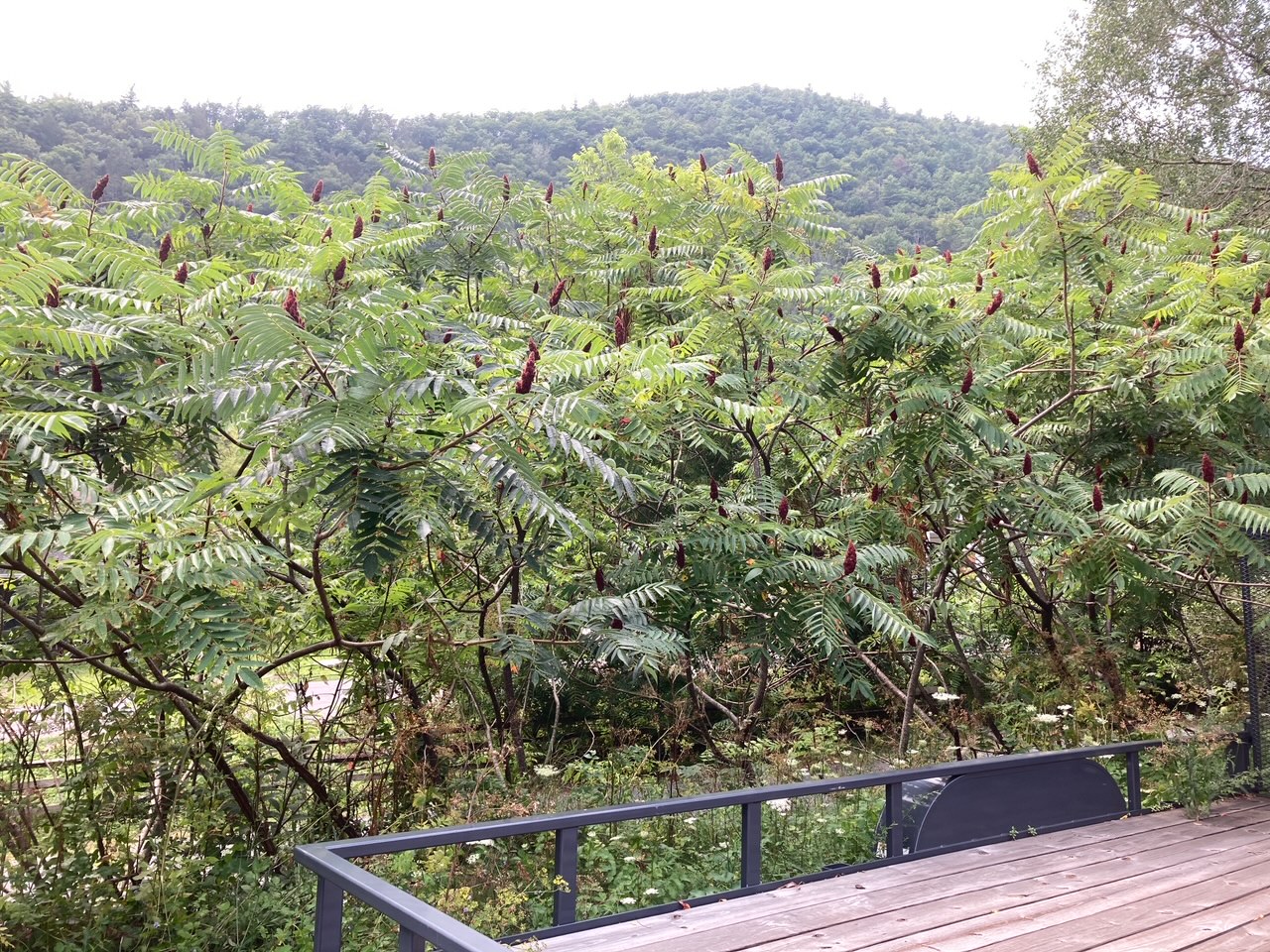
Sumac grows wild everywhere. Steeping a few heads in a bowl of warm water provides the most delicious drink possible. Chill it, serve it with sugar over ice, sumac tea is free, easy to forage, and chemical free
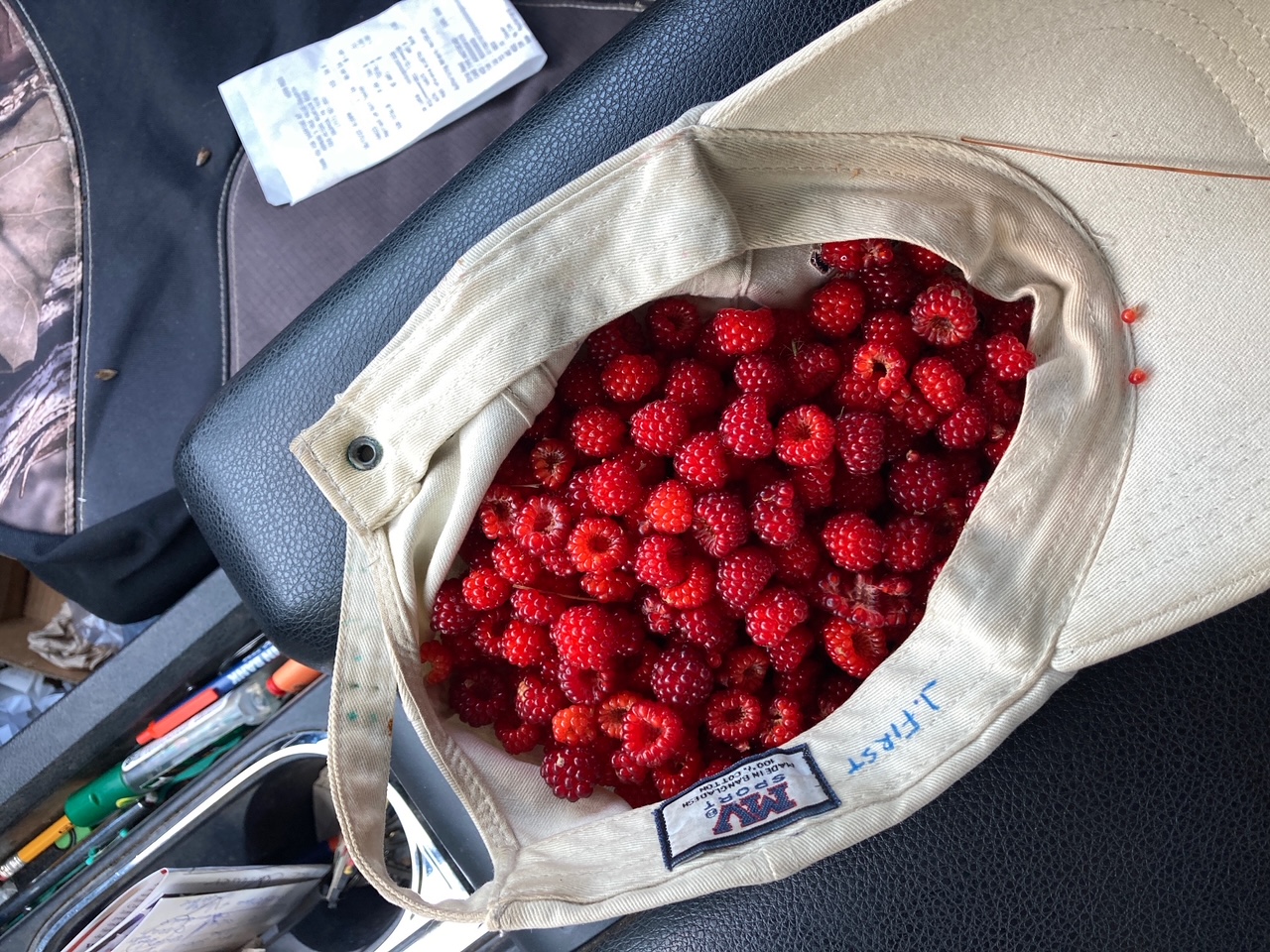
A hatful of red raspberries I foraged in July in the shrubbery of a public parking lot. IN a store you would pay twenty dollars for these wild ones, and they would be half as good. Go forage and pick your own food
Digital currency’s iron slave chains
Oh, the irony of a bank that is now insolvent in part because it illegally gave unsustainable amounts of highly regulated investor money to the domestic terrorist group “Black Lives Matter,” due to the weird political and anti-historic narrative that present day huge cash transfers (so called reparations from people who never owned slaves to people who never were slaves) are required from all other Americans to American blacks alone, above and beyond the past seventy years of gigantic taxpayer funded welfare programs and affirmative action preferences that ignored merit and rewarded skin color and that have benefited American blacks almost exclusively at enormous financial cost to America.
It is illegal to give away bank assets, or structure investing strategies, if it damages the bank’s ability to fully ensure its fiduciary duty to its shareholders and clients. The sole purpose of a bank or investment firm is to maximize its clients’ financial benefits.
This failure of Silicon Valley Bank has already created a ripple effect in the banking industry that is threatening a whole host of banks, including industry giant Credit Suisse. So it is not just one bank, but many that are being destroyed by Black Lives Matter. Turns out one of the primary reasons so many banks are in big trouble is because they contributed some 73 BILLION DOLLARS to Black Lives Matter and related spin-off organizations. None of these donations were legal, because they put the banks’ balance sheets in jeopardy, but as we know already from the related failure of Sam Bankman-Fried’s FTX fund (which now appears to have been created primarily to launder money and funnel it into the Democrat Party and BLM), illegal massive political donations due to the need to virtue signal is a Big Thing.
What is not ironic but scary about these bank and investment fund failures is the crisis opportunity it is creating for advocates of digital currency. And digital currency means just one thing: Slavery. Slavery through government control of how, when, and where you spend your own money.
Digital currency has nothing to do with convenience. No one really cares about that. I mean, how inconvenient is it really to pull a twenty dollar bill out of your wallet or purse and pay for gas, groceries, or lunch out with a business colleague? Paper money and coin is not only plenty convenient, it is the hallmark of a free person making free market decisions. No one else controls how much of your own money you decide to spend.
On the other hand, digital currency will always be directly controlled by the government. No matter what empty promises are made about digital currency’s privacy, there is only one reason for it to exist, and that is to put government bureaucrats in charge of your own finances. And as soon as you have digital currency, the government can turn it on or turn it off, take it away with the push of a button, or block it from being transferred to a person or business because someone in government does not like what you are trying to buy. Like maybe a gun, or a gasoline powered car, or firewood, or clothing made by a particular manufacturer.
Government control of your spending choices is slavery. You will not be able to make your own decisions. This arrangement is being pushed by the same exact people in government (the current administration) who wanted to monitor every withdrawal and expenditure above $600.00 that you and I make, and who wanted to limit your bank account, and who now have the Internal Revenue Service digging deeply and illegally into every financial decision we make, looking for the smallest of discrepancies to then come down like a ton of bricks upon each of us.
Digital currency is government gone wild, driven by bad people who do not like your freedom. These are people who really truly believe that they know best how you should spend your own money, and they are now trying to use government to set up everything so that you are hemmed in on every side and can only do what these bureaucrats tell you you can do.
It is difficult to tell how many Americans are catching on to this situation. So many Americans wrongly believe that America is too big to fail, even while America is failing right under our feet and under our noses, right in front of our faces. The Silicon Valley Bank failure is bad enough, and its reasons for failing are bad enough. But the ripple effect and bigger outcomes from its failure are really, really bad. Incredibly bad. Much worse than just a handful of banks going insolvent. The use of this growing banking and “financial crisis” to implement digital currency so that we go from being a free people to an enslaved people is the worst part of it.
Say No to digital currency. Say Yes to your freedom to decide how and where and when you will spend your own money. Resist and push back against the evil people who are seeking to take over your life by controlling your financial decisions. Or, don’t resist, and then don’t complain when you find yourself suddenly enslaved to totalitarian government in heavy chains of iron.
And if you are thinking ahead about your own freedom and ability to be self-reliant and independent, then you will be growing a substantial garden, keeping some chickens, and thinking of ways you can participate in a barter system that keeps government hands off of you.


It is now ratatouille season, and for the rest of the summer
Summer time means gardens.
Summer gardens here in urban and suburban America mean tons, literally, of zucchini and tomatoes.
Some gardeners can their success. Using Mason jars, they boil, steam, stew, blanch and otherwise prepare their hard-won vegetables for the long pantry sleep or freezer burn.
Not I. Oh, I like to eat, especially fresh vegetables.
So my thing is to give away some extra garden produce and eat like a king every day, lunch and dinner.
Probably the easiest and most wholesome meal possible out of the basic garden is ratatouille. If this word has too many syllables for you, like it does for me, and it makes you think of fancy French men in white chef’s hats, take heart. It is this easy to make: some diced zucchini sauteed in olive oil. About 3/4 of the way to done, fresh tomatoes are thrown in the skillet and simmered down amidst the sautee action. Maybe an onion, if you like onions. More olive oil (we use California Olive Ranch) can only make things taste even better. Then some home-grown herbs (no, not that), like basil, rosemary, dill, garlic.
Keep simmering and sauteeing. Low flame.
When it is all becoming a big mush, sprinkle it with cheese. Don’t mix it in. A blend of grated hard cheese like wine goat or parmesan, with some decent Vermont cheddar, and let the skillet lid sit over a very low flame for about three to five minutes.
Turn off the heat, and let the skillet sit there on the burner for a couple minutes, with the skillet lid still on. Magic is happening in there. Don’t lift the lid to peek, or you will let the magic slip out and away.
Serve yourself first, because everyone else around you will dive in on the ratatouille and it’ll be gone in a minute.