Posts Tagged → crop
Garden post script
Every summer my garden grows butternut squash. It is a hardy squash, and a hearty meal. Eaten sweet or savory, hot or cold, baked, fried, boiled, simmered, or mashed, butternut squash is a versatile food that is easy to grow in the home garden. Pesticide free.
Or so I thought it was easy to grow, until this Monday, when I went out to harvest the two or three dozen butternut squash that had grown nicely and were supposed to be waiting to be harvested. As always, every Fall.
Turns out, the much hated local rodent population developed a taste for my butternut squashes, and ate all but two and a half of the several dozen that had been sweetly, placidly dreaming in the fall sunlight the past month. The tree rats AKA “squirrels” which had descended into my personal space en masse for the massive pin oak acorn crop had then unexpectedly turned their attention to the garden.
My garden.
The garden in which I had toiled mightily all spring and summer, and from which I had briefly turned my attention after 90% of its produce had been gathered, had become the hang-out for the socialist rodents in the neighborhood. The freeloaders, the thieves, the gluttons. They ate my butternut squashes.
Pennsylvania is fortunate to have a strong pro-gardening law, which allows gardeners to assertively defend their hard-won crops from marauding pests and vermin, like tree rat squirrels, using all means necessary. In the past, from the time when I was a kid patrolling our family’s large rural garden with a .22 single shot to just a couple years ago, I have always been a “by all means necessary” defender of the garden.
People who think that tree rats are “cute,” or entertaining, are strange. Nothing about destructive gnawing or crop thieving or ruinous scavengers is “cute.” There is no defending this destructive pestilence.
This summer, as in 2025’s growing season, I had tried Repels-All spray, which does work well for a time. You have to stay on top of it, keep it active, because if there is a rain, and it washes away, the tree rats AKA squirrels will find the opening and run amok in your crops. And Repels-All is expensive. And it cannot go on your crops, but just the tree trunks, the fencing, the perimeter. Other means of vermin control are a lot meaner and a lot more effective.
I think it is time to bring a new sheriff into town in 2027…..
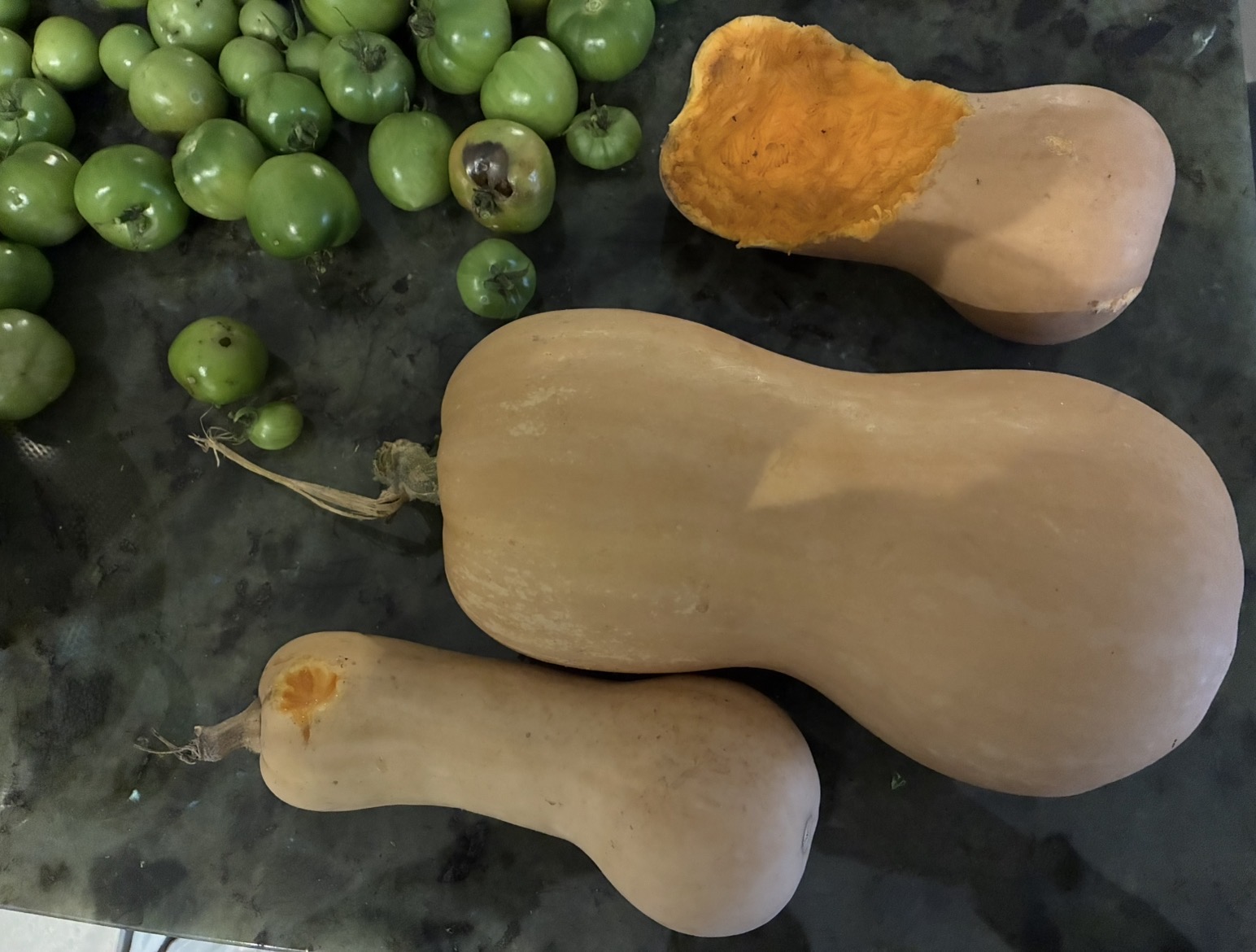
The sole survivors of the garden’s once-large butternut squash crop. Notice the squirrel tooth marks
Yeah, PA’s lame bear season in one picture
Pennsylvania is about to have one of its lowest bear harvests in decades. And like so many policies of any sort, the story of this failure is told not just by the data, but by a picture of the data (see below).
In sum, this year’s early bear seasons of archery and muzzleloader resulted in roughly 1200 bears being taken by hunters. These are predominantly individual hunters in elevated stands, not crews of drivers pushing bears to standers.
By the time the real firearms “bear season” arrives in late November, much of the steam has been bled out of the system, so to speak. The demand has been met. Many serious bear hunters have already taken their bear and they won’t be going “to camp” to participate in punishing bear drives through thick mountain laurel on steep mountains in the northcentral region. And when the most ardent hunters pull out of a camp, that loss of energy and excitement affects everyone else. We noticed many empty camps across the entire northern tier this past week.
Again, the 1,217 bears taken in the early season so far are 200 bears ahead of the roughly 1,000 bears on record for the “bear season” as of tonight, which is the end of the formal “bear season.” In other words, bear season wasn’t. It is actually producing behind the early season.
So is the early season the real bear season now?
Add a poor acorn crop to the situation, and whatever bears were roaming around in October’s early season have gone to den for the winter now in our “bear season,” or have moved southward by the time November arrives, because all of the available wild food has been eaten up. We are now in our third year of a failed acorn crop in the northern tier, and the silence of our woods shows it. No food means no wildlife. Hunters saw no poop, no deer rubs, no squirrels, no nothing. Hunters scouring rugged northern tier landscapes that are the historic high producers of bears are encountering woods devoid not just of bears, but of deer and turkey, as well.
Yesterday was a classic example of this dynamic. Our guys put on a drive across a NW Lycoming County mountaintop area that usually holds bears. I was the lone stander in the primo spot, a saddle between two hills with a stream running through. I could see far in every direction. There were no other drives happening anywhere around our guys, which is unusual. But another and much larger drive was going on behind me, and pushing toward the area we had hunted the day before. And half a mile down the forest road several long range hunters were set up looking across a canyon. If there were bears around, or even deer, the two drives would push them past the long range guys, at least.
And yet, by the time dusk arrived and our men had slid and tumbled down the mountain side to gather at the truck, no one anywhere had seen a bear or a deer, nor heard a shot. The long range guys were packing up as we were driving out, and they told us they had seen several deer on Sunday, but nothing else any other day, including that day that had so much activity.
The Pennsylvania Game Commission is a government agency, and agencies make mistakes. Sometimes the best-intended and carefully considered policies have unintended consequences. Maybe the Saturday opener (as opposed to the long-time Monday opener) to bear season is part of the failure we are seeing. Maybe it’s the acorn crop failure making a bad situation worse. Maybe it’s the early season stealing all of the thunder from the regular rifle bear season. I don’t know the entire answer why, but the numbers don’t lie, and this 2023 bear season was a flop. Yes, we will see another 100-200 bears taken in the extended season that is concurrent with deer season in some Wildlife Management Units. But overall, PA has not seen a bear harvest this low in a long time. And as I recall, last year wasn’t that great, either.
Something is wrong and something needs to change. A lot of small businesses in rural areas depend on these big bear and deer seasons to make their end-of-year financial goals. Let’s hope the PGC staff and the board are up to the task of fixing it.
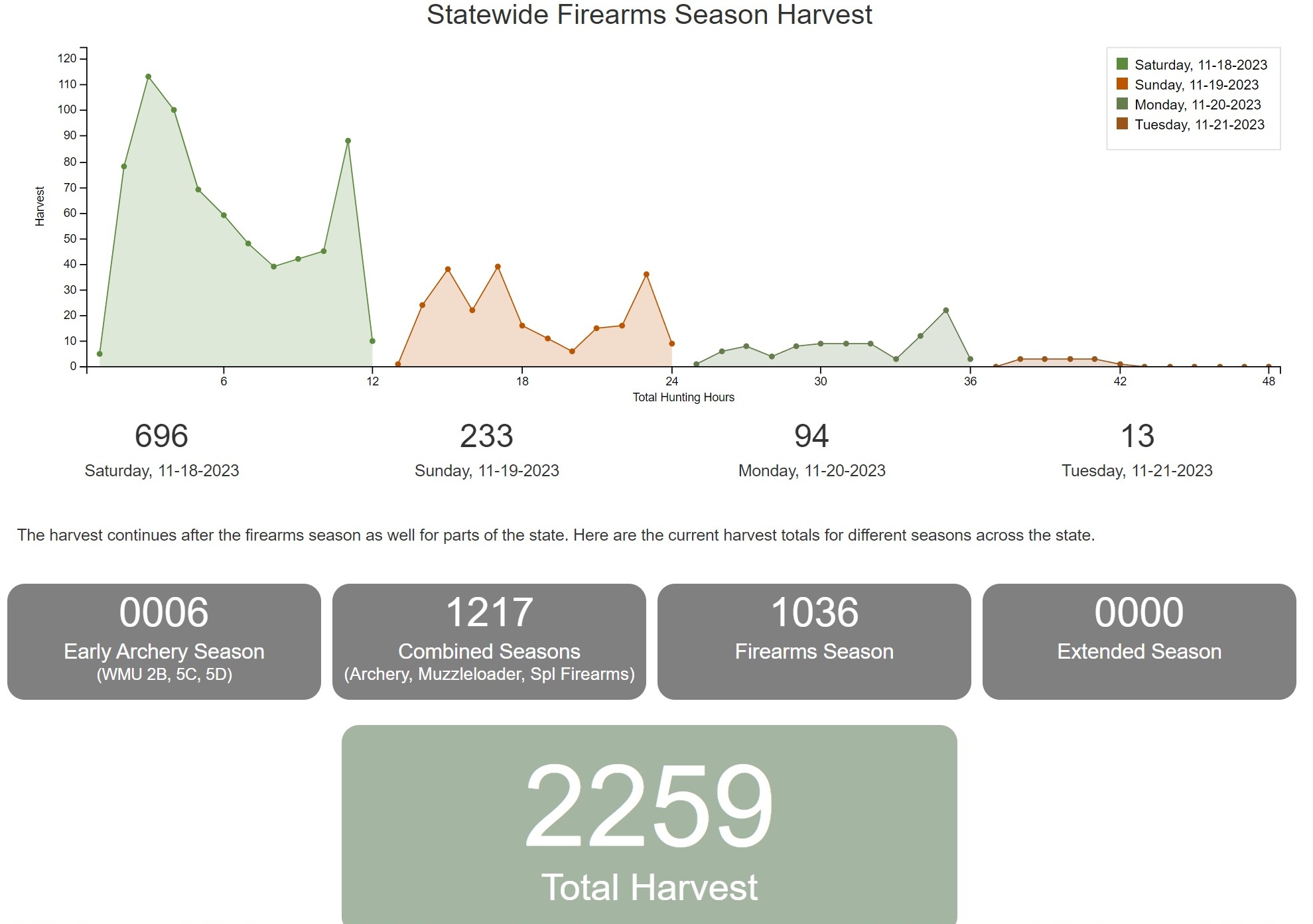
Harvest results as of the last night of regular rifle bear season, 2023. Not final, but not going to change much. The early season was the best season.