Posts Tagged → chivalry
Advice for young men
Following a lot of recent discussions about the generally sorry state of America’s young people, it is necessary for this elder to chime in. Go ahead and say it: “OK Boomer,” it just proves the point here.
Because I am a man, and grew up in a time when Americans knew who they were and what a woman was, and what a man was not, this advice is aimed at America’s young men. If you think you are young, then this is for you. And if you are starting over a little later in your life, then these thoughts might also be for you.
First, be a gentleman in all ways, and dress like one, if you can. Be articulate, thoughtful, reflective, a listener, and respectful, even of people or opinions you do not yet understand or with which you disagree. This will set you up for receiving the same, which we all enjoy. Dressing nicely will really make you stand out, and be received well.
Second, be chivalrous at every opportunity. Men my age were taught to open doors for women, which made women feel special and made men feel better than average. Today I open doors for women, and men, every opportunity possible. Sadly, many older women evince surprise at this kind act, and I always say “If I did not hold this door open for you, my mother will jump out from behind that bush over there and she will kick my ass.”
The older women know exactly what I am talking about, and smile, or laugh, because they remember. They enjoy being treated nicely and because discipline was once an important part of child rearing and creating a healthy, well adjusted, functioning adult. Some women will even laugh or confirm my fear that Mom is indeed right over there, just waiting for me to screw up. Fear of Mom is not always a bad thing. It built functioning human civilizations for thousands of years until recently, when moms decided they had to be their children’s best friends, or worse, their enablers.
Third, learn how to fight. Fist fighting was a way of life when and where I grew up, and almost all of the boys I had fist fights with ended up becoming close friends. We ended up hunting, fishing, camping out together, riding dirt bikes, etc. Some of us are still in touch. It shaped us, it did not ruin us, though some kids liked fighing too much, and they ended up being the older guy you know who goes to jail.
A lot of those youthful fights were more a test of a guy’s measure than an act of hostility. Guys sizing each other up. Today, hostility is in the air, and danger lurks around every suburban street corner, because crime goes unpunished and the wheels of our society are falling off. A man worth being called an American should know how to at least defend himself, if not make an attacker regret his choice.
Recently at a wedding, I encountered a young man whose last appearance in my life was as a scrawny, nerdy, bookish, bespectacled, sweet natured teenager. Today, he is a fine, confident, and muscular specimen of a young American man, complete with a concealed carry pistol and weekly boxing lessons. No designated victim he, unlike so many American men.
You do not need to be a black belt in anything, some of which are actually a liability and not an asset (overconfidence kills the cat); you just need to know when to run away, which is almost always, and lacking the possibility of retreat, how to make a good showing for yourself and your future health. Boxing and various other forms of fighting can be learned almost everywhere across America.
Simple lessons teach the basics of stance, timing, blocking, parrying, and striking. Eons ago, I tried a few styles of Karate, and settled on the old version of Tang Soo Do, Korean street fighting. That was replete with throat rips, eye gouges, and finger breaking. Today, such training is considered a legal liability, and Tang Soo Do is no different than the version of the point system Thai Quan Do taught in most dojos.
Whatever fighting style or practice you learn is good. Again, learning to defend one’s self is not about becoming the bully of your block or being a nationally recognized expert in arm locks and spinning back kicks, or ripping your shirt off at parties and demonstrating your moves. You are not taking classes in self defense so you can do somersaults that end in hand choppng pine boards. Rather, every American man should have enough confidence and will power to stand toe to toe with an assailant, if the need arises. This is the American spirit.
A man’s spirit.
TBC
Shen Yun thumbs up review
Somewhere in the time frame of 1971 to 1974, a troupe of Chinese acrobats and dancers put on an incredible performance at Penn State University’s Recreation Hall. Despite having been a wee lad up in the bleachers that evening, I can still now recall moments of their performance with shocking clarity, such were the amazing skill and feats of strength they brought to the American public.
Lots of male and especially female displays of traditional weapons mastery – spears, swords, knives – whose choreography defies even an aged and highly skeptical intellect decades later, as well as incredible and frankly unbelievable balancing + acrobatic + martial arts acts with tea cups and people, bending iron bars that the audience members were invited to try etc etc.
And now looking back, I realize that those early 1970s Chinese performers must have been the last of their kind, or maybe they were exiles, such was the crushing tyranny of Mao’s “Cultural Revolution” aimed at stamping out through murder, torture, and literal destruction of every single thing that had made China China for the past five thousand years. In any event, in Rec Hall that night I had witnessed history.
Well, fast forward about fifty years, and into the intervening gap steps Shen Yun, a modern show about “China Before Communism.” That is, before all that Mao Cultural Revolution communist crap that has destroyed one of the world’s great nations and culture. Begun in 2006, Shen Yun performances have been evolving and growing for the past sixteen years, and now boasts eight geographically dispersed troupes regularly impressing audiences around America. The Princess of Patience and I saw one such troupe in Pittsburgh, PA, this past Sunday, at the historic and beautiful Benedum Theater.
Looky here, I am no theater or musical show kind of guy. So don’t go on reading further here and expecting to encounter the usual aphorisms and adjectives “professional” art and theater critics regularly provide through their Pez dispensers.
What you are about to read is my own unvarnished layman perspective, as told from the guy who almost always falls asleep as soon as the lights go out and the curtain rises, and who is then awakened either by the sharp elbows of the theater goer to my left or by the Princess of Patience to my right. Apparently I think I am not snoring when I sleep in a theater, but in fact I do snore.
Apparently one play was stopped mid-scene while an actor asked someone to stop me from snoring, such was the distraction. What can I say, few theater performances are memorable to me. Men singing…bad. Men dancing in tights and playing dress-up…really bad. Theater and especially musicals and most especially opera are all a refined form of torture. If a play is any good, it will become a movie, which I might see and during which I probably will not fall asleep. My highly educated and experienced opinion here.
But, such is my love for the Princess of Patience, that I bought tickets and took her to see this updated version of whatever it was I had been mesmerized by fifty years ago.
To its credit, Shen Yun kept me awake. We can joke, but that is actually an achievement.
Shen Yun’s scenes or performances are relatively brief, each probably five to seven minutes long, and also varied. That constant change helps keep the audience’s attention focused. The subjects are about traditional Chinese culture, love, war, good vs. evil, history, spirituality, chivalry, family, and the performers wear culturally appropriate dress in each scene. They also have an act about forced organ harvesting, the current real-time inhumane insane crazy can’t believe this is happening actual action of murdering political prisoners and transferring their healthy organs to the unhealthy bodies of Chinese citizens who are “more equal”* than the 99.99% of the Chinese socioeconomically beneath them.
*(George Orwell, author of dystopian novel and a foreshadowing message about the present political situation in both China and America 1984, coined this phrase more equal than others in his other dystopian novel Animal Farm, where the political leader pigs betray the farm animals’ revolution against the humans and go on to corrupt the original commandment that all animals are equal in order to keep their pig selves in unintended, constant, never-ending more equal than others tyrannical mastery over all the other animals)
Something I had not seen before is Shen Yun’s use of a digital screen as the stage backdrop, instead of the traditional painted screen that would form the background for the stage in each scene. Shen Yun uses different digital backdrops, often several different ones, in each scene. They are crisp, clear, and bright. They also allow for cartoon versions of the actors to soar through the air or run away over the horizon. Maybe this is old technology, but it is a first encounter for me, and I liked it.
Things I liked about Shen Yun: The amazing dance, ballet, tumbling, and acrobatic abilities of the professional actors, the incredibly tight and perfectly executed choreography, the superior talent of the live orchestra members, and the bright and flowing costumes that must be a real b#tch to move around in. I liked all the subject matters. The simpler weapons handling wasn’t intended to be anything like the old days, but it adds a nice change to each story and act. The pleasant combining of traditional Chinese music with a modern European/ Western orchestra is very cool.
Things I did not like about Shen Yun: About a third of the acts are repetitious, despite using different costumes and some different choreography, with the same sweeping “windmill” arm motions of the actors in each one. Consider that the one act that brought the loudest applause was about a traditional Tibetan dance, complete with very different moves and costumes. Another thing that irked me was how MC/Announcer Perry’s suit crotch was obviously rumpled. Probably because I am not a regular suit wearer, my eye was immediately drawn to this unprofessional and uncomfortable anomaly. Come on, Perry, your suit must be cleaned and pressed before each performance. Even a knuckle dragging lug like me knows this.
In conclusion, I spoke with half a dozen members of the audience both inside and outside the theater, and everyone liked it. Some appreciated the simple artistic expression, despite not synching with the political, religious, or cultural messages. Others really liked the occasional blips of overt religious messaging, which if I had to guess is some sort of Bhuddist messianism that most Christians can relate to in one way or another. One audience member I spoke with said that she is politically liberal, but that she was not bothered at all by the political or religious aspects of Shen Yun: “I don’t have to agree with it to enjoy it. This is just their own artistic expression and I am here to see it and enjoy it as it is,” she said to me.
Amen.

Benedum Theater is worth visiting just to see the beautiful interior

Benedum Theater ceiling

Benedum Theater interior

If I had a big social function, I would have it at the Benedum Theater. Tons of cozy little nooks like this
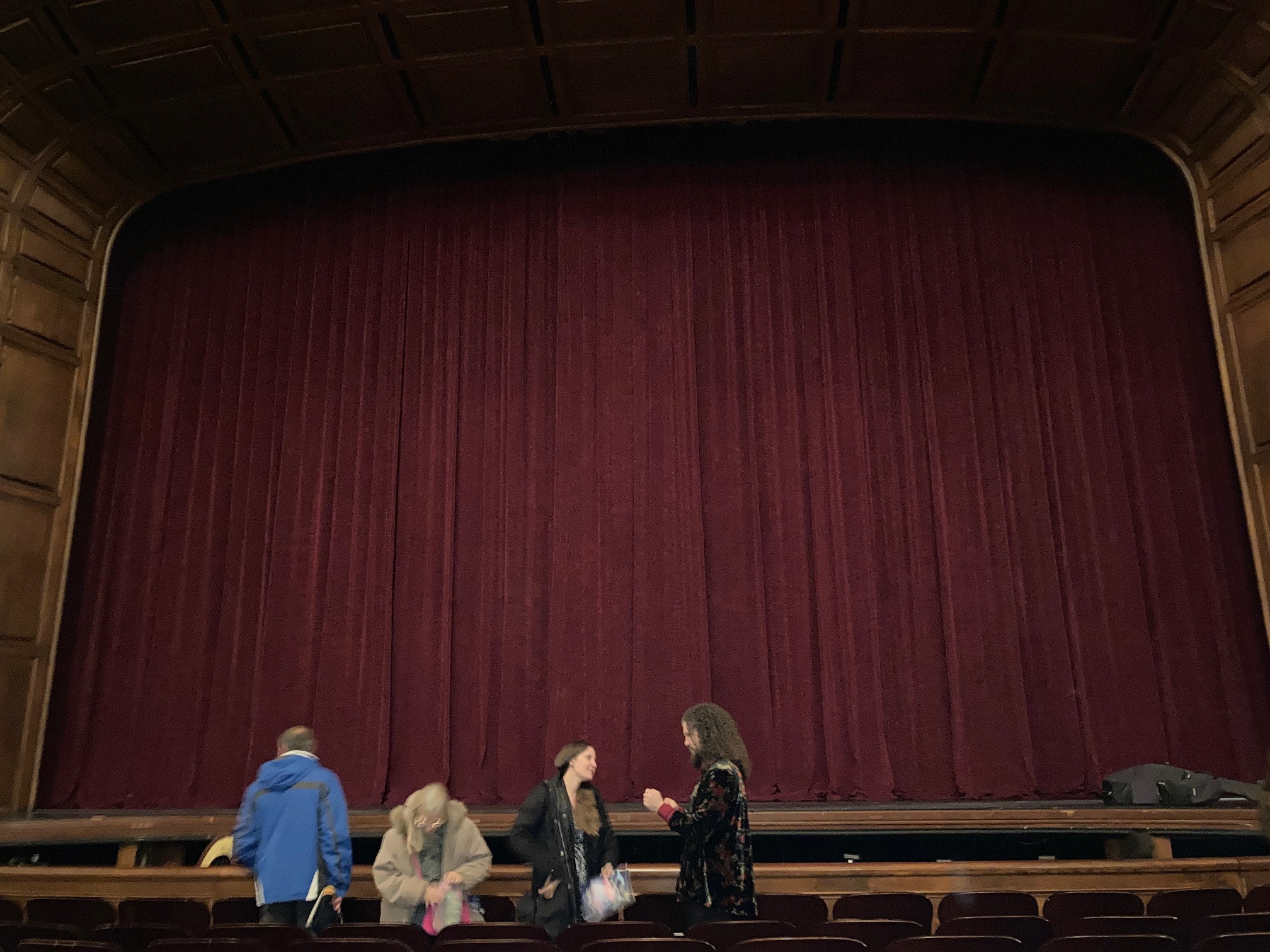
If I can’t get front and center seats, I won’t go see an event that has a stage.
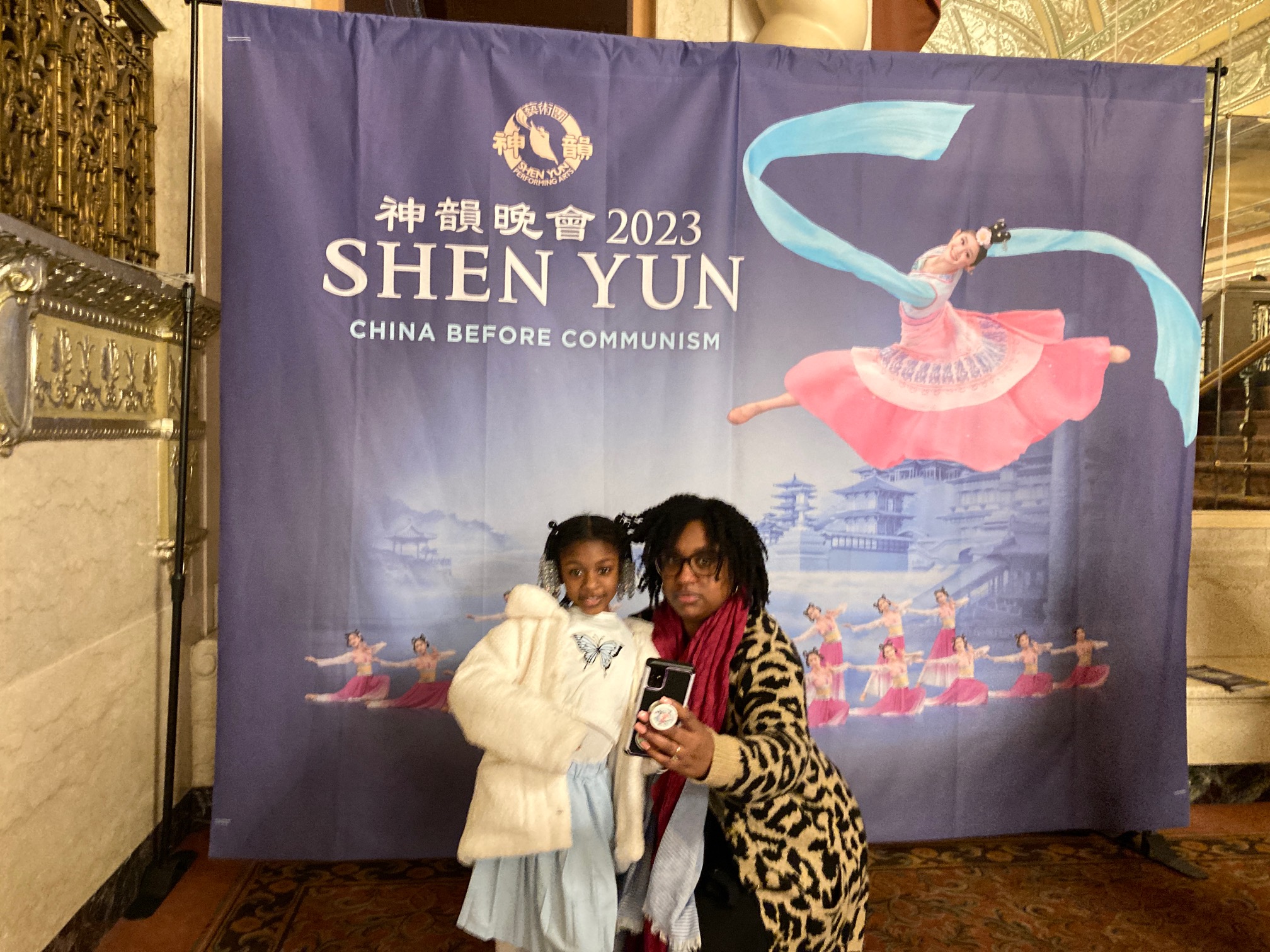
Shen Yun audience had everyone old, young, in between, Asian, black, white, purple…
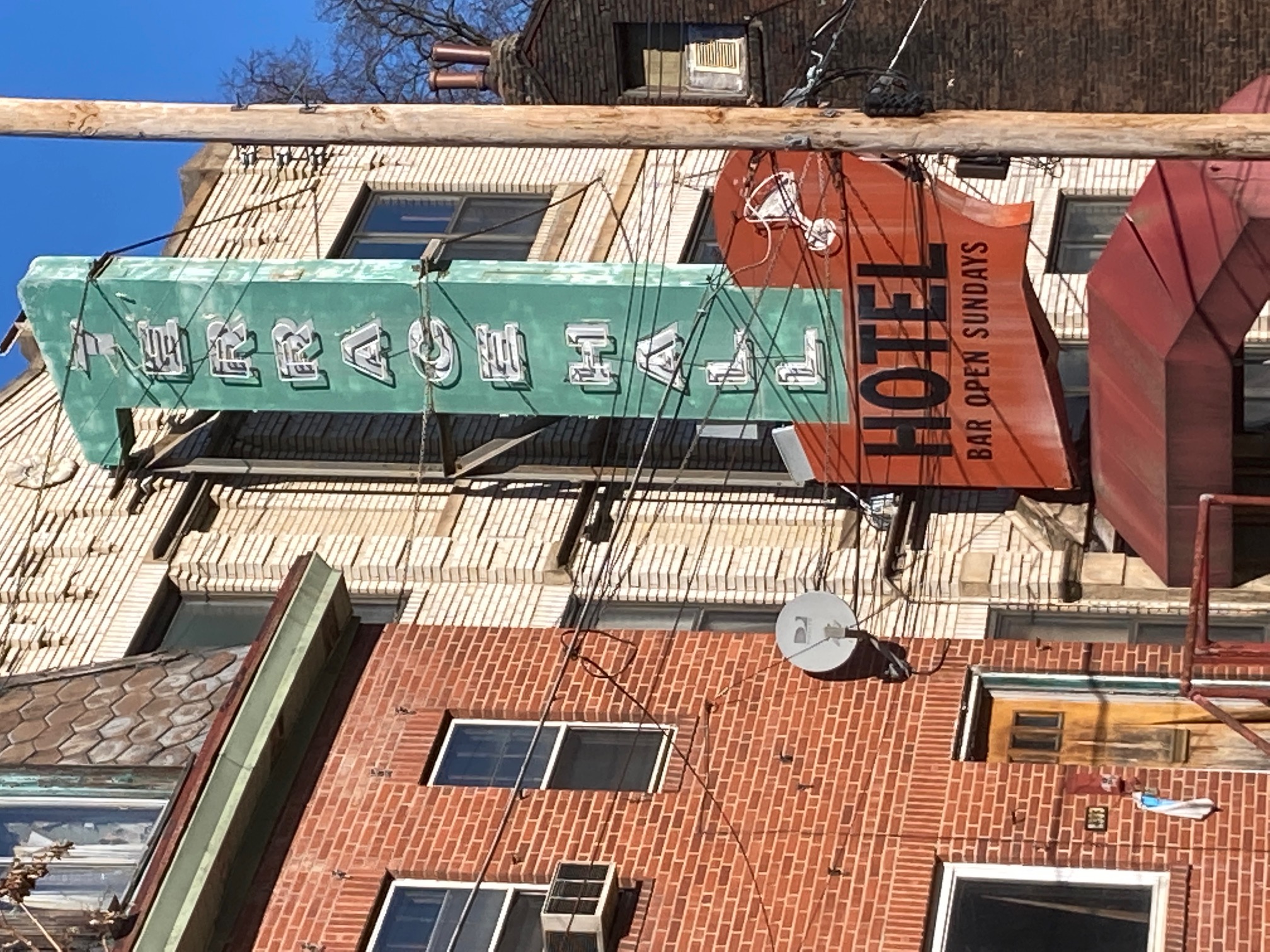
Some parts of Pittsburgh have not been successful. Around the block from this ancient bar and hotel we encountered what had been a recently built very attractive state of the art Martin Luther King, Jr cultural resource center abandoned in an overgrown lot

Pittsburgh smartly employs vehicles powered by clean burning propane
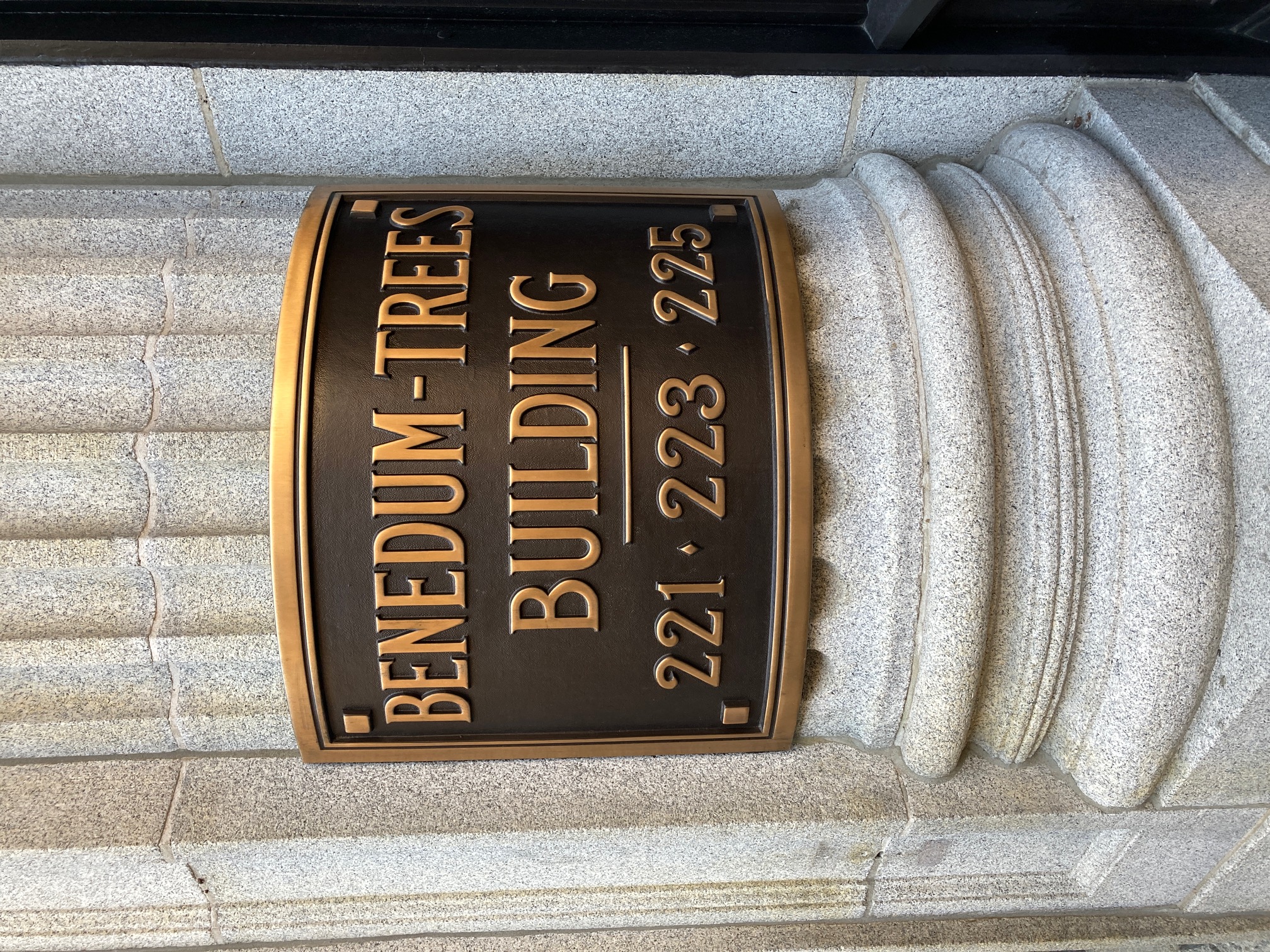
The entire city of Pittsburgh is stunningly beautiful. This one column is representative of the beautiful hand carved stone buildings from the Victorian Age to the 1940s. Thanks to industrialists like the Mellons, Carnegies, Olivers, and Benedums, Pittsburgh is a world hub for architecture and science