Posts Tagged → rockies
Two Hollywood legends I will actually miss
Normally I am not a fan of Hollywood in any sense. In recent times, including just days ago, America lost two Hollywood legends, two actors who personified Hollywood at its best and maybe its worst, but also at its most colorful. I will miss them both, for very different reasons.
First up is Rob Reiner, apparently murdered two days ago by his own son. Both Rob and his wife Michelle were found deceased in their home by their daughter. Their throats had been slashed. Their son Nick has been arrested and charged with their murders. Apparently Nick has had a long history of drug abuse and all of the resulting relationship challenges that come with it. We now see the gruesome result, and can easily imagine the victims disbelievingly pleading with their own son not to harm them…
…their murders are a tragedy on its face, as well as a statement about the unworkable culture that is “inside Hollywood.” A mix of libertine excess and constant parental indulgence and allowance followed by inexorable failure. What a symbol of the whole place.
Rob Reiner really began his Hollywood career as “Meathead,” the abrasively sanctimonious know-it-all liberal son-in-law of appropriately named American workingman archetype, Archie Bunker, in All In The Family TV sitcom.
Relying on a well-scripted, well-played political and cultural tension between old guard Archie Bunker and Hippie “Meathead,” Rob Reiner gave effective voice to his generation’s anti-war, anti-tradition, anti-religion, anti-America liberalism.
The show captured the “generation gap” of my 1960s-1970s childhood, where older Americans held the traditional values that built a fully functioning nation, and the younger Americans were utopian meatheads with unrealistic, unsustainable expectations guaranteed to derail the nation.
Confusingly, Rob Reiner never grew up or let go of his Meathead persona, nor his destructive goofball political views. I suppose to his credit, in a way, neither have nearly all of his contemporary eldering-in-place fellow ever-child meathead Hippies. I will miss his entertaining online rants against Trump, MAGA, conservatives, Republicans, regular working Americans, essentially against everything outside of the tiny bizarro world Hollywood bubble that Rob Reiner inhabited.
Rob Reiner created the living liberal strawman that conservatives easily use to prove their points. In essence, Meathead grew up proving that Archie Bunker was right, decade after decade. And so, as much as he was strange, he also contributed well to the American political discourse. Rest in peace, Mr. Reiner. I am genuinely sorry you left us in this horrible way.
The other Hollywood person who recently left us is actor, producer, film maker Robert Redford. Easily the best looking man in American history, and also the one Hollywood actor least addicted to plastic surgery as he aged, Redford inhabited a very different cultural place than Reiner.
Famous for playing a variety of all-American hero and anti-hero roles, from gritty to suave, from cowboy to playboy, Robert Redford was a fixture in Hollywood for a really long time. He also fueled the Sundance Film Festival, an alternative to Hollywood, where low-budget art films and documentaries could gain audience and funding outside of Hollywood’s metrics and politics.
One of my favorite Redford movies is Spy Game, with Brad Pitt. Redford plays the role of a CIA spook and patriot, who in a former job as Cold War spy went so far as to unilaterally murder/ execute a known American traitor in Europe. This role alone sends a loud message about Redford’s politics: He was no leftist, no Hollywood commie, but rather he was a true American patriot in every conservative sense of the phrase.
But Redford also promoted environmental quality, and public lands, two things that are close to my own heart and not always present in the conservative movement. Not that Redford followed the leftist doctrine of heavy regulation and anti capitalism, but rather, he simply said that these things are important. And of course, they are important. And there are other ways of achieving environmental quality and public lands conservation without following leftist doctrine. Such a moderate stance is unheard of among Hollywooders.
Redford played very well a famous, iconic role that still speaks to men of my generation, that of historic mountain man Jeremiah Johnson. Filmed right before the 1976 American Bicentennial, Jeremiah Johnson captured the spirit of the American frontier, Westward expansion, Manifest Destiny, rugged individualism, self reliance, urban vs rural, and the European-American conflicts with the western Indian tribes (Crow, Blackfoot, Cheyenne, Pawnee, Lakota and others) in the Rockies.
Many of these themes and character traits are still central to the American identity that us older Americans have. Including Archie Bunker.
Jeremiah Johnson promoted the now-underappreciated but still central role of undeveloped American open lands in forging the tough American frontier spirit and Yankee ingenuity that built our nation. That conservatives miss or ignore this link, or misunderstand it, is just as much a crime as leftist attempts to essentially shrinkwrap public lands and make them off-limits to humans.
Robert Redford represents an image and political philosophy almost at the other end of Rob Reiner’s place on the political bell curve. Both men played important parts in shaping American culture, and I appreciate them both. However, Robert Redford will forever be an aspirational icon, whereas Rob Reiner represents a dead end on the political evolutionary tree.
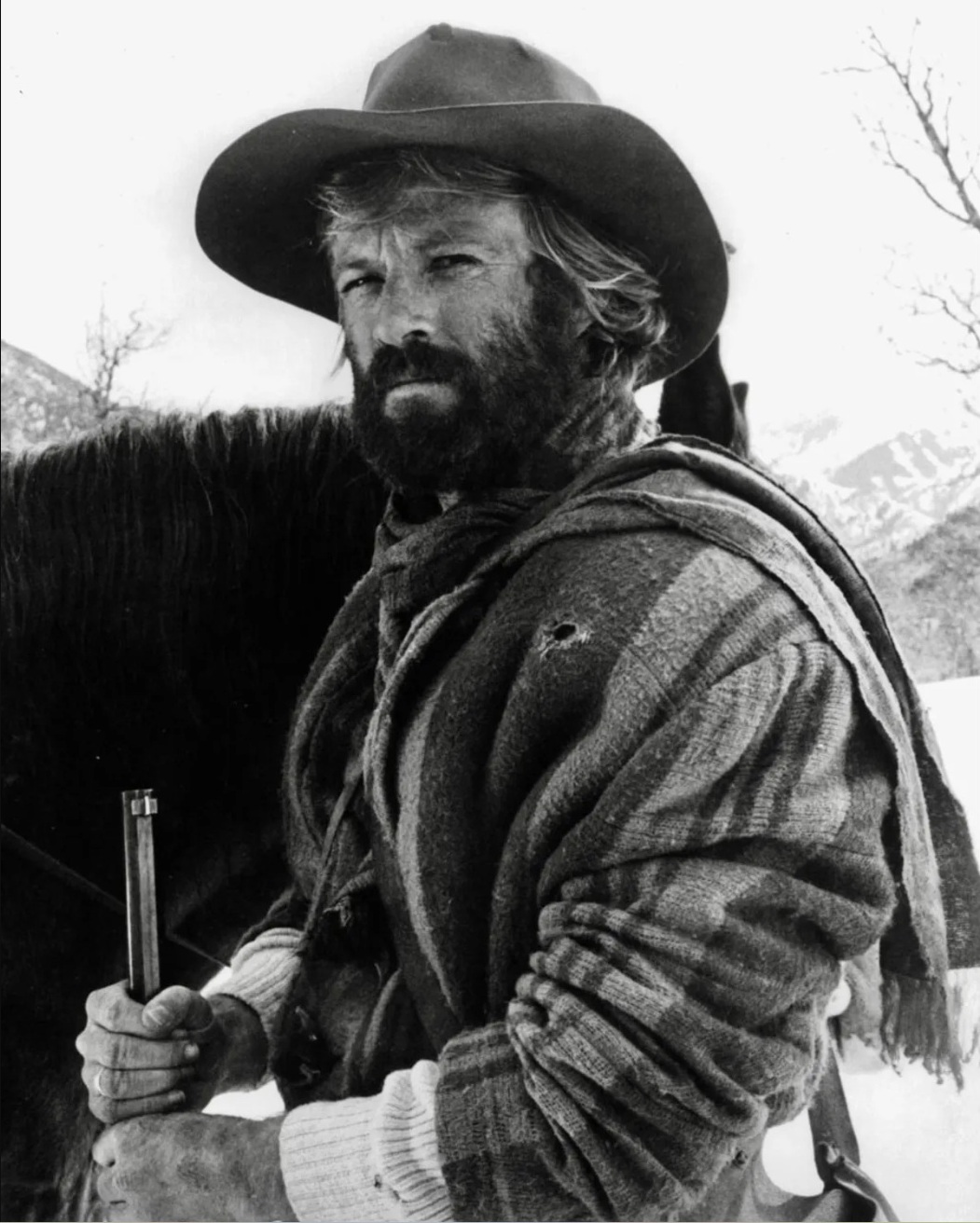
Robert Redford as Jeremiah Johnson, iconic American frontiersman
Aggressive timber management necessary in the Northeast
When I tell some people how aggressively we try to manage standing timber (forests), they often recoil. It sounds so destructive, so environmentally wrong.
It is not environmentally damaging, but I will be the first to admit that the weeks and months after a logging operation often look like hell on the landscape: Tops everywhere, exposed dirt, skid trails, a tangled mess where an open woods had stood for the past sixty to eighty years just weeks before. No question, it is not the serene scene we all enjoyed beforehand.
This “clearcutting” gets a bad name from poor forestry practices out West and because of urban and suburban lawn aesthetics being misapplied to dynamic natural forests.
However, if we do not aggressively manage the forest, and the tree canopy above it, then we end up with tree species like black birch and red maple as the dominant trees in what should be, what otherwise would be a diverse and food-producing environment. Non-native and fire-sensitive species like ailanthus are quickly becoming a problem, as well.
When natural forest fires swept through our northeastern forests up until 100 years ago, these fire-sensitive species (black birch, red maple) were killed off, and nut trees like oaks, hickories, and chestnuts thrived. Animals like bears, deer, turkey, Allegheny woodrats, and every other critter under the sun survived on those nut crops every fall.
Without natural fire, which is obviously potentially destructive and scary, we must either set small prescribed fires, or aggressively remove the overhead tree canopy to get sufficient sunlight onto the forest floor to pop, open, and regenerate the next generation of native trees. Deer enjoy browsing young tree sprouts, so those tasty oaks, hickories, etc that lack sufficient sunlight to grow quickly usually become stunted shrubs, at best, due to constant deer nibbling. Sunlight is the key here.
And there is no way to get enough sunlight onto the forest floor and its natural seed bed without opening up the tree canopy above it. And that requires aggressive tree removal.
Northeastern forests typically have deep enough soils, sufficient rainfall, and gentle enough slopes to handle aggressive timber management. Where my disbelieving eyes have seen aggressive management go awry is out west, in the steep Rockies, where 1980s “regeneration cuts” on ancient forests had produced zero trees 25 years later. In fact, deep ravines had resulted from the flash-flooding that region is known for, and soil was being eroded into pristine waterways. So, aggressive timber management is not appropriate for all regions, all topography, or all soils.
But here in the northeast, we go out of our way to leave a huge mess behind after we log. Why? Because how things appear on their surface has nothing to do with how they perform natural functions. Those tangled tree tops provide cover for the next generation of trees and wildflowers, turtles and snakes, and help prevent soil erosion by blocking water and making it move slowly across the landscape.
Indeed, a correctly managed northeastern forest is no place for urban or suburban landscape aesthetics, which often dictate bad “select cut” methods that work against the long term health and diversity of the forest, as well as against the tax-paying landowner.
So the next time you see a forest coming down, cheer on the landowner, because they are receiving needed money to pay for the land. Cheer on the loggers and the timber buyers, the mills and manufacturing plants, and the retailers of furniture, flooring, and kitchen cabinets, because they all are part of a great chain of necessary economic activity that at its core is sustainable, renewable, natural, and quintessentially good.