Posts Tagged → rifle
Do deer processors give you back your own deer?
Pennsylvania rifle season for deer is nearing the end of its second and concluding week. On average, Pennsylvania hunters annually kill 400,000-500,000 deer, and I would just hazard a guess that 2/3 of those carcasses are taken by the hunter to local deer processors.
Tonight, deer processors across Pennsylvania are working triple-staffed and double overtime to process the hundreds of thousands of deer being brought in by successful hunters.
A perennial question asked by both new hunters and well seasoned is “When I pick up my deer from the processor, will it actually be my deer I am getting, or will it be someone else’s deer?”
There are two certain answers to this question, and I base these on my own experience and the experiences of many friends and acquaintances.
First answer, Maybe. Depending on what you want done to your deer, you might get back 100% of your deer or you might get back 75% of your deer, with the 25% difference being parts of other people’s deer. If you just want real simple cuts, basic steaks from the backstraps and the hams, and roasts from the neck, leg, and shoulders, then you stand a better chance of getting your deer back. This is because it is almost as easy for the processor to cut your deer up into these basic cuts with a bandsaw and a boning knife as it is to grab whatever oddball cuts he has on hand to fill your order.
Second answer, when ordering sausage and hamburger, is absolutely No. This is because deer sausage, pepper sticks etc. are made from various trimmings and random pieces of deer as they are brought in from the very beginning of the archery season, based on the kind of demand that processor has experienced in the past. Additional batches of sausage are made as demand increases towards the end of archery season and into the rifle season. There is just no way that your deer can be turned into its own sausage mix. Your deer might be contributed to a big pot of deer trimmings destined for sausage, and you might be getting your portion of that sausage, but that sausage just isn’t going to be yours and yours alone. It will be a mix of various deer brought in the same time as your own.
I cannot tell you how many times I have gone through the expense of having my prize deer turned into beautiful shrink wrapped cuts at a processor, only to discover that the cardboard box I received my order in is short at least ten to fifteen pounds of venison (from a huge buck). And worse, some random pieces have been thrown in a try to make the balance, as the processor guesses it. And some of the packages have been frozen a long time. And the same cuts of meat are colored differently, as though from different animals.
The truth is that if you want to eat your deer, then you must either butcher your deer yourself, or get together with buddies and butcher all of your deer together.
Butchering a deer by yourself is much easier than most people think, especially if you are willing to cut up the backstrap and hams into basic steaks, and then grind up everything else for hamburger or sausage. In fact, I am about to take a deer I shot today over to a friend’s house where we are going to butcher it in his garage. This is going to be his first experience doing this, but I am sure it will not be his last time.
With buddies, you can pool your odd trimmings and leg meat for sausage. One or two guys or their wives run the sausage/ hamburger grinder and filler, and by the end of the weekend the sausage has been cooked/smoked, and everything is all done simultaneously. I have seen a historic hunting camp in Elk County that had the most impressive kitchen and butchery set-up, including scales for weighing both the whole deer and the various parts and cuts. This is nice so that the guy who shoots a 60-pound yearling gets his deer, and doesn’t unfairly get a bonus pay-out taken out of someone else’s 120 pound deer. Unless this is the way everyone agrees to work together: Everyone goes home with more or less the same amount.
Nothing against the deer processors, they have an important role to play. But the question asked in the beginning can only be satisfactorily answered by doing the job yourself, and I can say from long experience that butchering a deer is easy and gets faster and easier the more experienced at it you become.
Yeah, PA’s lame bear season in one picture
Pennsylvania is about to have one of its lowest bear harvests in decades. And like so many policies of any sort, the story of this failure is told not just by the data, but by a picture of the data (see below).
In sum, this year’s early bear seasons of archery and muzzleloader resulted in roughly 1200 bears being taken by hunters. These are predominantly individual hunters in elevated stands, not crews of drivers pushing bears to standers.
By the time the real firearms “bear season” arrives in late November, much of the steam has been bled out of the system, so to speak. The demand has been met. Many serious bear hunters have already taken their bear and they won’t be going “to camp” to participate in punishing bear drives through thick mountain laurel on steep mountains in the northcentral region. And when the most ardent hunters pull out of a camp, that loss of energy and excitement affects everyone else. We noticed many empty camps across the entire northern tier this past week.
Again, the 1,217 bears taken in the early season so far are 200 bears ahead of the roughly 1,000 bears on record for the “bear season” as of tonight, which is the end of the formal “bear season.” In other words, bear season wasn’t. It is actually producing behind the early season.
So is the early season the real bear season now?
Add a poor acorn crop to the situation, and whatever bears were roaming around in October’s early season have gone to den for the winter now in our “bear season,” or have moved southward by the time November arrives, because all of the available wild food has been eaten up. We are now in our third year of a failed acorn crop in the northern tier, and the silence of our woods shows it. No food means no wildlife. Hunters saw no poop, no deer rubs, no squirrels, no nothing. Hunters scouring rugged northern tier landscapes that are the historic high producers of bears are encountering woods devoid not just of bears, but of deer and turkey, as well.
Yesterday was a classic example of this dynamic. Our guys put on a drive across a NW Lycoming County mountaintop area that usually holds bears. I was the lone stander in the primo spot, a saddle between two hills with a stream running through. I could see far in every direction. There were no other drives happening anywhere around our guys, which is unusual. But another and much larger drive was going on behind me, and pushing toward the area we had hunted the day before. And half a mile down the forest road several long range hunters were set up looking across a canyon. If there were bears around, or even deer, the two drives would push them past the long range guys, at least.
And yet, by the time dusk arrived and our men had slid and tumbled down the mountain side to gather at the truck, no one anywhere had seen a bear or a deer, nor heard a shot. The long range guys were packing up as we were driving out, and they told us they had seen several deer on Sunday, but nothing else any other day, including that day that had so much activity.
The Pennsylvania Game Commission is a government agency, and agencies make mistakes. Sometimes the best-intended and carefully considered policies have unintended consequences. Maybe the Saturday opener (as opposed to the long-time Monday opener) to bear season is part of the failure we are seeing. Maybe it’s the acorn crop failure making a bad situation worse. Maybe it’s the early season stealing all of the thunder from the regular rifle bear season. I don’t know the entire answer why, but the numbers don’t lie, and this 2023 bear season was a flop. Yes, we will see another 100-200 bears taken in the extended season that is concurrent with deer season in some Wildlife Management Units. But overall, PA has not seen a bear harvest this low in a long time. And as I recall, last year wasn’t that great, either.
Something is wrong and something needs to change. A lot of small businesses in rural areas depend on these big bear and deer seasons to make their end-of-year financial goals. Let’s hope the PGC staff and the board are up to the task of fixing it.
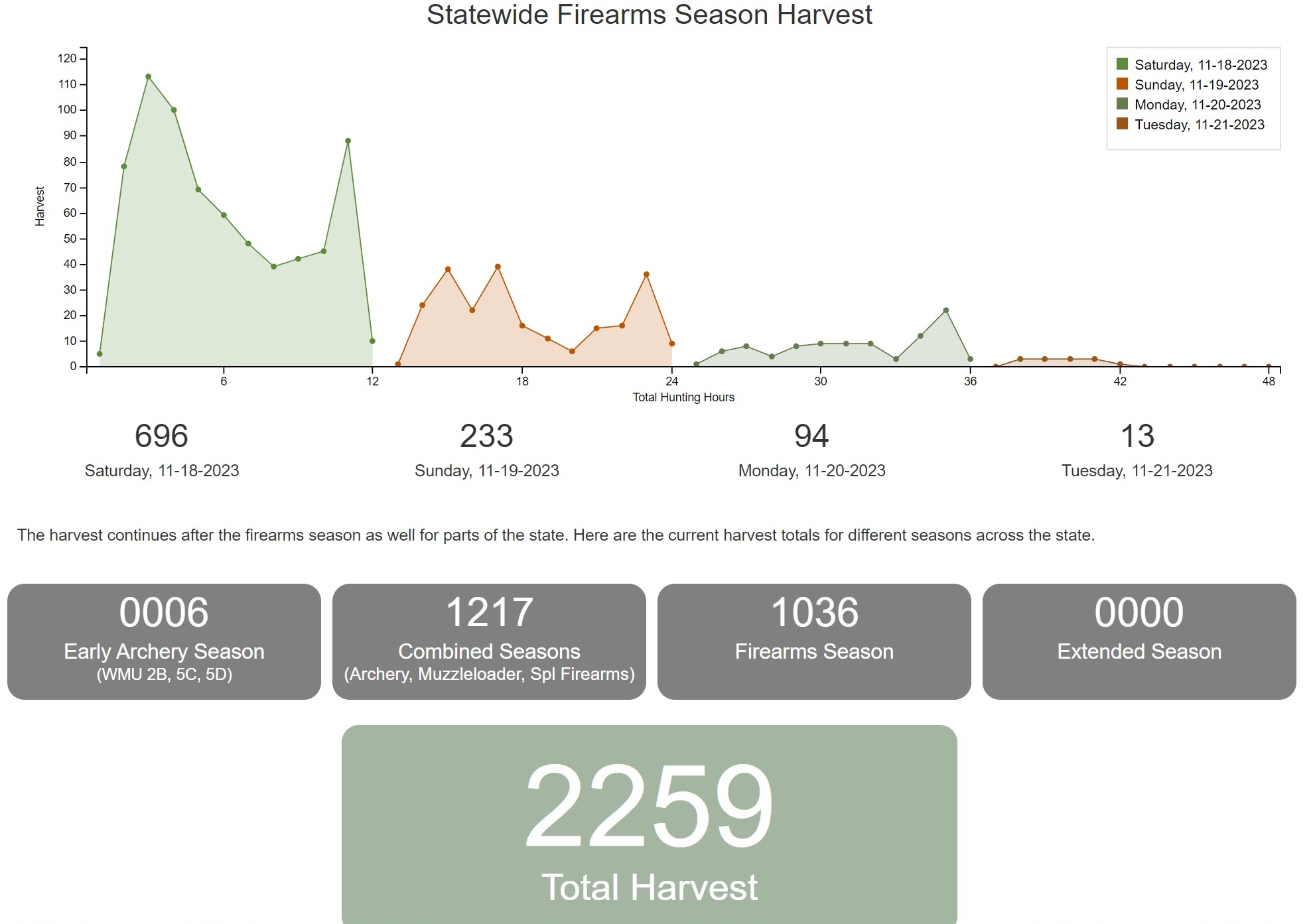
Harvest results as of the last night of regular rifle bear season, 2023. Not final, but not going to change much. The early season was the best season.
A few more thoughts on Alaska gear & public land
Even people who will never hunt in Alaska want to know what kind of gear a guy carried while he was there, and they might even have some opinions about it. Alaska is kind of the go-to place for all imaginary hunts, survivalist prepping, and bush homesteading, and you can go on YouTube and on any related video find endless debate about guns and gear by all kinds of people, 99% of whom have never been to Alaska. After the “Thousand Overnight Tragedies” essay here a week ago, I got some questions about my hunting kit from people who will never do anything more than a luxury cruise to Alaska. I know well that if a couple guys ask, there are more who want to know but didn’t ask. So here goes, my best advice on how to be properly kitted out for Alaska.
First off, before assembling your Alaska kit you have to determine if you are staying out in the Alaskan wilderness. Plenty of people get air dropped into a remote wilderness spot, tent up near the lake or river where the float plane landed to drop them off, and that’s their base camp they hunt out of every day. It is the same place the plane will pick them up from in a week or ten days. If this scenario is how you are heading into Alaska to hunt or fish, then you need all of the survival gear, various fire starting methods, a beacon, etc. kit that you would need while wilderness hunting anywhere else in North America. My Seek Outside tipi tent with the large titanium wood stove has made all of the difference for how I hunt in wilderness (thanks to Ranger Ian for his guidance on this years ago after I reported how I nearly froze to death in his service territory).
Second, the month of year really makes a difference in Alaska. I have been there in July, August, and September. July and August are usually quite comfortable. In September you are beginning to get some chilly nights, and possibly chilly mornings. Maybe a chilly day. Warm clothing you can easily layer on and off, like a Filson wool vest, becomes critical the later it gets after August ends.
Finally, where exactly in Alaska are you going? Central Alaska encompasses most of the state, and it is kind of the rugged classic interior Alaska everyone thinks of when they imagine Alaska. But all of the state’s coastal areas are really different from the interior, especially as you begin to head north or south of Anchorage. Southeastern panhandle Alaska is a temperate rain forest. It rains there even when it is not really technically raining. Something like fifteen to twenty FEET of rain falls there in the southeast. Obviously you have to be prepared for regular rain if you are hunting and fishing in the panhandle.
If you are hunting out of an Alaskan home, say your friend’s or your cousin’s, or from a lodge, and then driving or boating to your destination each day, with plans of returning before dark, then here is the kind of checklist you will appreciate:
- Rubber rain suit, jacket with hood and pants. My 25-year-old Cabela’s blue rubber rain suit worked fine for both repelling the constant light patter and sometimes more steady rain. It also served as my wind breaker with only a tee shirt underneath. Blue is a bad choice for hunting, because many animals see blue like humans see fluorescent orange. When my blue rain suit finally dies, I will get a green one.
- Good rubber boots and also good leather hunting boots. I used both, sometimes on the same day, the rubber ones in the morning and the leather ones later in the day, or vice versa. If you are hunting hard, you need rigid ankle support, and I have not found a better boot for hunting in steep, rugged terrain than the Danner Canadians. I especially relied on the Danners on the SE AK island we hunted for blacktail deer. For this recent trip I finally bought my first “good” pair of rubber boots, the only “hunting style” rubber boots that properly fitted my enormous duck feet, by Irish Setter. These worked great in all wet environments I encountered, many of which were the margins and shallows of salmon streams. A PEET boot dryer is a good thing to have waiting at home at the end of the day.
- A light day-use backpack holding extra clothing, extra ammo, food, water, GPS (I use a Garmin 62s with detailed mini SD card maps) a range finder, binoculars, etc is an absolute necessity. My LL Bean hunting pack has accompanied me on hunting trips from the Scottish Highlands to Alaska and a lot of places in between. It is a fabulous and extremely durable, well thought out piece of kit.
- Binoculars are essential in Alaska, because it is such big country. Doesn’t matter if you are hunting or fishing, you absolutely must be able to see what is happening around you, if for no other reason than Alaska serves up cantankerous grizzly/ brown bears by the minute almost everywhere you go. And occasionally mean moose. Plus binoculars help you see game you are after, or maybe circling marine birds distantly picking off scraps as larger fish feed at the surface, where you can easily catch them. Leupold has been my USA-made go-to binocular maker for a very long time, after using various Nikons for a while. Yes, you can’t go wrong with Swarovskis or Zeiss, but I am brutal on my gear, and I will cry like a baby if all 265 pounds of me face plants on top of the $3,000 binos strapped to my chest. So I use a pair that are almost as good as the $3,000 pair, but which cost about 800% less.
- Range finder. Any modern range finder is useful for hunting in big country like Alaska, except over water. If you are hunting directly over a large body of water, then you need to calibrate your piece, or it will give you whacky results. I use a Nikon Forestry Pro because I work in the forest products and land business, but it has also served me just as well in hunting. I have learned that this model is rugged, because I use mine so much, in so many tough environments.
- Knife. Yes, you need a strong, sharp knife to go hunting correctly. I won’t wade into the whole which steel is better than my grandma’s Old Hickory no-snob high carbon potato peeler knife. And if anyone ever says the word “bushcraft” within arm’s length of me, you’re gonna get a healthy serving of country whoop ass. Because I can’t take it any more. The whole “bushcraft” genre is such urban flatlander weekend warrior nonsense, for God’s sake, let it be, leave it alone, leave it behind. A hunting knife can be almost any shape, size, and steel type that has worked well for you in the past. The Inuit and Inupiat just south and north of the Arctic Circle use Old Timer pocket knives, grandma’s ulu made of whale penis and wrought iron, and occasionally a high quality modern “huntin‘ knife” left behind by an appreciative tourist hunter. And guess what…all of these various shape knives work just fine for the subsistence lifestyle a lot of Inuit and Inupiat live. And they kill, skin, dissect, and eat raw on the spot – with their varied assortment of knives – more critters in one month than you will kill in a lifetime of Lower 48 recreational huntin‘. I happen to use various JRJ knives made by John R Johnson of Perry County, PA, because his ATS-34 steel and overall craftsmanship were as good as any huntin‘ knife available anywhere on the planet. Unfortunately, John has not made a knife in almost ten years. Fortunately, for years I bought armloads of knives that he custom made for me, and I enjoy using every one of them every season.
- Rifle. Yeah, some guys hunt Bigfoot with a souped up .44 Magnum or 454 Casull handgun. So what. A rifle is light years better than a handgun in every way, and I hunt big game only with a rifle, especially in real big country like Alaska. On this recent trip I carried my friend’s Henry 45-70 lever action, loaded with the Federal Premium HammerDown 300 grain rounds. There are hotter, more effective 45-70 rounds available from CorBon and Grizzly, but I was happy with the 3″ 100-yard performance of this round out of my friend’s rifle. And I don’t know how up to snuff the Henry is with the hotter 45-70 loads. The problem with the Alaska panhandle is that the weather there absolutely eats guns. If the saltwater doesn’t kill your gun, the constant rain and moisture will finish the job. A stainless steel gun like the Marlin 45-70 SBL is probably the best possible hunting rifle for Alaska. And this gun can handle the hottest 45-70 loads. One comment about the Henry: Its rear sight was very frail and kind of sad. It moved around all by itself, which can result in a severe mauling or death by Griz, if you happen to not check up on the rear sight and adjust it as needed every ten minutes.
- Backup pistol and bear spray. Bear spray works very well in places without wind or breezes. If you use bear spray in a place with wind or strong breezes, you are likely to incapacitate yourself instead of the bear (insert stupid human hungry bear joke here). I happened to be hunting and fishing in a SE AK place with constant winds and breezes, so I dispensed with the bear spray and kept a .44 Magnum revolver on my hip, loaded with some bear-buster ammo and not the ubiquitous 240 grain JHP that is guaranteed to piss off Griz more than kill him. Speaking of backup, I carried an emergency beacon of unknown make or vintage on most of my hunts.
- Clothing. My old tried-and-true Cabela’s Gore-Tex hunting pants were perfect for the cooler days, and my old tried-and-true Columbia nylon zip-off cargo pants were perfect for the warmer days. A wool hunting shirt in red and black buffalo plaid (of course) with some thermal long underwear is all I needed in the early season. I wore a no-name fluorescent orange fleece hat as well as my 2020 Trump hat. Sometimes together when it was cold. Mid to late September and beyond, you need real cold weather gear.
Good luck if you go DIY hunting in Alaska. DIY solo is my thing, and I think it is the most fun way to wilderness hunt. The challenge with DIY in Alaska is it is so big, and the critters are so big, and the distances are so big, and the civilization is so small and so far away. You really can’t do a DIY hunt by yourself in Alaska. It is not safe, and a thousand things can go wrong after you are successful and kill the animal of your trophy dreams. Go with a friend, go with a guide. And be smart about balancing your kit with practical items you are truly likely to need. Hunting in Alaska is not automatically a survival test or a Bataan Death March. You don’t go to Alaska and automatically plunk yourself down in the woods and start doing a video on (puke) bushcraft. It isn’t all dangerous, nor is Alaska all wilderness. Plenty of good hunting and fishing is available a decently brief drive out of any of the major cities, but it does get better the farther out you go.
Speaking of going further out of civilization, all this amazing hunting and fishing and trapping in Alaska is possible only because of the huge critical mass of public land there. Yes, I agree that federal and state agencies sometimes mis-manage public land. And sometimes those agencies end up “mis-managing” their relationships with the American citizen taxpayers who pay the agency staff and who own the public land the agencies are supposed to steward. But I think that public land is one of the very few things that government does pretty well. And even when government staff screw it up, the public land is still there afterwards.
The king you got, not the king you wanted or needed?
Two days ago was Coronation Day in England, whereupon the former very very longtime Charles Prince of Wales became Charles King of England AKA King Charles III. Even in The Year of Our Blessed Freedom From Monarchy 2023, this is still a big deal, because like it or not, kings and queens can matter when they want to, for better or worse.
This new king follows on the heels of his most amazing and impactful mother Queen Elizabeth, whose traditional values and top notch leadership skills many people miss. It appears Charles also wants to matter, like his mother, to be of consequence, to make what he believes is a positive difference on Planet Earth. So, we take note of his ascendence. He may not be the high caliber of his mother, who many would have liked to have seen replaced by another woman or man of equal qualities (good luck finding such a person anywhere in Western Civilization today), but Charles is nonetheless now the monarch. For better or for worse, or most likely a mix of both really bad and some good, King Charles is not going to be invisible.
Setting aside the die-hard monarchists for a moment, there was still a lot of worldwide public interest in Saturday’s coronation, if only because several mini-dramas played out in the coronation process. One being the role of His Most Spoiled Brattiness Prince Harry (strategically blocked from camera view at the actual coronation by a tremendous red feather plume in his aunt Anne’s hat in front of him), two being the marked absence from the coronation of Harry’s horrendous harridan of a wife, MeGain Markle, three being the final and hard public point being put on Charles’ longtime relationship with Priscilla, which had been openly maintained even while Charles was married to the most glamorous human being ever to grace the earth, Princess Diana Spencer. Many people never forgave Charles for his affair and disrespecting of Diana, but now, it’s officially all over. Charles and Priscilla are officially married and officially King and Queen of England.
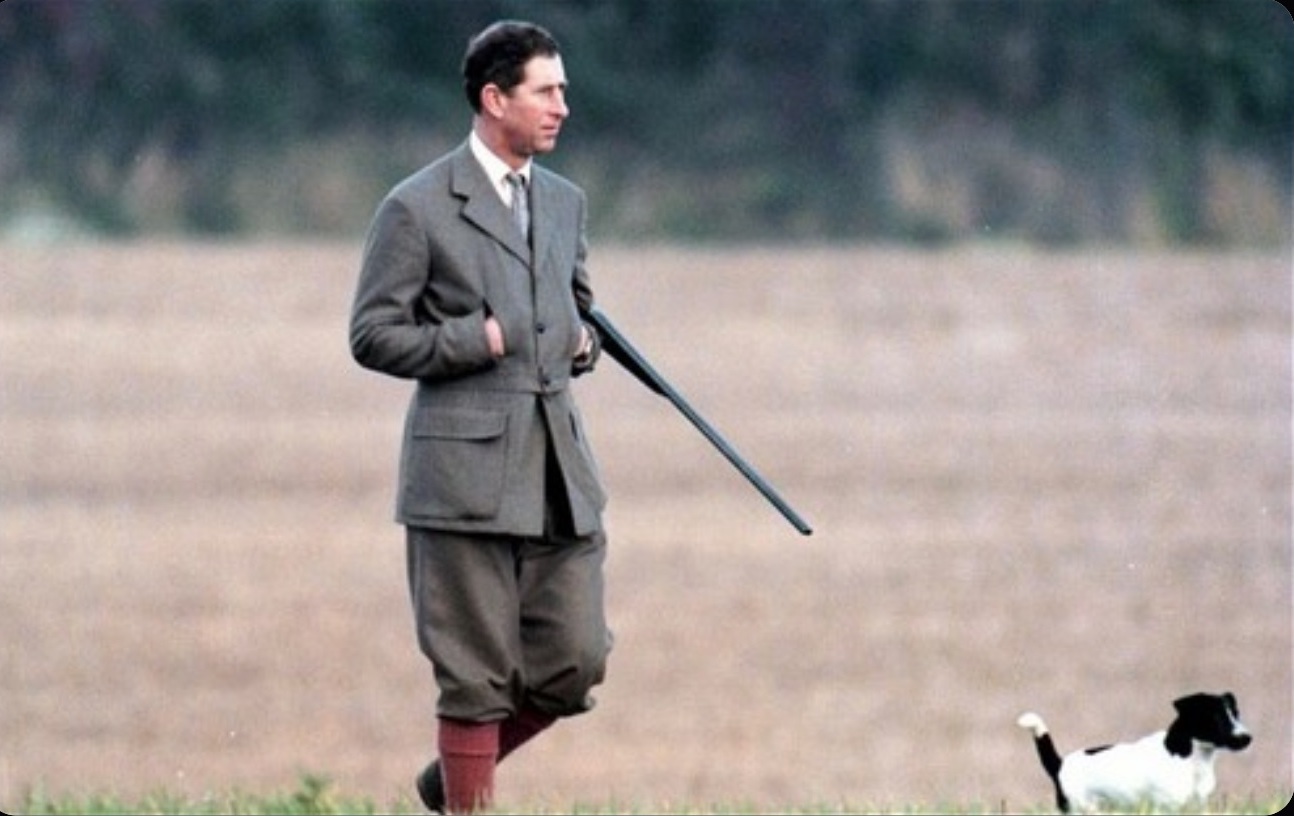
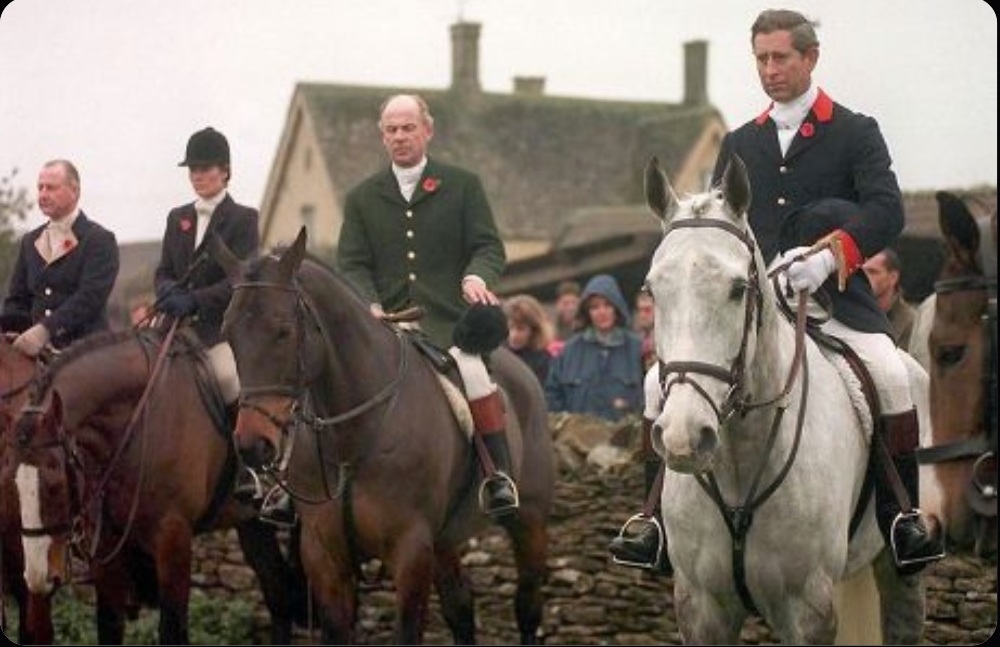
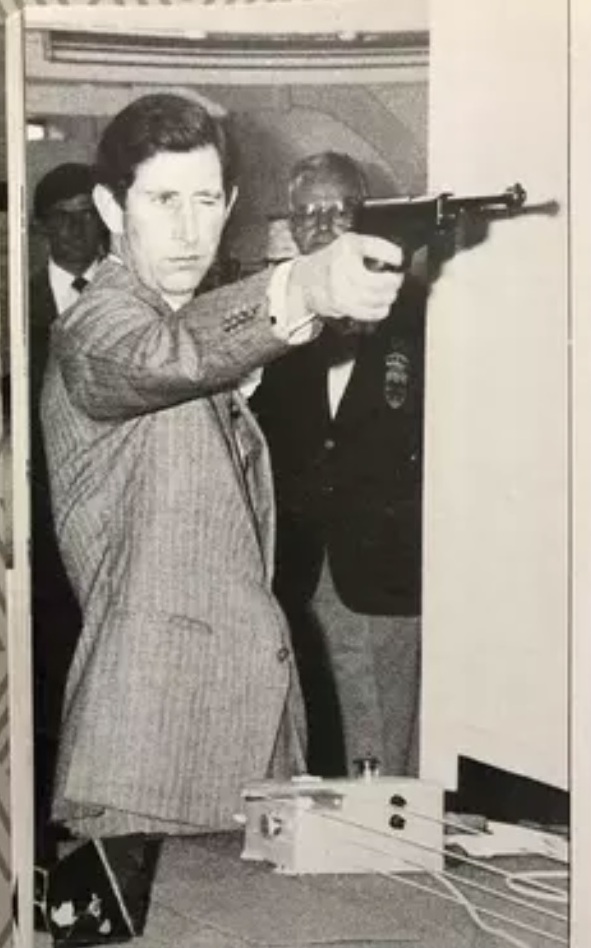
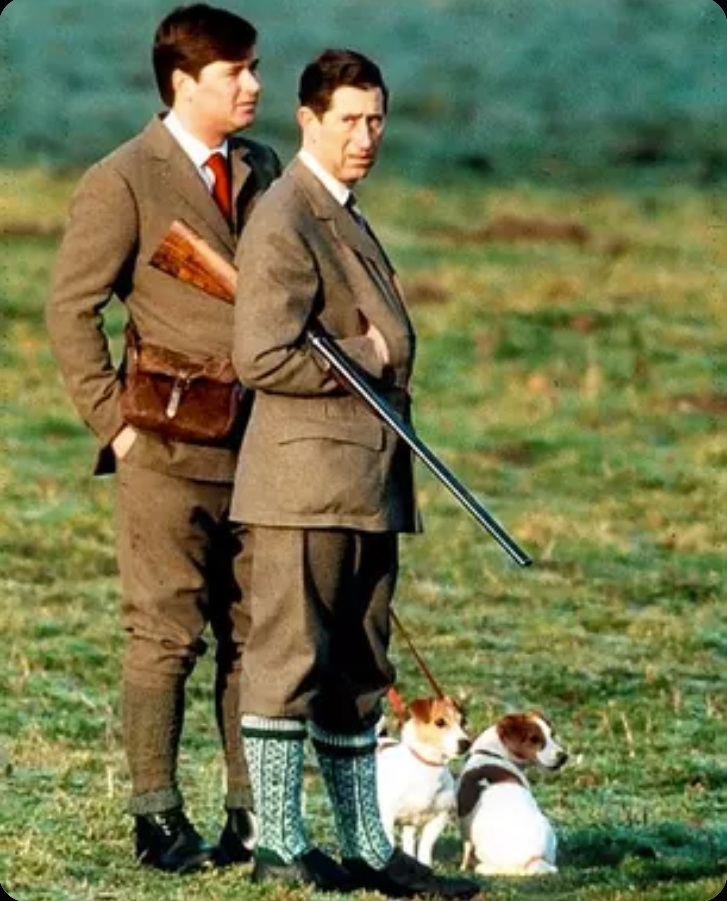
Surely there are other notable features of this coronation, but to me, the one that matters most is the one that almost no one (that I could find) took notice of, and that is King Charles’ masculinity and his love of field sports, notably hunting. With guns, and occasionally spears. In a world of the establishment war against boys, against masculinity and manhood, of forced and artificial feminization of men at every turn (like Bud Lite’s Dylan Mulvaney debacle in the USA), King Charles’ quiet but absolute manliness is a crucial symbol for normal people and for those who should want to return to being a natural, normal, healthy human.
If nothing else, King Charles may end up being a potent symbol of How To Be A Man. Laugh if you want about this, but at one time not too long ago, 99% of boys naturally wanted to become masculine men when they reached adulthood, to be service-minded police officers, brave firefighters, adventurous cowboys, heroic soldiers, and hunting was a bedrock experience that trained many boys for these fields. In a western world now under siege from within our borders and from within our own governments that are captured by our worst enemies, who among other things are doing double duty to weaken us by erasing manhood and masculinity from our population, having public symbols of masculinity and manhood, like King Charles, is more important than many people realize.
Setting aside his many bad policy positions, King Charles is no dithering dandy, no fop. Quite the opposite. He speaks firmly, rides tall in the saddle, properly and expertly handles rifle, pistol, and shotgun, and is not afraid to kill his own dinner or get blood or dirt on his hands or clothes. This is a king I could like and who we all need, if only because he is a real man. Long live this manly king.
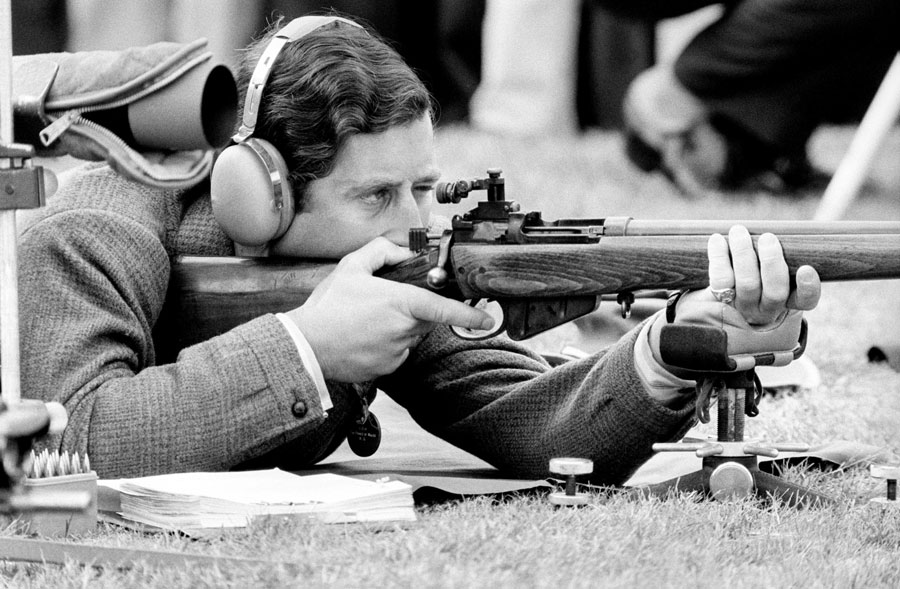
Thanks to Westley Richards for this photo
American hunters need an accurate round ball shotgun
Lt. James Forsyth wrote a fabulously prescient and useful hunting ballistics book in 1861 from his unique perch in Colonial India, “The Sporting Rifle and its Projectiles.” Using single shot and double barreled muzzleloading rifles, with mere black powder as the propellant, Forsyth squared off against the most dangerous wild animals modern humans have met in battle since the end of the Pleistocene, when our forbears wiped out all of the even more dangerous and ill-tempered megafauna with mere stone tipped spears.
Hold this thought for a minute.
Today’s hunter thinks he needs a soulless, faceless, characterless Three Million Magnum plastic and stainless steel rifle getting 1/8″ accuracy at three miles when topped with the Hubble Telescope, capable of blasting a twelve-inch gaping hole in a steel plate at that same three miles. But the truth is these modern gee-whiz gizmos are dumbing down, blunting, ruining and corrupting the most beautiful, honest, and pure hunting instincts and abilities we have inherited from our fur-clad ancestors.
Sniping animals from impossible distances with weapons they cannot possibly detect or withstand is nothing more than aerial bombing or target shooting at vulnerable living creatures who deserve our greatest respect and admiration, and upon whom we should only inflict our will when we are offensively at their own level of defense.
That is, what honest sport is there in assassinating an unsuspecting wild animal whose honed instincts protect it from every other natural predator, whose own predatory skills must be equally or better honed in order to close the distance and survive another day on the flesh of the prey animal?
What honor is there in these long distance assassinations? I say none.
You say you like to hunt? Okay then, hunt, dammit. Actually hunting means: Get outside on the landscape of your choice and perfect your actual hunting skills. Learn to play the wind, move quietly, use the topography to your advantage, be patient, be attentive, coordinate well with other hunters, and understand the life and habits of your quarry. Then and only then will you be an actual hunter worthy of the honorable name of hunter.
Enough of this hochsitz heated shooting box overlooking a planted field while waiting for some pet buck to step out five minutes before shooting light ends crap. This is not hunting, it is sitting on your lazy ass and relying on high technology to do the real work for you. Unless you are physically disabled or elderly, a status I myself am approaching and fighting hard every step of the way, do not dishonor yourself with this beyond early morning and late afternoon times. Or at least do not dishonor real hunters who actually hunt by calling yourself one of them when you do it exclusively.
Back to Forsyth, who though slight of stature was of immense bravery and manly stoic British character. (Oh, the British…a great people, once, and with some yet living among them who remember the old ways and who could lead their people forward through these dark days…if they would but will it.) Anyhow, Lt. Forsyth was a small but tough little bastard who faced down 8,000-pound rogue elephants, 3,000-pound gaur bison, and 600 pound male tigers, with mere black powder muzzleloading rifles at powder-burn distances.
Regardless of how fatal his shot might be, or not, Forsyth’s hunting adventures were very often enriched by the smell of burning fur as locomotive-powered horns and fangs sped close by him on their way to trying to stamp him into a little red puddle. Gunpowder that is still burning as it exits the gun’s muzzle is likely to catch something on fire if it is close enough, including the hide of charging Death. Forsyth embodied the spirit of the hunter, at least the truly manly hunter willing to take a real risk to gain a genuine and truly earned prize. We who are hunters today must all admire Forsyth, and we must seek to emulate him as much as we can in today’s sad world of toxic femininity and low testosterone. Sniping unsuspecting animals with magnum firepower is gay, or lame, or pathetic; choose your own appropriate adjective, but don’t do it. If Forsyth could trust his life and limb to a round ball, then we can trust our tame deer hunts to it, too.
The singular principle of Forsyth’s sporting rifles (not military weapons, which operate on different principles with different goals) was the use of the round lead ball. Like Sir Samuel Baker in Africa and Ceylon, Forsyth found that large round lead balls sufficiently propelled and accurately placed would utterly crush the life force out of dangerous animals, as well as more demur animals one might simply bag for the pot. Bear in mind again that these two men, in particular Baker, discovered the effectiveness of the round ball by literally shooting dangerous game at such close distances that any small mistake would probably mean life-changing injury or death. They got this close in order to ensure the proper placement of their ball, not to test themselves and see if they could cheat Death.
For mere deer and elk, Baker used a shortened Claymore sword. Yes, he hunted and killed deer species of all sizes (including Highland red stag) by hand, at close quarters combat. So, again, do not lower yourself to shooting unsuspecting animals at long distances with gigantic magnum calibers. Be a man and a hu-man, and get out on the landscape within spitting distance and earn that critter. Archery hunters know and do this innately, and are thus justifiably proud of their kills. Same for traditional muzzleloading hunters, spear chuckers, atl-atl launchers, and handgun hunters.
Today, to implement both Forsyth’s hunting spirit and technological advances in ballistics, so that we might be the best firearm hunters we can possibly be and also be the most practical hunters we can be in an increasingly regulated environment, we need a modern firearm that achieves multiple goals simultaneously.
To that end, I propose the single shot and double barreled shotgun, rifled with Forsyth rifling. Any well made utility grade shotgun will do just fine. Most of the old but trusty utility double barrel shotguns like the Savage Fox Model B or the Stevens Model 311 should take a slight rifling just fine, because their ridiculously thick barrels could be just as easily used to club baby seals as seal the explosive gasses of fired ordnance.
OK, pump and semiauto shotguns could have Forsyth rifled barrels, too. It’s just that our skills improve when we are challenged by (self-imposed) limitations.
Forsyth rifling is specially designed for the round ball at black powder velocities between 1,100 and 1,900 feet per second. This rifling has very shallow depth grooves, like 2/1000 of an inch to 3/1000 of an inch, as well as a very slow twist rate. Like one full turn of the cut rifling in 72-90 inches. With appropriate powder charges in modern steel barrels, either black powder or smokeless powders can be safely used, and both fabulous accuracy and devastating knockdown power achieved. The perfect “brush gun,” at the least.
Using black powder, Forsyth satisfactorily tested his rifling and round balls out to 250 yards, saying that within 150 yards it was exactingly accurate. Probably consistent 1-2 inch groups. With big lead balls. Imagine what can be done using smokeless powder.
To my knowledge, nothing like Forsyth rifling is employed in modern shotguns today. Despite or perhaps because of the ongoing craze for shotguns accurately shooting massive slugs (like TarHunt), sabots, and conicals, it seems the lowly but easily obtained and highly effective round ball has been shelved because too many of them were ineffectively shot at deer and bear out of smoothbore shotguns, or shot out of tightly rifled shotgun barrels designed for conical bullets and sabots.
Round balls have received bad press because here in America they have not been correctly matched with proper rifling except for smaller deer and bear caliber-sized single shot muzzleloading rifles. Time for a change!
One constant and legitimate knock against “punkin balls” is that they were terribly under powered, meant more for imprecise point blank shooting at animals in thick cover. This problem can be easily fixed by correctly loading round balls into shotgun hulls for use in appropriately rifled barrels that will give deadly accuracy and destructive force to round balls. Meaning, add more powder! Pap’s old “punkin balls” would have actually shot incredibly accurately had they gone through barrels with Forsyth rifling.
So let us return to a simpler, cheaper, and frankly more manly and effective firearm: The modern shotgun with Forsyth rifling, designed to very accurately and effectively propel a 20, 16, or 12-guage round lead ball (only 350 to 600 grains weight 😳) around 1,500 feet per second. Put these velocity-times-mass kinetic energy numbers in your pipe and smoke it! You will smoke every deer and bear you hit with such powerful projectiles!
And for those hunters concerned about the cost and availability of hunting projectiles and reloading, there is nothing simpler than pouring your own lead round balls and reloading shotgun hulls. Push come to shove with components, you can most easily obtain lead and black powder, and shotgun hulls are reloadable about twenty times each.
Shooting round balls might feel like going backwards, but in many ways the simpler ways and days were better.
Today I submitted a written request to Henry Repeating Firearms, makers of sturdy, accurate, no-frills shotguns perfect for employing Forsyth rifling, that they please consider undertaking such a project. Let’s say to start, manufacture 100 Forsyth rifling single shot break-action shotguns, tested with correct diameter round balls fired from common shotgun hulls with commonly obtainable smokeless and black powders.
If the 100 single shots sell well, then try a few dozen double barrel shotguns that have received some elementary “regulating” whereby the two barrels are brought into pointing harmony with one another. Each barrel should place its ball at or near the landing point of the other barrel, fully converging together within a 75-120 yard distance.
In conclusion, let us say we pursue this particular goal if not for efficiency, effectiveness, and ease of reloading, then to restore our rightful place and reputation as American riflemen, long hunters, frontiersmen with pluck and the best hunting skills on Planet Earth bar none. Shooting round balls within 200 yards is true fair-chase, ethical hunting.
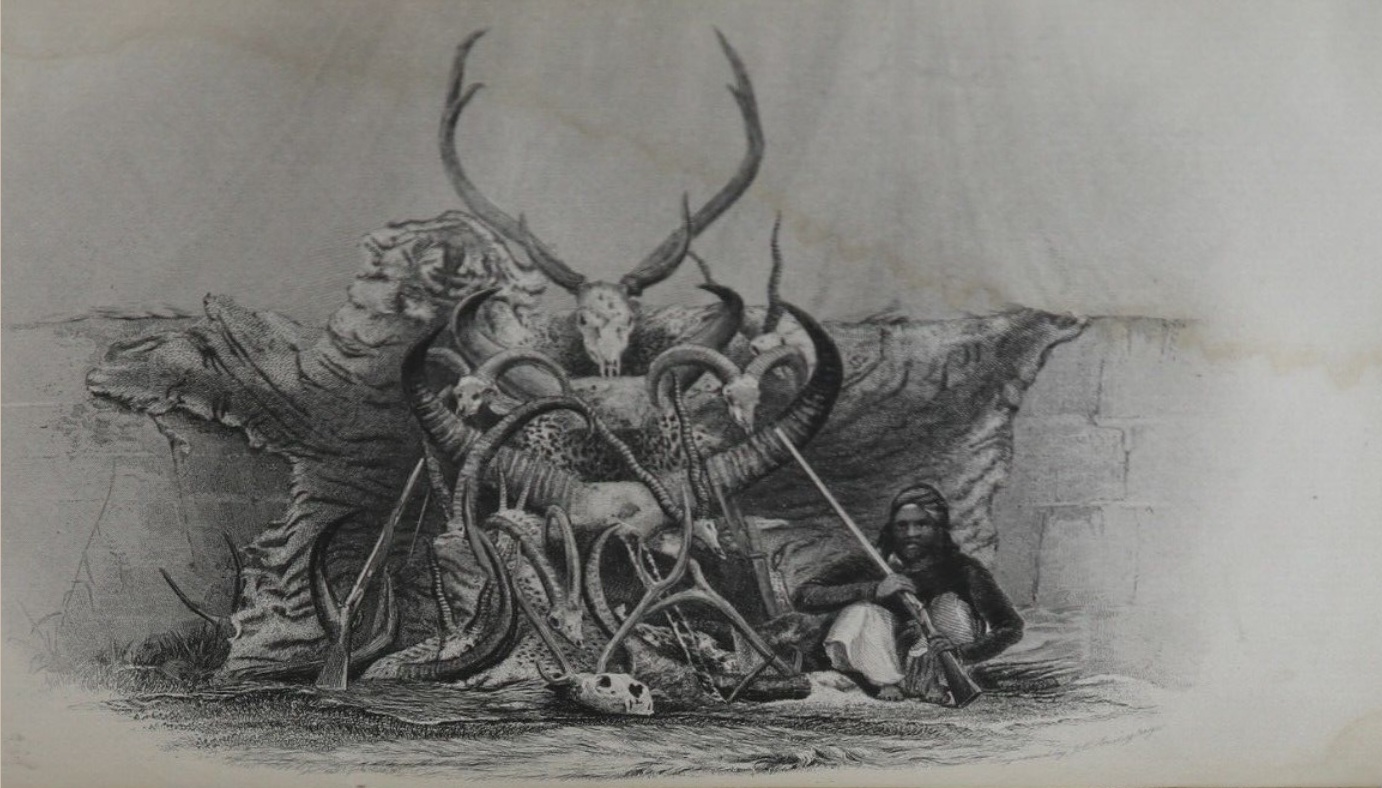
Lieut. James Forsyth of the British Bengal Riflemen Corps posing with some of his well-earned Asian hunting trophies in about 1860. All of which he took with the black powder round ball. Look at the tiger skull that is the size of Forsyth’s entire chest. Note the tiger skin into which quite a few full-sized Forsyths could be stashed all at one time. We hunters today would do well to use Forsyth’s properly arranged round ball technology.
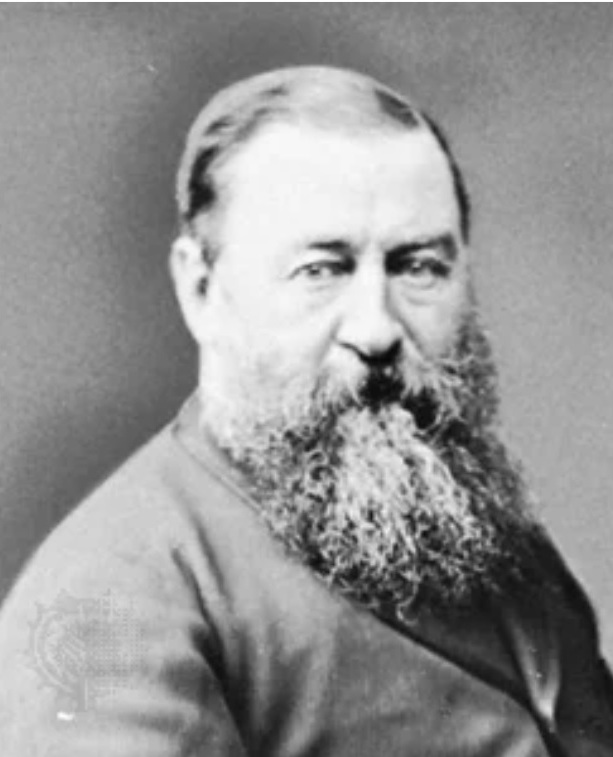
Sir Samuel Baker, gentleman, ultimate stud, patriot, hunter, fearless adventurer and most tender, devoted, and loving husband to a slave woman he liberated. We should all yearn to be like Sir Samuel in some way or another. Maybe it will just be hunting with a powerful round ball instead of a hyperkinetic missile.
Recent gun “buy backs” hugest waste of money and time
Leave it to people who are so consumed with hate that they can’t think straight to make a solid public policy, and so they expend public time and funds on really stupid things.
We are talking here about the hate that so many elected officials (99.5% of whom are registered Democrat Party) have for firearms. Firearms that otherwise secure our police forces, secure our armed forces, secure food for the table, and secure our private homes and personal bodies from violence. Firearms by themselves never did anything to anybody, but if you are an ineffective elected fool, and you are looking to make some kind of statement about how effective you are to people who are easily impressed, you do a “gun buy back.”
Such foolishness recently happened here in Northampton County, Pennsylvania and in Utica, New York.
Never mind that there is no “back” in the gun buy-back, because the guns being purchased never belonged to the official buyer. But hey, fools are gonna fool, especially with foolish sounding policy names, and so we get these mis-named public gun purchases in mostly Democrat-run towns and counties. *I grew up in a rural area where the Democrat Party was heavily represented. Today, not one person out there is a registered Democrat, because this political party has gone off the rails.
Public funds are expended to buy guns, with great fanfare and yet very little or no gain in public safety. Usually the public message goes something like this: “If our purchase of guns here today stops just one mistaken shooting, just one crime, just one accident, why then this is all worth it.”
Which is of course more foolish nonsense. The same communities are often wracked with violence and epidemic official failure, causing hundreds of local citizens to die unnecessarily and prematurely every year. But the “just one life” thing always sounds so serious.
Never does anyone ask What if these guns were used instead to defend our borders by state militia in Arizona, or New Mexico, or California, or Texas? Think about how many lives THAT would save, given how many drug and drug violence deaths are being walked across America’s open southern border right now. These guns in the hands of private citizens defending the American border could probably save hundreds of thousands of lives!
Or, what if the local police put on a gun safety program and taught these same private gun owners with little firearms experience how to safely shoot and store their guns? They would probably make their homes so much more safe and crime-resistant!
When all of the potentially saved lives are compared to the one or two potentially, theoretically, possibly saved by the “gun buy-back,” then we see these gun buy-backs a) don’t save lives and b) are a waste of public money.
What really strikes the eye in these publicized public firearm purchases are the purchased firearms’ low quality, the large number of antique black powder guns that have not hurt anyone since the 1860s, the valuable historic and collectible guns that should be sold to raise money for public agencies, and the simple hunting-grade weapons that leftists tell us they never ever want to take away from us. And all of the hunting ammunition! Destroying this stuff is the crime!
Why don’t the police use the ammunition for police officer training? Why destroy something so valuable as ammunition?!
And since when does the government rip off private citizens, paying them literally pennies on the dollar for high value guns, and then instead of monetizing that public money investment, the government employees then destroy the high value property?
Why doesn’t the government have an appraiser on site who can advise private citizens about the actual high value of the old gun the local government is offering them $75.00 for? Why is ripping off local people a good policy?
In Utica, New York, roughly $30,000.00 of public money was spent on purchasing… “ghost guns,” which is a political term, a loaded term, and a fake term to describe guns that are manufactured off the grid. And you know what? Those “ghost guns” that sound so dangerous and scary to the New York Attorney General… they were printed on a 3-D printer! In other words, they probably cost a few bucks each to make, and then the public mis-paid the owners hundreds of dollars each.
How does any of this make sense?
And yet all of these guns and the ammo are destined to be destroyed. So say the unquestioning mainstream media fools, who stand up in front of the cameras and parrot the talking points they are handed. Hint to the paid media people: You got a degree in “journalism,” I think because you were supposed to be…journalists? What kind of a journalist doesn’t ask questions, especially of those in positions of political and official power? (Answer is: Mainstream media people are not journalists and they do not ask questions. Instead they parrot narratives given to them by leftist government employees).
So we here are doing the job of the “journalists” who appeared in writing and on TV with the articles and reports about the gun purchases in Northampton County, PA, and Utica, NY. We are asking the simple questions, and making the simple points that these are not intelligent uses of official time or money. But then again, we do not begin at the assumption that destroying any and all firearms is the right and intelligent thing for government to do, because we are not filled up with mindless hate for inanimate objects.
[Question to the pro 2A activists in Northampton County: Why not sue this nincompoop of a DA, Terry Houck, and demand that he at least assess the market value of these guns before having them destroyed? In no other area of government do people get rewarded for destroying valuable public property]

Terry Houck is Northampton County’s idiot DA, who takes great pride in knowing zero about the collectible, valuable guns he is destroying
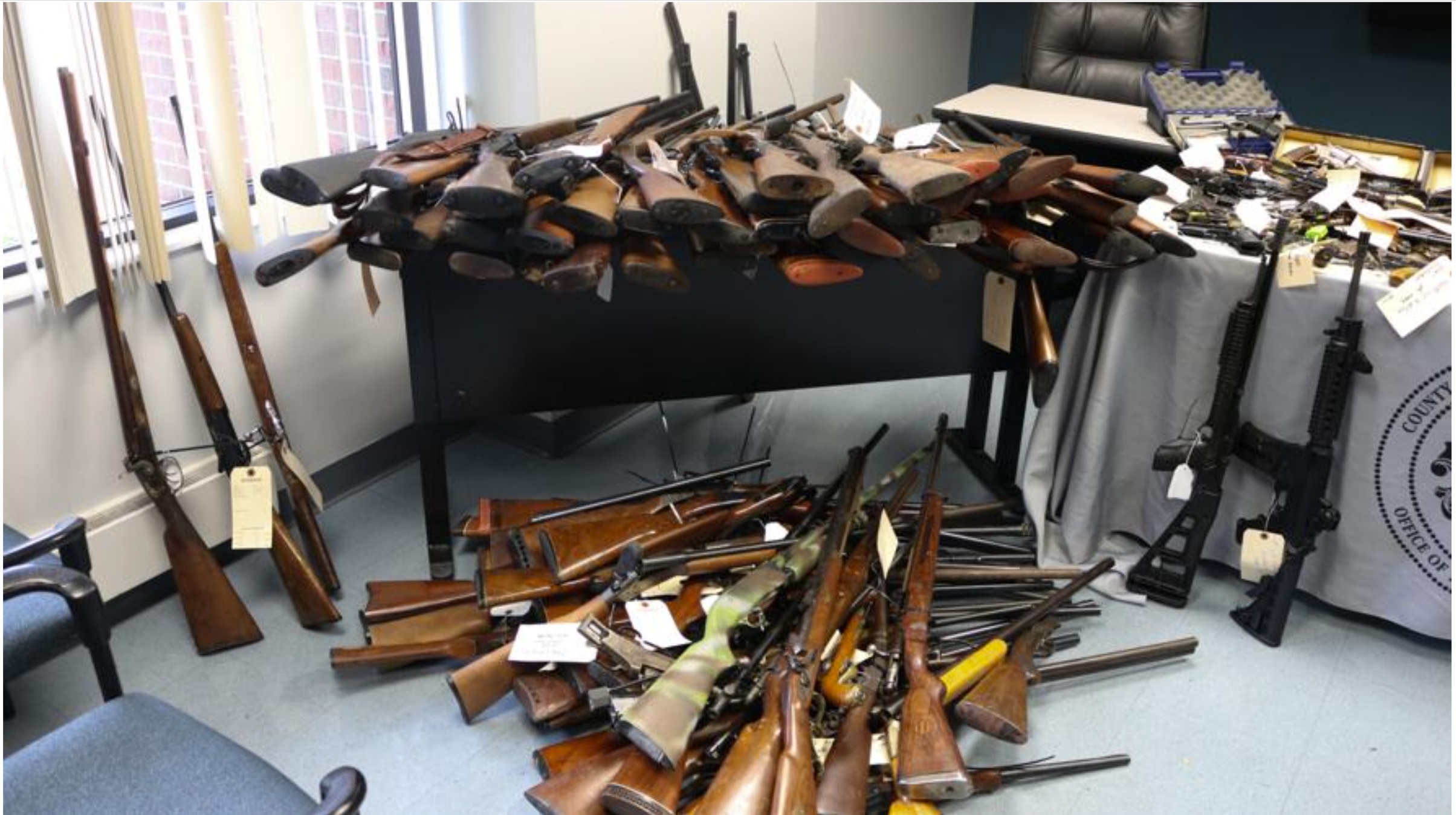
Flintlocks, black powder percussion guns, hunting shotguns, single shots, highly collectible and valuable Veteran bring-back guns from Europe, all said by DA Terry Houck to be dangerous. And yet…none of these are associated with crime. And therefore they are not dangerous.
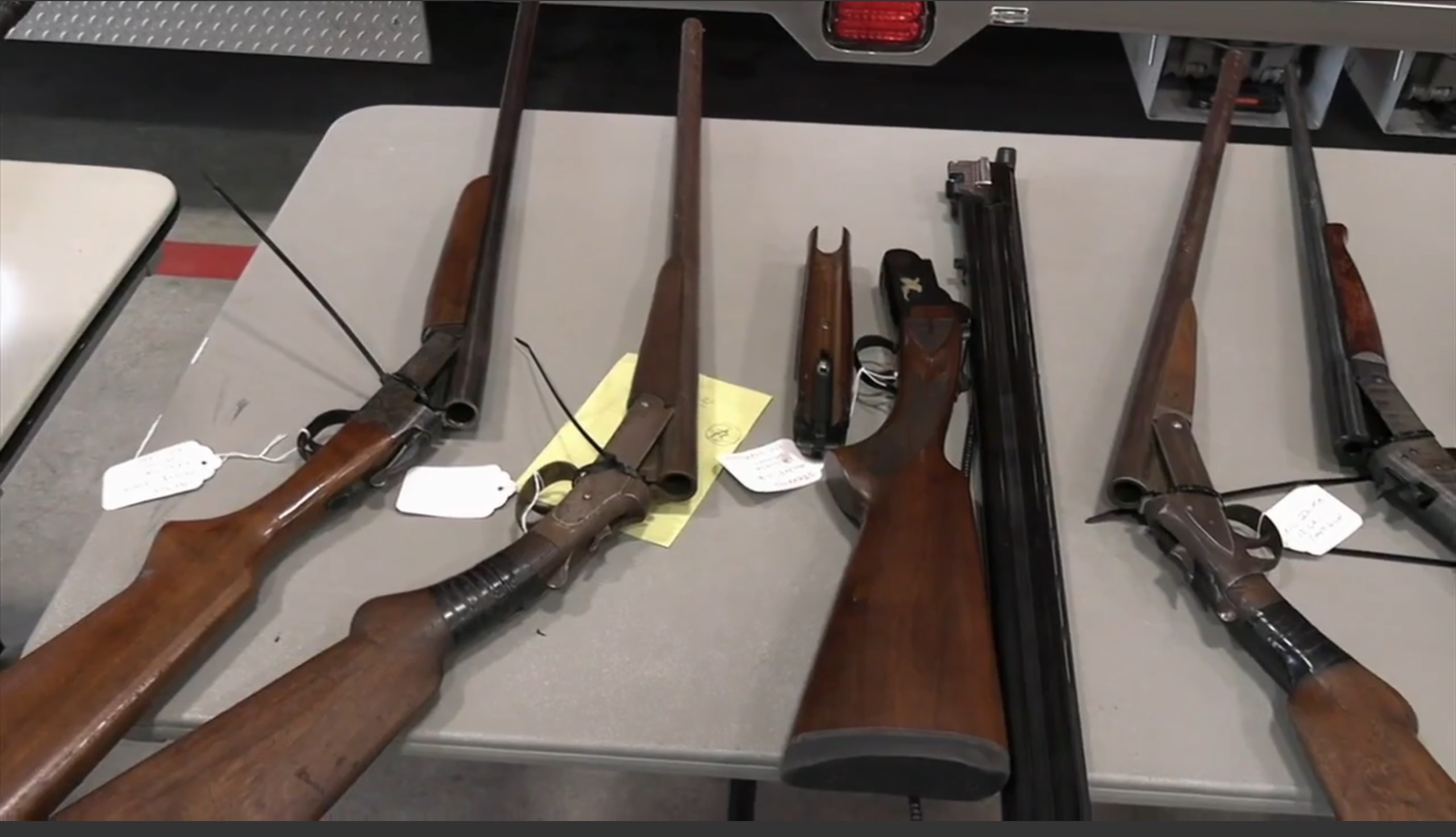
These are not the kinds of guns used in crime. Simple single shot shotguns and one really valuable over-under hunting shotgun, all destined to be destroyed. For no public benefit at all. Just to make fools feel good about themselves

If you stand in front of a camera and talk like a parrot, are you a journalist? Priscilla Liguori asked no questions, committed no acts of journalism in the making of her report about Northampton County’s gun purchases. One more big mainstream media failure
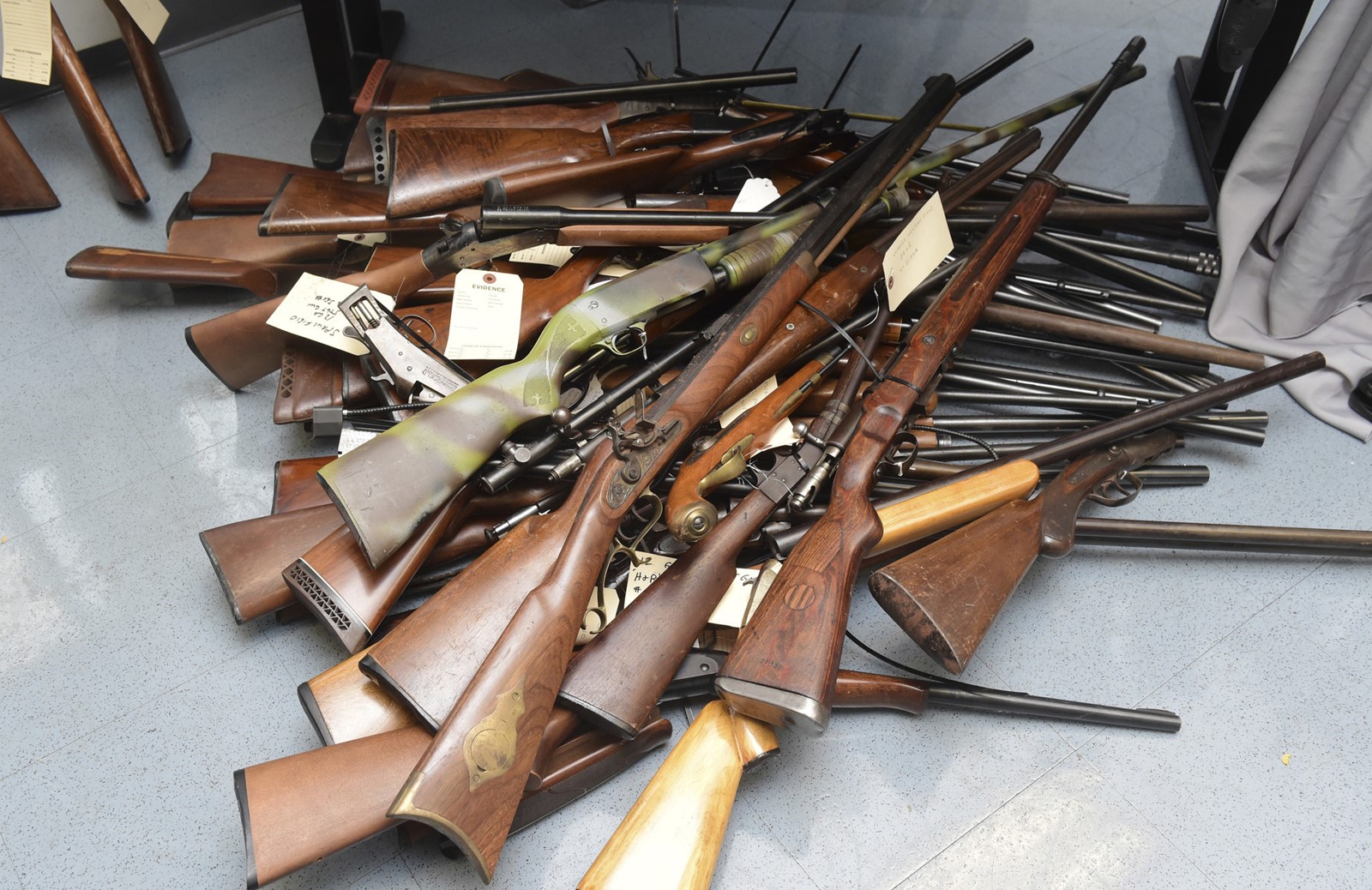
The green-colored gun is a Remington 20-gauge pump shotgun used for hunting birds and rabbits. The rifle at the far right bottom with the rounded pistol grip is a high value Veteran bring-back gun from Europe that never hurt anyone. The gun at the very top of the heap is a single shot black powder FLINTLOCK muzzleloader used to hunt deer; with 1790s technology, it has zero potential use in crime. Only hatred-filled firearm prohibitionists cheer on the destruction of these useful and safe recreational and collectible guns.
Primitive hunting techniques are more important than ever
In this day and age of popular stainless steel and plastic hunting rifles and Hubble telescope-sized rifle scopes, primitive hunting techniques and weapons are more important than ever. Something in the bad age of video games and instant gratification happened to the American character in the past thirty years or so, and so many young Americans have become lazy and even a bit heartless, as a result. Hunting culture has suffered from this, too. Really badly. Today’s focus seems to be predominantly on the kill, and much less on the process of the hunt.
Those curious about the distinction here should look up some neat videos from real hunters in the big woods of Vermont, Pennsylvania, and the Adirondacks.
Hunting should never be just about, or mostly about, killing an animal. Especially if the hunter wants to call it a trophy and put it up on his or her wall as a representation of his skill.
People trying to justify 300, 400 yard long range shots (or farther) on unsuspecting animals are not hunting, they are assassinating. Their wood craft often sucks, their field craft is limited to wearing camouflage, and their knowledge of the game animal is negligible. They are not really hunters, but rather shooters. Their high-tech guns, ammo, and rifle scopes are a crutch diminishing their need for good woodcraft, and it also results in a lack of appreciation for an actual hunt, and a lower value placed on the animal.
Culling oversized wild animal populations for the benefit of the environment is one thing, but hunting wild animals for pleasure and clean meat should be accomplished with skill. Age-old skills that everyone can respect. Hard-won wild animals taken with real skill under fair chase conditions are all trophies.
An unsuspecting big game animal assassinated at long range (or worse, inside a high fence, or over bait) requires very little hunting skill, and can never be said to be a trophy that is reflective of the hunter’s skill set. And yet isn’t this why so many hunters want big antlers and broad hides? They see these big animals as a reflection of their hunting prowess, of their manhood, their chest-thumping status within the outdoors community. As a result, America has developed a hunting culture driven by bigger-is-better trophies, at any cost, all too often achieved through long-range assassinations of unsuspecting wildlife, or over bait. Fair chase, which has always been at the heart of hunting, has been tossed away in favor of quick gratification and unfounded ego bragging rights.
The primary reason why primitive hunting weapons are so important today, is that someone has to keep the culture of hunting alive. What is a primitive hunting weapon? Pretty much any legal implement that requires the hunter to work hard to develop unique field craft/ wood craft skills, including the ability to penetrate within a fairly close range of the prey animal’s eyes, ears, and nose: Any bow (compound bow, stick bow, self bow, longbow, or other hand-held vertically limbed bow), spear, atl-atl, open-sighted black powder or centerfire rifle, any large bore handgun with or without a scope, should qualify. Flintlocks, percussion cap black powder muzzleloaders, and traditional bows are especially challenging to master and to harvest wild game with.
All of these primitive weapons require the hunter to actually hunt, to rely upon his woodcraft to carry him quietly and unseen across the landscape, and into a fair and close range of his prey animal. Animals taken with primitive weapons and techniques are earned in every way, and therefore they are fully appreciated.
Few experiences bother me more than watching some internet video of a fourteen year-old hunter running his hands over the antlers of a recently deceased buck, and listening to this inexperienced mere child discuss the finer aspects of this rack, its inches, its points, its relative size, and its (barf on my feet) trail camera name. Usually the child has shot the deer from an elevated box blind that conceals all of the hunter’s scent, sound, and movement. Whoever has taught these kids to hunt this way exclusively, and to then look at deer harvested this way as so many bragging rights, has done a huge disservice to these kids. These kids are going to grow up into poachers and baiters, always trying to prove how great of a “hunter” they are, and how studly and manly they are, at any cost. They will end up doing anything to score the next “record book” animal. These young kids who are being warped right now with this trophy nonsense are the future of America’s hunting culture, and what a crappy culture it will be if it is dominated by big egos and even bigger mouths armed with sniper rifles and no actual hunting skill.
Moms, dads, grandpas and uncles who are beginning to teach kids to hunt right now can do two simple things that will ensure their little student grows up into an ethical, responsible, high quality, law-abiding hunter: Make them use open sights on single-shot firearms and bows.
The skills that young hunters develop from having to rely on open sights and single shots (primitive weapons) will force them to achieve a high level of field craft, wood craft, and fair chase values. Developing skill requires a person to overcome challenges and adversity, often making mistakes along the way. And that results in better character.
Forcing kids to get close to their prey animal, and to take only carefully aimed shots with just open sights, will result in people who become really excellent hunters. Adults can always opt to add a scope to their rifle as their eyes age, but the lessons learned early on in concealment, controlling movement, playing wind direction, and instinctive shooting will keep the respectable art of hunting alive and well.
This Fall, get your little one started on a flintlock or old Fred Bear recurve bow from the get-go, for squirrels and deer, and watch as a true hunter is born.
Bidenflation just killed a national publication gem
“Soaring prices of paper, shipping, ink, and printing have put us into the red, and we can no longer function,” reads the personal note I received on a fabulous custom Double Gun Journal card from DGJ proprietors Daniel and Joanna.
What a message: Disastrous loss, beautifully wrapped and delivered on a silver platter.
My first encounter with the DGJ was spring 1991, in Rockville, Maryland, on a Tower Records bookstore shelf, along with Grey’s Sporting Journal and other fancier field sports publications. But the DGJ was different than any other publication I had ever seen, and, therefore, every quarter thereafter I purchased the latest edition and learned about reloading for black powder firearms long believed to be “obsolete” or “dangerous!” or un-sexy enough to compete with modern mass produced plastic and stainless steel firearms lacking a soul, a heart, or even personal appeal.
Distinguished gun and outdoor writers like Ross Seyfried and Sherman Bell introduced modern shooters, antique gun enthusiasts, and financially or historically oriented gun collectors to actually making those beautiful historic firearms shoot once again. Seyfried and Bell, in particular, removed the mystique and veil from antique rifles, double rifles, and double barreled shotguns with Damascus or twist barrels.
It turns out that the beautifully hand crafted double barreled black powder rifles and shotguns of the 1800s, and the early nitro express rifles of the 1900-1930 period, did not just look good. They also shot with incredible precision.
Since the late 1990s I have been an annual subscriber to the DGJ, eagerly awaiting each quarterly installment. In 2017, 2018, and 2022 I published a number of technical articles about Charles Lancaster double rifles. Of particular focus has been the development of Lancaster’s most valuable trademark technology, their singular oval bore rifling. For those with any curiosity, the Lancaster oval bore rifling looks like a smooth shotgun barrel. But if you squint your eyes and look hard enough, you will eventually discern an egg-shaped bore that rotates on a central axis. Lancaster’s proprietary oval bore rifling was long ago, and remains today, one of the great mysteries of sporting arms ballistics, because it absolutely defies physics. And yet, it works incredibly well.
An 1888 Charles Lancaster black powder double rifle that I shoot regularly is capable of placing paper patched bullets from BOTH its barrels into a 1.5″ hole at 100 yards. Now THAT is the very definition of firearm accuracy.
Charles Lancaster oval bore double rifles were The Thing for wealthy sportsmen around the world from the 1850s into the 1920s. That I eventually became the probable “expert” on Charles Lancaster oval bore rifles is due to a simple mistake, or a weird act of Godly intervention, or Fate. Because when now deceased Maine forester extraordinaire Tim Scott asked me to buy his Charles Lancaster .450 BPE double rifle, I bit. And then Ross Seyfried walked me through the steps of making it shoot safely. After that I was hooked, and the rest is history (see also lancasterovalbore.com).
And so here we are, saying goodbye to one of the last, if not THE last artisanal publication in America. A family owned business for decades, a byword and watchword and often the final word on antique firearms technology and reloading, the DGJ is irreplaceable. And yet it too is now fallen victim to Joe Biden’s hyperinflation. Everything is so expensive now, so much more expensive than it was just a year ago.
I recognize that Biden’s purposefully destructive economic policies are aimed at re-setting America into a more communist China-type place. While most Americans oppose this needless, illegal, forced, and destructive change, I think the loss of the DGJ is like the proverbial canary in a coal mine: Its early demise warns of us of coming dangers that can be fatal to us, too.
If you are interested in contacting the DGJ to acquire back issues, binders, beautiful note cards and artwork, etc., they can be reached at 231-536-7439 in central Michigan.
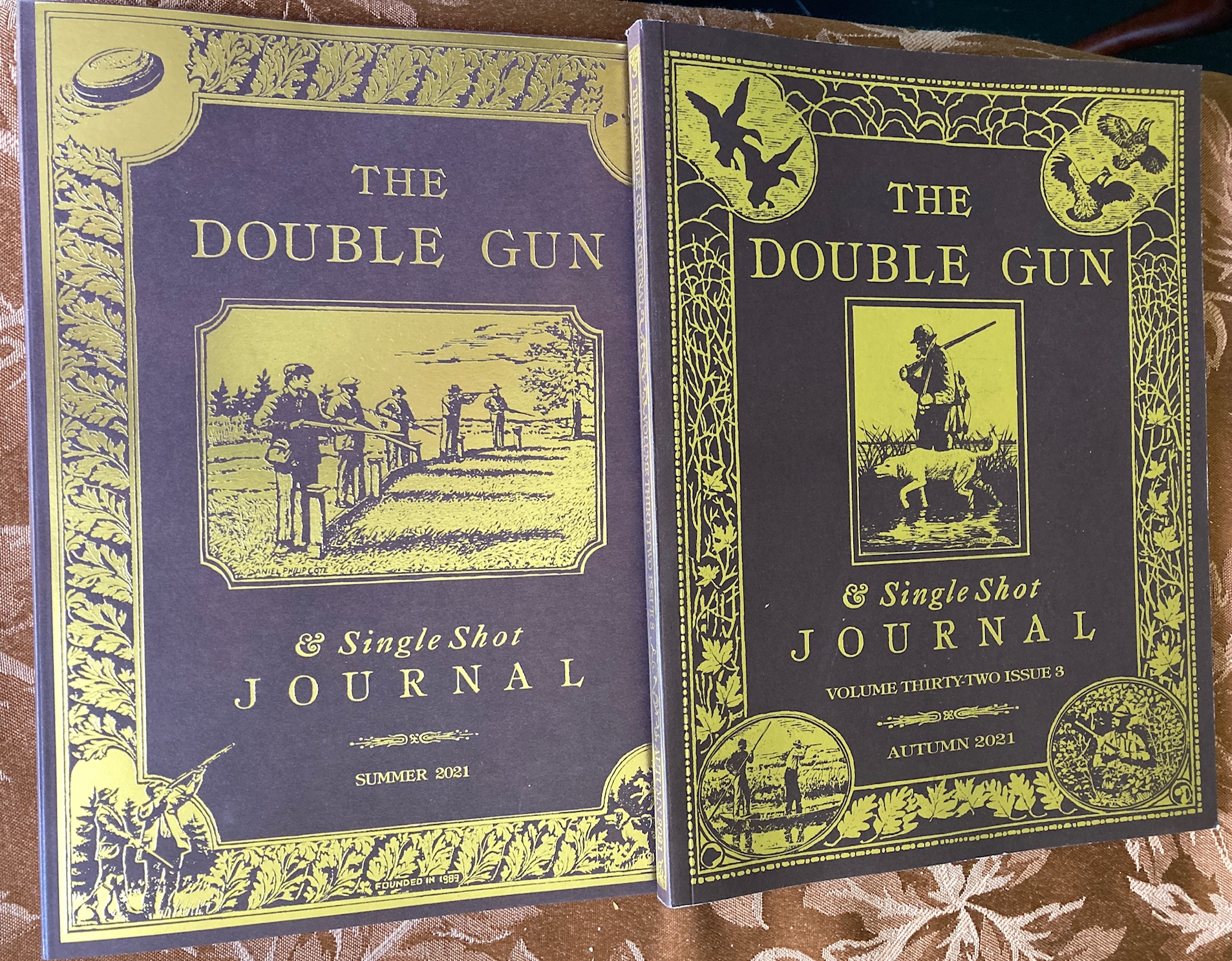
Maybe some day younger Americans will encounter these treasures, and discover an appreciation for fine firearms
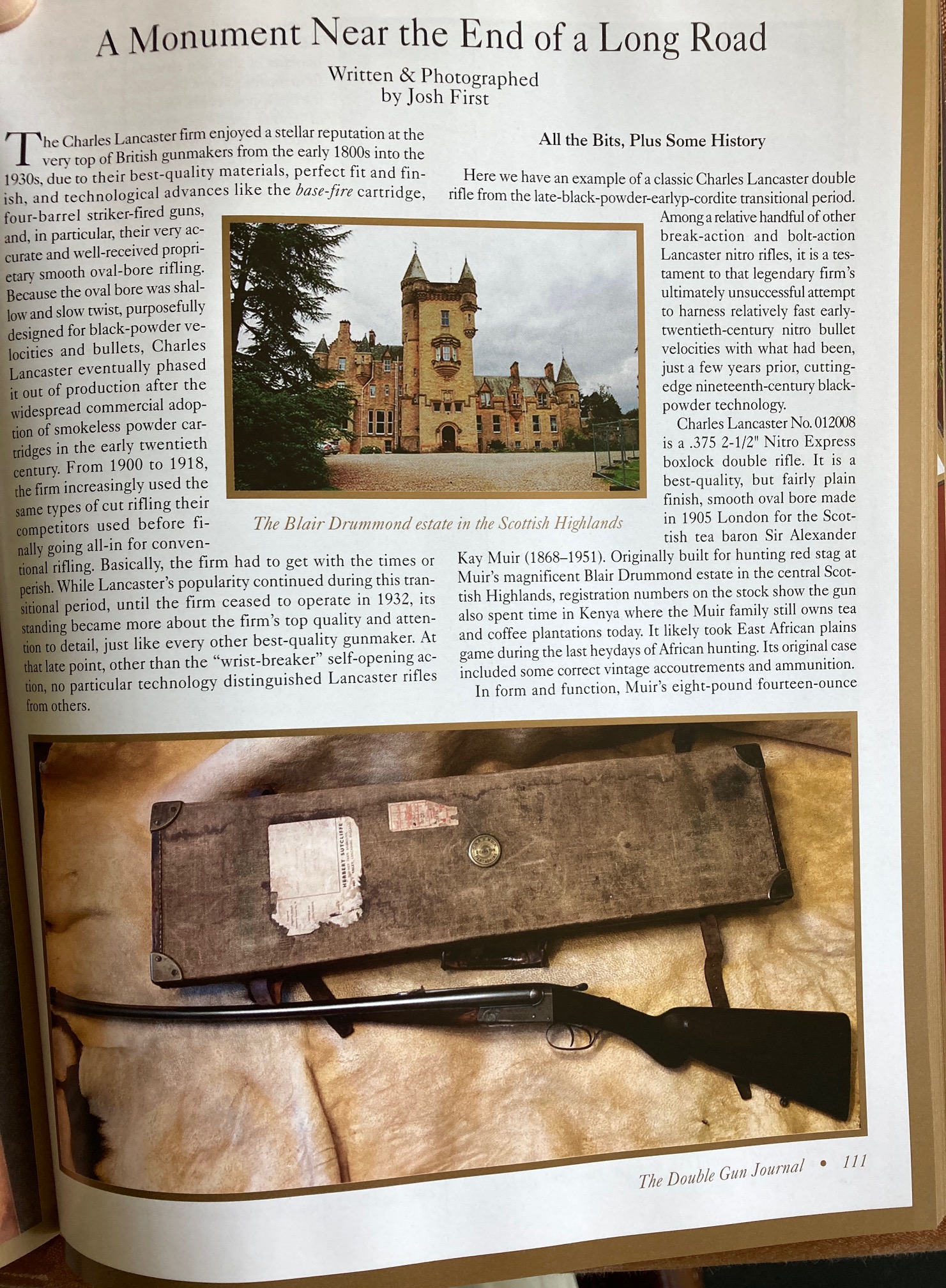
My final article in the Double Gun Journal, thanks to Joe Biden’s purposefully destructive economic policies
What is hunting?
With hunting seasons drawing to a close here in Pennsylvania, it is worth the time to revisit an old question, which is What is hunting?
We ask because, without question, non-hunters overwhelmingly support hunting that is fair chase and purposeful. That is, hunters who are seen by the public to be respectful of our prey are recognized as a positive force, and worthy of continuing their pastime.
Every scientific opinion survey asking Americans their opinion about this subject for the past several decades has yielded the same result: Hunters who actually hunt get respect and support from non-hunters. On the other hand, people who are perceived by the general public to be casually killing animals just for pleasure or for “trophies” usually do not garner much support.
While there is a lot for us to talk about with even just the survey question itself, like how America has become so urbanized and thus our people so distant from the natural resources and processes that feed and clothe us and wipe our butts (toilet paper from trees harvested in forests) etc, this particular question, and its answer, is most important because hunters are a minority of a minority in America.
Positive public opinion about hunters and hunting is necessary to the continuation of regulated hunting as we know it and as it has been practiced for the past 100 years.
Given that American hunters are lamentably awash in a sea of soulless plastic and stainless steel rifles these days, whereupon the Hubble Telescope-equivalent scope is mounted, many owners of these contraptions are regularly and quite naturally tempted to attempt military-grade long distance sniper assassinations of far-off big game animals.
Though fleet of foot, strong of heart, and equipped with majestically sensitive noses, ears, and eyes, these animals cannot compete with humans who are so far removed from the natural zone of awareness these animals’ senses otherwise provide them. This begs the question of whether or not long-long-distance shots at these clueless animals are actual fair chase hunting, or are they incautious and disrespectful maltreatment of animals we otherwise admire.
Honestly, this stark question brings to my mind the images of charismatic megafauna hand-painted on cave walls by our spear-wielding ancestors: Rhinos, gigantic cave bears, massive aurochs, lions, zebras and wild horses, bison, etc. dangerous animals all, taken at great personal risk and at bad breath distance, contrasted with today’s ego-driven high-fence “trophies” mounted on manicured man cave walls around America, animals snuffed out without a chance at fight or flight. The cave paintings were the Sistine Chapel experience for paleolithic humans, and today’s manicured egocentric faux trophy rooms are very sorry substitutes. Authentic versus fake, they couldn’t be more different from one another.
So, a bear or deer taken with a bow, a crossbow, a spear, an atlatl, a blowgun, a shotgun, a flintlock or percussion muzzleloader, or a modern muzzleloader or rifle with open sights seems like a pretty natural example of fair chase. The 400-yard Hubble Telescope plus “500 Magnum Killem” caliber assassination of the unknowing and unsuspecting beast is just that, an assassination. Is there anything fair or chase about it?
Just as political America now requires a return to our simple and beautiful founding principles, so will our hunters benefit from returning to mastering the basics of early American woodcraft, the ability to sneakily slither and glide into the wind across a landscape to get within the animal’s sensory zone and make an honest and competitive kill. This kind of field craft is the essence of fair chase.
Artificial reliance by hunters on high tech is embarrassing, to tell you the truth of how I feel. Repent and return to the basics, brothers and sisters! Our fellow Americans who do not hunt will not only support us, they will admire us, and as a result of their admiration our outdoor lifestyle will have a much greater chance of surviving beyond the high tech culture that is otherwise crushing everything natural and alive in its unwholesome path.
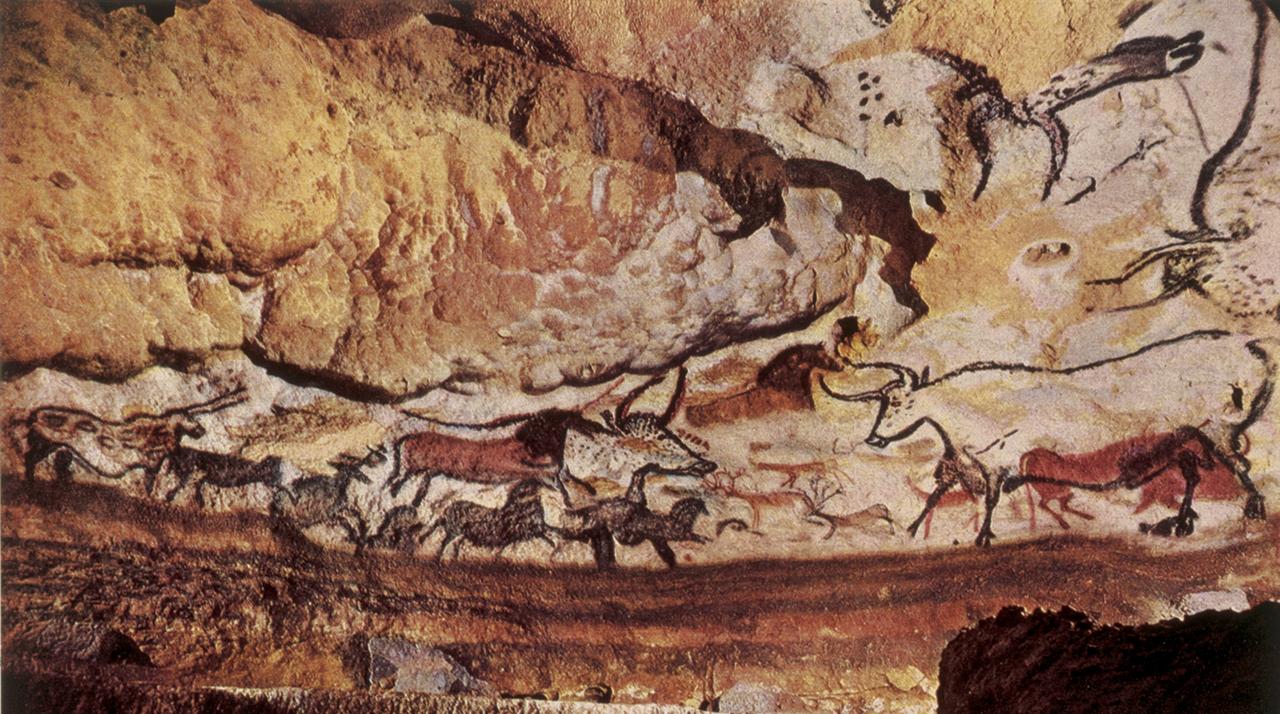
Wild animals have understandably inspired humans since our beginning
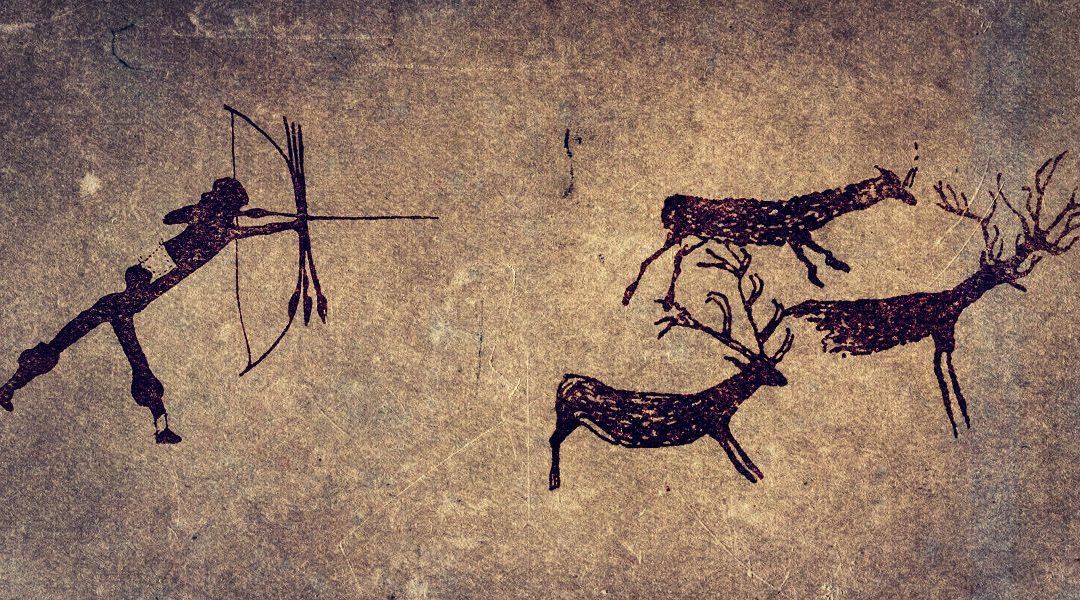
Hanging this stag’s magnificent rack on your lodge wall would be earned with the bow and arrow
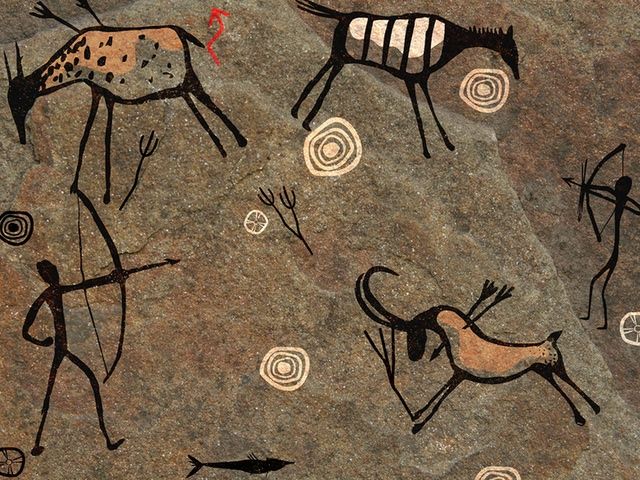
An honest kill. This is hunting
Anatomy of a deer season
It doesn’t matter if you archery hunt for deer religiously, from October 1 to mid-November; the archery season is always over way too fast.
It doesn’t matter if you archery hunt a bit for bear and deer, hunt the week of early muzzleloader for bear and doe, do some small game hunting, have the men up to camp for bear season for four days, and then hunt every day of deer rifle season. The ending is always the same: It ended way too fast. We wait all year for this time, and before you can blink an eye, it is over.
For many hunters, this time is about being afield, hunting. The occasional actual killing part is a welcome indication that the hunting part was done well. Proof that the time spent outside was not wasted.
Oh, we still have some late deer season remaining, which is the late archery and flintlock hunt. But by now, deer everywhere in Pennsylvania are on high alert. A twig falling out of a tree and rustling a leaf on the ground will send a nearby deer herd into panicked stampede into the next county. So getting deeply enough into the sensory zone of these intelligent animals to take one with a bow or a flintlock at this stage takes real skill, not just the usual luck.
Although I will hunt the flintlock deer season, because I have some DMAP tags left, looking back even now with a sense of longing has me thinking about the anatomy of a good deer season. Some take-aways:
- Eat good food. Whether it is home-made jerky and dried fruit we make ourselves for our own time afield, or it is the extra thick gourmet steaks we bring to hunting camp, eat the best quality food you can afford. Hunting alone or with friends and family is a celebration, so eat like you are celebrating. And because Man does not live on bread alone, make sure your drinks are of a commensurate high quality.
- Practice, practice, practice with your gun. Archery hunters practice non-stop, but for some reasons many gun hunters leave it to one box of ammo and the days right before the season to “practice” shooting. Well do I recall sharing a range with a guy from Lancaster County at the bench next to me. Friendly enough, he enthusiastically, if spastically, launched his one box of “extra” shells down range as rapid fire as a bolt action can fire. I had offered him the use of my spotting scope and Caldwell shooting sled, and he declined. He did end up relying on my spotting and calling his hurried shots, however, because he didn’t quite have his scope figured out. The old random “spray n’ pray” is the approach he packed up and drove off to hunting camp with. Do any of us think he hit what he shot at?
- Bring your best jokes, naughty or practical. Hunting camp is fun, and each of us must contribute to that festive atmosphere. Many years ago, I bent down to inspect a strange looking object hiding under the cabin’s kitchen counter. And just as quickly I jumped back and screamed like a little girl when the damned thing took off running. That it was merely a muskrat pelt attached to a fishing line being pulled by Bob and followed by uproarious laughter at my expense just made my revenge all the sweeter. As for naughty jokes and rhymes, the list is endless. Look them up and bring half a dozen. Maybe I am lowbrow, or maybe I have low expectations, but it sure seems that everyone present laughs at these men-only jokes.
- Get out into position early, like at least an hour before first light, and when you move play the wind (nose into the wind), go quietly and slowly, and carry your gun port-arms and not across your back. If you can get out into position at 4:30am, even better. Just bring a blanket and some Zippo hand warmers.
- Food sources matter for deer and bear, too. We humans are not the only ones who both enjoy and need food. In a year of abundant acorns, a stand of sweet tasting white oaks will draw more deer and bear, and you can sit down wind of that stand of trees. In a year of scarce acorns, like this year, any tree that had a decent crop will still draw animals pawing in the leaves for whatever may be left in early December. By this mid-November, almost all of the already scarce acorns were eaten up, and both bear and deer seemed to be moving widely across the landscape in search of any food. It makes for tough hunting, and so we have to team up with buddies and other camps to work together to scoop up what animals are out there. Be flexible and think outside the box of a permanent stand.
- Speak animal language. Last year I grunted in an Adirondacks wilderness buck after busting him out of his bed. He was a territorial and aggressive SOB. But the conditions were all wrong for playing around, and although his body was visible, I could not shoot through the beech brush to get him. This year I returned for Round Two with the same animal, which had probably never seen a human being, and after two days of tentative efforts, Day Three resulted in the furious huge buck storming right in to my position with leaves, twigs, snot and mouth foam flying. I shot him in the neck at five yards, five miles from my truck. Lot of work, totally worth it for that DIY hunt of a lifetime. My position was carefully chosen for what he could see or smell under a certain wind direction. I waited until it was all just right, and let fly. His response was immediate.
- Take pictures, send them in emails. While journaling is not dead, most people today do not write in a personal or camp journal. Instead, we take photos and email them around. The recipients always appreciate them. Especially when ten or twenty years has suddenly passed, our knees don’t seem capable of all those steep climbs and hard sidehilling drives any longer, and a lot of our best times at hunting camp are sitting around with dear friends and reminiscing together. So don’t forget to take pictures and share them.

Northern PA’s acorn crop largely failed in 2021, possibly due to a late frost that killed the acorn flowers. Acorns remaining on the ground looked OK from the outside, but were all rotten like this on the inside. Wildlife is hungry and moving widely to locate food.
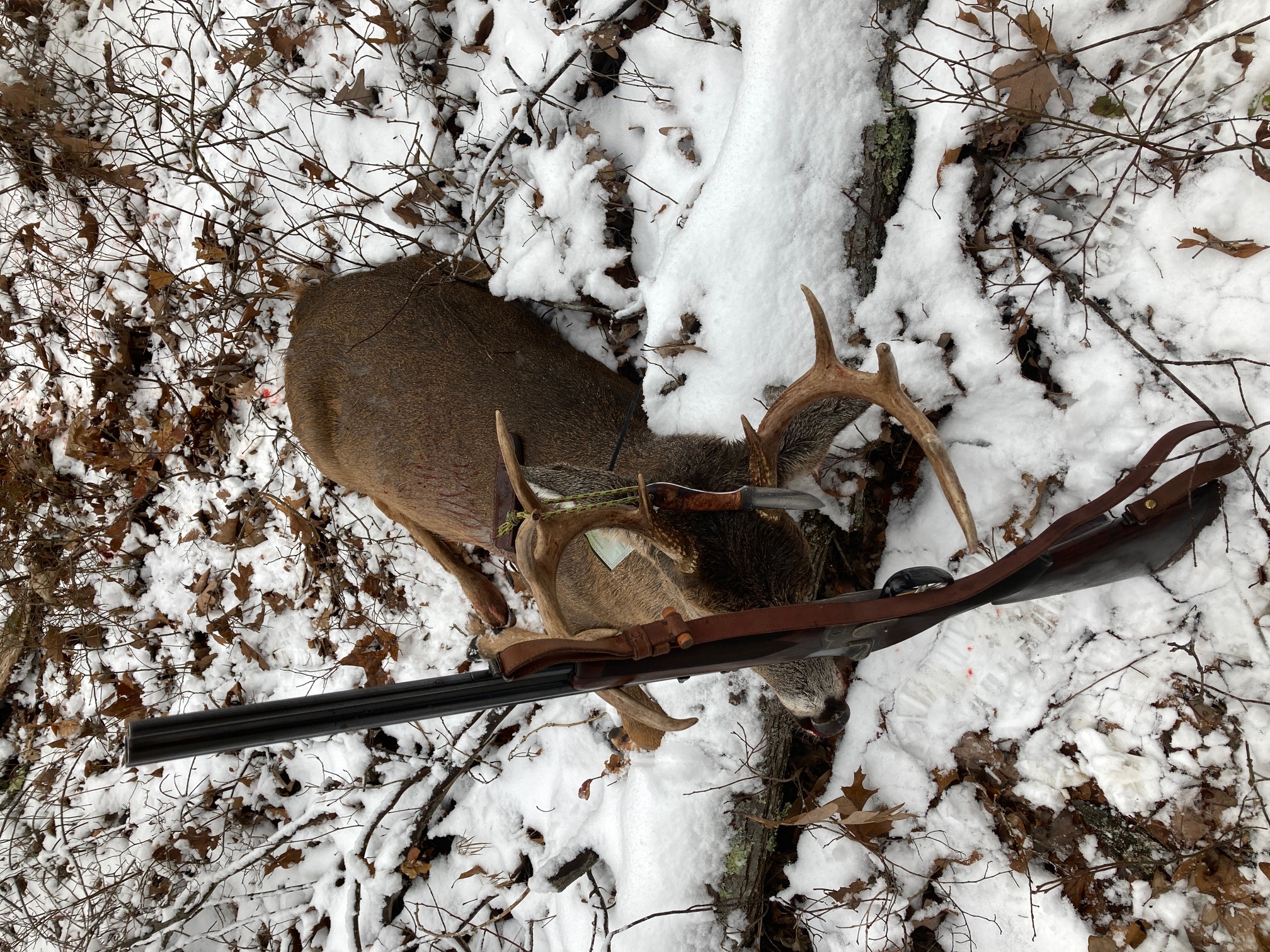
My “Freedom Buck,” killed on Sunday November 28th at 7:45am, on private property in PA. The ban on Sunday hunting is an attack on freedom, and so I named this Sunday morning buck after my declaration of freedom.