Posts Tagged → Jefferson
Musical “1776” Two Thumbs Up
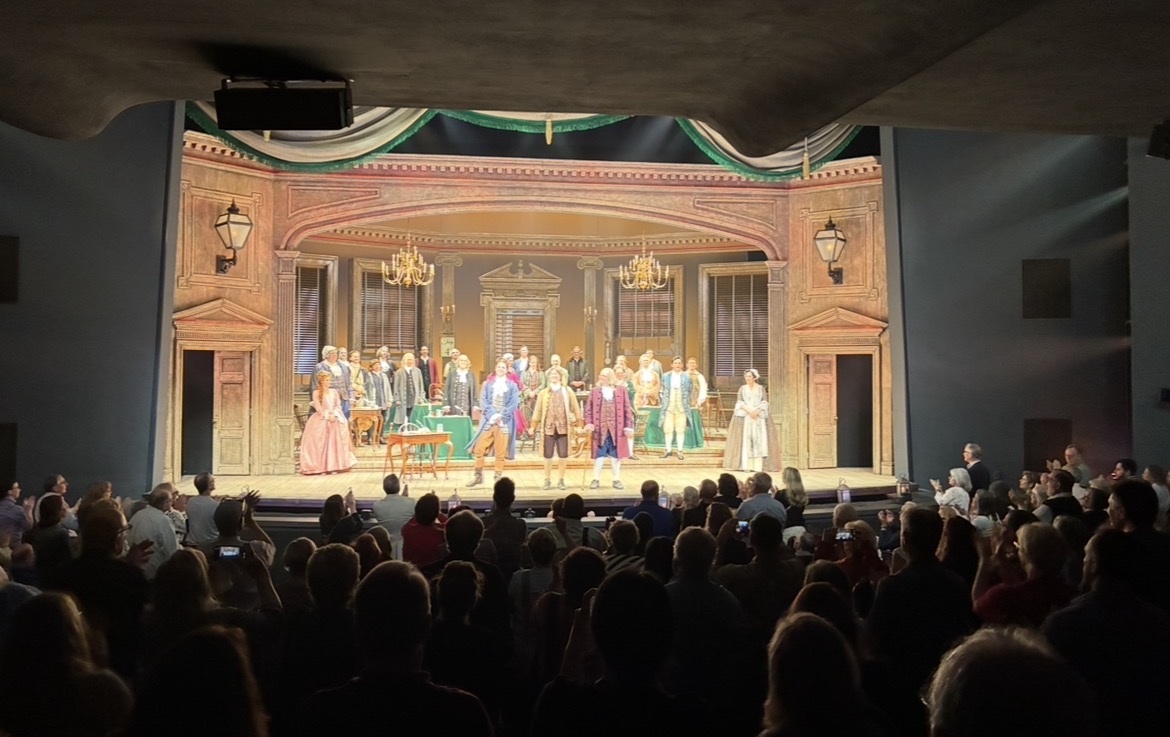
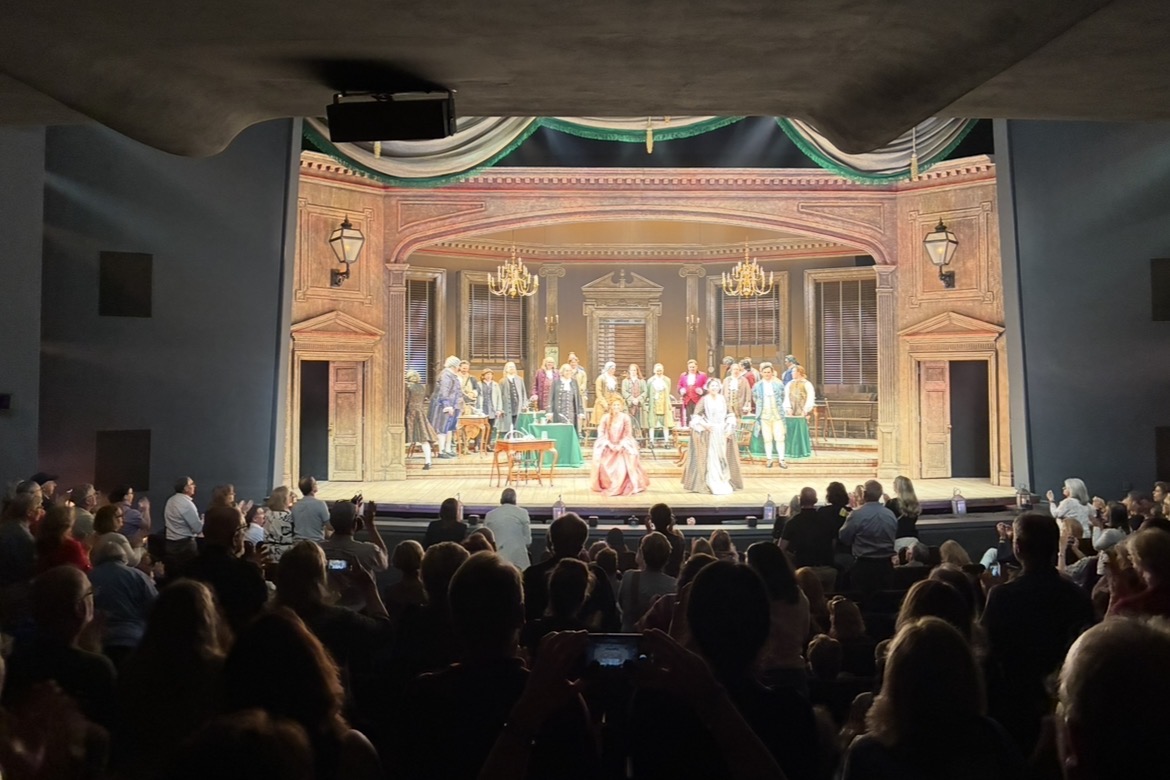
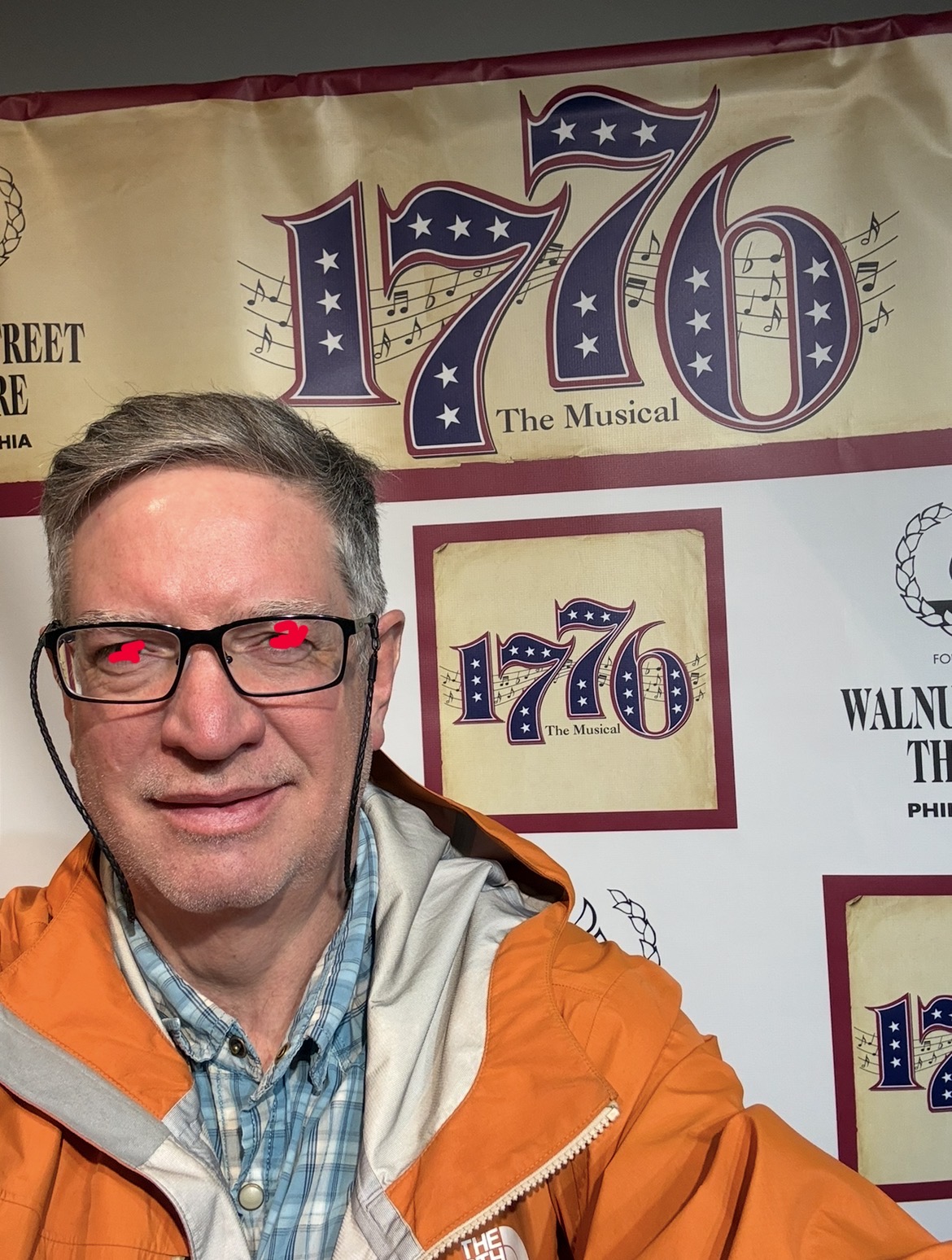
Please do not tell anyone, but I saw a musical play the other day, and I liked it. Humiliating to admit, yes, but our three readers come here for honesty, if nothing else. Today you get five doses of honesty: The musical “1776” was excellent, timely, accurate, entertaining, and all the other positive stuff that my movie and theater critic mentors Siskel & Ebert would say about it.
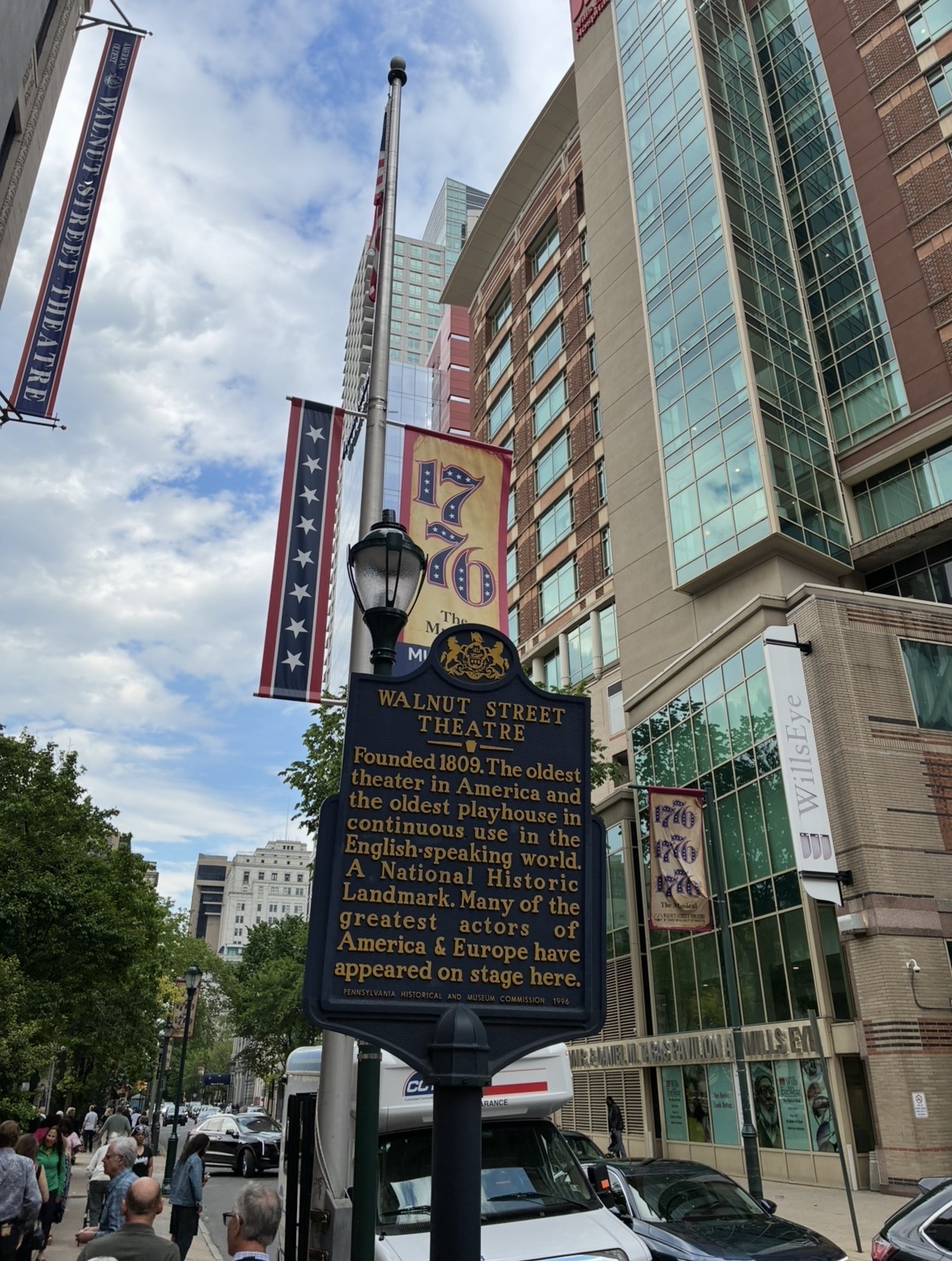
We saw it at the historic Walnut Street Theater in Philadelphia, America’s oldest longest-continuously running theater. Because the venue has a sane policy on weapons (have your carry permit available if anyone asks to see it), I was strapped. I was strapped because it is downtown Philly, where the Wild West can descend upon one in the blink of an eye.
The docents, volunteers, and paid staff were all nice and helpful. Before the show started, we could have raised Lazarus more readily than actually reaching a human being during operating hours. Weak spot, but probably a weak spot in all theaters. No one there answers the phones or the emails until after you have come and gone.
Look here, theater is not for me. Watching adults play dress-up and make-believe is usually overwhelmingly annoying for me. These are not mature people, and many of them have gratingly annoying personalities. It is impossible to take actors seriously, on stage or off. Now that TDS is ravaging Hollywood, I am reminded daily about how much I dislike actors. It seems that the kind of people drawn to acting all fall into the “Big Jerk” category of life.
One exception in my world exists for those live stage performances that are about meaningful, inspirational, true stories. Biblical stuff ranks “acceptable.” Political theater is almost always heavily slopped to the falling overboard-left, preachy, inaccurate, dumb, communist, and, thus, annoying. Best bets are on movies, where the nonsense and forgotten lines moments have been left on the editing room floor.
“1776” is about the writing of the Declaration of Independence over a one month period, however, and is, therefore, a ten out of ten in my book, any day. It involves the story of the delegates from 13 colonies, debating the break-up with Britain, in Independence Hall, in Philadelphia, in June and early July, 1776. The widely documented personal performances of Benjamin Franklin, John Adams, and our own (local to PA) John Dickinson are performed admirably by the capable actors. Thank you!
Real focus is put onto the debate about slavery, which did occur in the actual Continental Congress, and how that hot issue was taken out of Jefferson’s first version of the Declaration of Independence. Depicting this on stage is especially important these days, as it is bizarrely considered “cool” by some to incorrectly badmouth America about slavery.
Fact: In 1794 America just about had a civil war over slavery. We also almost had a full civil war over whisky and taxes, then, too. But abolishing slavery was an early goal in our nation’s founding, and white people were ready to fight and die to end it, even as slavery was a full blown enterprise in the rest of the world. Eventually American whites got around to that fighting and dying thing, in 1861, when the insurrectionist Democrat Party declared separation from the rest of America, over keeping their slaves.
By 1865, the Republicans took away the Democrats’ slaves, and as we see even today, the Democrats never forgave them for it.
I digress.
That this was a musical without much singing was God’s way of showing me that beauty can occasionally exist in the darnedest places, including on a stage full of … feh… actors. That most of the singing that did occur was bawdy or silly really took the sting out of the musical part.
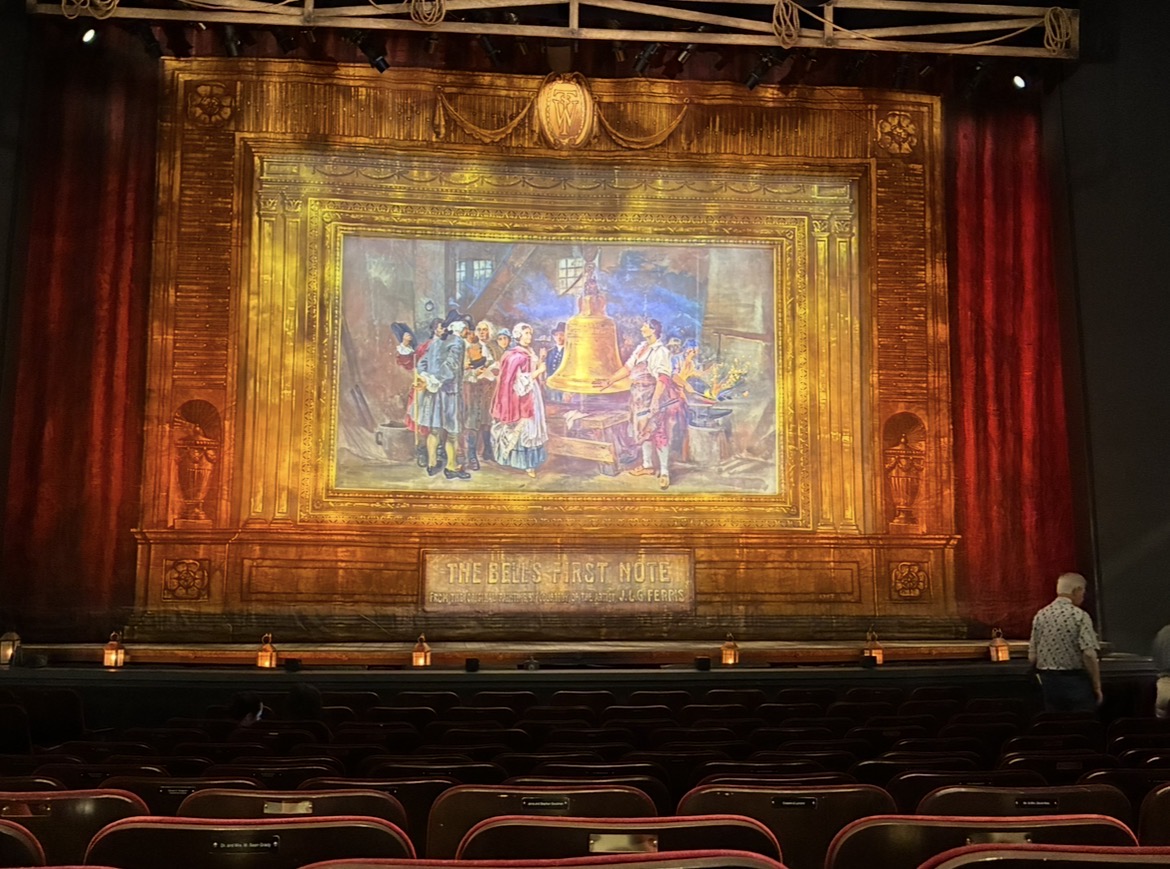
The actors said their lines well, performed very well, and entertained us audience people well, about an important subject. The Walnut Street Theater was clean, had no stray odors, and was a pleasure to visit. All the audience members upon whom I threw myself were friendly and gracious.
In another couple of months America, us, our nation, will celebrate its 250th anniversary since our founding. It is a really big deal. This play was timed to synch with our national celebration, and it fits well. If you find yourself going anywhere near Philly in the coming weeks or months, go see “1776.”
And go strapped, because the venue has a Constitutionally-minded policy on 2A concealed carry. God bless ’em. That was the only reason I set foot inside the theater…they actually believe in FREEDOM.
Screenshot
Screenshot

Screenshot
Screenshot
Screenshot
Screenshot
A Day for Presidents and Chiefs
Today is Presidents’ Day, the day Americans remember the more notable and benevolent of the presidents who have administered our collectively owned executive branch. As we are seeing daily, the chief executive has tremendous power not only over our military forces and federal agencies, but over things we rarely see behind the scenes, like how our tax money is spent.
Daily reports of outrageous payments of your and my tax money by rogue federal agencies are riling up Washington, DC, and are vindicating President Trump. Recall that President Trump stated that the Biden Administration was lawless in more ways than just politicized law enforcement and open borders. Turns out that for the past four years, American taxpayers have been sending our hard-earned money to the farthest corners of the planet for the most ridiculous reasons – promoting transgenderism and gender coordinators among climate change cultists in Asia, is just one such boondoggle. Hundreds of billions of dollars spent on subjects of dubious value, at best, and of fraudulent purpose. There is undoubtedly corrupt self-serving going on with these grants, as well.
In directly challenging these modern illiberal, really pagan, values that very nearly overran America, Trump is channeling something older and more powerful than himself, or even than modern America: His inner warrior is coming out. We are now seeing the spirit-man himself, no longer speaking from a sterile podium, but rather riding out on his horse, war paint on his cheeks, his Plains Indian headdress flowing in the wind, his reddened war club in his right hand, going straight at the enemy of all things good and sacred.
Mount Rushmore has the faces of our most famous presidents, Washington, Jefferson, Lincoln and Theodore Roosevelt. Room remains for one more face, and various suggestions have been made about whose face it should be. Because Mount Rushmore is in the Black Hills, a place long sacred and special to various Plains Indians, and which was supposed to be set aside solely for the Indians, many people have suggested that the last face be Indian. Specifically, the same face that adorned the Buffalo Nickel.
A composite face, not necessarily Sitting Bull or Geronimo, but one that represents as many of the native tribes as possible, and thereby capturing the spirit of the carving: Indomitable and fighting to the very last. Truly American. Truly Trump.
While America forcefully defeated the many native Indian tribes, we then immediately put their faces on our coins and public symbols, because of our admiration for them. We liked to think that the deeply faceted spirit of the American Indians was in all of us. The American Indian spirit is something we still universally recognize and value, respect, and admire. So, I will put in with those who say the Indian head from the Buffalo Nickel should be the last face to go up on Mount Rushmore. Maybe just brush a little Donald Trump in there with it.
The way I see it, we will get a two-for-one out of it. It will be symbolic of not just the Indian, whose presence made our frontier more formative of the Yankee spirit that Trump now represents, our European settlers tougher, and our Declaration of Independence from tyrannical government stronger, but also of the inner Donald Trump, who was last in his generation to fight to the last, with everything at risk, everything on the table, against invaders and impure people.
That is the message this Presidents’ Day. Put an Indian chief up on Mount Rushmore, because the spirit of a free America has been defended, and it remains powerful medicine. It will really be Trump up there.


The spirit of Trump is alive, and defending America


America’s guardian
Billy Graham and America’s Christian Imperative
Nobody did Christianity better than Billy Graham, a quintessential American and American icon. He was definitely a man of God, a rare, beautiful thing to see.
Losing Graham last week released a flood of beautiful and well-earned words summarizing his commitment, passion, energy, focus, humility, earnestness, and non-judgmental effectiveness. These are all good things, and taken in context as just one man, they are an impressive list of achievements and accolades few of us will ever have said about us.
But Graham was more than just one good man we looked to for leadership and inspiration. Graham symbolized much of what America was in its golden age, say the 1950s, and also a great deal of the building blocks our nation is based on: Biblical at the base, and big-tent-Christianity at the top.
Graham represents America’s Christian imperative. Meaning, it is imperative that America be a Christian nation, and not atheistic or secular.
America is far better as a Christian nation than an atheistic nation. As a religious nation, America is as America was founded. A common morality, shared values. Even if it falls down, a Christian nation can be, always has the potential to be, a moral and ethical place.
On the other hand, the secular atheist nations have been Hitler’s Germany, Stalin’s Soviet Union, today’s Red China, Pol Pot’s Cambodia, and so on. Not good places. Very very bad places. Cruel places. Places with no human rights, no individual liberties, no religious freedom, and unlimited state power.
Unlike Europe, American Christianity in general, and Graham’s faith in particular, did not discriminate nor judge nor exclude. It is an inclusive faith. American Christianity has always been different than the discriminatory Europe, which persecuted, burned alive at the stake, and ultimately drove out the early Protestants, our “Puritans” and Quakers. In Europe, state religions remain, such as the Church of England, the Church of Scotland, and the various Catholic churches of France and Spain and elsewhere.
You do not have to be a Christian to feel welcome in Graham’s America, or to be an outstanding American, or even to be emblematic of America. That big-tent-Christianity which our Founders believed in, which Benjamin Franklin and Jefferson so well represented, and which Graham came to represent today, is responsible for that openness, that tolerance. If Europe suffered from religious tests and requirements in order for people to fulfill public roles, America was the opposite: Come one, come all, give your best, we are a meritocracy.
Jefferson’s famous 1805 Letter to the Danbury Baptists contains the “separation of church and state” phrase which is so powerful that many people mistakenly believe is part of our nation’s First Amendment. That may be wrong in fact, but the letter captured and set the tone for the kind of religious belief America would come to represent 213 years later. We may not have had an official church, but most of our early leaders were religious Believers, and they carried that moral code with them into their official positions, where it guided their actions. They carried church around in their hearts, and not necessarily on their sleeves. A uniquely American creation.
American politics has always been about shared values, if not shared beliefs. Traditional religious views, call them the Judeo-Christian pillars of America, are that big tent in which the shared values are assembled. So it is on the shoulders of conservative Catholics, evangelical Christians and Baptists, and yes, even Mormons (please leave us out of endless theological debates, or discussions about dogma) to help right the ship of state now, to rally around the shared values, circle the wagons, and protect our most sacred freedoms and liberties.
In this day and age of confusion in the West, with abandonment of basic human traits and life, Christianity is needed more than ever. It is all-hands-on-deck right now. The Christian imperative is more clearly evident now than it has ever been in my lifetime, and Billy Graham showed us all the way.