Posts Tagged → deer
Yeah, PA’s lame bear season in one picture
Pennsylvania is about to have one of its lowest bear harvests in decades. And like so many policies of any sort, the story of this failure is told not just by the data, but by a picture of the data (see below).
In sum, this year’s early bear seasons of archery and muzzleloader resulted in roughly 1200 bears being taken by hunters. These are predominantly individual hunters in elevated stands, not crews of drivers pushing bears to standers.
By the time the real firearms “bear season” arrives in late November, much of the steam has been bled out of the system, so to speak. The demand has been met. Many serious bear hunters have already taken their bear and they won’t be going “to camp” to participate in punishing bear drives through thick mountain laurel on steep mountains in the northcentral region. And when the most ardent hunters pull out of a camp, that loss of energy and excitement affects everyone else. We noticed many empty camps across the entire northern tier this past week.
Again, the 1,217 bears taken in the early season so far are 200 bears ahead of the roughly 1,000 bears on record for the “bear season” as of tonight, which is the end of the formal “bear season.” In other words, bear season wasn’t. It is actually producing behind the early season.
So is the early season the real bear season now?
Add a poor acorn crop to the situation, and whatever bears were roaming around in October’s early season have gone to den for the winter now in our “bear season,” or have moved southward by the time November arrives, because all of the available wild food has been eaten up. We are now in our third year of a failed acorn crop in the northern tier, and the silence of our woods shows it. No food means no wildlife. Hunters saw no poop, no deer rubs, no squirrels, no nothing. Hunters scouring rugged northern tier landscapes that are the historic high producers of bears are encountering woods devoid not just of bears, but of deer and turkey, as well.
Yesterday was a classic example of this dynamic. Our guys put on a drive across a NW Lycoming County mountaintop area that usually holds bears. I was the lone stander in the primo spot, a saddle between two hills with a stream running through. I could see far in every direction. There were no other drives happening anywhere around our guys, which is unusual. But another and much larger drive was going on behind me, and pushing toward the area we had hunted the day before. And half a mile down the forest road several long range hunters were set up looking across a canyon. If there were bears around, or even deer, the two drives would push them past the long range guys, at least.
And yet, by the time dusk arrived and our men had slid and tumbled down the mountain side to gather at the truck, no one anywhere had seen a bear or a deer, nor heard a shot. The long range guys were packing up as we were driving out, and they told us they had seen several deer on Sunday, but nothing else any other day, including that day that had so much activity.
The Pennsylvania Game Commission is a government agency, and agencies make mistakes. Sometimes the best-intended and carefully considered policies have unintended consequences. Maybe the Saturday opener (as opposed to the long-time Monday opener) to bear season is part of the failure we are seeing. Maybe it’s the acorn crop failure making a bad situation worse. Maybe it’s the early season stealing all of the thunder from the regular rifle bear season. I don’t know the entire answer why, but the numbers don’t lie, and this 2023 bear season was a flop. Yes, we will see another 100-200 bears taken in the extended season that is concurrent with deer season in some Wildlife Management Units. But overall, PA has not seen a bear harvest this low in a long time. And as I recall, last year wasn’t that great, either.
Something is wrong and something needs to change. A lot of small businesses in rural areas depend on these big bear and deer seasons to make their end-of-year financial goals. Let’s hope the PGC staff and the board are up to the task of fixing it.
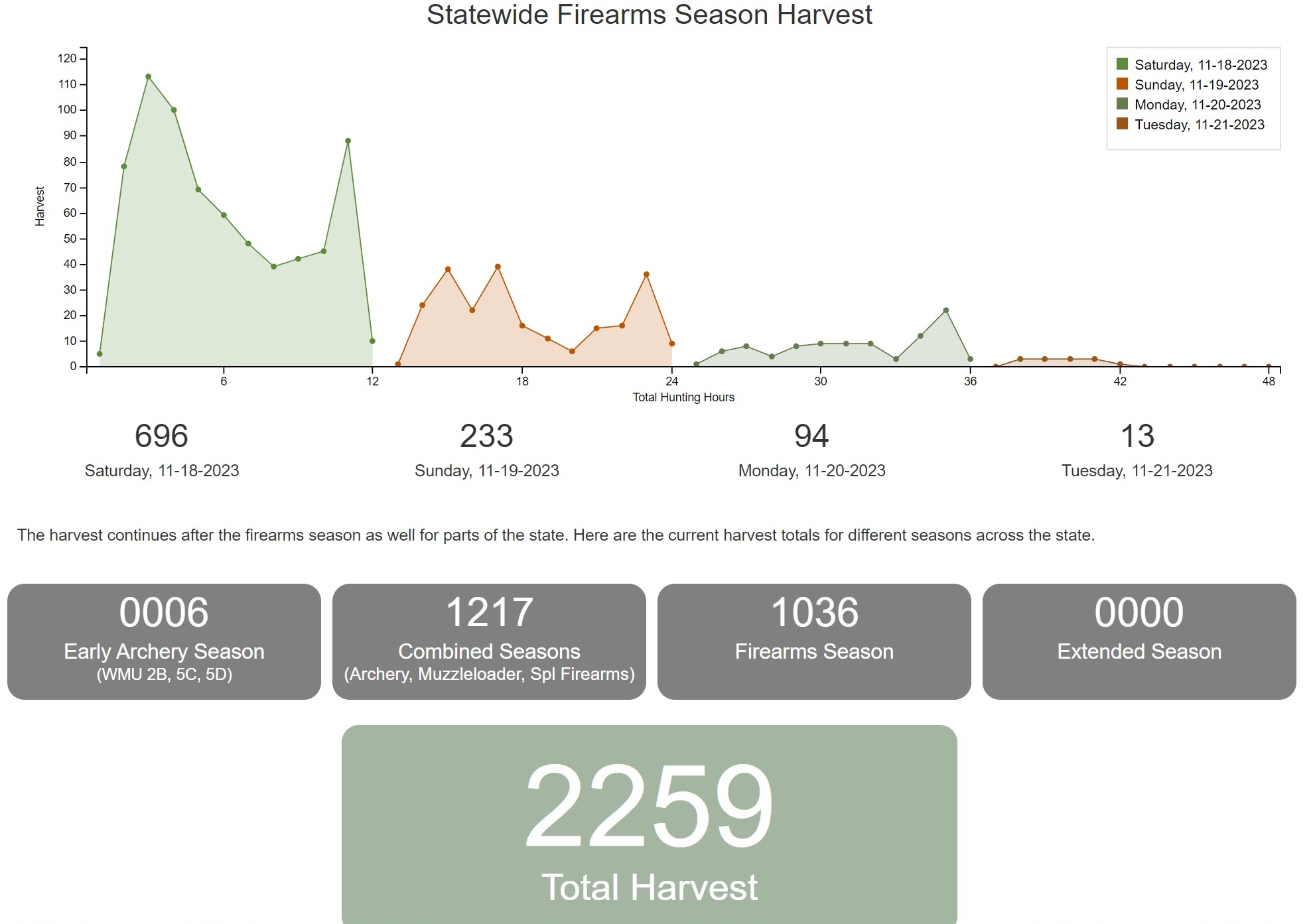
Harvest results as of the last night of regular rifle bear season, 2023. Not final, but not going to change much. The early season was the best season.
PA’s 2023 bear season
After hearing just one rifle shot all day (followed by the customary follow-up shot thirty seconds later, and the coup-de-grace shot a minute later) today, at 4:20PM, I felt compelled to write about what seems to be happening this bear season. In a nutshell, this is not your pap’s or even your dad’s Pennsylvania bear season in Northcentral PA. That long-hallowed experience of buffalo plaid Woolrich coats and moldy little hunting camps built in 1948 filled with men putting on big drives across the landscape, is now a thing of the past.
Some people blame the Saturday bear season opener that started eight years ago for the demise. Others blame the early October muzzleloader and archery seasons. Either way, what many hunters are calling the death of the famed PA bear season is actually a direct result of the incredible success of PA’s decades-long bear population conservation program.
When PGC biologist Gary Alt became the steward of the PA bear program in the early 1980s, he faced a problem. Hunters, nature lovers, and simple habitat and ecosystem health required more bears across Pennsylvania. And bears were not responding to the demand. In twenty years of hard and smart work, Dr. Alt turned the situation completely around. When Dr. Alt left the PGC twenty years ago, his life’s work was one of the great wildlife conservation success stories in America. Black bears then filled habitat niches in almost every county from Philadelphia to Erie, from Honesdale to Pittsburgh, and everywhere in between.
And then, almost overnight it seemed, PA had way too many bears. Bears were showing up in cities proper, turning over trash cans in suburban back yards everywhere. And so the PGC had to try and dial back some of Dr. Alt’s success. Increasing the number of bears taken by hunters was the solution.
Now looking at harvest data resulting from a half dozen years of early muzzleloader bear season, early archery season, regular bear season, and extended bear seasons running concurrent with deer season, it is easy to see why we only heard one rifle shot all day today in what probably still is the epicenter of PA’s bear hunting. And why none of our guys encountered any bears hanging from hunting camp porches on their valley run tonight.
Early muzzleloader and archery seasons combined now account for almost half of the overall annual PA bear harvest, even before “bear season” has begun. These early season hunters are mostly single men hunting near their homes. By the time the traditional bear season arrives in late November, half the licensed bear hunters who are likely to kill a bear are already tagged out, and the rest are looking forward to the concurrent bear-deer seasons in their home hunting territories. Few hunters feel compelled to make the historic annual migration north, and why would they?
Those of us, we hardy few, who do still come to the traditional bear hunting ground up north, are faced with an already depleted bear resource, and many fewer men pushing across the landscape to break free and push those bears that remain. And yet, despite our reduced opportunity, we enjoy the crisp Fall air, the camaraderie, the laughs, and the naughty food and drink our wives would never approve of, if they only knew.
Good luck this season, boys. You’re gonna need it.
A fabulous hunting trophy
Another PA archery season over (UPDATE: No, it wasn’t over, I have not kept up with new PA archery season dates), another season I did not arrow a deer or a bear. It’s not that I could not have killed a buck with a gigantic rack, I could have, a hundred times. It is that I chose not kill him. He isn’t necessarily tame, but he has been hanging around an awful lot. It would have been easy to send an arrow or a bolt through him from a porch or an upstairs window. But in my old-er age, I must be turning soft-hearted. He even came into a ground blind I was in with a crossbow, and puttered around. I decided to admire him, instead.
Just seeing wild beauty like his brings me real pleasure. I don’t need to put his head on the wall for him to make me happy.
Even without killing a black bear or a wolf, I still got an amazing trophy from my Alaska hunt in September. And no, I am not referring to the beautiful stones and colorful pebbles I bring home with me as keepsakes from all around the world. Alaska streambeds were loaded with all kinds of incredible geological samples, and I could have easily filled a pickup truck bed with the easy ones. Instead, I picked up a memento of someone else’s kill, and brought that home with me.
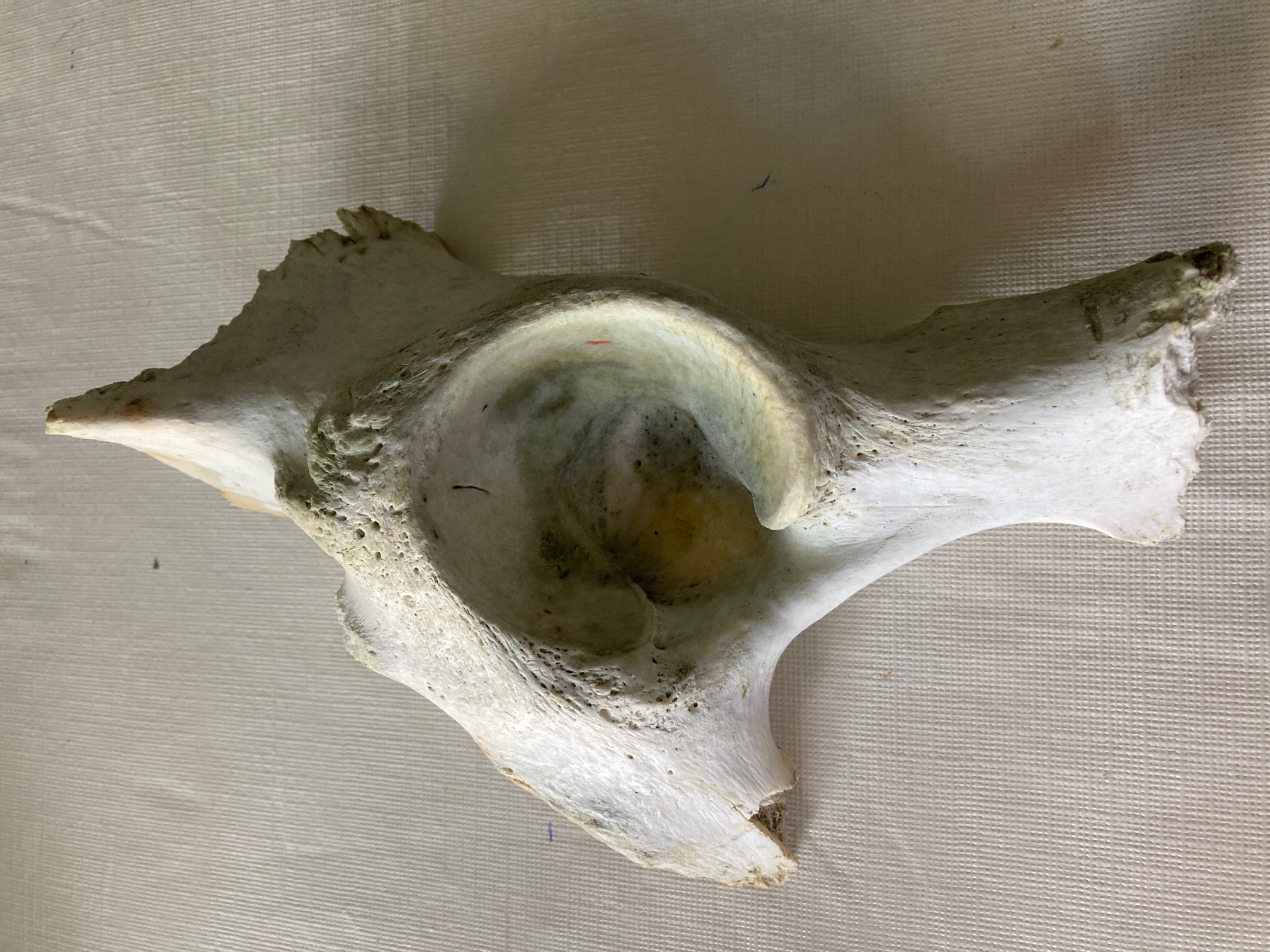
While I was stalking a salmon stream in the northernmost part of southeast Alaska eight weeks ago, cradling a 45-70 rifle in my arms and looking for black bear feeding on spawning fish with one eye, or a wolf, and watching out for the ever-present brown bears/grizzlies with the other eye, I happened upon a scattering of big bones up against a stream bank. Bleaching white on the top side, and staining green with algae and moss on the bottom side, these bones marked a kill site. From what I could piece together, a two-year-old moose had made a stand against a pack of wolves or a large grizzly on this site, and had lost. It was right here where he had died and had been eaten.
One bone in particular caught my eye, the hip socket, sitting concave-side-up to the sky. What made this individual bone stand out so much was both how perfectly round it was, and yet how it was also framed on three sides by heavily fragmented and fractured ends of bone. Something really big had broken this heaviest of bones, and the tooth marks are still on the socket. As artists are fond of saying about something that catches all of the visuals just right, it was a study in contrasts.
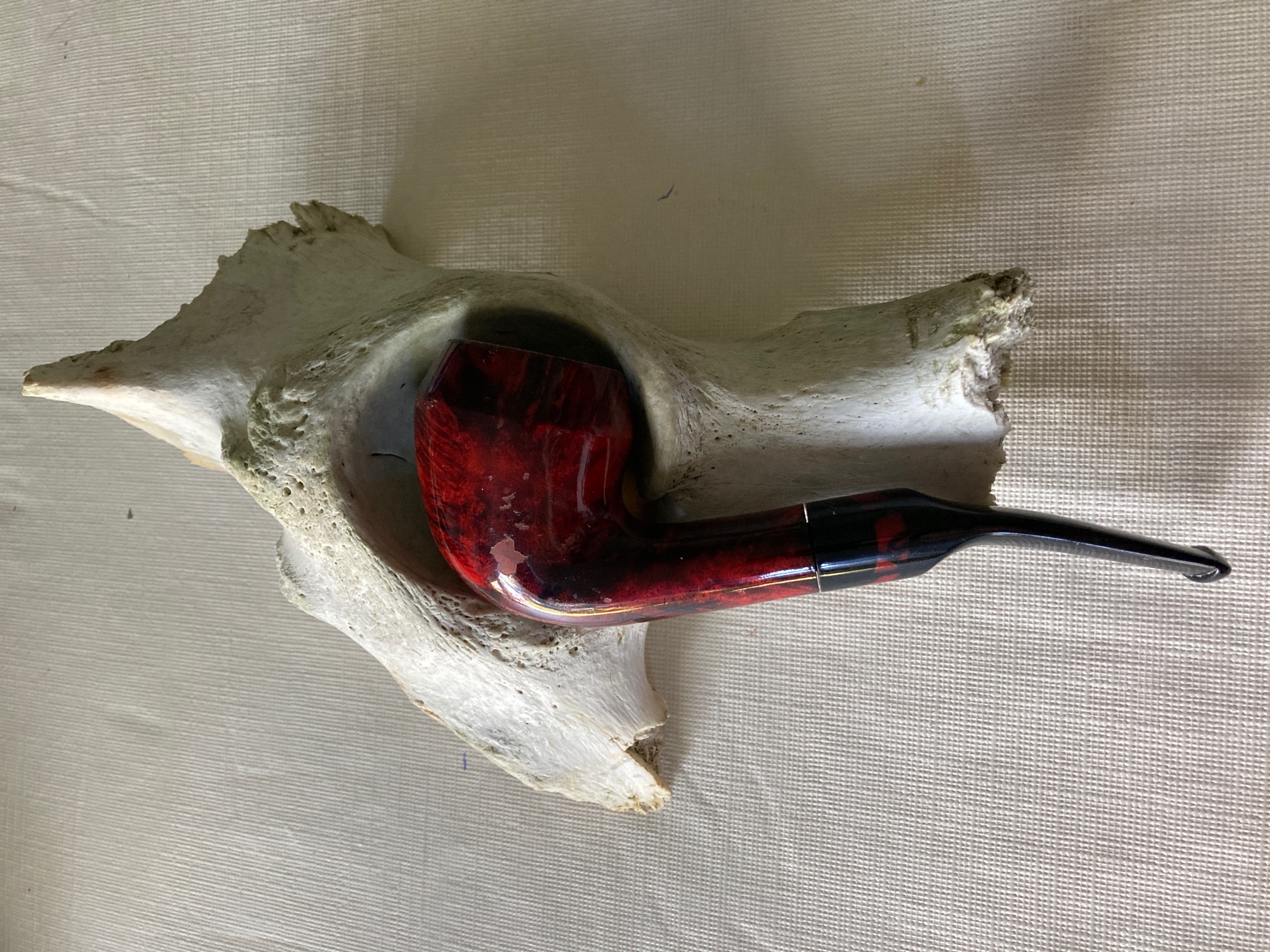
I bent down, picked up the broken socket bone, brushed off the dirt and leaves, and stuffed it into my backpack among the long underwear and my PB&J sandwich. Back home in Pennsylvania, it was cleaned off, lightly bleached, and re-purposed into a pipe holder and ashtray. It is actually incredible how perfectly my tobacco pipe fits into that hip socket. Now I can use the bone as both an ashtray and a reminder of being in some of the world’s wildest country.
As soon as it dried, I sat down to enjoy a bowl of cherry cavendish, and with the light tobacco smoke swirling up around my head, I was immediately lost deeply in thought about God’s magnificent creation, the amazing wild beasts that have inspired us wee humans since our dawn here on Planet Earth, and how a hunting trophy is what you make of it. It doesn’t always have to be something you killed yourself. Sometimes it is just a small piece of the wilderness we love that serves as a symbolic touchstone and a time machine that transports us back to a place and time where all that mattered was the wind direction and the smell of Fall in the air.
Looking at this ten thousand years ago or fifty thousand, any Neolithic hunter anywhere around the planet would have felt exactly the same way. This one piece of fractured bone connects us two hunters across time, even though we never met.
A thousand overnight tragedies
Normally, the smell of rotting fish is a signal to clean out the fridge or to leave the area you are in. It’s a universally bad smell, and no one normal wants to be around it. But it was a pervasive good sign where I happened to be standing, because it was associated with the freshly dead salmon heads and remains at my feet that had not been here the previous afternoon. A thousand individual tragedies had occurred along this stream bank overnight, as bears had picked muddy bank spots to grab spawning salmon and take them uphill where they could eat them without the fear of being ambushed by humans, or bigger bears.
We had hunted and fished along a roughly seventy mile vertical stretch of southeastern Alaska for over a week, and in addition to beginning to smell a little fishy myself, I had also saturated and possibly satiated a cavernous need inside me. It is an ever-present deep, clawing need that most wilderness seekers share, be they bikers, hikers, canoers, campers, photographers, fishers or hunters. Sorry, I am not going to quote Thoreau or Muir or Roosevelt on the tonics, joys, highs, or benefits of directly experiencing wilderness. My own wilderness pleasure is gained from simply not seeing a single other human being (except my hunting/fishing partner, when I have one) anywhere near where I am hunting or fishing. That unusual moment results in me feeling like I have better than average odds of achieving my goal, because I have the whole landscape to play without intervention.
On this trip, my “public” goal was a wolf, a blacktail deer, and/or a big black bear better than 300 pounds. Hides and skulls alone were going to come home with me. Edible meat was going directly into my buddy’s freezer. All of the many salmon I caught on the trip went into either my buddy’s smoke house, into his freezer, or into my stomach. It pleases me to report back that chum (dog) salmon directly out of the ocean taste damned good. It is also a fact that chum salmon do not keep well overnight, and that even halibut turn up their noses at it. I suppose freshly caught chum can be immediately canned, but given that there are usually better alternative salmon species to eat and can, I don’t see why a person would make this choice.
Incidentally, about those salmon: Alaska’s management of its salmon runs has been so good, so professional, so scientific, and so successful, that there is actually a glut of salmon in the streams and on the American market. Therefore, wild caught salmon prices are way down. A lot of commercial salmon boats were out netting, and the cannery we visited was in business, but with diesel fuel at about eight bucks a gallon there and salmon at eighty cents a pound, it’s hard to see how the netters will survive. But thanks to the Alaska Department of Fish & Game, the bears have plenty to eat before denning and hibernating for the long, cold Alaskan winter.
Goals are critical on a wilderness trip. Even stupidly simple ones. You have to have goals before you set out on a trip like this, or else you will wonder what the heck you were doing out there when you get back to civilization. My actual personal goal was simple: To fish and to hunt as much as I could, and this goal was easily met. On this trip, I was often able to do both hunting and fishing simultaneously: We slowly trolled salmon spoons behind the boat while glassing the shorelines for critters. A rubber dinghy towed in the backwash provided us the ship-to-shore transportation we needed. See a salmon stream that is calling your name? Go ashore and hunt it, and look for salmon-eating black bears to fill some tags; and look out for the griz. We saw a lot of griz.
Only saw wolf tracks in one very remote spot, and I passed up the one black bear I had a shot at. Only twenty feet across the salmon stream from me, he was either a genetic runt, an ancient-looking yearling, or maybe a female. Whatever kind of black bear he was, he was crabby enough to growl at me before shambling off to less crowded fishing spots. I wouldn’t shoot a bear that small in Pennsylvania, and I sure wasn’t going to fill my Alaska tag with it. Maybe I will go back for the spring bear hunt in 2024.
Despite fighting our way up into the interior of an island known to have blacktail deer, we saw none and feared the griz there more than we were willing to keep going after deer. Signs of griz were everywhere. I picked and popped high bush cranberry and high bush huckleberry while noting the increasing deer browse the farther in and higher I got. But it was a veritable jungle, and surprising a griz up here would mean my certain mauling, possibly my death, and so I decided to nicely frame my deer locking tag when I got home instead of risking life and limb to fill it. I headed back out and found Merlin asleep in the sunshine on the beach.
A loud thud on the bottom of the boat awakened me from my cramped sleeping position, and I rolled out of my sleeping bag onto the cabin floor, which was cluttered with gear and guns. Walking out onto the deck to look for the source of the thump, I saw a sea lion, a seal, and a pod of porpoises chasing salmon all around us in the early morning dimness. Mist rose from the water, and then the rosy tint of dawn’s first sunbeams lit up a nameless glacier high up in the crags across the water. I felt stoned on all this Mother Nature. Like I said, I was there just to hunt and fish, and whether or not I went home with the physically tangible results was not nearly as important as absorbing and sucking up the magic around me and filling that big, hungry, empty cavern in my soul. You just can’t have this magical experience without public lands, and some of that designated as wilderness. This, these, we had.
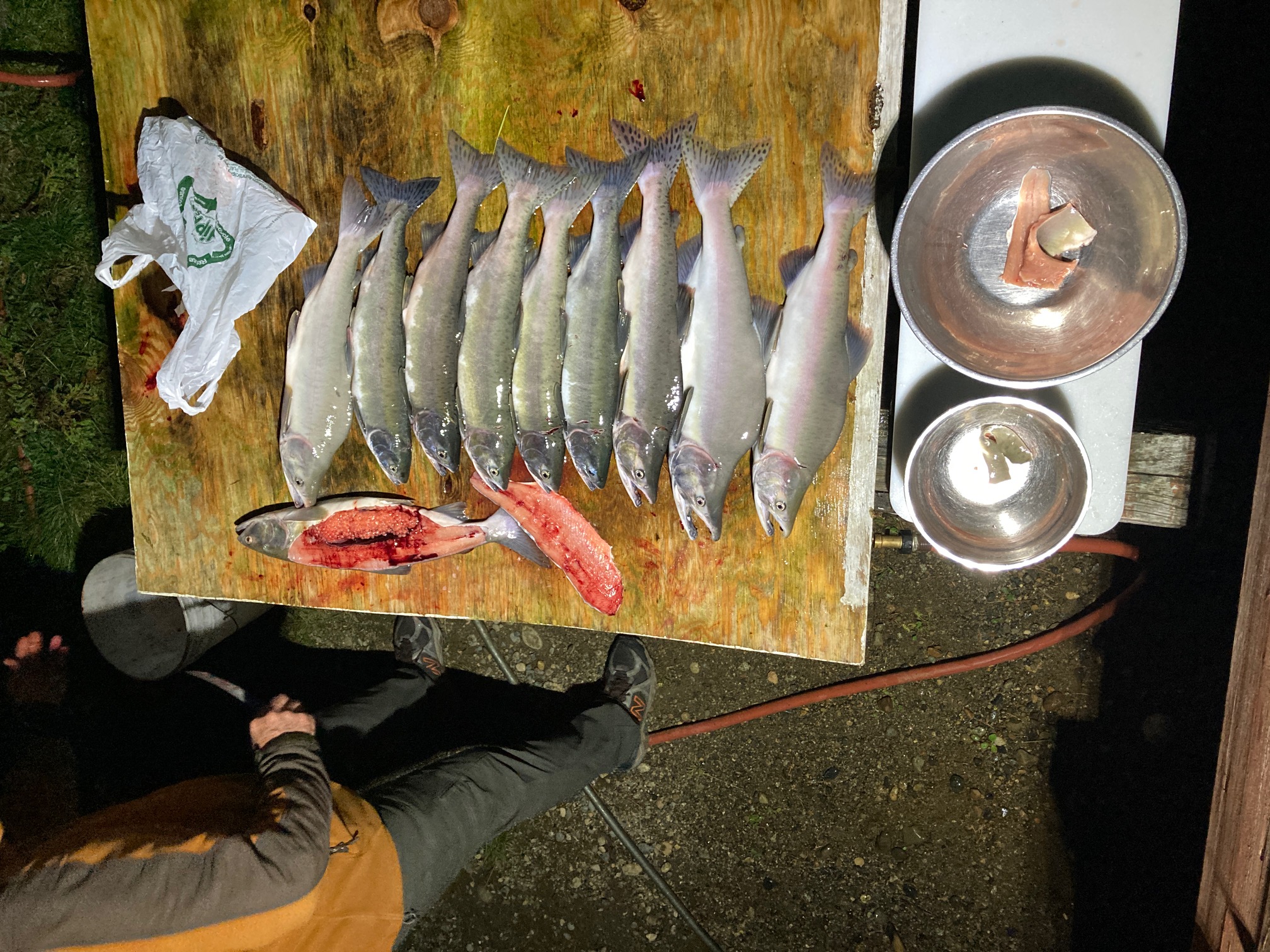
Cleaning a day’s catch of salmon, fresh in from the ocean
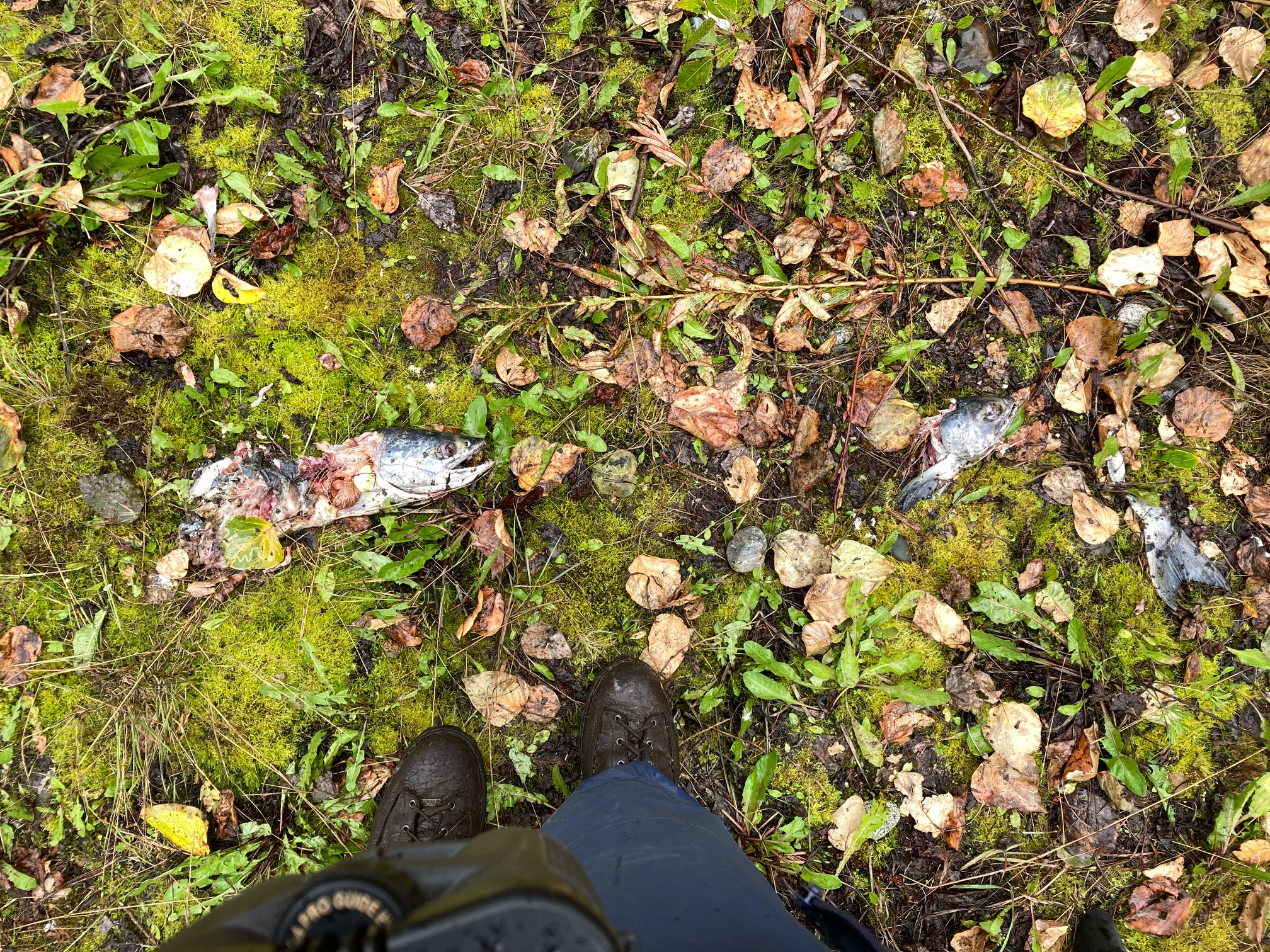
Overnight tragedies, spawning salmon scooped and eaten by bears
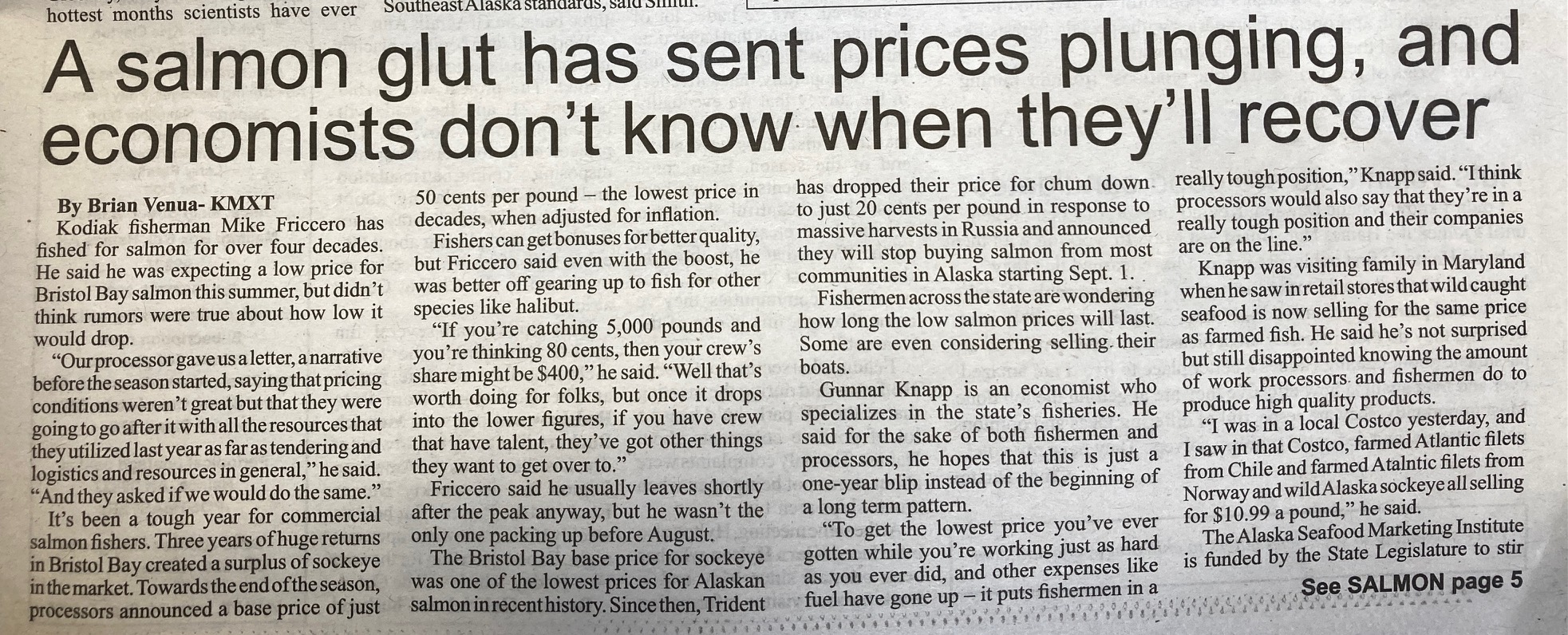
Alaskan salmon management has been so good that there are actually “too many” salmon, if there is such a thing
Reflected is the Chilkoot River, where we fished with the bears and a gaggle of international tourists following them up and down the river

Dawn on a glacier
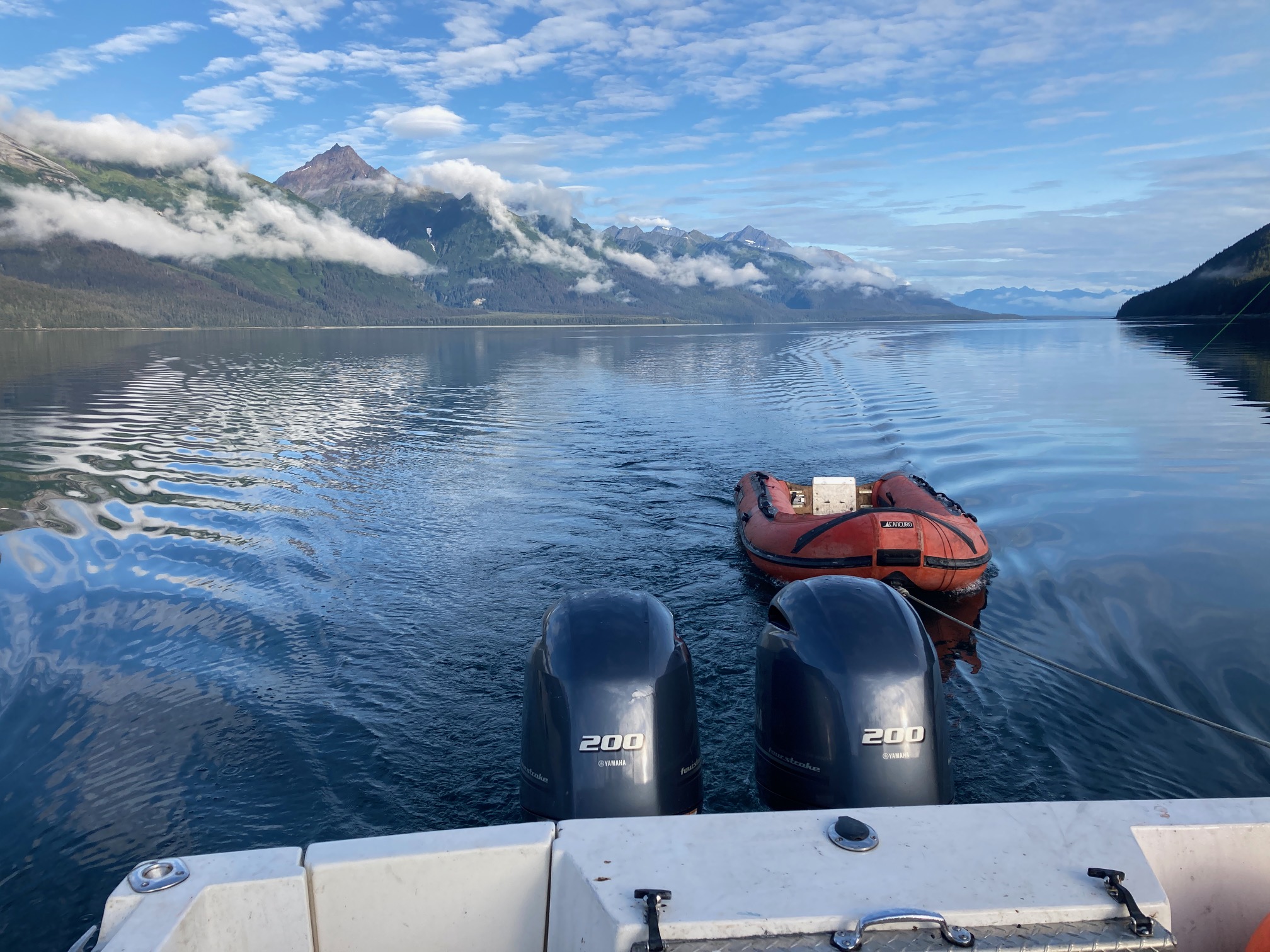
Trolling spoons for salmon, towing our dinghy, and glassing the shoreline for critters. This is hunting and fishing at the same time
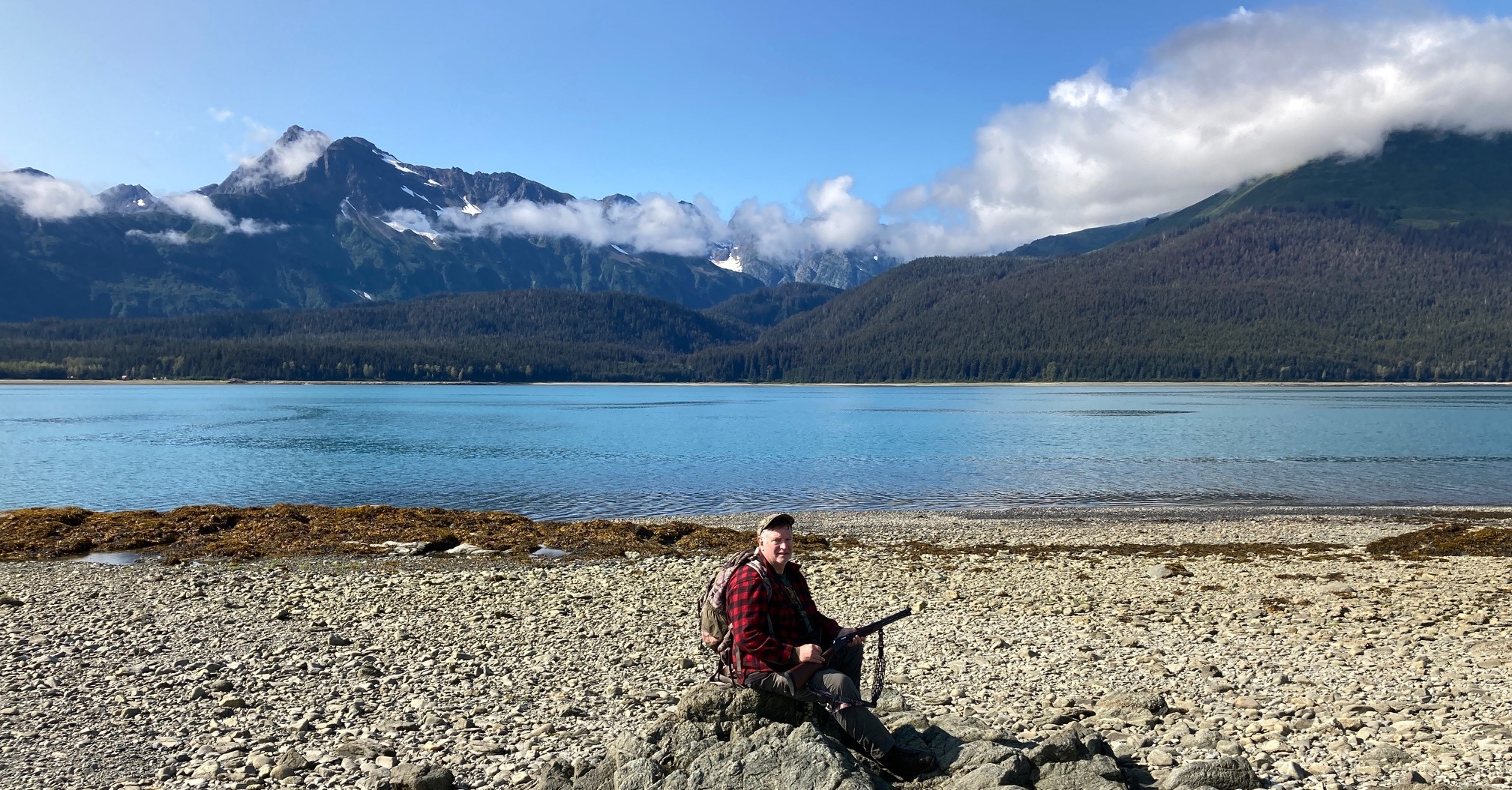
A picture like this is worth about a trillion words. Wilderness is freedom
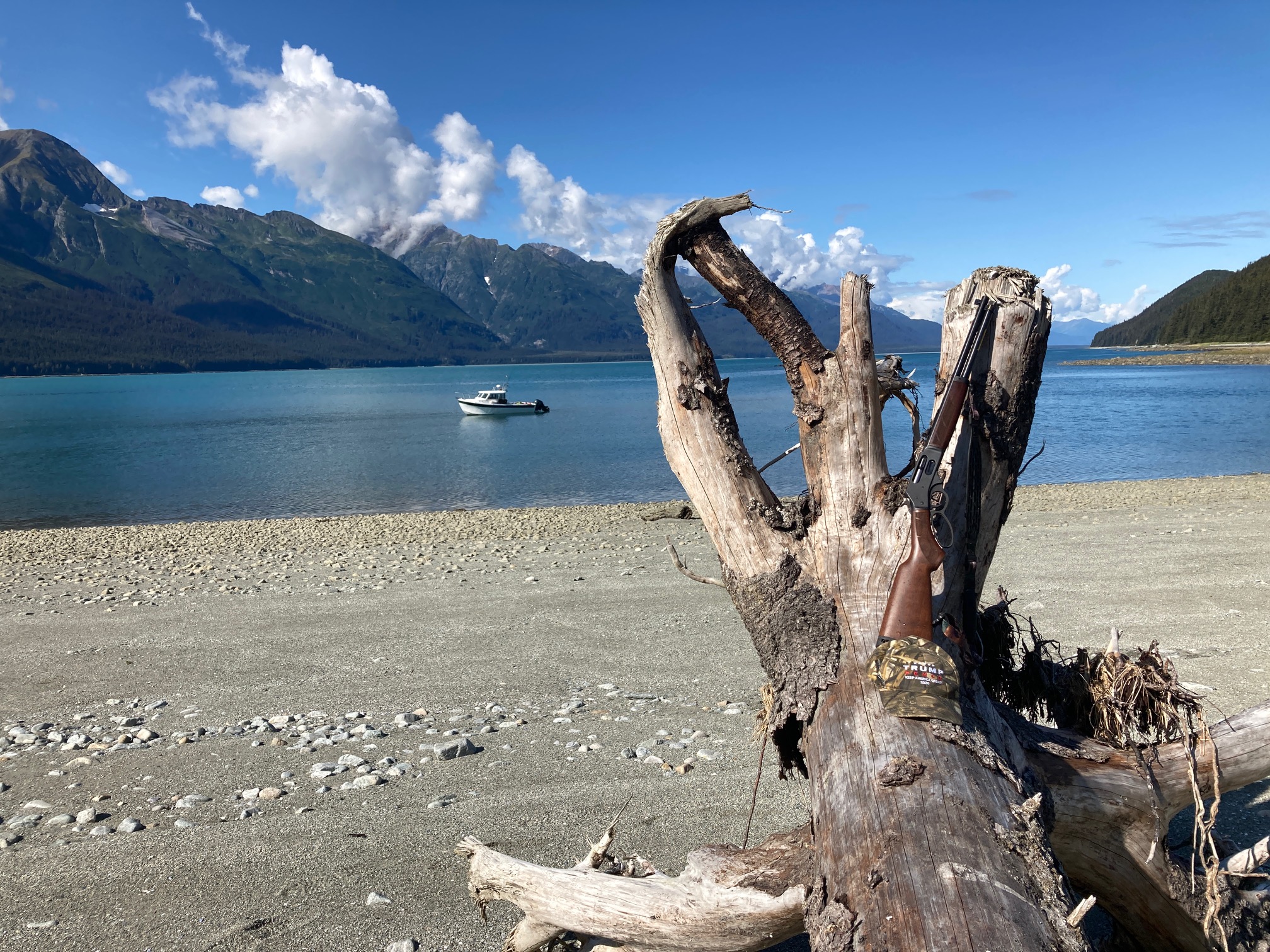
Our boat, our beach
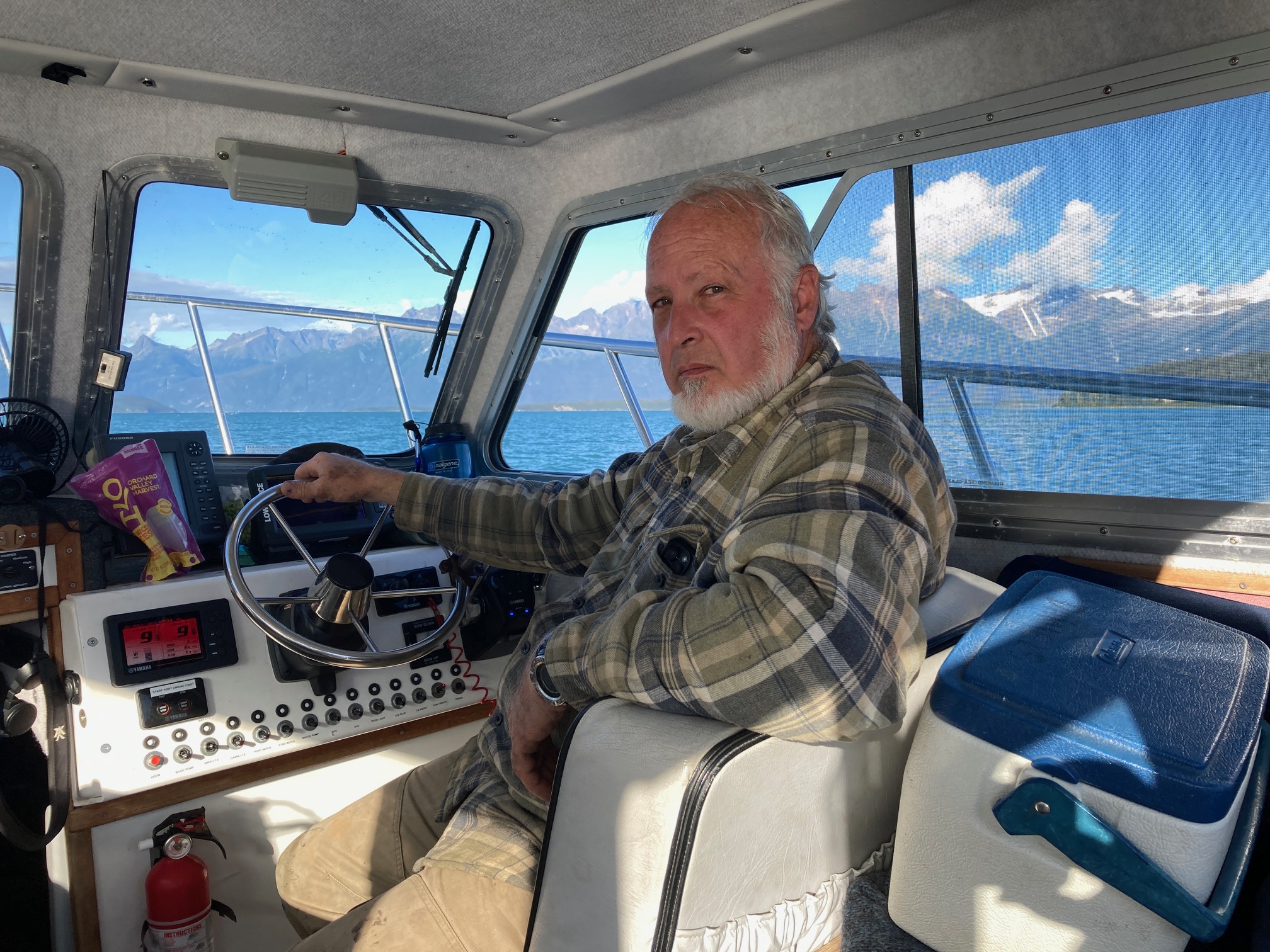
Captain, oh my captain. One of my heroes and a good friend
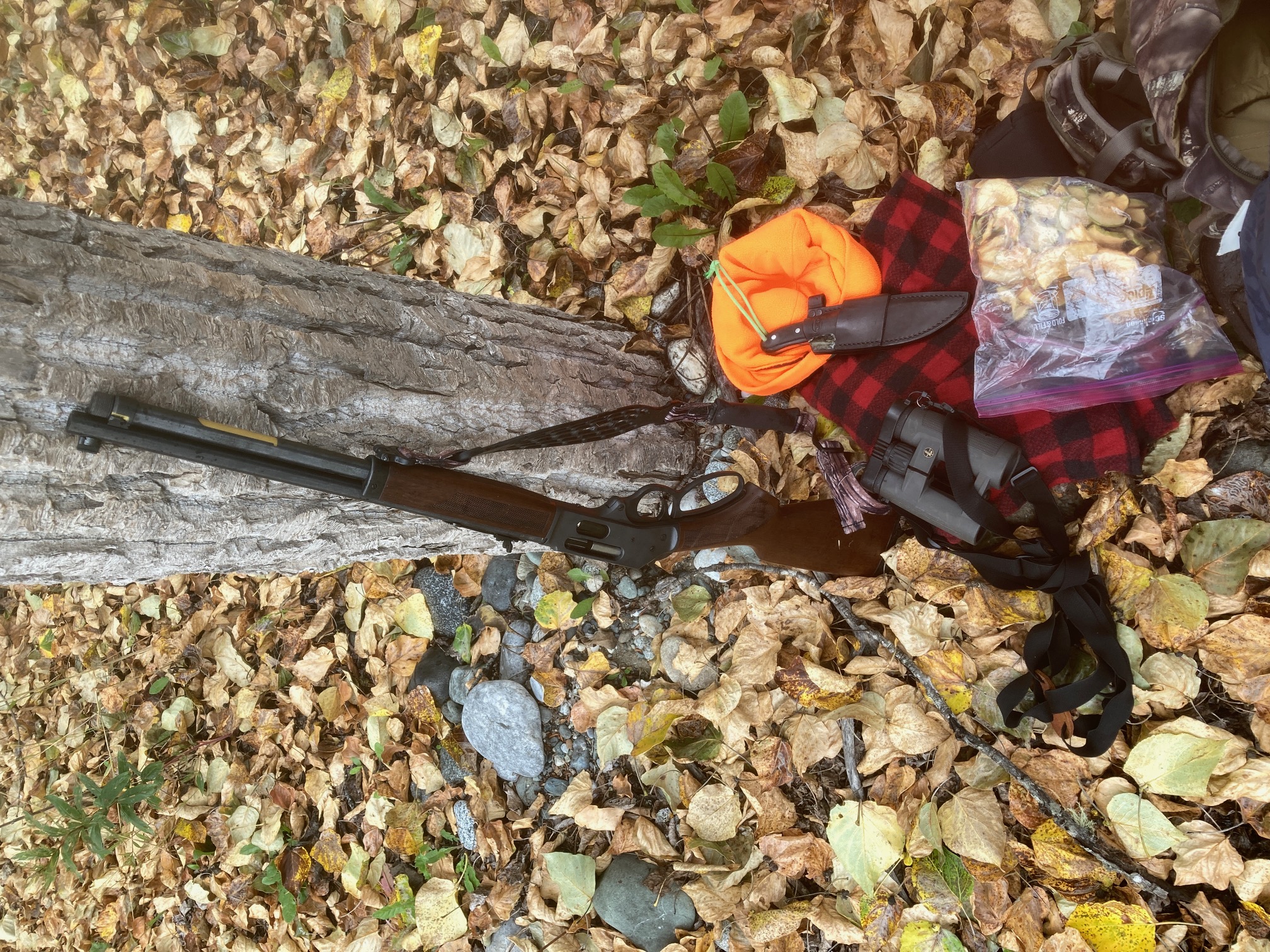
My hunting kit. A Henry 45-70 lever rifle (not crazy about the cheesy rear sight), a JRJ knife, rugged Leupold binoculars, home made dried fruit and jerky

Grizzly sow and cub eating salmon as they spawn upstream from the Chilkat River. I saw a lifetime supply of griz on this trip.
Why we share wild food with each other
People around the planet enjoy sharing wild food with one another, and we always have since God above evolved our species, however it is He evolved it. It is an innately human trait to both enjoy giving and receiving wild food.
Wild food is a broad category, but it excludes anything we buy, especially in a big store. Foods from stores are almost always, or are always, plants and animals raised in intensive industrial environments, replete with chemicals everywhere and in everything. Wild food usually includes fruits, herbs, and vegetables grown in our own gardens; fruits we have picked in the wild, like berries and apples; and any wild game meat or fish we have harvested. Chemicals are either non-existent or are naturally occurring in minute amounts from the native soil.
All around the planet people put a high premium on wild harvested meat. In Africa and Australia, “bush meat” is highly valued as fresh, nutritious, free of human-injected chemicals and hormones. Everywhere bush meat is eaten, it is traded in lieu of money. And when a European bites down on a size 8 piece of shot in her forkful of grouse recently from the Scottish Highlands, where it was shot on a drive, hung for three days in a cooler, and then shipped off to Spain, Germany, England, or France, she knows she is eating something special, and it tastes even better. The same is said for the meat of hunted red deer, and occasionally wild boar, both of which are highly prized foods served in restaurants and home kitchens across Europe.
Wild food is better for us, we all know that, both in terms of what is in it and also what is not in it, because (except for poached bush meat from at-risk wild animal populations in Africa) it is environmentally sustainable. It also tastes better, because it has grown up under natural circumstances. Giving and receiving it as a gift is a symbol of real friendship and caring. Wild food is something most Americans can participate in, especially as growers and givers, and so I hope that someone reading this is inspired to take a corner of their luxury status symbol yard and turn it into an unruly food garden. The pleasure of sharing the harvest with friends and neighbors is quite enjoyable.
Humans began as hunters and gatherers and we remain such, even with our thin veneer of civilization inartfully separating us from the wild world around us. Much of our innate gender differences are centered on what hunting and gathering was done by our ancestors over the past few hundred thousand years. Gathering food by hand is a natural and innately human thing to do, and most people find gardening calming and enjoyable. I guess being a real human and not a false, contrived human can be pleasurable.
Last month I picked over six pounds of blueberries and another five pounds of blackberries and red and black raspberries, about a hundred pounds of peaches, and about fifty pounds of apples. I won’t share these hard-won prizes with you by the fistful, because then the berries would all disappear within a few minutes. Rather, I will share them by mixing them into muffins, pancakes, cobblers, pies, and preserves spread onto toast, ice cream, and cakes. This way these gems last all year long, and everyone gets to share in them.
Aside from being cleaner and tastier than industrial foodstuffs wrapped in plastic and styrofoam, wild food has the benefits of bringing us closer to nature, closer to reality, closer to self-reliance and self-sustainability, and closer to people we might not normally encounter. Nature can be the sharp berry bushes we must reach through to pluck our juicy berries, and it can also be the mother bear and her cubs waiting for you and me to clear out of the scratchy berry patch so they, too, can feed on Nature’s bounty.
Nature here can also include a variety of destructive garden pests like squirrels, rabbits, groundhogs, and chipmunks, and learning to cope honestly with these artificially overabundant animals teaches us important lessons about reality versus luxurious and silly childish feelings and notions of animal welfare that are terribly destructive.
For example, artificially high populations of pest species, like squirrels and ground hogs, spread high amounts of disease and physical destruction. And when vegans strut and brag about their reliance on industrial monocultures like soy beans, they ignore the tremendous environmental and habitat destruction wrought in their vegan names. There are significant environmental costs to veganism and vegetarianism that could be offset if those adherents participated in wild food, like growing their own and trading/ bartering for what they cannot grow themselves. Few things are more annoying than listening to someone from a wealthy lifestyle bragging up their veganism/ vegetarianism while simultaneously tearing open plastic wraps and environmentally damaging containers containing industrial foods. Food isn’t just about what you put in your mouth, it is very much about where it comes from, where it was grown and where it lived before your credit card brought it home.
Hunting in America and Canada produces millions of pounds of fresh, clean, natural, wholesome wild meat for more than just the people who pull the trigger. Hunters Sharing the Harvest is a well known program that enjoys widespread support from both givers and receivers. Schools, neighborhood soup kitchens and homeless shelters, and just simple low-income people, all benefit from receiving this wild meat. And farmers and forest owners benefit from having artificially overabundant deer and hog populations thinned out so their crops can grow in peace.
For those silly people who oppose hunting, jiminy crickets, people, wake the heck up. You are not living in a fairy tale book, and you are having your own huge impacts on the planet around you. An animal’s life is not just measured by how it died, but also how it lived. Almost all industrial meat comes from factory farms, enough said. However, wild meat comes from animals living their lives to their fullest before quickly falling over dead from a bullet or an arrow. Any modern educated human who believes that wild animals die naturally under antiseptic and peaceful conditions is a fool, enough said. Recreational and population management hunting (not poaching or market hunting) is a perfect way to provide environmental protection to wildlife habitat, conserve vulnerable wildlife populations, and harvest natural, sustainable wild food.
By mid-December of this year, I will have probably shared over a hundred pounds of wild meat, mostly venison, occasionally waterfowl, turkey, and small game. The people who receive my gifts of deer meat (that I have shot) are always grateful, and they often report back to me on what they made with the gift, who they shared it with, and how delicious it tasted. This exchange is true friendship, and in a politically fractured world, we all can use a little more friendliness, a few more friends. Wild food is my way of contributing.
In an hour I am dropping off a bag of peaches from my own trees, and picking up a bag of pears from my friend Ryan’s trees.
What wild food are you going to grow or harvest, eat, and share? If you have a big lawn, put away that lawn mower and start growing your own food. You will like it, I promise.
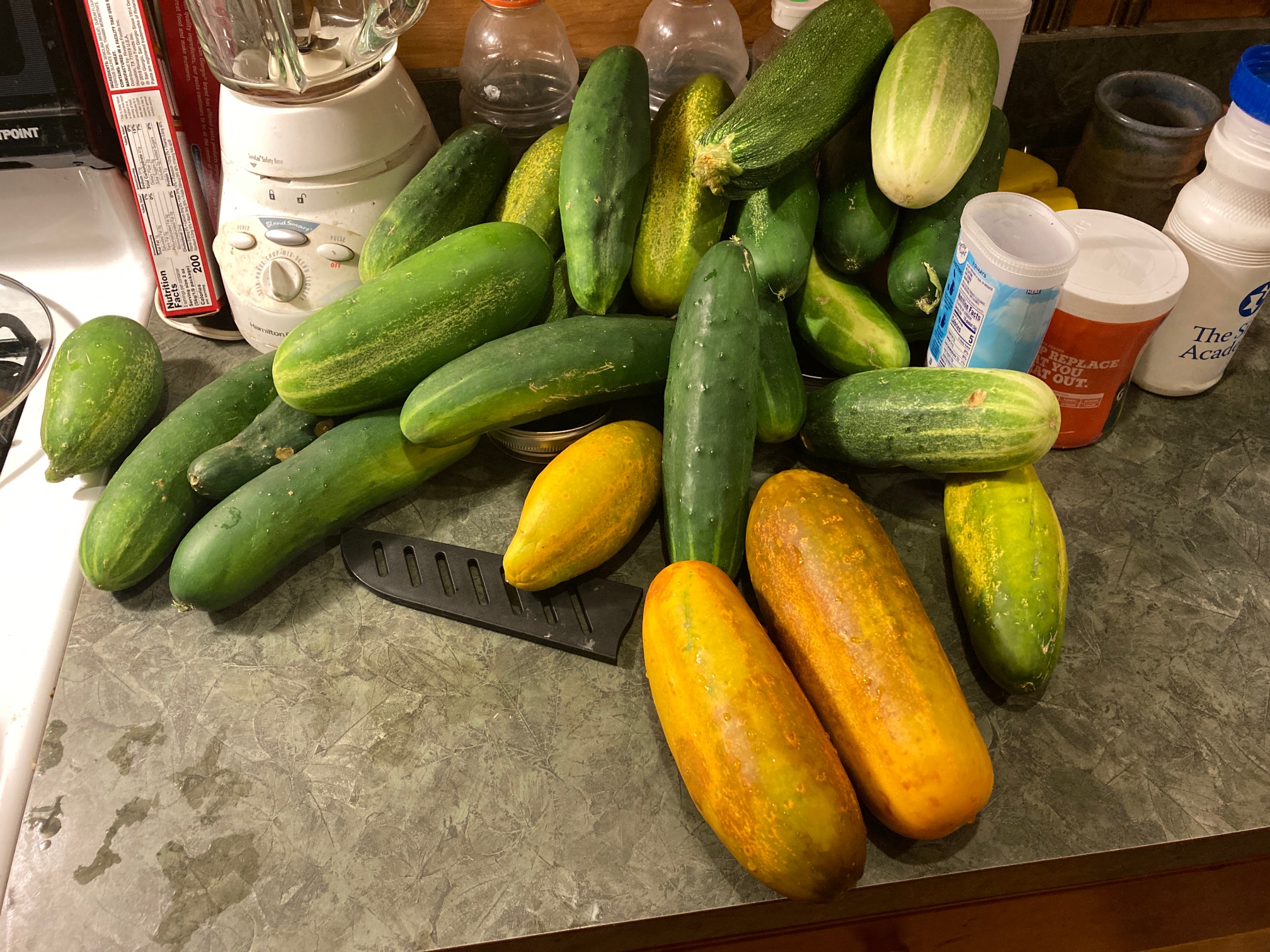
cucumbers from our garden don’t cost a dollar apiece like in the stores, and they are fresher and have no chemicals. Our home made pickles are far tastier than store bought, and have no chemicals. We use the overripe ones to make bread and butter pickles.
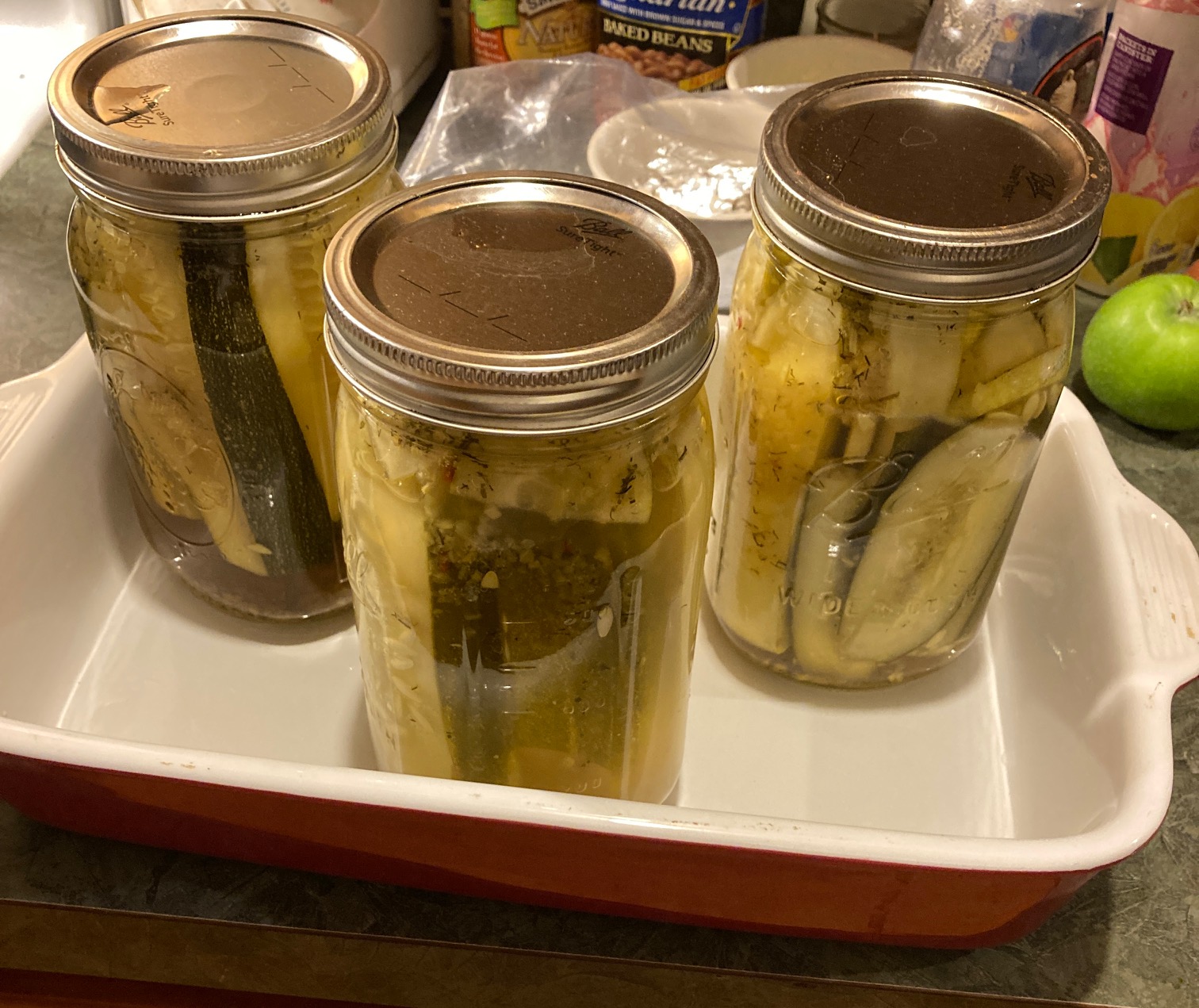
Every summer we make home made pickles. Different flavors. Yum
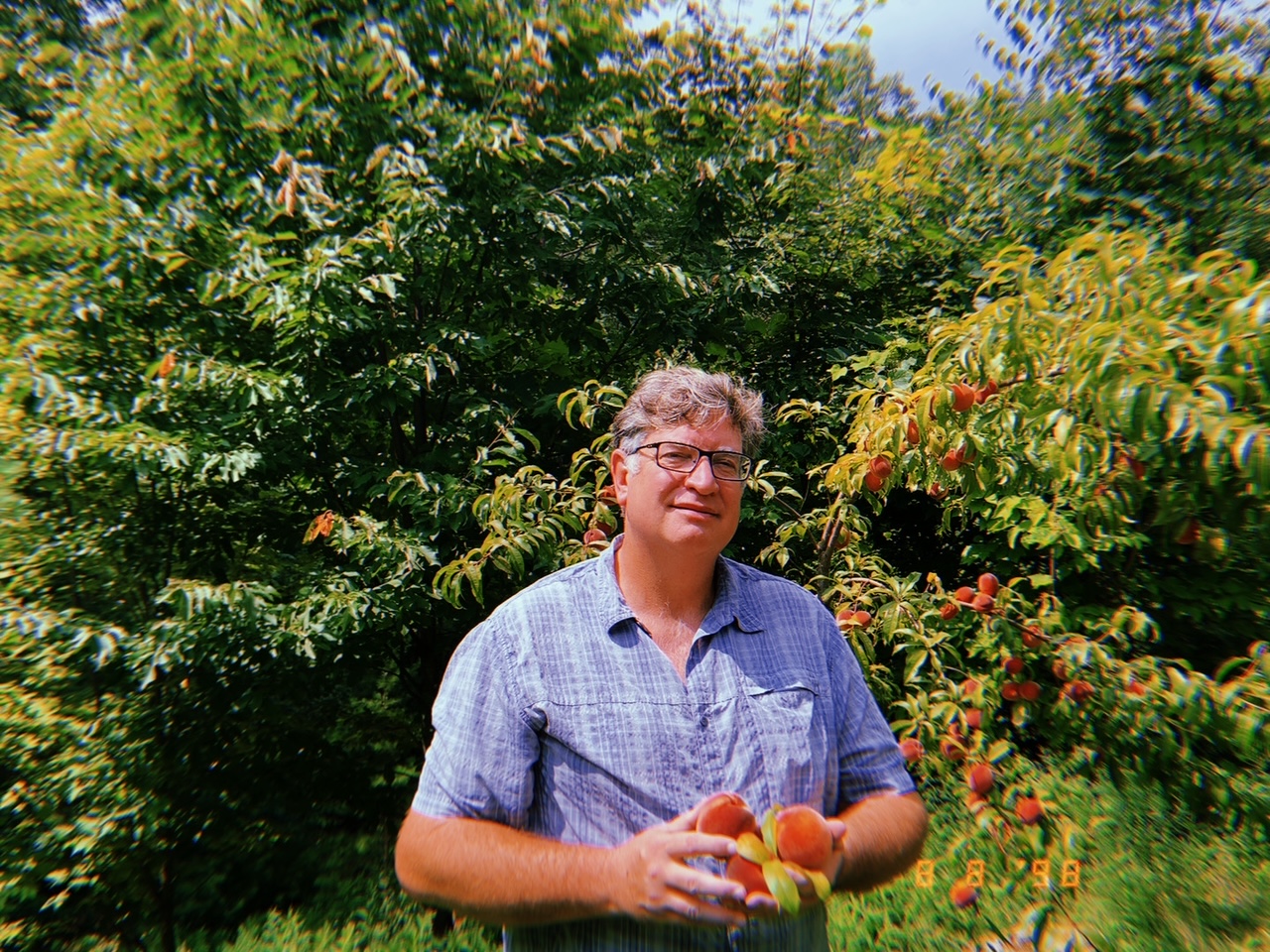
We have a bunch of peach trees. If the bears and the squirrels don’t raid them, we get to enjoy them, and cook with them, all year long
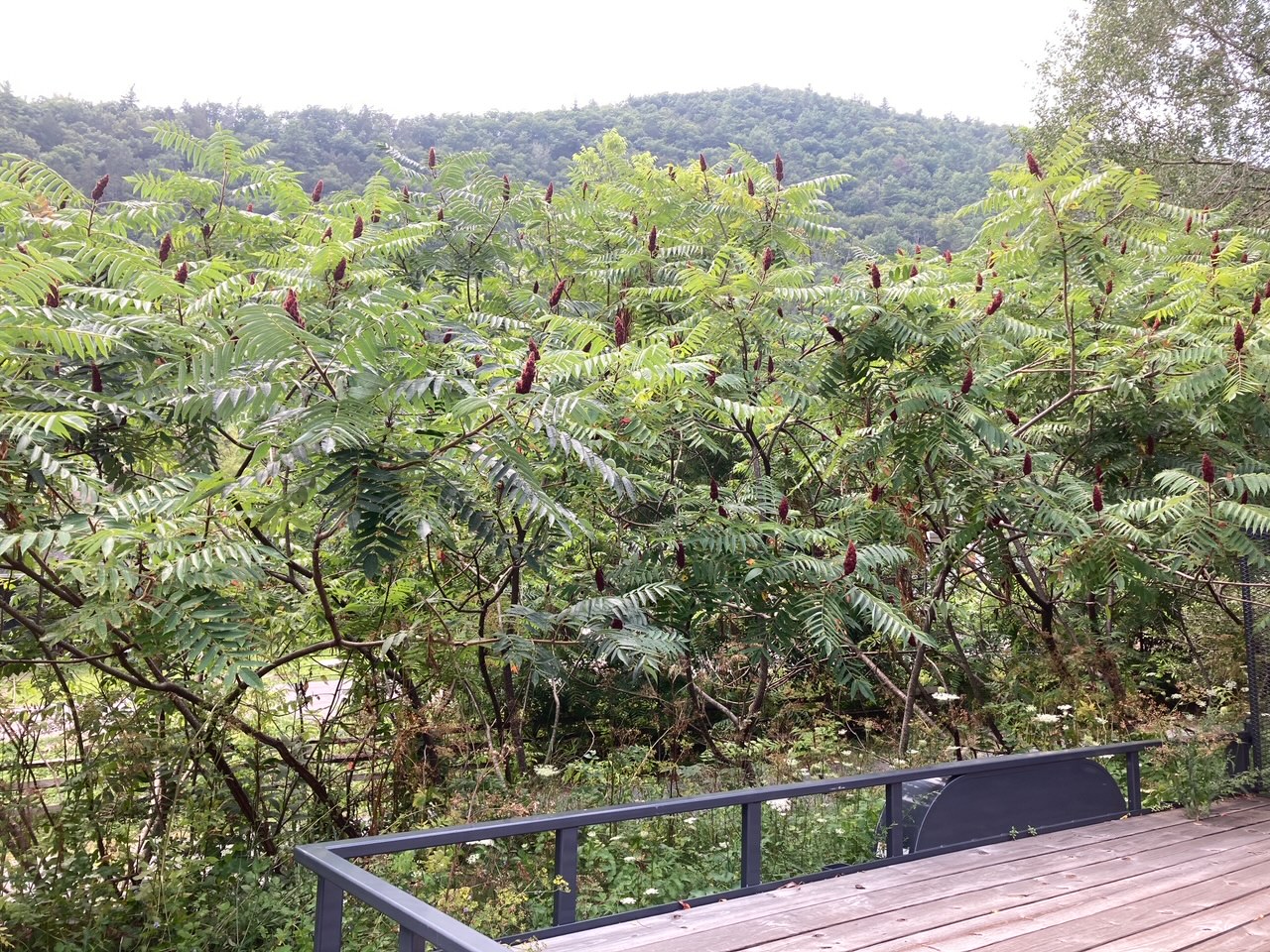
Sumac grows wild everywhere. Steeping a few heads in a bowl of warm water provides the most delicious drink possible. Chill it, serve it with sugar over ice, sumac tea is free, easy to forage, and chemical free
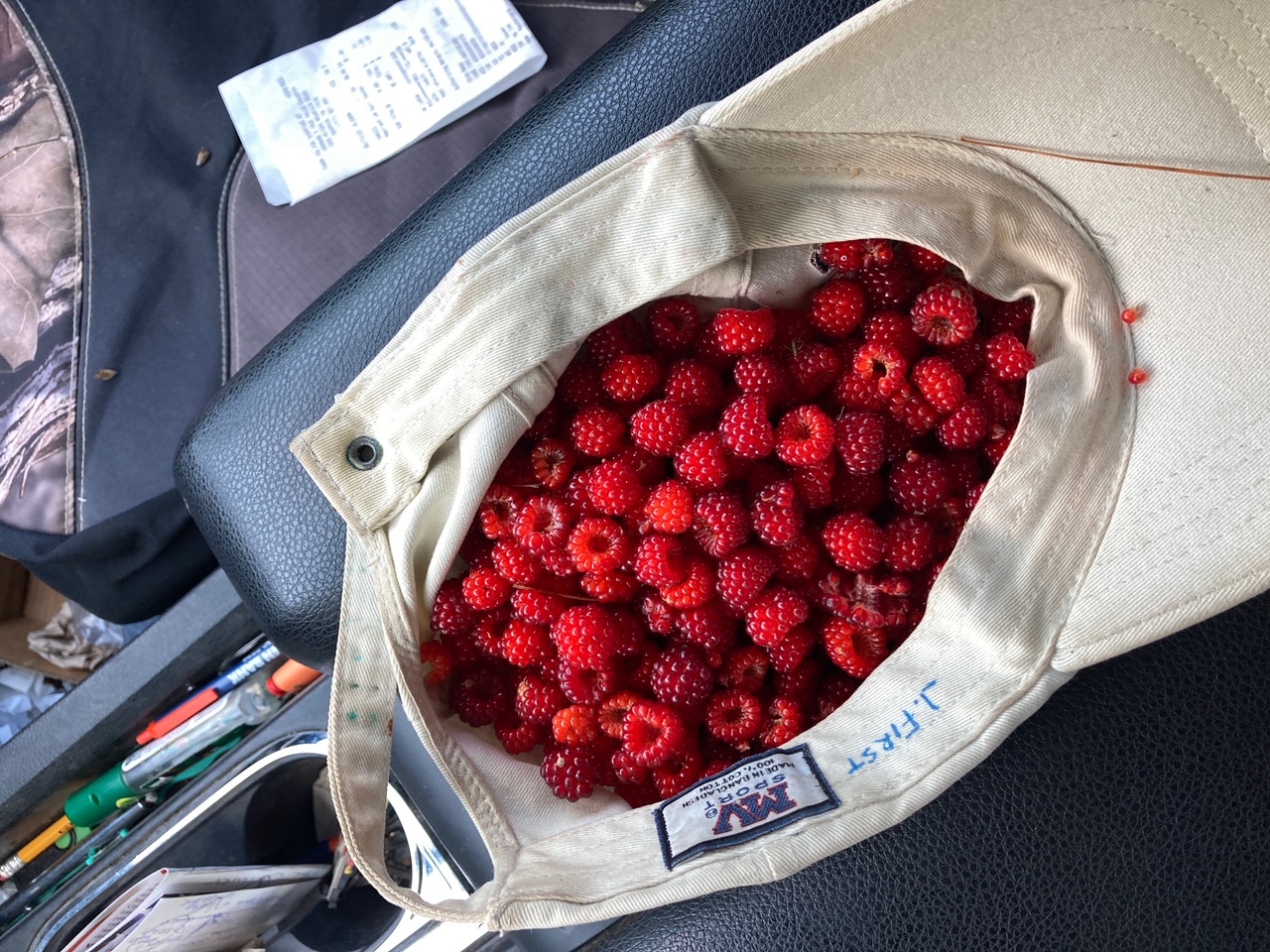
A hatful of red raspberries I foraged in July in the shrubbery of a public parking lot. IN a store you would pay twenty dollars for these wild ones, and they would be half as good. Go forage and pick your own food
Midsummer report
My apologies for the long absence here. Summer is in full swing and our family has been operating at full tilt speed. Time only for doing things, and none for writing about it all, until now.
First off, our oldest kid was married on Independence Day. Held at a pretty and historic farm, it was a fantastic wedding, and we feel like we acquired a wonderful addition to our family. However, the preparation necessary for that event took up a lot of time and energy, for many months. And then there was the recovery week. And then there was the vacation week. Hence no blog posts. Full credit to my wife for all of the wedding planning.
At least I myself am back in the saddle, while other people around me are still recovering from their vacation. Not everyone does well with the surf fishing bum lifestyle, including sleeping on the beach, eating questionable food from a warm cooler that has been pawed over and drooled on by feral raccoons, and drinking fetid water. I myself thrive in this kind of environment, and so I am back to report back to our three readers.
What can I say about the wedding other than I fired our small black powder cannon seven times, for good luck. It was Independence Day, and while the venue does not allow fireworks, they did allow the cannon (it’s a cast iron, steel sleeved replica swivel gun with a 1.75″ bore). And in my speech as the bride’s father, how could I miss an opportunity to point out that Independence Day was brought to us by citizens with guns? That is a fact, is it not?
And (of course, I guess) I heard back afterwards that some of our wedding guests were offended by the cannon and also offended by my mention of the origins of American freedom – citizens with guns. You can’t make this stuff up if you tried, like it’s a Hollywood movie script caricature of spoiled rotten children who get everything that Planet Earth can provide and yet nonetheless complain about it. Something like “The food here is terrible and the portions are so small.”
Are Americans now really offended by Independence Day fireworks? Are they offended by displays of patriotism and mentioning of historical facts that unfortunately run contrary to some evil political narratives that privately owned guns are bad and our freedom was brought to Americans by a immaculately conceived federal government that descended from Heaven? Are some wedding guests now so crass that they actually complain about the bride’s father setting off his celebratory toy cannon for the enjoyment of all the normal fun-loving people in attendance?
I have a hard time believing these things, but I did get to witness this stuff. America is in big trouble when its own citizens, young and old, hate its founding and can’t give a proud father his one moment and some space to celebrate it. Jiminy crickets.
Just returned from a subsequent beach trip to a a long spit of federally managed property on the east coast. The National Park Service rangers were 99% normal, nice, intelligent Americans, thank you very much, Gage, Donald, and Stephen.
In this national park there is a problem with artificially high numbers of deer, foxes, and racoons. They have no natural predators and they are multiplying at breakneck rates and having huge negative impacts on the environment and local ecology. Vegetation shows a distinct deer browse line about four feet above the ground, and the racoons are everywhere, aggressive, and aiming to ruin your trip. I watched a red fox steal a camper’s breakfast sausage meal right off of his plate on the guy’s picnic table. We had raccoons patrolling our campsite and under our table as soon as we broke out our food. They will grab your food right out of your hand. It is a fact that raccoons are host to some nasty parasites they excrete in their poop, which was abundantly displayed all around the campsites. Raccoons are also the number one vector for rabies among wildlife.
Aside from posing health threats and incessantly badgering the humans who are trying to enjoy the park, the foxes and raccoons also eat the eggs of rare nesting shore birds. These rare birds enjoy huge swaths of cordoned off human-free dunes and beaches in the park (and also on federal and state lands out on Long Island, like Orient Point and Montauk). And yet the same exact NPS staff enforcing the human no-go dune zones policy are absolutely fine with the overabundant nest-raiding foxes and raccoons that render all the no-go zones meaningless. The staff do not support hunting or trapping these destructive pests, either to improve the park visitor experience or to protect the natural environment.
How can the rare birds successfully nest on the ground and hatch their chicks there when the artificially super overabundant egg-eating raccoons and foxes are allowed to roam at will?
Talking with various National Park Service staff about this problem resulted in exposure to various levels of education and serious/unserious mindset. Most of the NPS staff acknowledged there is a wildlife problem on site that must be addressed. Hunting the deer and trapping the foxes and raccoons is the normal and responsible way to deal with this artificial human-caused environmental problem. These are the responsible and serious ways of addressing a visitor problem on land that is owned by the US taxpayer and whose management is entrusted to taxpayer-paid bureaucrats.
However, when I mentioned the above normal solutions to a young, handsome, tall NPS Park Policeman patrolling our campground, he responded “The same can be said about humans — there are just too many humans. And your solution to the overabundant raccoon problem is not humane.” He would get rid of the humans and allow the artificially high numbers of nuisance wildlife to proliferate. With taxpayer-paid federal employees of this guy’s low caliber and high wokeness quotient, the park visitor experience is going to degrade. C’mon, NPS, you can screen your employee applicants better than this. This foolish people-hating young guy should never have a gun and a badge, much less wear an NPS uniform.
Overall the surf fishing was fun if mostly unproductive. Probably due to the high heat and ferocious sunshine. I can report that catching cownose/ bullnose rays on strong surf tackle is a hoot, but then safely decoupling that animal from the tackle is a whole other thing. They whip their barbed tails around trying to nail the fisherman, who is trying to release them back into the ocean (I learned to place something heavy on the tail while using heavy pliers to remove or break off the hook). We did witness a large shark violently feeding close to shore, and it would be a fair guess to say it was probably eating these rays, which we caught and saw in abundance on both the bay side and the ocean surf side.
So that is the mid-summer report. Fast action, lots of family, some big family celebration and lots of family movement across the beautiful American landscape for work and vacation. I hope that you the reader are also enjoying your summertime. Summer is such a glorious time to be with family and friends, to visit new places, to camp out under the stars and cook over an open fire, to think through life’s normal challenges and to spend time with people we love…and then it is over just when we are all starting to really get into it.
So make the most of your summer.
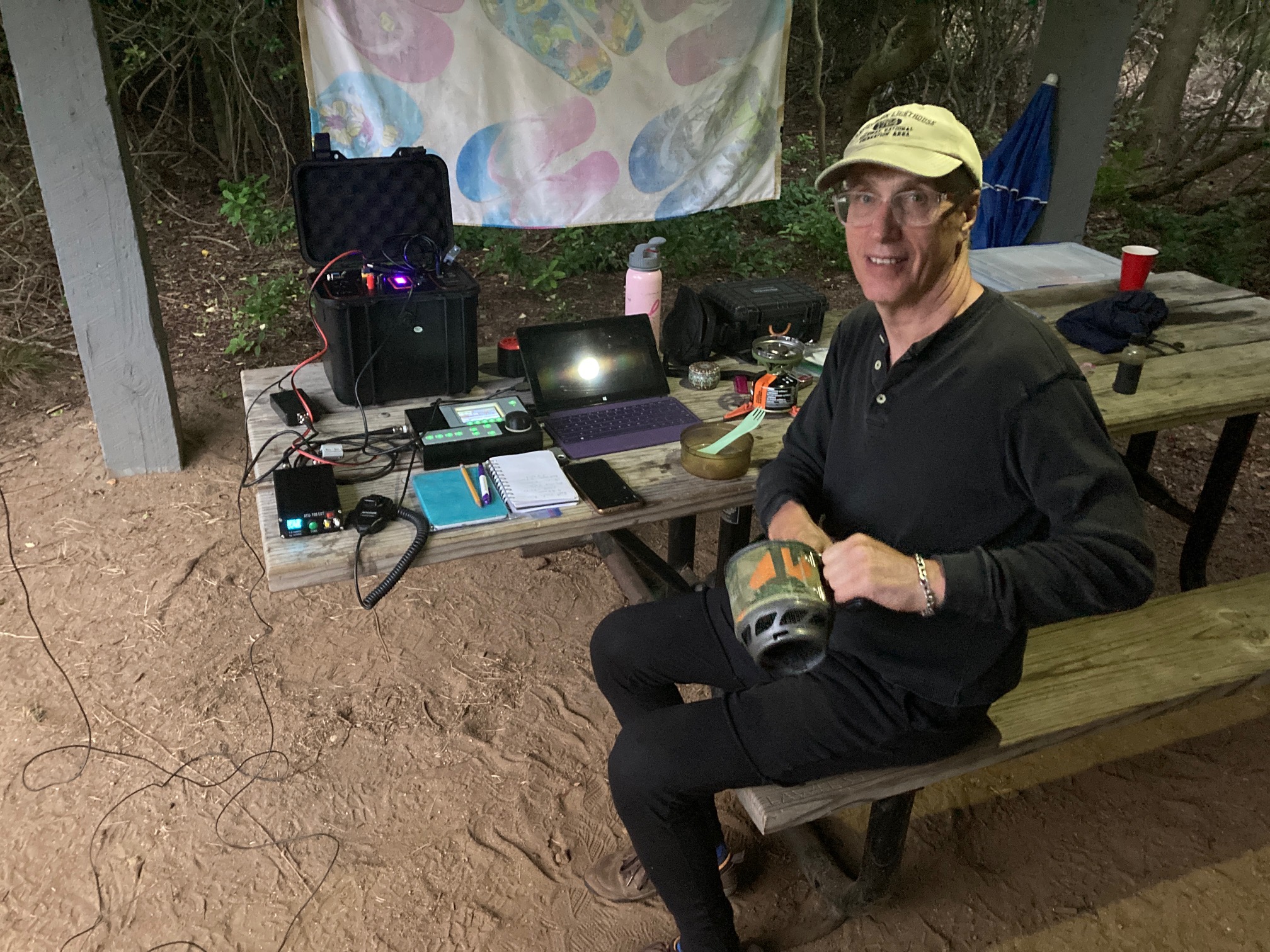
Campsite neighbor Steve, a PhD engineer ex-patriot Brit and defiant leftist, helped MAGA Maniac Josh fix my malfunctioning headlamp, demonstrating that it’s easy to be enemies when separated by keyboards and easy to be friends when living side by side
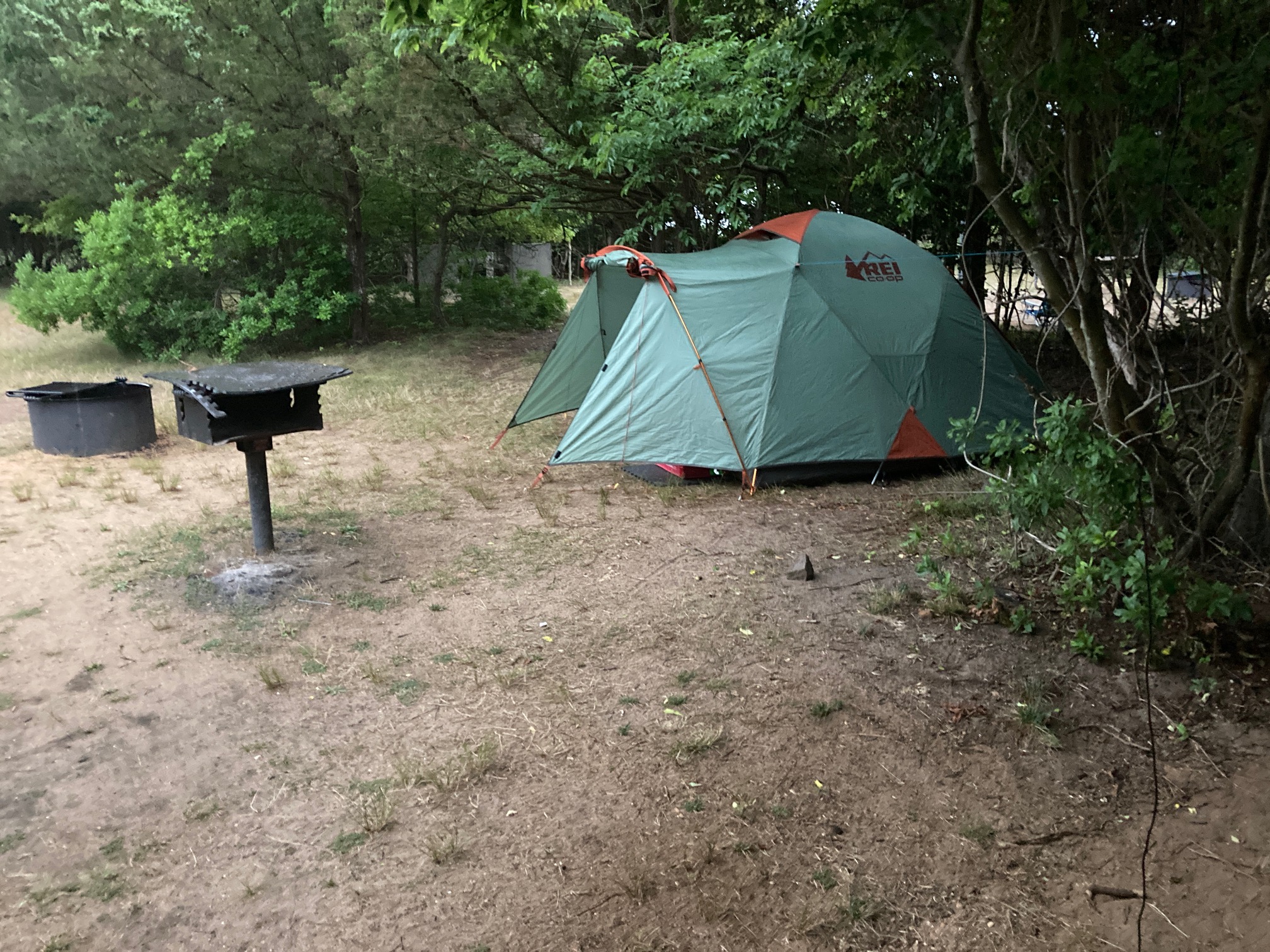
Nice level NPS campsites with fire ring and grill
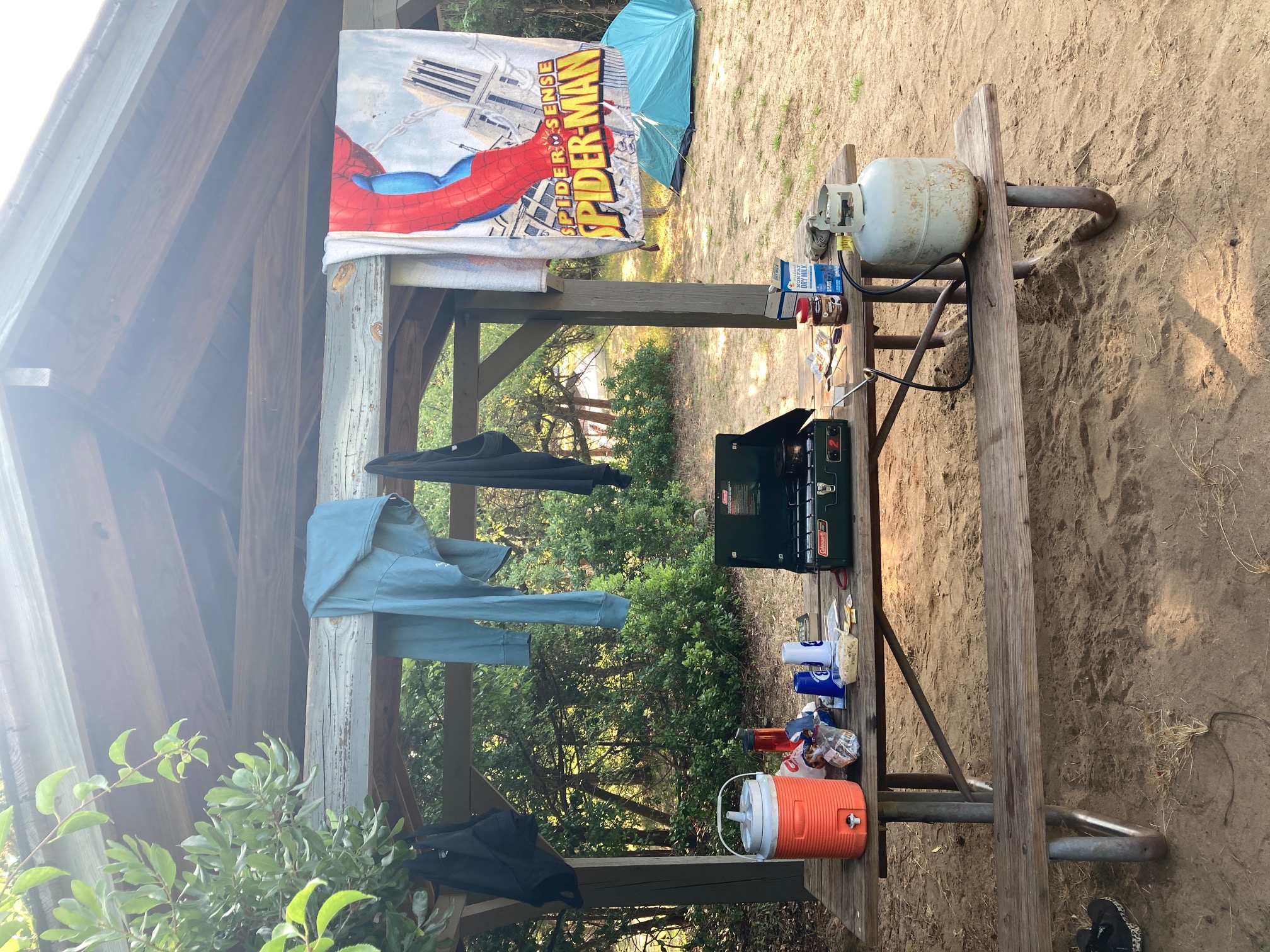
Each campsite has a pavilion and a picnic table. Is this really camping?
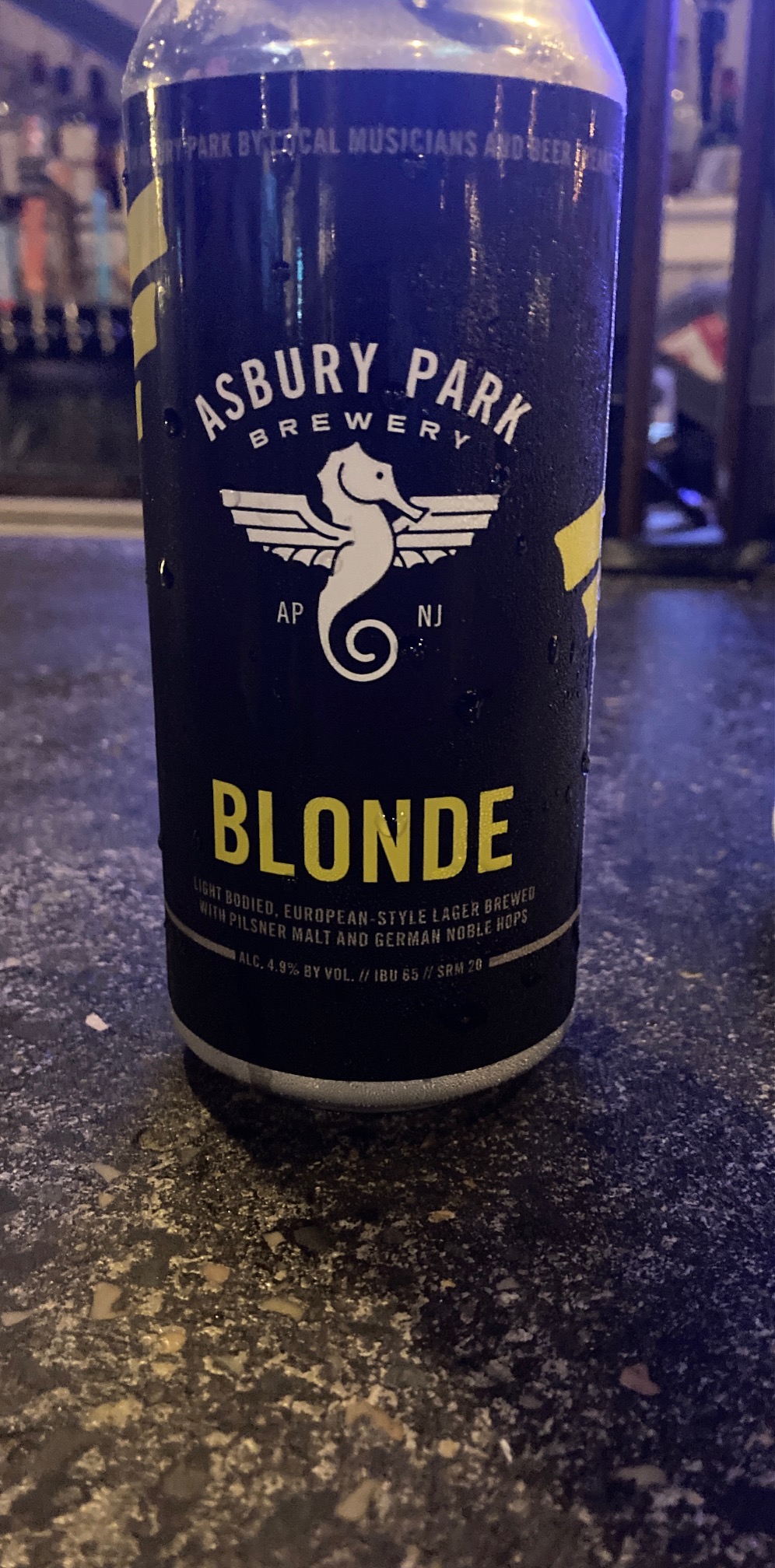
Asbury Park Brewery is a local flavor that I was happy to support. No sign anywhere of Bud Lite or Budweiser anything, thankfully
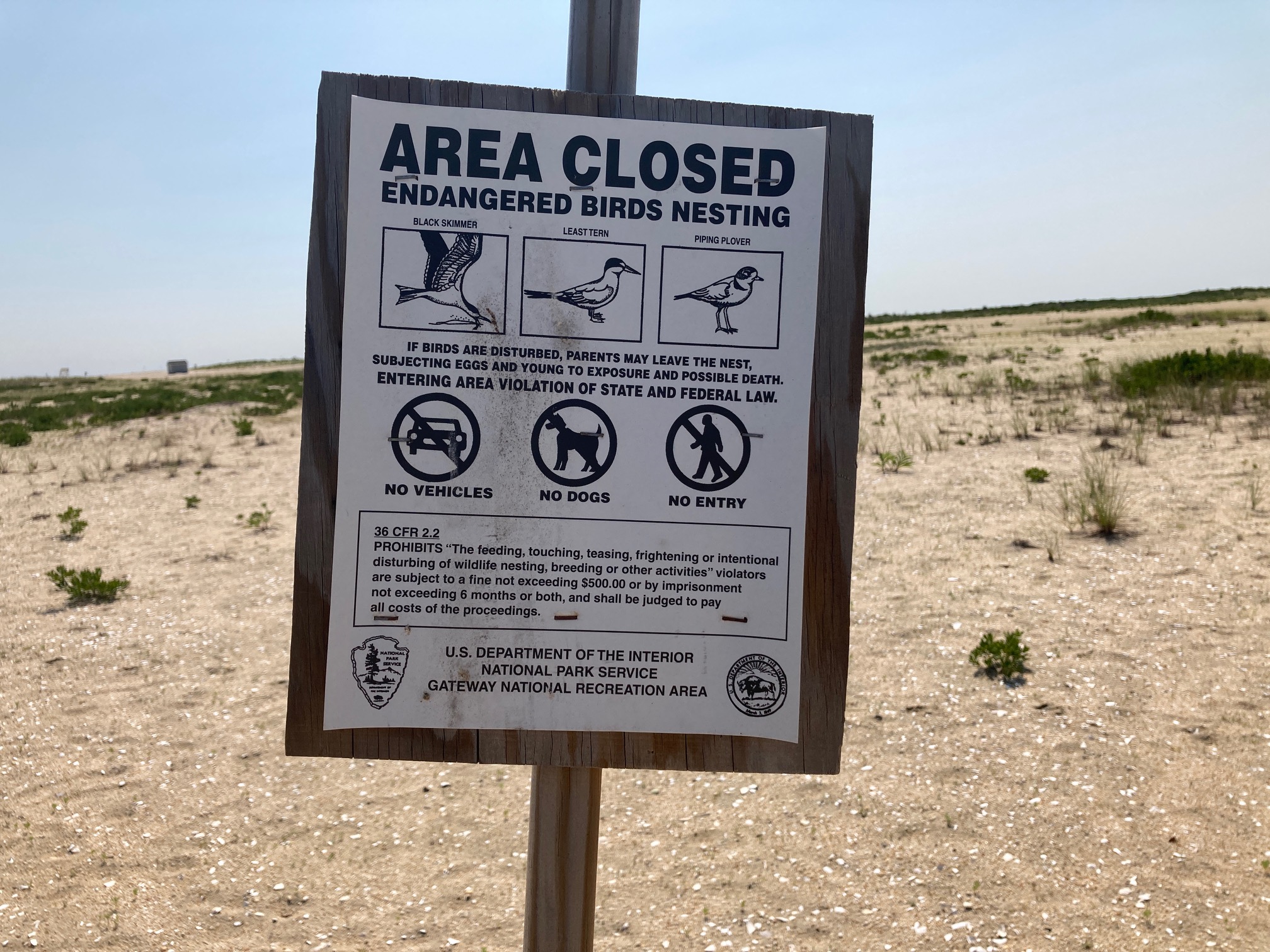
Symbol of foolish National Park Service policies seeking to protect rare shore birds by excluding people from their habitat, but allowing artificially overabundant populations of nest-raiding raccoons and foxes to roam at will.
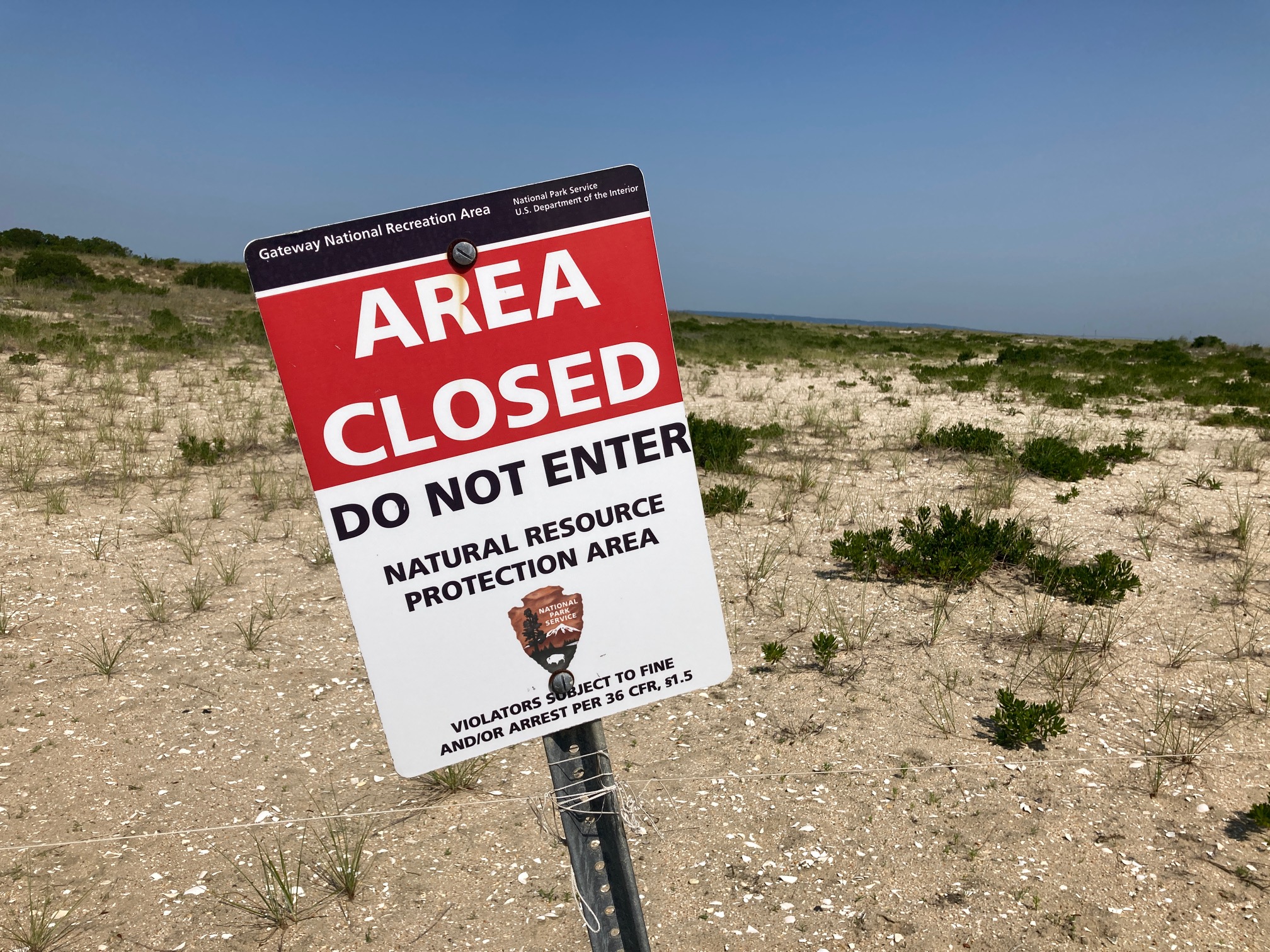
Beach goers nonetheless entered this area because there were zero nesting birds in it and there were literally tons of foxes running around in it. Come on National Park Service, you can do much smarter than this
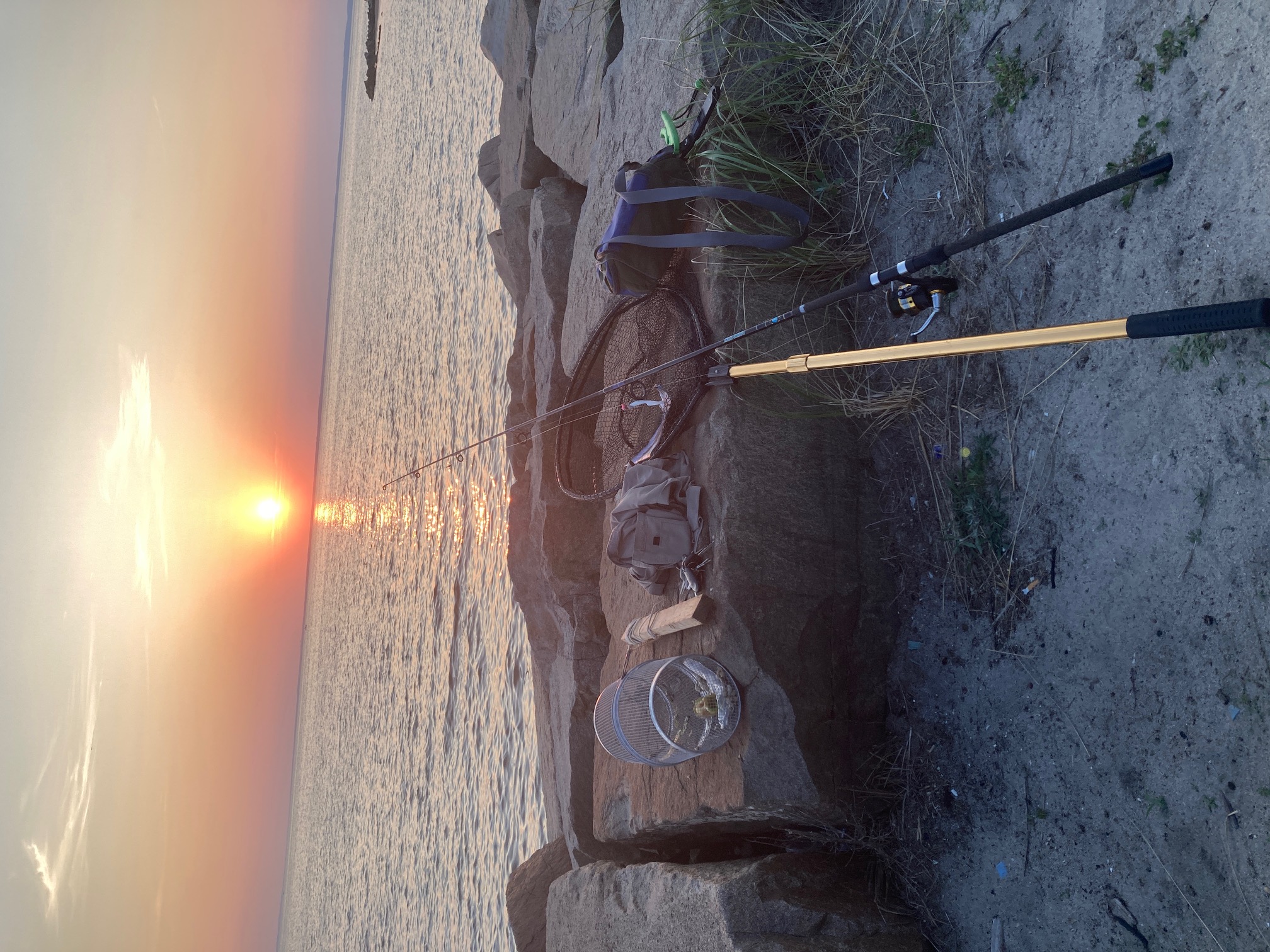
Ahhhhh… summer vacation on the Atlantic Coast
How’d that go? PA begins online hunting license & tag sales
Today at 8:00 AM marked the first day of the Pennsylvania Game Commission’s true entry into the modern world of home computers and the Internet. This probably sounds like an unnecessarily harsh or even a commonly outlandish criticism of the venerable PGC, but it is a technological fact that today marks the very first step by the 1895-founded-and-minded wildlife agency into directly integrating with its customer base.
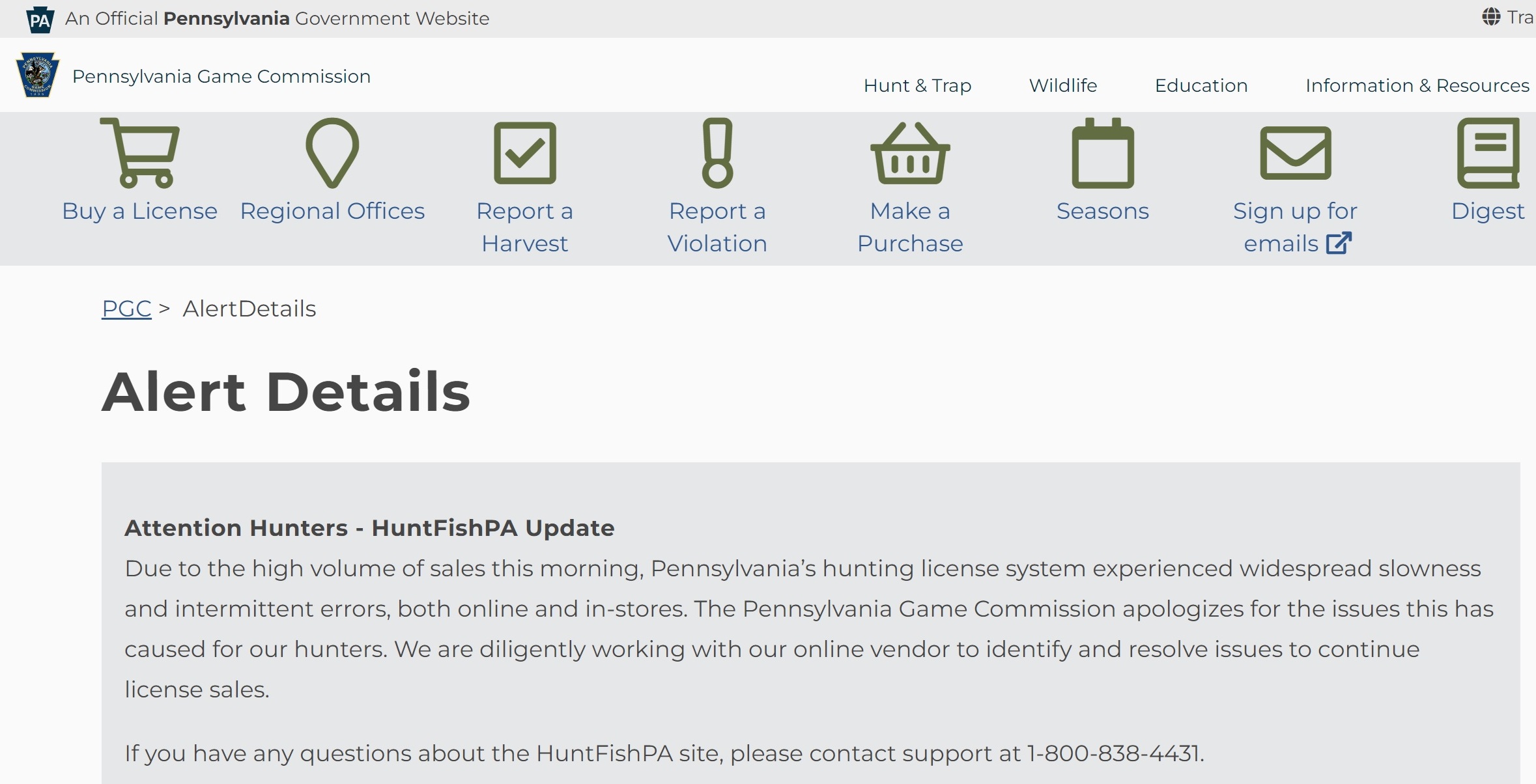
And it has not gone well, although it could have gone a lot worse. Monday end-of-business hours analysis shows the PGC website processing about 7,090 license purchases per hour. That is about 118 per minute, which is a lot faster than the roughly 1,900 licenses per hour purchased in the early time frame I operated in. Given all of the little moving parts involved, especially that carefully measured doe tag purchase, I guess I can see why this is taking longer than the two to three minutes total that each person expected to spend on it. It still frustrated me and others who are not at war with PGC.
The process has been marred by exceptionally long waits, both in-person at brick and mortar retailers and online, with lots of “system crashes” and people standing in line for hours, spawning humorous memes like the old and now former pink doe tag envelope saying “Miss Me Yet?” I like the meme of the skeleton passed out over the desktop computer “Waiting for my 21st century Internet purchase from the PA Game Commission.”
The truth is that this day had to come, sooner or later. The old double-stamped pink envelope US Mail process was increasingly marred by the US Postal Service’s incredibly ever worse performance, to the point where people were photographing piles of time-sensitive pink envelopes sitting in heaps in some post office rooms, waiting for who knows what or who knows who. No one likes to be treated differently than everyone else, and the pink envelope lottery was an idea from 1945 that worked when postal employees did their jobs. These days, the Postal Service is notoriously unreliable. We can’t have a doe tag distribution process that relies on unreliable people and institutions. Even when the applying hunter does everything correctly, his or her pink doe tag envelope might take a wrong turn at Albuquerque and arrive days or weeks after the last doe tag was distributed. Which greatly impacts the hunter’s plans and prospects for that upcoming hunting season.
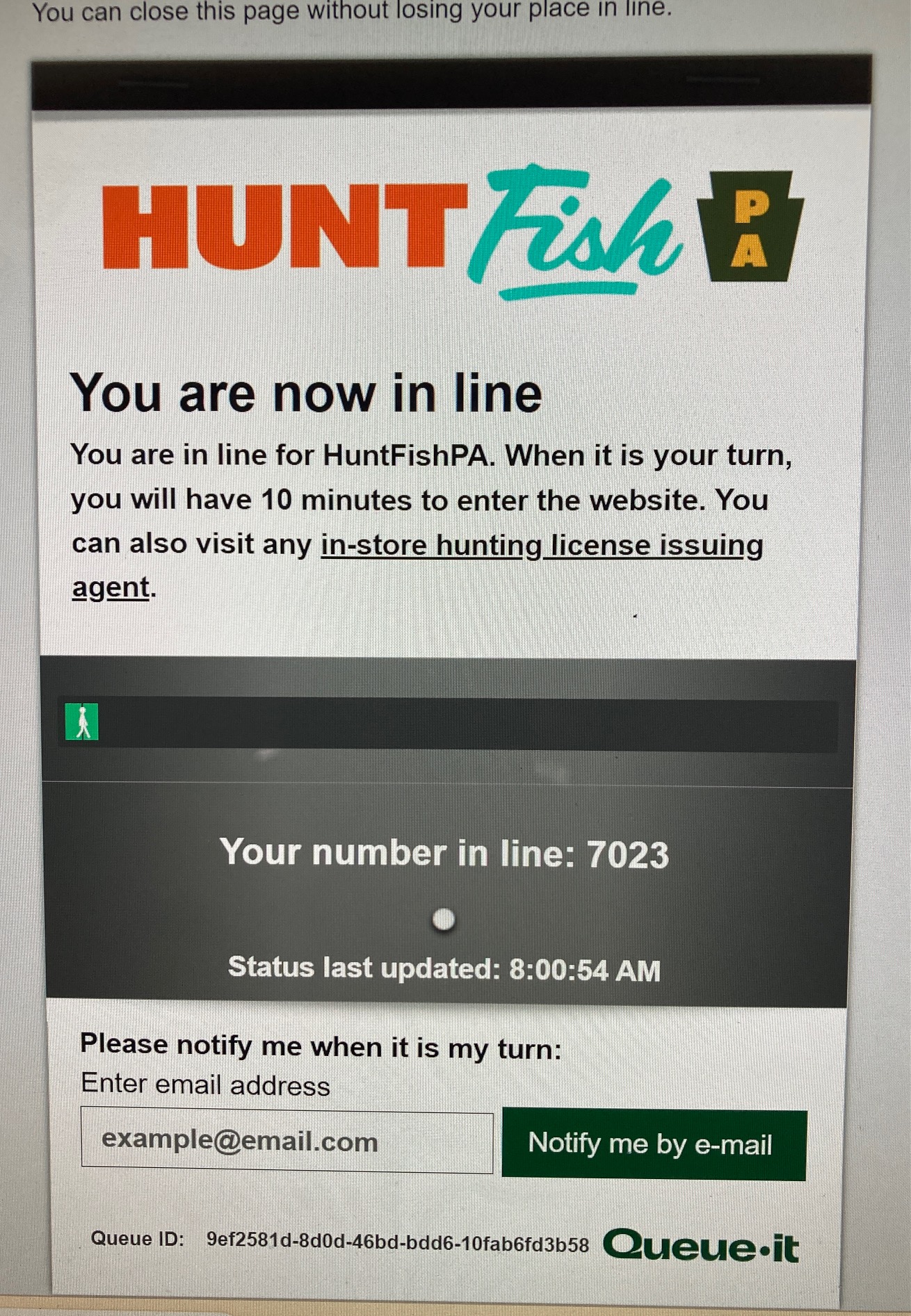
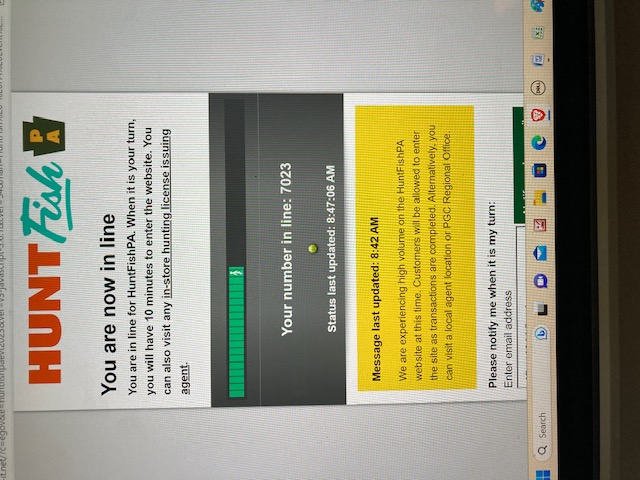
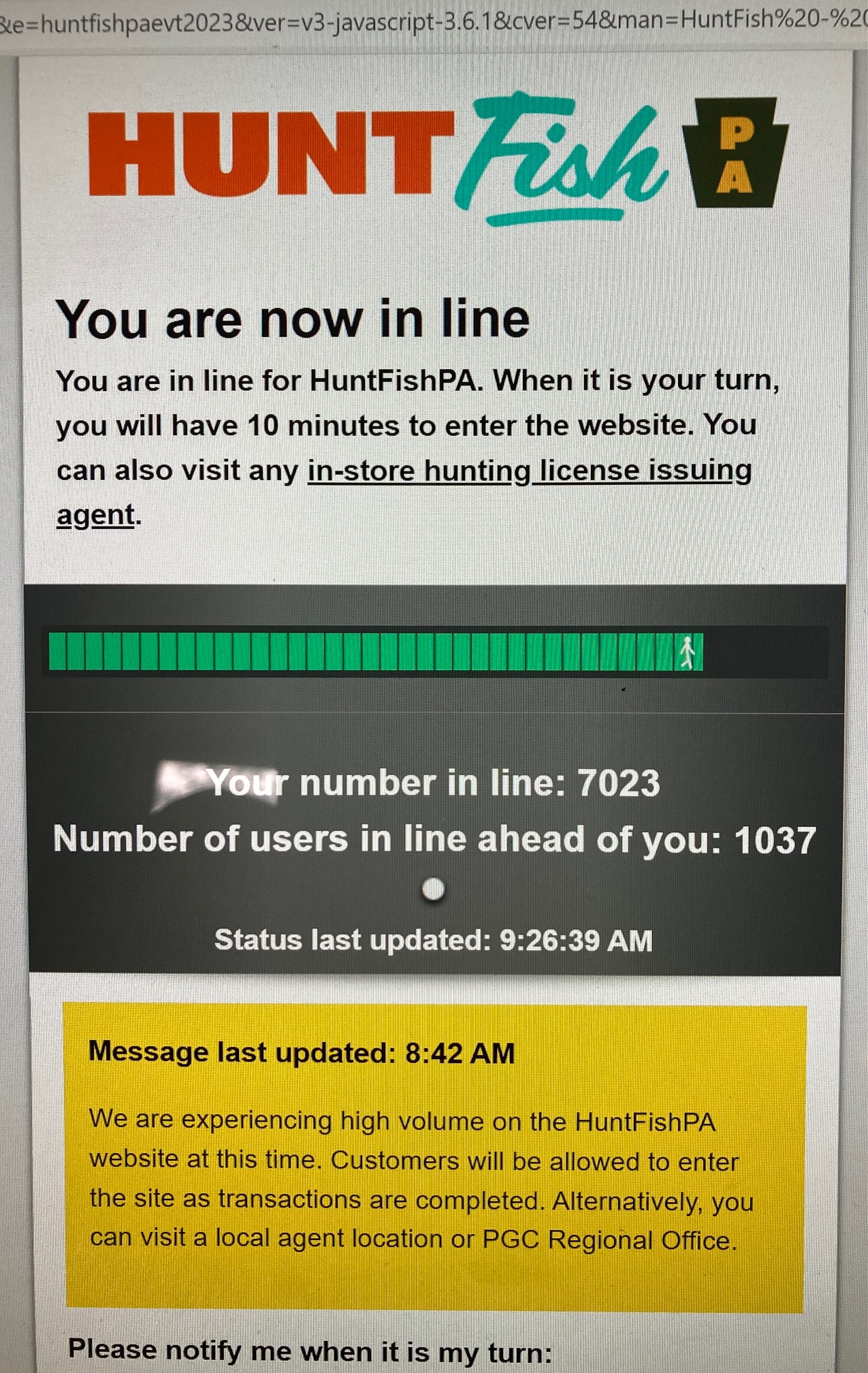
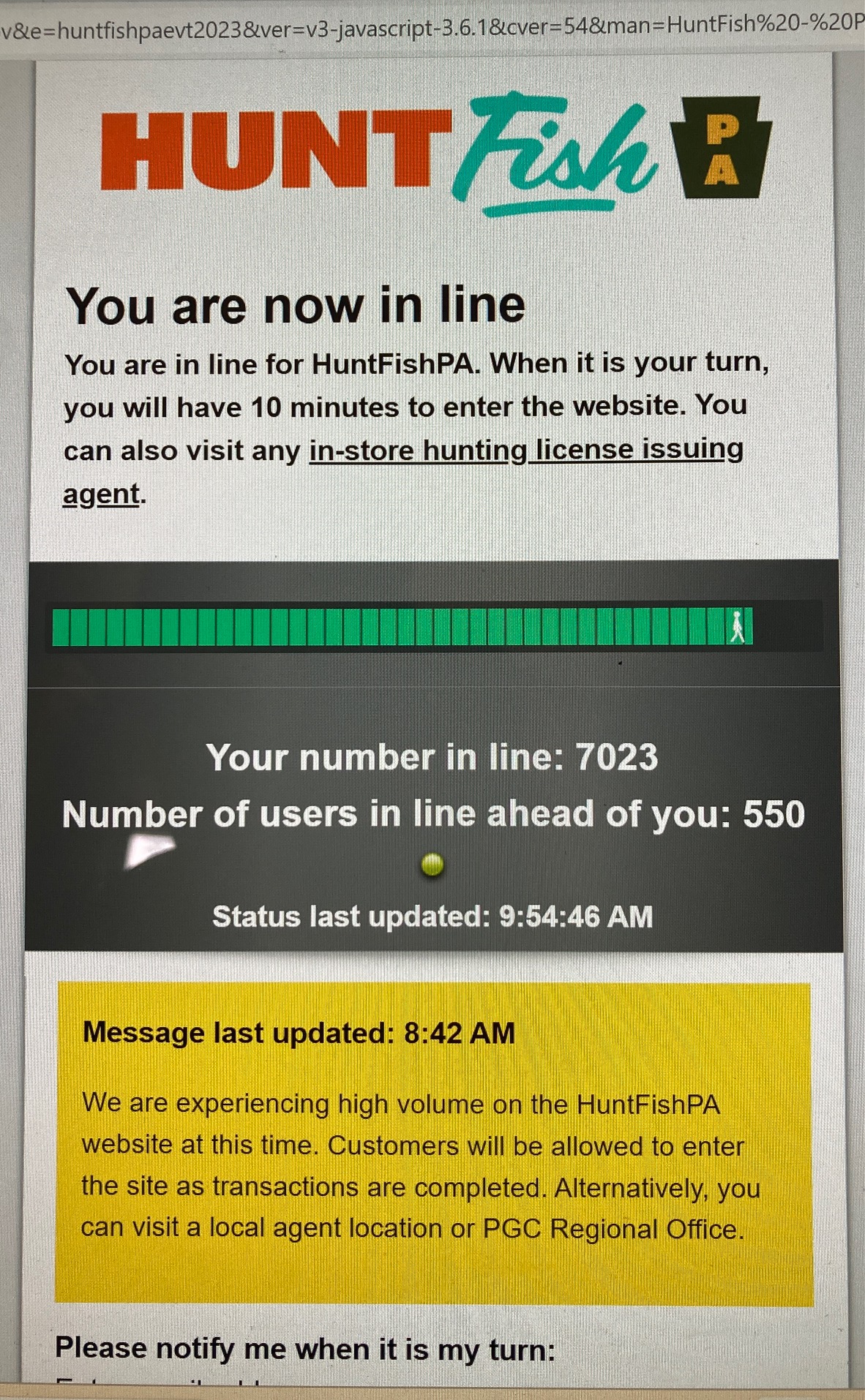
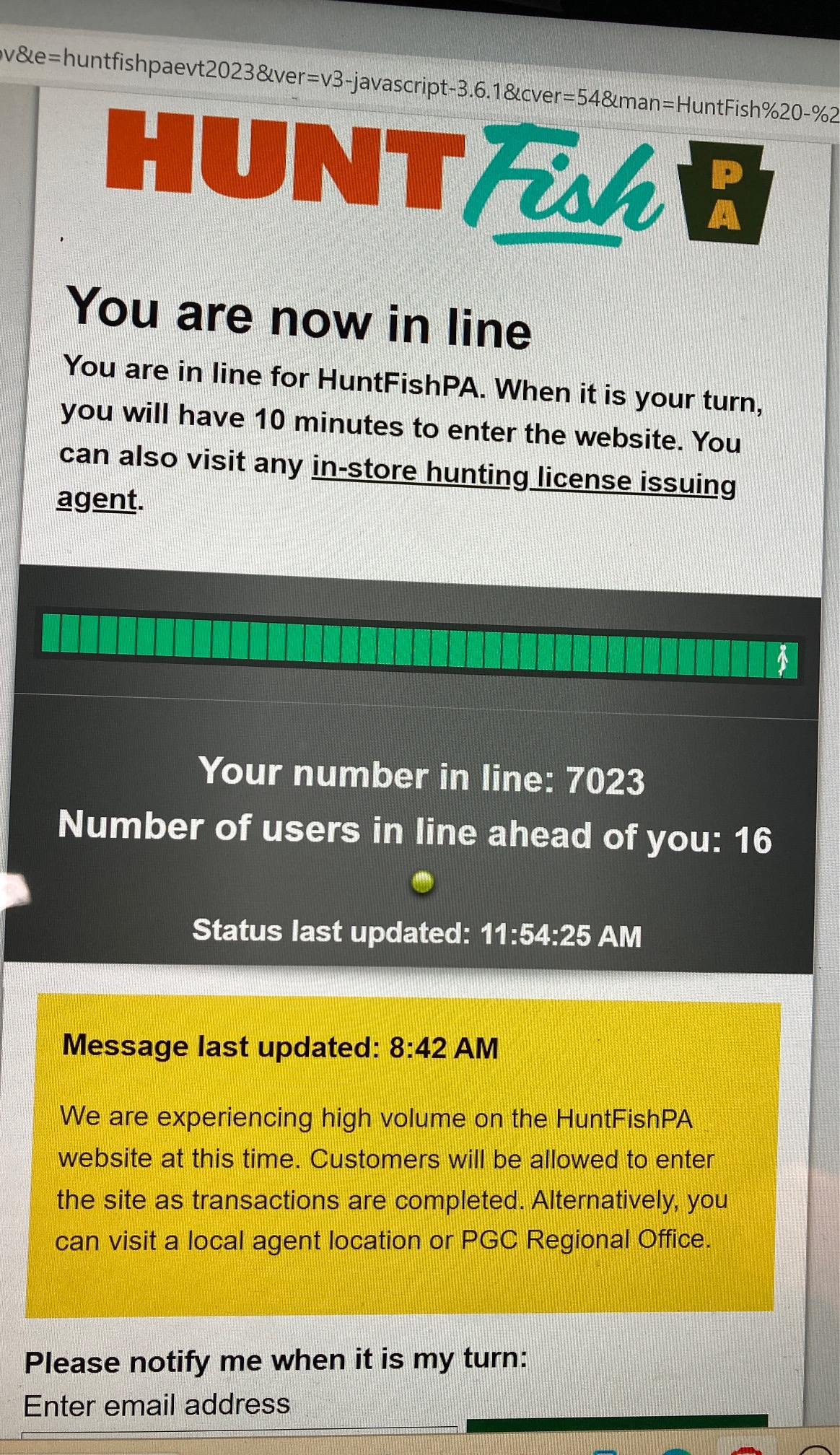
My own experience today had me first sleeping fitfully all night like it was hunting season, and finally dragging myself out of bed and hunkering down by the laptop well before the 8:00 AM beginning of the online purchase process at www.huntfishpa.gov. Almost like opening day of deer season and sitting down at an ambush site. Except this process revealed itself as having actually started well before the appointed 8:00 AM hour, as I was number 7,023 in line when I signed into my PGC huntfishpa account. With barely any coffee in my veins to buffer this unhappy revelation, an ice cold shock ran through me as I realized I was both early and yet already very late to the process. Thousands of hunters were ahead of me in an online process that was unknown, untested, and sure to have its ups and downs and delays.
The big ticket item for most of us early applicants is getting the doe tag of our first choice Wildlife Management Unit. It is why we stayed in the game til the very end. And the numbers tell the tale: My own first choice, WMU 2G, sold 17,000 doe tags by 5:00 PM today, about twice as many doe tags as any other WMU. There is a strong fear in a lot of guys that if you don’t get in line early either online or at a store, you won’t get your coveted doe tag in your primary hunt region. Fact is, with the ever popular northern “Big Woods” WMU 2G, that fear is well founded. There are many more hunters wanting WMU 2G doe tags than there are WMU 2G doe tags to hand out. The early bird gets this worm, every year.
[UPDATE: At 9:42PM I looked at the doe tag numbers and 23,502 WMU 2G doe tags out of the 35,000 total allocation for that WMU have been sold so far. A sale rate far beyond any other WMU. This means that 2G will be sold out by Tuesday early morning hours. The hunter demand for Big Woods 2G tags has always been high, we knew it, and now we get to see how that demand plays out when the hunters themselves are put in direct control of their tag orders]
Four hours and ten minutes later, having obsessively hovered over my laptop screen the entire time while emailing and bitchfest-texting with friends in both better and worse positions than I, I finally had ordered my general hunting license plus all of the additional license and permits I get, like furtaker (trapping), the annual elk application (I will take anything ya got anywhere ya got it), muzzleloader, archery, spear, atl-atl, sling, blowgun, black bear, fisher, bobcat, armadillo, hog, dog, rat, bat, and zinjanthropus tags. And yes, I got my WMU 2G doe tag, which enables me to hunt the way I enjoy most – solo pack and rifle and maybe an overnight and campfire somewhere way off the beaten path and far from roads and people, and the promise of a long and heavy pack-out of boned-out meat with a single doe’s ear and a completed tag attached. This kind of hunt is the most rewarding among big game hunters everywhere. Guys sitting in warmed box blinds overlooking fields and ravines have no idea.
So yeah, I waited and waited to ensure I got that 2G doe tag. A lot of my Big Woods hunting depends on it.
Anyone old enough to pick up on the Bugs Bunny theme above will understand where I am coming from; it was a loooong and kind of zany morning. In this day and age of Amazon and eBay and Gunbroker one-stop-shop badda bing badda bang badda boom go online and it’s yours two minutes later, Pennsylvania’s entry into the online hunting license world was practically Stone Age. New York has about as many hunters as Pennsylvania, and I have never encountered anything like this when I order my hunting license and tags from NY. It is usually immediate. Even Kentucky’s online hunting license and elk tag application process is faster than ours was today.
I am not picking on Kentucky….but come on, we all know it, Kentucky is not known for being especially technologically advanced. And yet….!
On the one hand, we must must give PGC credit for taking the long step out of 1895 and into the computer and internet age. This step the agency took this morning was one small step for PGC and one giant leap for hunterkind, or maybe the reverse, or whatever….. something like this. It is a big deal and I send you guys three cheers. Three grouchy cheers. Let’s not do this again, OK?
Yes, today’s license purchase has been marred by delays that seem unacceptable, but we all know that the PGC’s public employees have way too much pride to let this situation continue. It is a fact that a lot of employees and contractors will be working all night on this new system, and that by the time 8:00 AM breaks tomorrow, a lot of the glitches and delays we experienced today will be a bad memory for some, and a non-experience for a million others.
American hunters need an accurate round ball shotgun
Lt. James Forsyth wrote a fabulously prescient and useful hunting ballistics book in 1861 from his unique perch in Colonial India, “The Sporting Rifle and its Projectiles.” Using single shot and double barreled muzzleloading rifles, with mere black powder as the propellant, Forsyth squared off against the most dangerous wild animals modern humans have met in battle since the end of the Pleistocene, when our forbears wiped out all of the even more dangerous and ill-tempered megafauna with mere stone tipped spears.
Hold this thought for a minute.
Today’s hunter thinks he needs a soulless, faceless, characterless Three Million Magnum plastic and stainless steel rifle getting 1/8″ accuracy at three miles when topped with the Hubble Telescope, capable of blasting a twelve-inch gaping hole in a steel plate at that same three miles. But the truth is these modern gee-whiz gizmos are dumbing down, blunting, ruining and corrupting the most beautiful, honest, and pure hunting instincts and abilities we have inherited from our fur-clad ancestors.
Sniping animals from impossible distances with weapons they cannot possibly detect or withstand is nothing more than aerial bombing or target shooting at vulnerable living creatures who deserve our greatest respect and admiration, and upon whom we should only inflict our will when we are offensively at their own level of defense.
That is, what honest sport is there in assassinating an unsuspecting wild animal whose honed instincts protect it from every other natural predator, whose own predatory skills must be equally or better honed in order to close the distance and survive another day on the flesh of the prey animal?
What honor is there in these long distance assassinations? I say none.
You say you like to hunt? Okay then, hunt, dammit. Actually hunting means: Get outside on the landscape of your choice and perfect your actual hunting skills. Learn to play the wind, move quietly, use the topography to your advantage, be patient, be attentive, coordinate well with other hunters, and understand the life and habits of your quarry. Then and only then will you be an actual hunter worthy of the honorable name of hunter.
Enough of this hochsitz heated shooting box overlooking a planted field while waiting for some pet buck to step out five minutes before shooting light ends crap. This is not hunting, it is sitting on your lazy ass and relying on high technology to do the real work for you. Unless you are physically disabled or elderly, a status I myself am approaching and fighting hard every step of the way, do not dishonor yourself with this beyond early morning and late afternoon times. Or at least do not dishonor real hunters who actually hunt by calling yourself one of them when you do it exclusively.
Back to Forsyth, who though slight of stature was of immense bravery and manly stoic British character. (Oh, the British…a great people, once, and with some yet living among them who remember the old ways and who could lead their people forward through these dark days…if they would but will it.) Anyhow, Lt. Forsyth was a small but tough little bastard who faced down 8,000-pound rogue elephants, 3,000-pound gaur bison, and 600 pound male tigers, with mere black powder muzzleloading rifles at powder-burn distances.
Regardless of how fatal his shot might be, or not, Forsyth’s hunting adventures were very often enriched by the smell of burning fur as locomotive-powered horns and fangs sped close by him on their way to trying to stamp him into a little red puddle. Gunpowder that is still burning as it exits the gun’s muzzle is likely to catch something on fire if it is close enough, including the hide of charging Death. Forsyth embodied the spirit of the hunter, at least the truly manly hunter willing to take a real risk to gain a genuine and truly earned prize. We who are hunters today must all admire Forsyth, and we must seek to emulate him as much as we can in today’s sad world of toxic femininity and low testosterone. Sniping unsuspecting animals with magnum firepower is gay, or lame, or pathetic; choose your own appropriate adjective, but don’t do it. If Forsyth could trust his life and limb to a round ball, then we can trust our tame deer hunts to it, too.
The singular principle of Forsyth’s sporting rifles (not military weapons, which operate on different principles with different goals) was the use of the round lead ball. Like Sir Samuel Baker in Africa and Ceylon, Forsyth found that large round lead balls sufficiently propelled and accurately placed would utterly crush the life force out of dangerous animals, as well as more demur animals one might simply bag for the pot. Bear in mind again that these two men, in particular Baker, discovered the effectiveness of the round ball by literally shooting dangerous game at such close distances that any small mistake would probably mean life-changing injury or death. They got this close in order to ensure the proper placement of their ball, not to test themselves and see if they could cheat Death.
For mere deer and elk, Baker used a shortened Claymore sword. Yes, he hunted and killed deer species of all sizes (including Highland red stag) by hand, at close quarters combat. So, again, do not lower yourself to shooting unsuspecting animals at long distances with gigantic magnum calibers. Be a man and a hu-man, and get out on the landscape within spitting distance and earn that critter. Archery hunters know and do this innately, and are thus justifiably proud of their kills. Same for traditional muzzleloading hunters, spear chuckers, atl-atl launchers, and handgun hunters.
Today, to implement both Forsyth’s hunting spirit and technological advances in ballistics, so that we might be the best firearm hunters we can possibly be and also be the most practical hunters we can be in an increasingly regulated environment, we need a modern firearm that achieves multiple goals simultaneously.
To that end, I propose the single shot and double barreled shotgun, rifled with Forsyth rifling. Any well made utility grade shotgun will do just fine. Most of the old but trusty utility double barrel shotguns like the Savage Fox Model B or the Stevens Model 311 should take a slight rifling just fine, because their ridiculously thick barrels could be just as easily used to club baby seals as seal the explosive gasses of fired ordnance.
OK, pump and semiauto shotguns could have Forsyth rifled barrels, too. It’s just that our skills improve when we are challenged by (self-imposed) limitations.
Forsyth rifling is specially designed for the round ball at black powder velocities between 1,100 and 1,900 feet per second. This rifling has very shallow depth grooves, like 2/1000 of an inch to 3/1000 of an inch, as well as a very slow twist rate. Like one full turn of the cut rifling in 72-90 inches. With appropriate powder charges in modern steel barrels, either black powder or smokeless powders can be safely used, and both fabulous accuracy and devastating knockdown power achieved. The perfect “brush gun,” at the least.
Using black powder, Forsyth satisfactorily tested his rifling and round balls out to 250 yards, saying that within 150 yards it was exactingly accurate. Probably consistent 1-2 inch groups. With big lead balls. Imagine what can be done using smokeless powder.
To my knowledge, nothing like Forsyth rifling is employed in modern shotguns today. Despite or perhaps because of the ongoing craze for shotguns accurately shooting massive slugs (like TarHunt), sabots, and conicals, it seems the lowly but easily obtained and highly effective round ball has been shelved because too many of them were ineffectively shot at deer and bear out of smoothbore shotguns, or shot out of tightly rifled shotgun barrels designed for conical bullets and sabots.
Round balls have received bad press because here in America they have not been correctly matched with proper rifling except for smaller deer and bear caliber-sized single shot muzzleloading rifles. Time for a change!
One constant and legitimate knock against “punkin balls” is that they were terribly under powered, meant more for imprecise point blank shooting at animals in thick cover. This problem can be easily fixed by correctly loading round balls into shotgun hulls for use in appropriately rifled barrels that will give deadly accuracy and destructive force to round balls. Meaning, add more powder! Pap’s old “punkin balls” would have actually shot incredibly accurately had they gone through barrels with Forsyth rifling.
So let us return to a simpler, cheaper, and frankly more manly and effective firearm: The modern shotgun with Forsyth rifling, designed to very accurately and effectively propel a 20, 16, or 12-guage round lead ball (only 350 to 600 grains weight 😳) around 1,500 feet per second. Put these velocity-times-mass kinetic energy numbers in your pipe and smoke it! You will smoke every deer and bear you hit with such powerful projectiles!
And for those hunters concerned about the cost and availability of hunting projectiles and reloading, there is nothing simpler than pouring your own lead round balls and reloading shotgun hulls. Push come to shove with components, you can most easily obtain lead and black powder, and shotgun hulls are reloadable about twenty times each.
Shooting round balls might feel like going backwards, but in many ways the simpler ways and days were better.
Today I submitted a written request to Henry Repeating Firearms, makers of sturdy, accurate, no-frills shotguns perfect for employing Forsyth rifling, that they please consider undertaking such a project. Let’s say to start, manufacture 100 Forsyth rifling single shot break-action shotguns, tested with correct diameter round balls fired from common shotgun hulls with commonly obtainable smokeless and black powders.
If the 100 single shots sell well, then try a few dozen double barrel shotguns that have received some elementary “regulating” whereby the two barrels are brought into pointing harmony with one another. Each barrel should place its ball at or near the landing point of the other barrel, fully converging together within a 75-120 yard distance.
In conclusion, let us say we pursue this particular goal if not for efficiency, effectiveness, and ease of reloading, then to restore our rightful place and reputation as American riflemen, long hunters, frontiersmen with pluck and the best hunting skills on Planet Earth bar none. Shooting round balls within 200 yards is true fair-chase, ethical hunting.
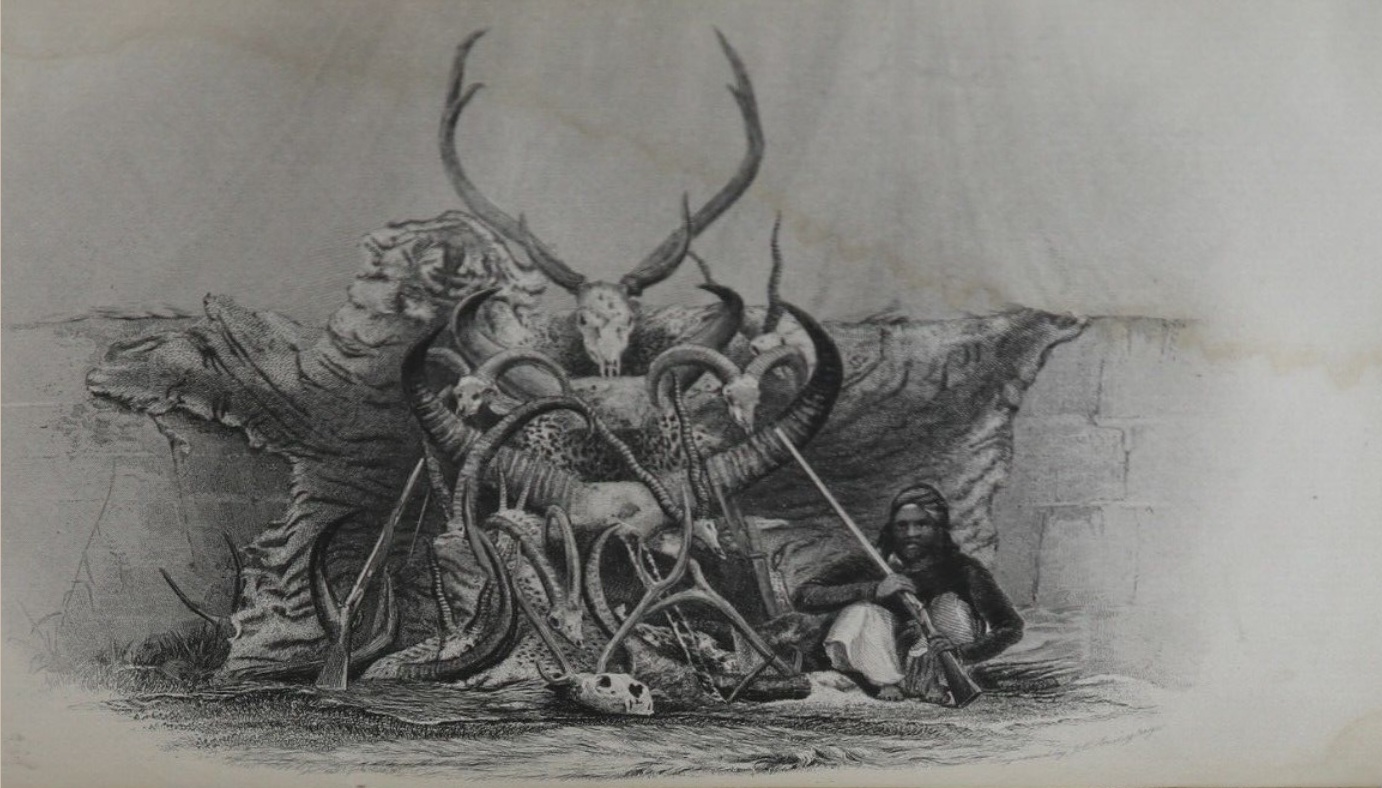
Lieut. James Forsyth of the British Bengal Riflemen Corps posing with some of his well-earned Asian hunting trophies in about 1860. All of which he took with the black powder round ball. Look at the tiger skull that is the size of Forsyth’s entire chest. Note the tiger skin into which quite a few full-sized Forsyths could be stashed all at one time. We hunters today would do well to use Forsyth’s properly arranged round ball technology.
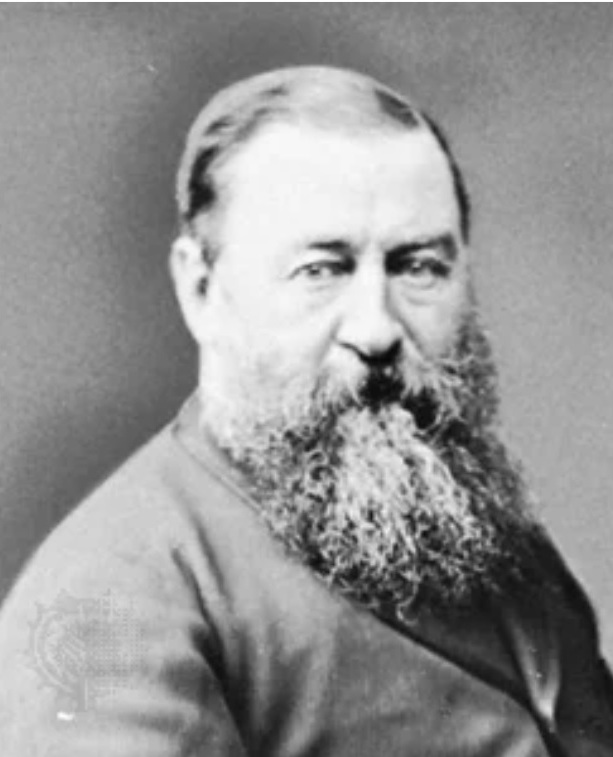
Sir Samuel Baker, gentleman, ultimate stud, patriot, hunter, fearless adventurer and most tender, devoted, and loving husband to a slave woman he liberated. We should all yearn to be like Sir Samuel in some way or another. Maybe it will just be hunting with a powerful round ball instead of a hyperkinetic missile.
If you are going to hunt flintlock, you must practice, practice, practice
Flintlock hunting season ended in southeastern Pennsylvania two weeks ago, and for those hunters who had either not yet harvested a deer or, who, in the alternative, are usually highly successful, it was a last ditch chance to fill a doe tag or the unused buck tag. I know full well from my own feeling, as well as from hearing from other hunters similar to me, that despite having a good season (I killed four deer in two counties. One with a percussion rifle in October, two in rifle season with an open sight 308 Ruger RSI, and one with a flintlock in January), that sense of lost opportunity hangs pretty heavy. Perversely, the more successful a hunter is, the more successful he feels he must be with all remaining tags and opportunities.
In the old days (of my youth and long before then) that lost opportunity was called the “horse collar,” and however we might describe this nagging feeling, it can be a pretty tough driver. Guys (definitely guys only; women are too smart or doing too much real, important work to act this way) will just throw themselves into the late flintlock season hard. That unused tag weighs heavier and heavier as the season winds down, the deer get so much more skittish, and we feel the last opportunities to prove ourselves slipping through our cold gloved fingers.
On top of the usual limitations listed above, I unnecessarily handicapped myself badly before flintlock season started: I failed to practice shooting with my flintlock ahead of time. If there is one hard fact chiseled in granite about flintlocks that everyone knows, it is that they require regular practice in order to shoot them half decently. Especially before hunting big game with one. Not just because they require lots of little pieces of metal and a rock to all quickly and seamlessly work together to make the barrel go BOOM, but because a big flash of flame and smoke goes off right in the shooter’s face.
And that big flash in the powder pan in your face makes those people who have not practiced and become used to the flash flinch badly. It is natural to flinch your face away from a fiery explosion. And when you flinch, you are sure as shootin’ gonna miss. Hence the moniker “flinchlock.”
And flinch-miss I did this past late December and early January. A lot. Missed a deer in Lycoming County, missed a whole bunch of times in Dauphin County, including a dandy buck. In fact there was one doe I missed three times on three days in one week with two different flintlock rifles, all from close range. All because I had not practiced before the season.
When I finally did take a deer in the late season, it was because I had patterned him, a huge buck, all year, and I had just encountered his tracks and knew where he was likely to come in to investigate the smell of a late season doe in heat. And in fact he did show up, right where he should have come. At first he was just a faint shadow within many shadows in the big forest’s early morning half light.
I wasn’t even sure he was a deer when he first showed up. He just appeared, then stood behind trees, then behind a bush, looking around intently, never offering a good shot on his vitals. When he finally stepped into a shooting lane, I knew it was him only because of his enormous body and the improved daylight that let me take in the steer-like curves of his shoulders and hindquarters.
His huge 150 inch class antlers had prematurely dropped (which this year seemed to be the rule across northern and even parts of southern Pennsylvania), and then he, too, dropped. The round ball hit him square on the ribs and took out his lungs and the very top of his heart. After a late season of many misses, it is OK to admit that I only hit him because I had the rifle on a solid rest and I was seated. And that by that time I was not surprised when the flash went off with the BOOM of the rifle, but rather I was cool as hell and stayed looking straight down the barrel with good hold-through, watching him kick a few times through the smoke cloud that enveloped us both.
I do not name bucks, because it does not appeal to me to do so. But I still knew who this buck was from having encountered him several times over the past eight years. Several years ago I saw him twice in bear season, and his rack was good. In 2021 he came in to investigate some doe pee on a remote hillside, alongside a smaller deer with an unbelievably symmetrical ten point rack. I took the perfect rack and watched the bigger one run off. By January 2023 he had not an ounce of fat on his entire brute body whose hide will square twelve feet. He also had a huge rotting hole in one hoof (his hooves were each the size of my hand), and no teeth left on his jaw. This sagacious deer, whatever his name was, had attained the rarity of great grandfather status in the woods, and regardless of how cagey he was, his days were numbered. One way or another, he was destined to die soon.
Despite looking several times in the right places for his shed antlers, they did not show themselves. Possibly because a utility line right-of-way clearing crew had come through ahead of me. But who cares about finding his big antlers, right? His immense estimated ninety pounds of meat is right now feeding two families, and I shook off the horse collar from all the prior missing I had done.
Learn from my mistake: Practice, practice, practice with your flintlock before the season. And then the day before season opens, snap a couple of pans of priming powder on an empty barrel while aiming at a picture on the wall. Just to keep from flinching and missing.
And one more thing: Flintlock hunting attracts me intensely because it requires all of the skills a real hunter must have to be successful. Open sights, hold through, stealth and good wood craft, patience, etc. This is real hunting. There are no unethical lazy long range assassinations of unsuspecting wild game with a flintlock.
Oh, and one more thing: Apparently the Super Bowl starts soon. Super Bowl? Never heard of it. The NFL lost me a long time ago, in 2016 to be exact, with all of the anti America kneeling crap. And apparently tonight there is supposed to be yet another woke racial song sung at halftime. My time is worth much more to me than to spend it on and with such useless people as this. Instead of watching this game played by spoiled brats, I will be building a new work table.
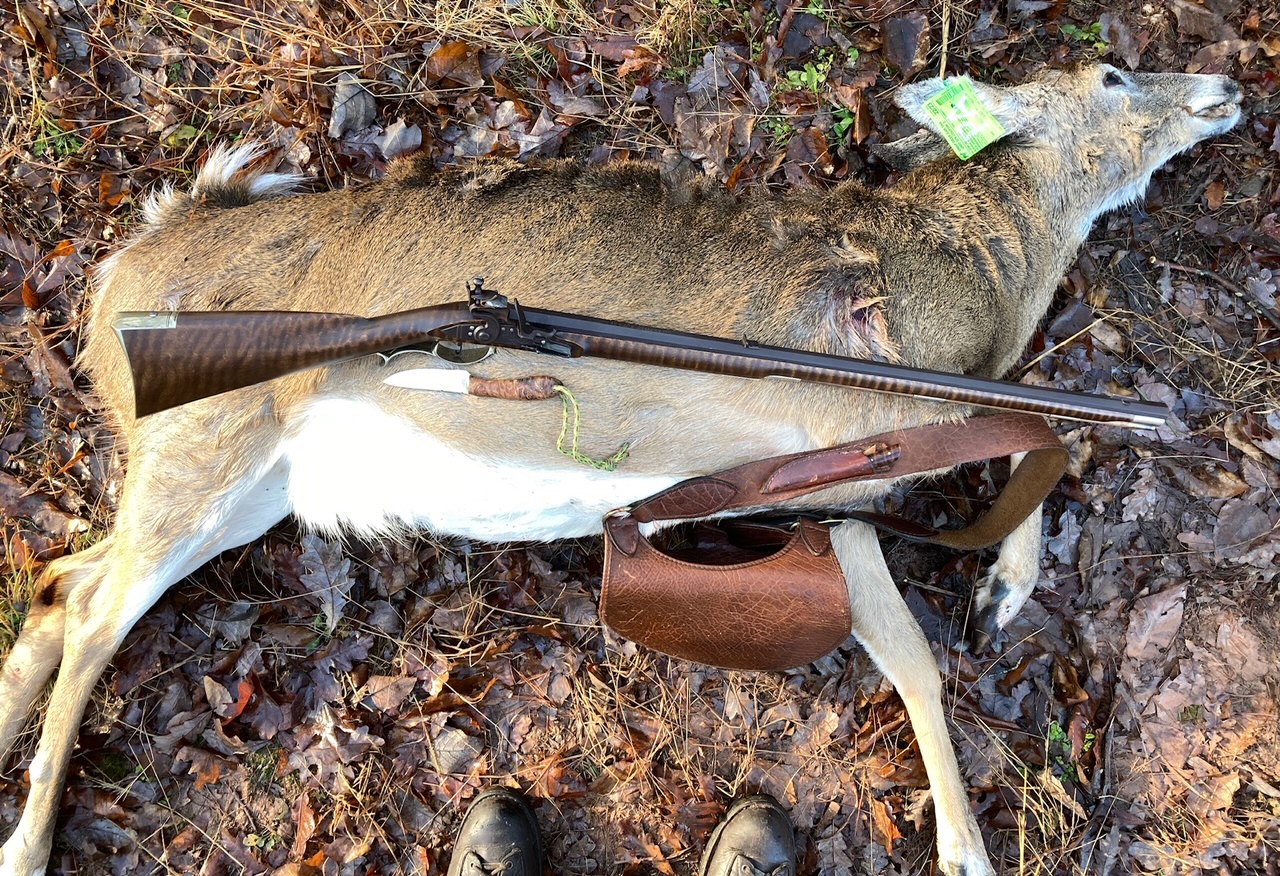
Huge old deer, taken fairly
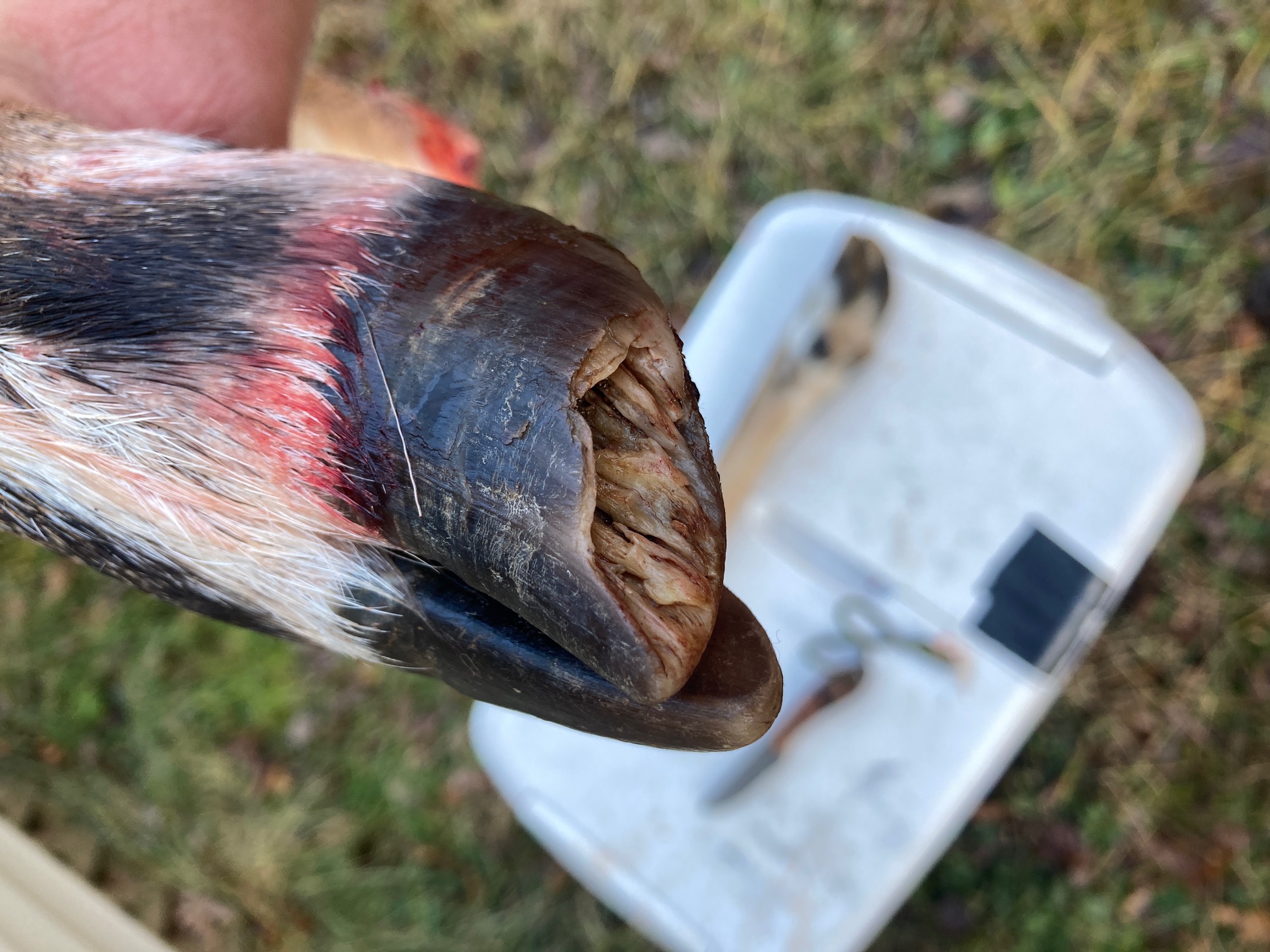
Huge old deer had weirdly rounded hooves and this big rotting hole in one hoof. His entire leg above this was enlarged, probably infected. All of his teeth were gone, completely worn down. His belly was full of grass, because he was unable to browse brush any longer.
Advice from a deer
As sure as the sun rises, there is sure to be complaining among hunters about the state, condition, blood pressure, and dental hygiene of Pennsylvania’s deer herd. In fact, you can’t escape the topic if you spend any time, like even a minute or two, in the company of devoted hunters. No matter who I am standing around, next to, or in line with, the complaints begin to flow about the Pennsylvania Game Commission and its deer management.
Despite being highly skeptical about government in general, and therefore despite keeping an open mind to complaints about government failings, I find myself repeatedly unpersuaded by these deer management complaints. While not quite ranking up there with UFO sightings or insistence that PGC has helicopter-imported mountain lions and coyotes to eat the deer, the fretting and nail biting and angry denunciations always seem to lack key aspects of any serious argument.
For example, for twenty years I have heard that Sproul State Forest harbors no deer. Then last year I easily killed a deer standing right at the edge of Sproul State Forest, and saw many others. This November, I hunted elk in Sproul State Forest and State Game Lands 100 in northern Centre County, and found myself endlessly surrounded by deer, from dawn until way past bed time while driving. Conventional views that these deer do not exist are easily reinforced around bar stools, but I have found them easily and quickly disproven in personal contact with the deer habitat itself.
One of the real challenges to Pennsylvania deer hunters is the change in deer herd size and behavior since 2001, as well as the maturing of our forests since the 1970s, when a lot of today’s older hunters were really getting into the lifestyle. A hunting culture based on sitting in one place and watching unsustainably sized deer herds migrate by resulted, and now that most rural deer herds have been lowered, just sitting and waiting is not enough. Especially when the mature forests we now experience are devoid of any acorns for the second year in a row.
In 2021 a late frost killed the oak flowers in northern PA, resulting in no acorns up north and spotty acorn crops in the south. In 2022, rampant gypsy moth infestations across the entire state denuded entire oak forests of every leaf and flower, which has again resulted in zero acorn production across a great deal of Pennsylvania’s forests. If you are inclined to blame people for things that are mostly out of people’s control, then I suppose we can point out that PA DCNR seemed to hold back on gypsy moth spraying in 2021 and 2022. Had DCNR sprayed more, then the state-wide acorn crop failure we now behold probably would not have been as bad.
The fact is that a great many of us started sitting or walking in beautiful mature forests this past Saturday or Sunday as PA’s deer rifle season opened up, and found ourselves marveling at the incredible silence greeting us. Hardly any bird activity. Maybe one squirrel seen all day, and certainly no bears and few if any deer. This is the result of there being nothing for anyone to eat in the woods.
So, unless your woods escaped gypsy moth damage and has acorns, get the heck out of the woods and go find brushy and grassy areas where deer can browse. Utility rights-of-way and clearcuts are the best places to find deer this season, and in fact the only person I know of who killed a deer anywhere near me yesterday (Sunday) was an older guy in a deer drive through a beautifully overgrown overhead powerline right of way. His hunting party also reported seeing eight does with the now deceased buck, none of which they shot.
Yesterday, while I was sitting miserably sick in my covered stand and waiting out the miserable cold rain and wind, a deer in a top hat and silk gloves happened by and gave me the following advice:
In general, access your hunting area well before sunrise and start every deer hunt with a quiet Sit from 6:30-9am, overlooking some promising travel corridor, funnel, or feeding area. Then slowly and quietly Still Hunt into the wind or quartering into the wind until lunch time. Then Sit down and eat lunch quietly, while overlooking some promising location through which wildlife regularly pass or eat. At 1pm pack up the lunch stuff and Still Hunt again slowly until 3:30pm, and then find a good spot with good views and shooting lanes and Sit quietly until 15 minutes before shooting light ends. Then slowly and quietly walk out, and maybe kill something on your way back to your vehicle or camp, only unloading your firearm when shooting hours have officially ended.
I myself am about to suit up for a long and slow stalk through some brushy utility rights of way. Yes, they are now wet, and always steep, and the going is tough. But that is where the deer are, because that is where they can eat and survive, and I am hunting deer so that I might actually kill one.
The deer and I must meet in person in order for this transaction to happen.

As much as a covered hunting blind may be a necessity when the hunter is sick or the rain is pouring down, the fact is this not really hunting. Slowly and quietly walking into the wind through good deer habitat with your firearm at the ready is real hunting. Do it.